From a Yatzer.com online article (March 14, 2020):
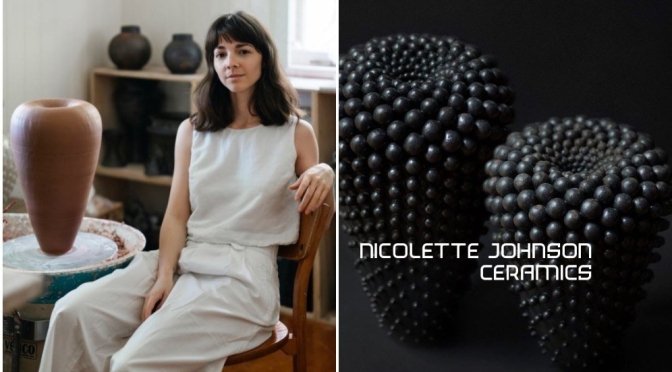
Hand-crafted through a laborious, almost ritualistic process, which sometimes has Nicolette individually sculpting and applying hundreds of protrusions to one vessel for days, her work transcends the dichotomy between artefact and artwork.
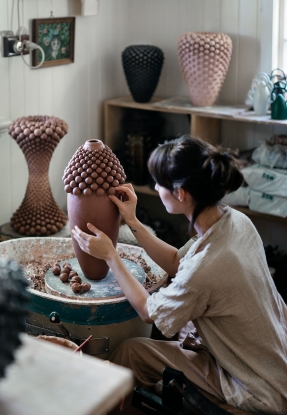 Whether it’s a reaction to the intangible aspect of our digital age, or a consequence of the trend-setting power of Instagram, there’s been a resurgence of ceramics in the last few years, both as an art form and a hobby. Perhaps it’s quite telling then that London-born, Australia-based ceramic artist Nicolette Johnson recreationally begun taking pottery classes just a few years ago as a counterbalance to her day job as a photographer.
Fast forward five years and Nicolette has distinguished herself as an acclaimed ceramist artist through the enchanting sophistication and painstaking craftsmanship of her work that channels ancient forms with contemporary precision.
Read full article
Nicolette Johnson is a ceramic artist whose work explores symmetry, motifs, and the importance of the artefact.
Nicolette was born in London, England in 1990, grew up in Texas, USA, and today is based in Brisbane, Australia. Working in stoneware and employing wheel-throwing, coiling, and sculpting techniques, Nicolette applies a modern aesthetic to re-imagined ancient forms. Her work is included in the permanent collections of The National Gallery of Victoria and the Museum of Brisbane.
With a background in photographic art and social documentary, Nicolette began studying ceramics in 2015 and is continuing her practice-led exploration into functional and sculptural ceramic vessels, hand-making and firing each of her works in her Brisbane home studio.
Website

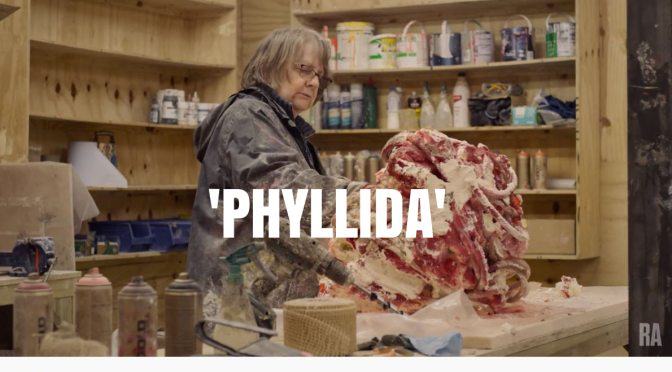
 year. Directed by Cosima Spender, this film maps the roots of Barlow’s oeuvre, as she revisits childhood memories, domestic and urban spaces, and their subsequent role in her creative process.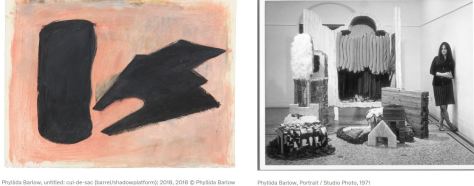
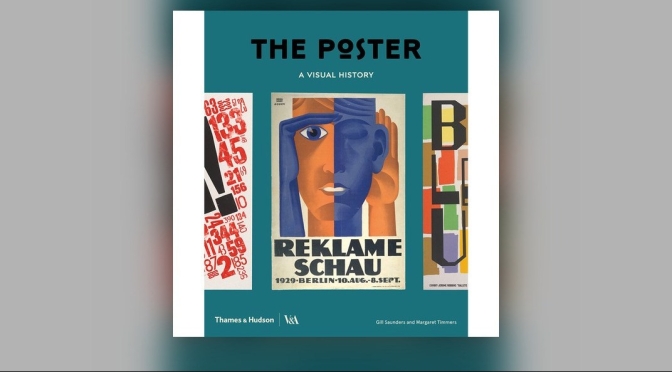
 Monocle 24 speaks with Gill Saunders and Margaret Timmers about their upcoming book ‘The Poster’ from Thames & Hudson in partnership with the V&A.
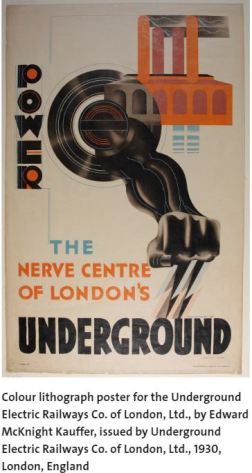 Museum, this book is the perfect resource for all those who appreciate one of the most popular art forms.

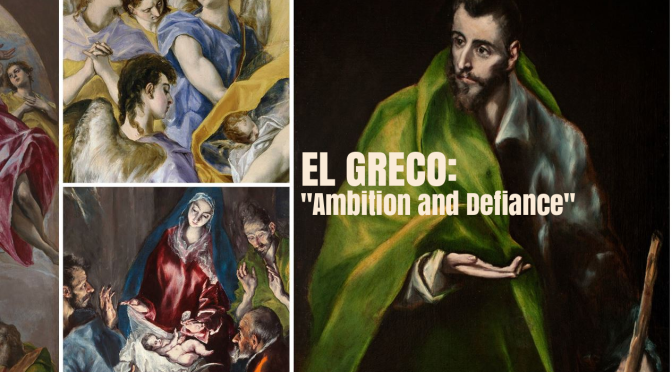
 Explore the exhibition “El Greco: Ambition and Defiance” with curator Rebecca Long and research associate Jena Carvana. Follow along as they lead you through the galleries and share some of the reasons El Greco and his work continue to fascinate us.
 Boomers Daily