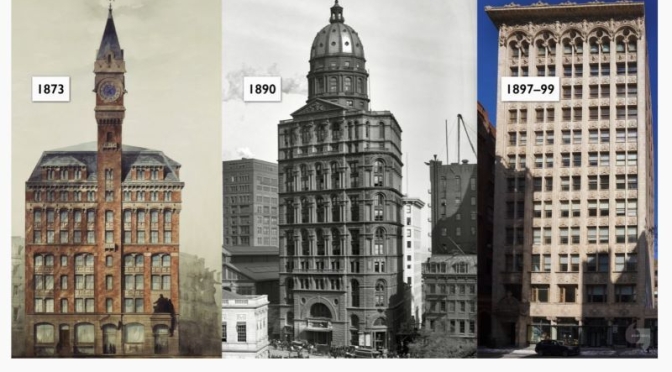
Louis Sullivan, Bayard-Condict Building, 1897–99 (65 Bleecker Street, NYC), a Seeing America video speakers: Dr. Matthew A. Postal and Dr. Steven Zucker.
Louis Henry Sullivan was an Irish-American architect, and has been called a “father of skyscrapers” and “father of modernism”. He was an influential architect of the Chicago School, a mentor to Frank Lloyd Wright, and an inspiration to the Chicago group of architects who have come to be known as the Prairie School.
The Bayard–Condict Building at 65 Bleecker Street between Broadway and Lafayette Street, at the head of Crosby Street in the NoHo neighborhood of Manhattan, New York City is the only work of architect Louis Sullivan in New York City.
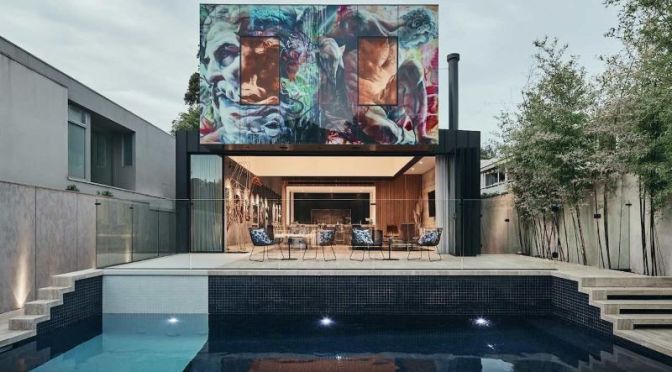
Nestled in a tree-lined street in the affluent suburb of Toorak in Melbourne, JARtB House is an architect’s home that explores art and architecture. Director of international award-winning architecture firm Kavellaris Urban Design (KUD), Billy Kavellaris designed his house with a view to creating both an art gallery and a family home.
The design explores the idea that art and architecture are separate disciplines but also that art can be fused with everyday life. A white circulation strip through the house doubles as a gallery, displaying the architect’s extensive art collection. Some pieces, such as the lofty giraffe sculptures, were designed especially for the space within the architect’s own home. The upper floor is ensconced in a custom mural created by Spanish artist duo PichiAvo.
Made up of 13 panels stitched together across the facade of the house, this artwork can be experienced from both inside and outside the house. The architecture and interior design can also be seen as art itself, with unusual and opulent staircases connecting floors, and uniquely shaped openings and furniture pieces. Bespoke timber flooring and panelling created by Made by Storey is used throughout the home on walls and floors, creating a sense of cohesion and warmth.
Other materials, such as concrete and steel, are carefully chosen for atmosphere and visual interest, while colour is largely provided by the artworks.
Architecture and Interior Design by Kavellaris Urban Design (KUD). Custom Timber Flooring, Stairs and Ceiling by Made by Storey. Video by Cheer Squad Film Co. Production by The Local Project.
Summer holidays near the coast, any coast, are the right of every New Zealander and loom large in the childhoods of many of us. For some, the reality of a home near the coast is a goal to aspire to; a place where family and friends can build memories that often transcend generations.
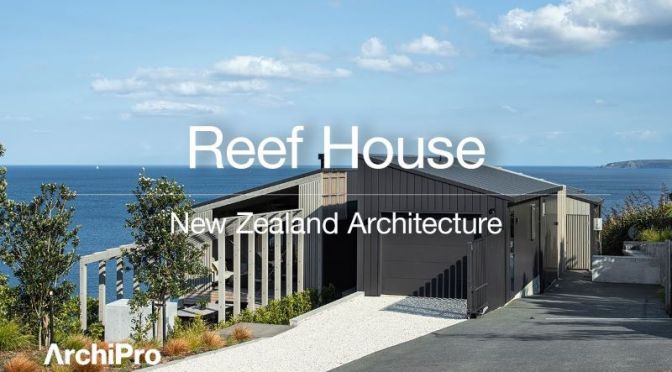
For the owner of this house, that was the dream—to provide a holiday home for her three children and their families. One that would ultimately be passed on, becoming, in the process, an indelible embodiment of that dream. In this instance though, the familial link runs deeper, as the owner commissioned her architect cousin—Dave Strachan of Strachan Group Architects (SGA)—to design the home and two of her children, builders starting out on their own, to build it.
“Reef house is very much a family experience,” says Dave. “Not just because of its intended use but because we will all get to look back on it and see where it was touched by each of us in turn.” Situated on an elevated section overlooking the rocky beach break of Daniels Reef, the site enjoys extensive sea views from the northeast through to the south and across to Little Barrier Island. “These views, as well as a fall of seven metres across the site diagonally from west to east, provided the natural context.
A vacant site to the northeast, as well as neighbours overlooking from the north, also needed to be considered in the design process. Dave says that while the site itself was of a good size, council regulations around setbacks and neighbouring sightlines, coupled with topographical considerations, restricted placement of the building site to within a 200m2 building platform.
“From the outset, the goal was to design as complete a council-compliant scheme as possible, including strict adherence to the maximum building footprint. To achieve that, the plan is a split cruciform, providing axial views and cross ventilation in both directions. In section, breaking the form into a twin-roof pavilion allows for ample volumetric shifts across the upper-floor spaces.
“Here, the floorplates are offset and arranged to direct views out to the sea from the entrance and living areas. The kitchen projects through the building envelope and out onto layered and screened outdoor living spaces—helping blur the lines between indoor spaces and outdoor spaces.” Another design element that blurs the lines is the courtyard garden, which works as a climate modifier and is accessed through a bank of hinged doors, cleverly incorporating the space into the interior while maintaining its exterior designation.
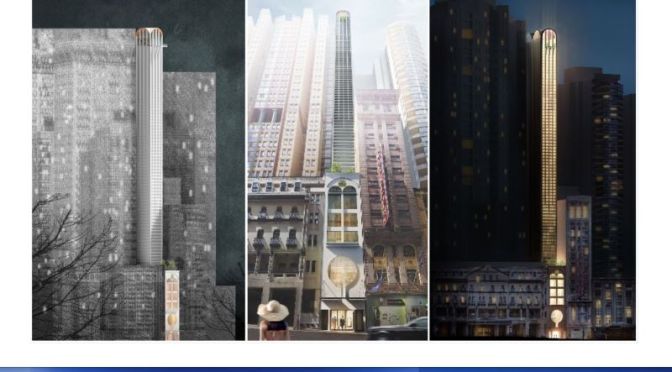
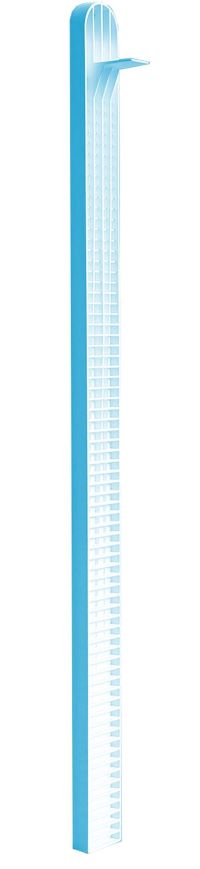
An improbably narrow, six meter wide site is envisaged for a 100m tower in the downtown area of Sydney near its central station.
Our proposal embraces this extraordinary attenuated quality, proposing a ‘column’ tower on a low scale podium.
The podium references the delicacy and detail of its heritage neighbours, using the language of grand arching brickwork. A three story urban room houses multiple levels of lobby, cafe & lounge, visible through a large scale keyhole window. A walled courtyard garden for shared use overlooks the street.
The tower simulates the compression and extension of a column, through a continuous abstraction of the elements of a column: base, shaft and capital.
The facade begins with compressed horizontal screening, slowly transforming into exaggerated verticals at the top. Horizontals begin wide and flush with the outside frame, slowly thinning and receding at the height of the tower. Each horizontal is at the height of the slab, handrail and door head height.
The capital is joyfully expressed as a flying balcony and shell curves of a rooftop sundeck, pool and “hammam” spa. The soffit of the curved ceiling is brightly tiled, visible from both the street below and the city beyond.
Each floor houses compact hotel rooms, gathering light from the street, rear court or internal shapely voids. The voids are tiled to reflect light and colour into the rooms. Key hole windows provide a framed vignette of the seamless tiled surface.
Testing the boundaries of construction and design, the ‘pencil’ tower adds both a generous street room and a heroic skyline to its neighbourhood.
Architecture firm ODA has completed a luxury residential building in Brooklyn that features Jenga-style facades made of concrete and glass.
Called 98 Front, the condominium building occupies a corner lot in Dumbo, a waterfront neighbourhood that has seen a flurry of new development in recent decades. The building is a short walk from Brooklyn Bridge Park, which stretches along the East River.
Designed by New York-based ODA, the project is intended to combine “sophisticated, innovative architecture with superior craftsmanship”. Roughly rectangle in plan, the building rises 10 levels and totals 189,000 square feet (17,559 square metres), Made of concrete and glass, the building’s exterior consists of irregularly placed cubic volumes that recall a game of Jenga. The projecting blocks create numerous overhangs and terraces.
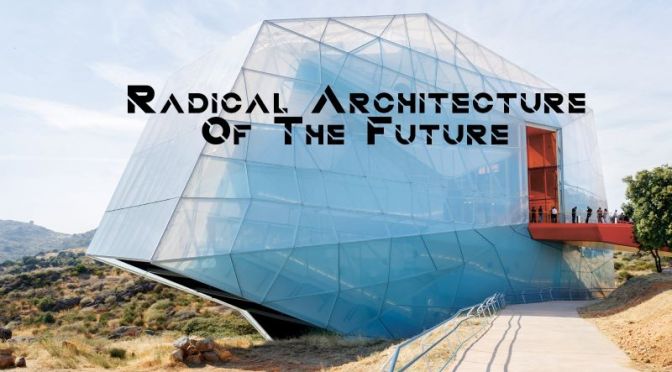
This remarkable book features projects — surprising, beautiful, outrageous, and sometimes even frightening — that break rules and shatter boundaries. In this timely book, the work of award-winning architects, designers, artists, photographers, writers, filmmakers, and researchers — all of whom synthesize and reflect our spatial environments — comes together for the first time.
An important and fascinating collection of original projects by unique thinkers in the world of architecture and spatial design
Architectural practice today goes far beyond the design and construction of buildings — the most exciting, forward-thinking architecture is also found in digital landscapes, art, apps, films, installations, and virtual reality.
About The Author:
How does tomrrow look from your doorstep? For the author, curator, critic and cultural consultant Beatrice Galilee tomorrow’s buildings, building plans, or ways of thinking about our built environment, are already out there.
In her new book, Radical Architecture of the Future, she quotes the American scholar Donna Haraway who asserted, way back in 1985, that “The boundary between science fiction and social reality is an optical illusion.”
Galilee patrols that boundary within the pages of her new book, in which she details works by 79 architects, designers, artists, photographers, writers, filmmakers, and researchers, each of whom are working at the most radical edges of architecture and spatial design today.
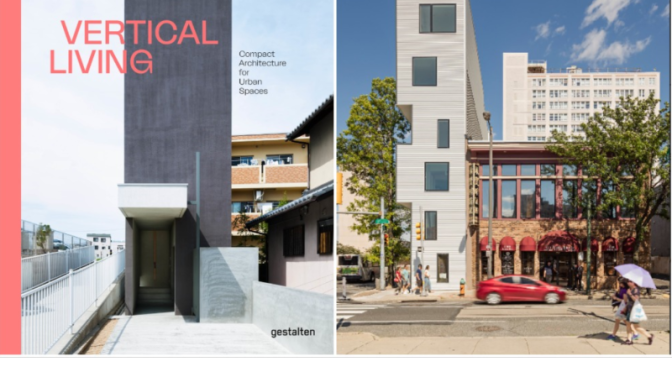
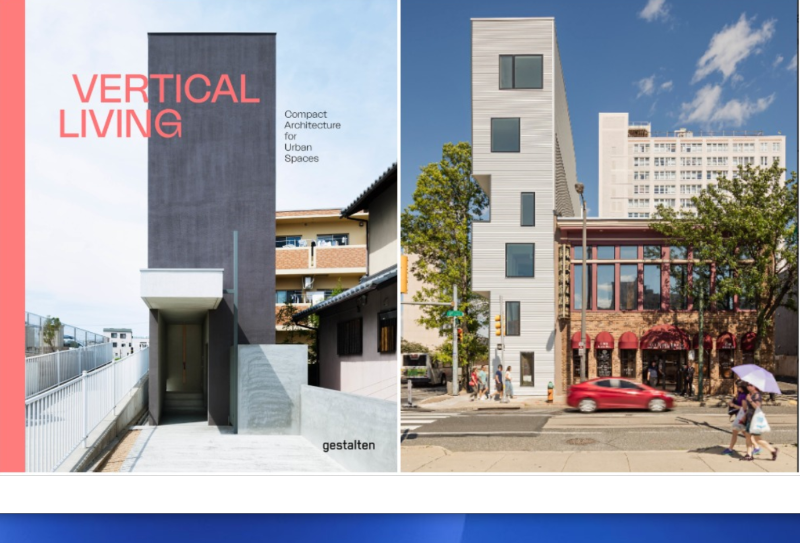
Vertical Living is an introduction to the architecture and interior masterminds using skillful, clever design to conquer compact living wherever there is space. As we continue to expect more of our flats and houses, unexpected approaches are necessary for the future of our urban spaces.
The era of moving to the suburbs is coming to an end. Instead, a growing movement of city dwellers are looking for grand architectural solutions in the smallest of spaces. Slender, slim, and tall structures are soaring in the limited land available, offering innovative solutions to a world with ever-growing urbanization.
The book looks at ingenious architectural solutions: impossibly skinny houses wedged into narrow plots, spacious homes built into neglected infill sites and comfortable homes created in tiny spaces. By combining inspirational projects, in-depth features and engaging profiles of architects around the world, Vertical Living will offer a new way of looking at how we live in the built environment.
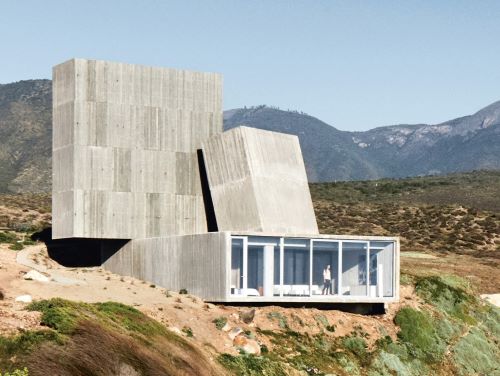
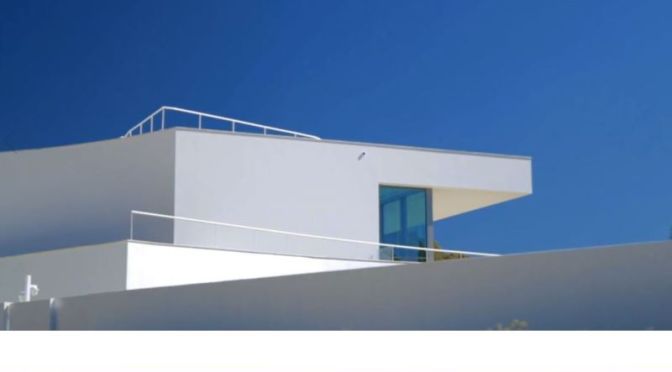
“Lux mare” means “light of the sea” and the name was chosen because of the light that the ocean, which extends as far as the eye can see, reflects. This is because of its unique location and view.
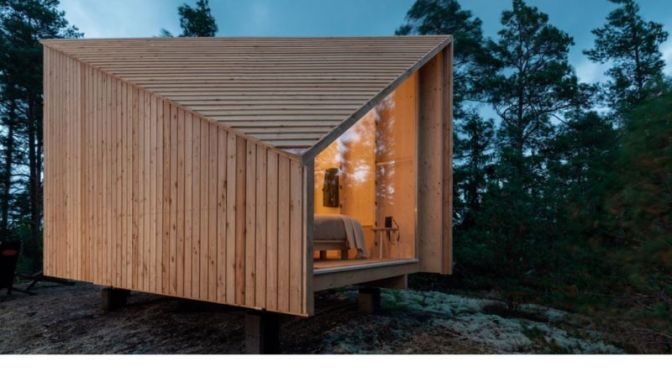
A peace of mind – Space of Mind is a modern cabin that acts as a dedicated space to think, recharge and unwind – somewhere we can find our own peace of mind. Through a modular system, Space of Mind can serve as anything from a spare bedroom to a gym to a home office with the flexibility to be placed nearly anywhere in the world.
Away from home – at home
As a concept, Space of Mind was initially developed in response to the on-going pandemic. With many of us now spending significantly more time at home than ever before, our collective notion of a ‘home away from home’ needed to be redefined to fit our newly limited range for travel. No matter whether it is placed in a backyard, rooftop terrace or even the nearby forest, Space of Mind acts as a spatial solution that fosters a similar experience – just without leaving home.
Yet how we find that peace of mind looks different for all of us. Therefore, an integral aspect to the design of Space of Mind is its versatility and adaptability. The outer wooden structure acts as a blank slate while the interior is adjustable to individual preferences, creating a space that can manifest into a gym for one and into a home office for another. Within the overall modular system, the custom furniture attaches to the wooden structure on rungs, giving the freedom to tailor the space as desired over time.
Architectural design
The overall architectural footprint of Space of Mind comes in at just under 10m2. Space-efficient and compact, a guiding emphasis within the design was to similarly express how even a minimal space with only the essentials can offer us the headspace to enjoy what matters most. With less, we can feel more.
In line with this, the structure is not insulated, connecting us closer to the raw, natural elements and ever-changing weather conditions outside. As a mass timber construction using ecologically sourced Finnish wood, Space of Mind can withstand even the harshest of arctic winters while remaining aesthetically cozy and nest-like inside through warm wooden tones and colors.
To make Space of Mind available to even the most remote of locations, it was strategically planned to be light enough for transportation by crane or helicopter with a resilient foundation that supports almost any site. This, in turn, adds to its versatility, ultimately creating an opportunity where we have the freedom to tailor a spatial experience to our exact needs and wishes during a time when our entire systems of living have seemingly turned upside down.
***
‘Space of Mind’ is a spatial experience designed by Studio Puisto Architects and developed and produced in collaboration with Protos Demos. Its modular interior is designed by Studio Puisto Architects in collaboration with Made by Choice.
News, Views and Reviews For The Intellectually Curious










 Boomers Daily