
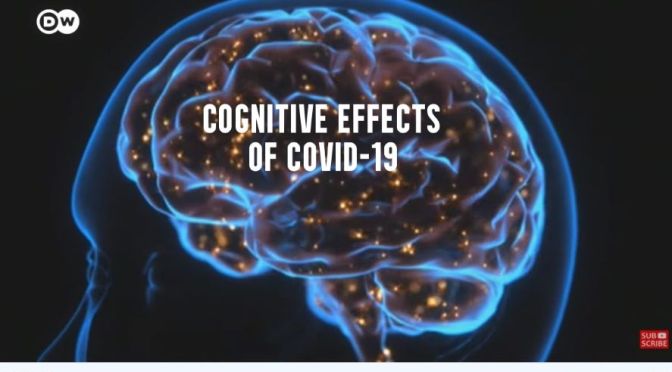
Covid-19 is complex. It can affect the nervous system, leading to language disorders, strokes and seizures. Scientists are still trying to understand why. 75% of people hospitalised with the virus continue to suffer from secondary symptoms at least six months after they recover. Many find it hard to function in their daily lives. Researchers hope understanding Covid’s impact on the brain could pave a way for treatment.
Tag Archives: Analysis
Podcast: World Economy Fault Lines, Afghanistan Abandoned, Publishing
A selection of three essential articles read aloud from the latest issue of The Economist. This week, the new fault lines in the world economy, the catastrophic consequences of America abandoning Afghanistan (10:28) and how Mills & Boon, a famed publisher of romantic novels, wants to diversify its hero base (17:30)
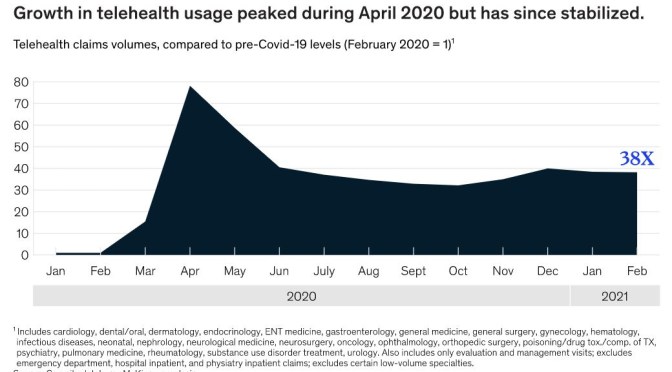
Telemedicine: Growth Rate Peaked In April 2020, Stabilized During 2021
A year ago, we estimated that up to $250 billion of US healthcare spend could potentially be shifted to virtual or virtually enabled care. Approaching this potential level of virtual health is not a foregone conclusion. It would likely require sustained consumer and clinician adoption and accelerated redesign of care pathways to incorporate virtual modalities.
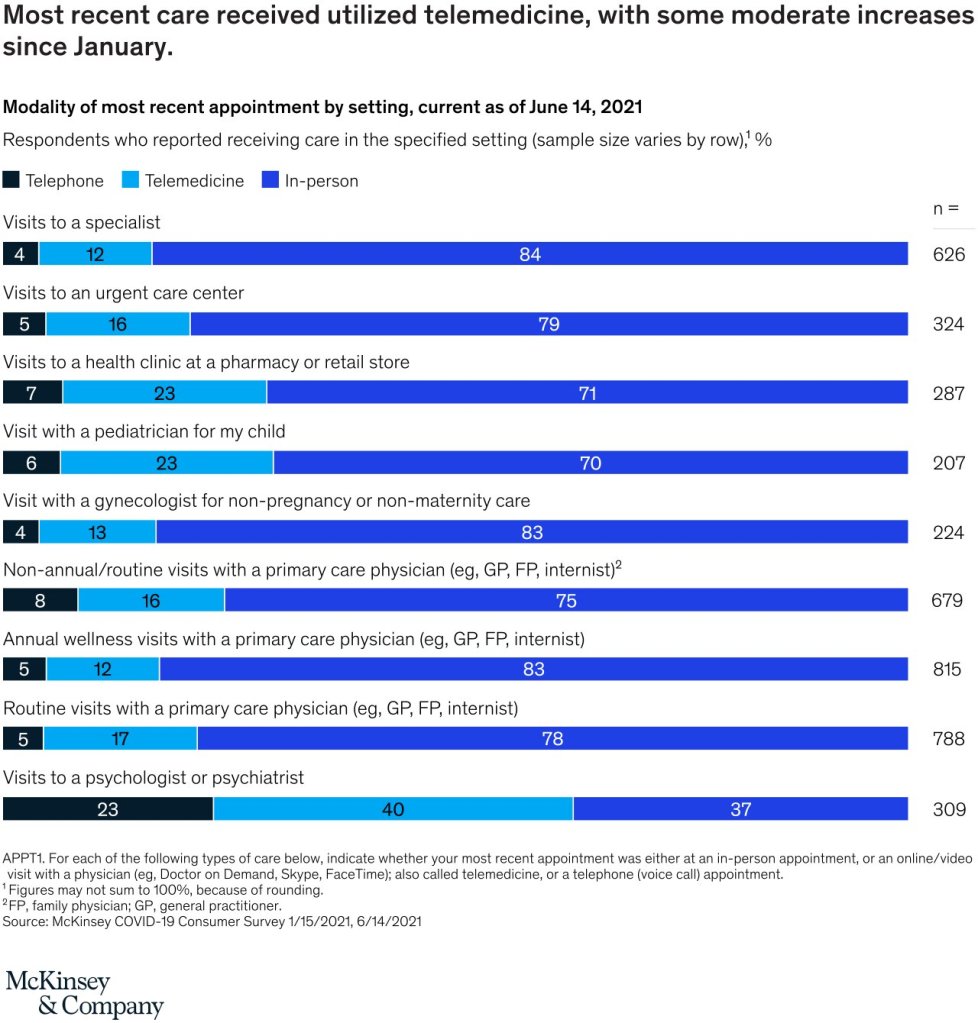
- Telehealth utilization has stabilized at levels 38X higher than before the pandemic. After an initial spike to more than 32 percent of office and outpatient visits occurring via telehealth in April 2020, utilization levels have largely stabilized, ranging from 13 to 17 percent across all specialties.2 This utilization reflects more than two-thirds of what we anticipated as visits that could be virtualized.3
- Similarly, consumer and provider attitudes toward telehealth have improved since the pre-COVID-19 era. Perceptions and usage have dropped slightly since the peak in spring 2020. Some barriers—such as perceptions of technology security—remain to be addressed to sustain consumer and provider virtual health adoption, and models are likely to evolve to optimize hybrid virtual and in-person care delivery.
- Some regulatory changes that facilitated expanded use of telehealth have been made permanent, for example, the Centers for Medicare & Medicaid Services’ expansion of reimbursable telehealth codes for the 2021 physician fee schedule. But uncertainty still exists as to the fate of other services that may lose their waiver status when the public health emergency ends.
- Investment in virtual care and digital health more broadly has skyrocketed, fueling further innovation, with 3X the level of venture capitalist digital health investment in 2020 than it had in 2017.4
- Virtual healthcare models and business models are evolving and proliferating, moving from purely “virtual urgent care” to a range of services enabling longitudinal virtual care, integration of telehealth with other virtual health solutions, and hybrid virtual/in-person care models, with the potential to improve consumer experience/convenience, access, outcomes, and affordability.
Analysis: Fixing The EV Charging Bottleneck
Electric-vehicle entrepreneurs are working on the industry’s biggest bottleneck: charging infrastructure. Companies are building more chargers, but it may not be enough to make EVs work for people who can’t plug in at home. Photo illustration: Carlos Waters/WSJ

Travel: The Rental Car Shortage Explained (WSJ)
This summer it’s harder than ever to rent a car in the U.S., especially at popular vacation destinations. To learn what’s behind the spike in rental car prices, WSJ speaks with an industry analyst and WSJ’s Nora Naughton. Photo: Luke Sharrett/Bloomberg
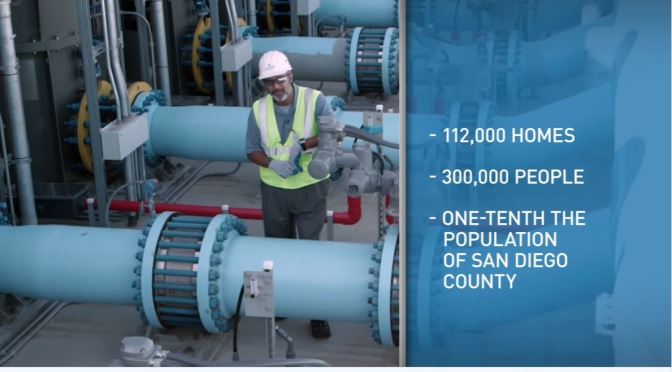
Drought: Desalination Plant Opens In California
San Diego is set to soon start supplying itself with millions of gallons a day of fresh, drinkable water, using saltwater from the Pacific Ocean, converted by a brand new desalination plant. As California’s historic drought continues, the plant will likely intensify the debate over the role of desalination may play in the state’s water supply. Special Correspondent Mike Taibbi reports.
View the Full Story/Transcript: http://www.pbs.org/newshour/bb/desali…
Political Analysis: Amy Walter And Tamara Keith On Voting Rights, Covid
NPR’s Tamara Keith and Amy Walter of the Cook Political Report join Judy Woodruff to discuss the latest political news, including how Democrats and Republicans view voting rights differently, and COVID-19 vaccinations and President Biden’s handling of the pandemic.

Finance: Why The Fed Will Create A Digital Dollar
The Federal Reserve is trying to figure out how to keep cash relevant in a cashless world. It’s considering digitizing the U.S. dollar, giving people money they can access on their phone and bypassing electronic payments that can be slow and costly for businesses. Illustration: Jacob Reynolds/WSJ
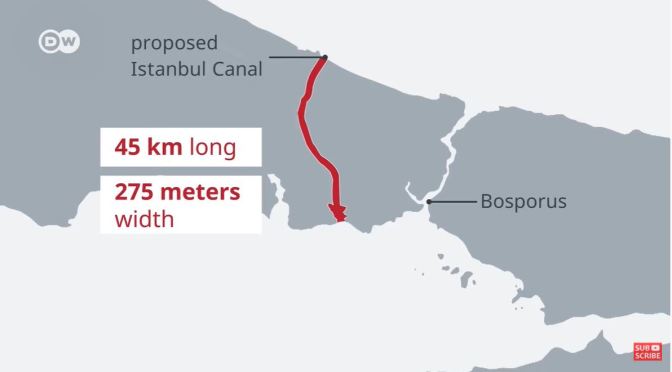
Analysis: Turkey’s ‘Canal Istanbul’ Explained (Video)
Canal Istanbul is the largest infrastructure project Turkey has ever seen. It will connect the Mediterranean to the Black Sea, and fulfill one of President Recep Tayyip Erdogan’s oldest dreams: To provide a new route, beside the Bosporus, for tankers sailing between the two seas, while at the same time boosting Turkey’s revenues. But the controversial project is pitting Turkey’s president against Istanbul’s mayor, Ekrem İmamoğlu, and the majority of the city’s citizens. So why is the canal so unpopular? And why does Erdogan want to build it anyway?
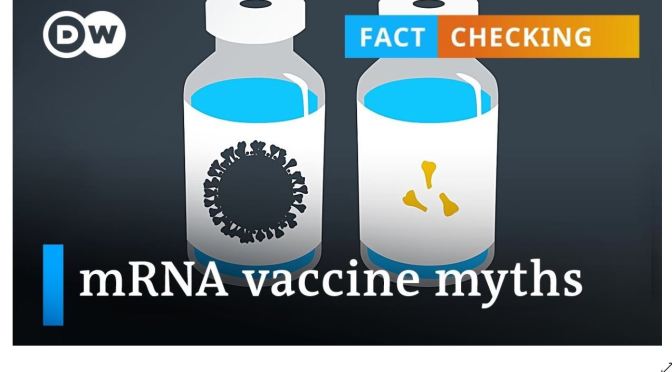
Covid-19: mRNA Vaccines Do Not Change Your DNA
With so many myths about COVID-19 vaccines regarding their impact on our health, many people don’t know what to believe. In our fact check, find out what you need to know about the mRNA vaccines — as we expose the myths and reveal the facts.
 Boomers Daily