
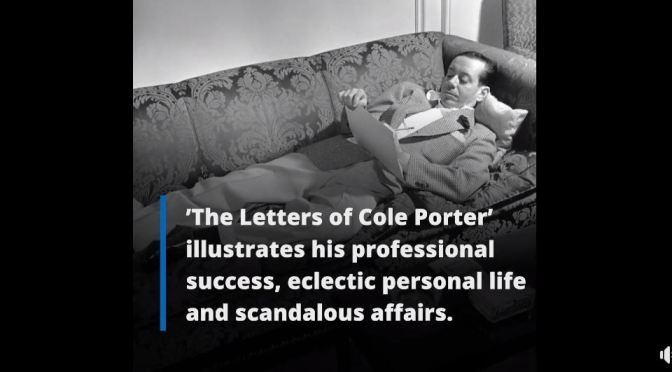
From a New Yorker online article review:
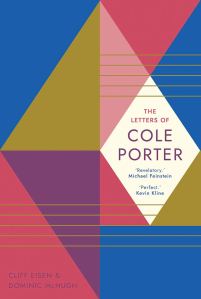 Beneath his smooth, genial, almost inhumanly productive and evasive surface, there were turbulent waters. His very name, for all its air of Ivy League ease, represents a burdened legacy. The Porters were his difficult, scapegrace father’s family; the Coles were his mother’s rich and ambitious Indiana family. He was a Porter by birth but, if his mother had anything to do with it, would be a Cole for life.
Certainly, Porter’s ghost could not ask for better care than he has been given in “The Letters of Cole Porter” (Yale), edited by Cliff Eisen, a professor of music history at King’s College London, and Dominic McHugh, a musicologist at the University of Sheffield (and the editor of Alan Jay Lerner’s letters). Laid out with a meticulous scholarly apparatus, as though this were the correspondence of Grover Cleveland, every turn in the songwriter’s story is deep-dived for exact chronology, and every name casually dropped by Porter gets a worried, explicatory footnote.

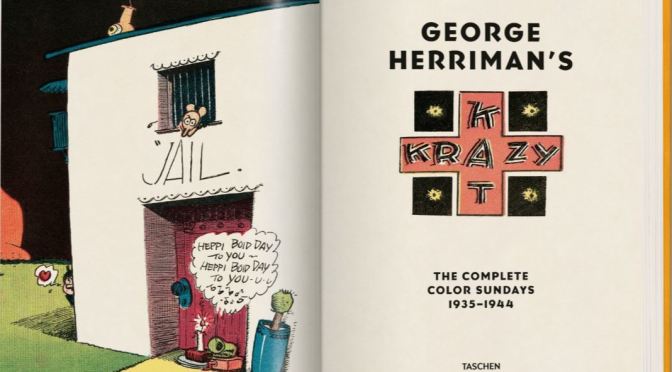
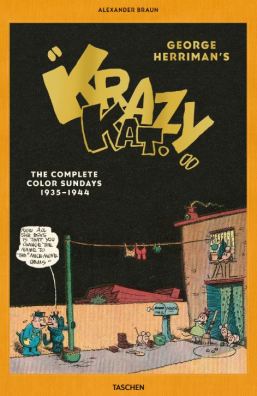 The premise is simple: a black cat loves scheming a white mouse who incessantly throws bricks at the cat’s head, which police dog Officer Pupp, secretly harboring a passionate love for the cat, tries to prevent.
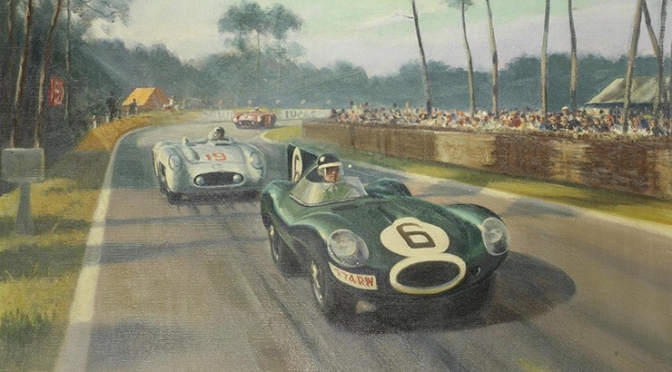
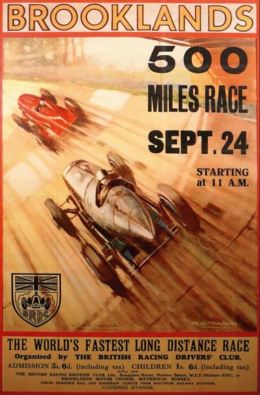 His work was displayed in many exhibitions in the UK and twenty four of his paintings were exhibited in New York in 1960. the exhibition was entitled ‘British Motoring Achievements’ and was a collection of paintings depicting outstanding performances of British cars during the previous ten years. These included the Vanwall and Cooper in Grand Prix, Monte Carlo and Alpine Rallies, speed records by MG and Austin, and Le Mans wins by Jaguar and Aston Martin.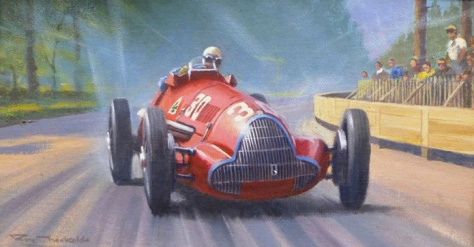
 Boomers Daily