Learn from some of the experts behind our September cover story! https://t.co/owDbTenY4T pic.twitter.com/EMxcrl1N0K
— National Geographic (@NatGeo) September 9, 2021
Reviews: How To Create Sustainable Business (MIT)
Architecture: ‘Building Bound to the Ground’
Dig deep into the origins of building. The ground, now often used as a passive foundation for going higher, is rife with possibilities. Bjarne Mastenbroek investigates the relationship architecture has, had, and will have, with site and nature. Through the photography of Iwan Baan and more than 500 analytical drawings by SeARCH, Dig it! dissects structures from the past millennia—some well-known, some previously overlooked. This global survey of nearly 1,400 pages, designed by Mevis & Van Deursen, brings architecture back in harmony with the Earth’s surface. Discover the book: https://www.taschen.com/04697yt
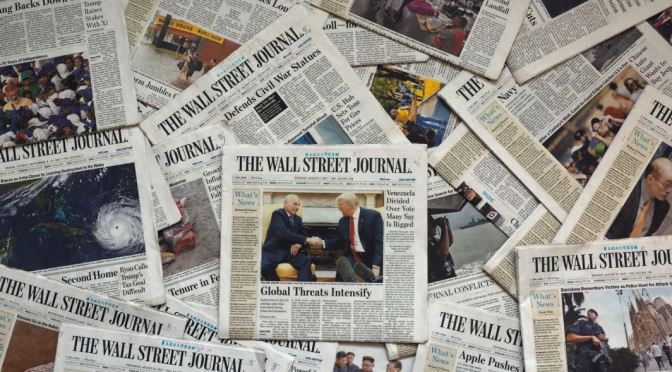
Front Page Views: Wall Street Journal – Sept 9
Morning News: Taliban’s New Government, France & Germany, Milan Fair
A look at the international reaction that Afghanistan’s new government is receiving, Emmanuel Macron’s meeting with Armin Laschet, who is hoping to be Germany’s next chancellor, and Milan’s Salone del Mobile fair.
Aerial Views: Phi Phi Islands, Thailand (4K)
The Phi Phi Islands are an island group in Thailand between the large island of Phuket and the Straits of Malacca coast of Thailand. The islands are administratively part of Krabi Province.
Walks: Old Fisherman’s Wharf & Cannery Row In Monterey, California
Monterey is a city located in Monterey County on the southern edge of Monterey Bay on California’s central coast. The Cannery Row, once a center of sardine canning factories, was immortalized by novelist John Steinbeck through his well-known novel Cannery Row.
Cannery Row is now a tourist attraction with shops, restaurants and hotels, several of which are located in former cannery buildings, and a few historic attractions. The Monterey Bay Aquarium on Cannery Row is one of the largest aquariums in North America, and several marine science laboratories, including Hopkins Marine Station are located in the area.
The Aquarium revitalized the neighborhood and it is now the number one tourist destination on the Monterey Peninsula. Monterey’s historic Fisherman’s Wharf was constructed in 1845, reconstructed in 1870 and is now a commercial shopping and restaurant district with several whale watching entities operating at the end of its pier. Used as an active wholesale fish market into the 1960s, the wharf eventually became a tourist attraction as commercial fishing tapered off in the area.
Timestamps: 00:00 – Monterey Conference Center / Portola Hotel & Spa 02:05 – Custom House Plaza 05:30 – Old Fisherman’s Wharf 14:45 – Monterey Bay Coastal Trail 26:35 – San Carlos Beach 30:35 – Cannery Row 34:45 – Monterey Bay Coastal Trail 38:30 – Cannery Row 41:25 – Steinbeck Plaza 44:00 – Cannery Row 47:30 – Monterey Bay Aquarium 51:20 – Cannery Row 58:30 – Monterey Bay Coastal Trail 1:04:30 – Welcome to the City of Monterey Sign
Science: Geology’s Billion Year Gap, End Of Leaded Gas & Lush Ancient Arabia
A new theory to explain missing geological time, the end of leaded petrol, and the ancient humans of Arabia.
In this episode:
00:29 Unpicking the Great Unconformity
For more than 150 years, geologists have been aware of ‘missing’ layers of rock from the Earth’s geological record. Up to one billion years appear to have been erased in what’s known as the Great Unconformity. Many theories to explain this have been proposed, and now a new one suggests that the Great Unconformity may have in fact been a series of smaller events.
BBC Future: The strange race to track down a missing billion years
05:23 The era of leaded petrol is over
In July, Algeria became the final country to ban the sale of leaded petrol, meaning that the fuel is unavailable to buy legally anywhere on Earth. However despite this milestone, the toxic effects of lead petrol pollution will linger for many years to come.
Chemistry World: Leaded petrol is finally phased out worldwide
08:26 The ancient humans who lived in a wetter Arabia
While much of modern day Arabia is covered by deserts, new research suggests that hundreds of thousands of years ago conditions were much wetter for periods on the peninsula. These lusher periods may have made the area a key migratory crossroads for ancient humans.
Research Article: Groucutt et al.
News and Views: Traces of a series of human dispersals through Arabia
Analysis: Covid-19 Vaccine Efficacy Explained (Video)
Recent studies have shown that the effectiveness of Covid-19 vaccines is decreasing, though experts say the shots still work well. WSJ explains what the numbers mean and why they don’t tell the full story. Photo illustration: Jacob Reynolds/WSJ
News: Top 5 Stories For September 8, 2021 (Reuters)
September 8, 2021: Biden, Texas governor, Mexico earthquake, U.S. $3.5 trillion bill, Mask Mandates
1. President Joe Biden toured sites of deadly floods in the Northeast and said Hurricane Ida demonstrated the ravages of climate change as he pressed for investments to boost infrastructure and fight global warming.
2. Governor Greg Abbott made Texas the latest U.S. state to impose Republican-backed voting restrictions, signing a law that was swiftly challenged in court and criticized by President Joe Biden as part of an “all-out assault” on American democracy.
3. A powerful earthquake struck southwestern Mexico near the beach resort of Acapulco, killing at least one man and damaging buildings, authorities said.
4. A U.S. House of Representatives committee this week will attempt to advance sweeping legislation to expand healthcare benefits for the elderly and other social services as part of Democrats’ $3.5 trillion domestic investment plan.
5. American Federation of Teachers President Randi Weingarten crouched to sit at a first-graders’ table in a Florida school, chatting with masked 6-year-olds about books and their former kindergarten teacher, Mrs. Smith.