


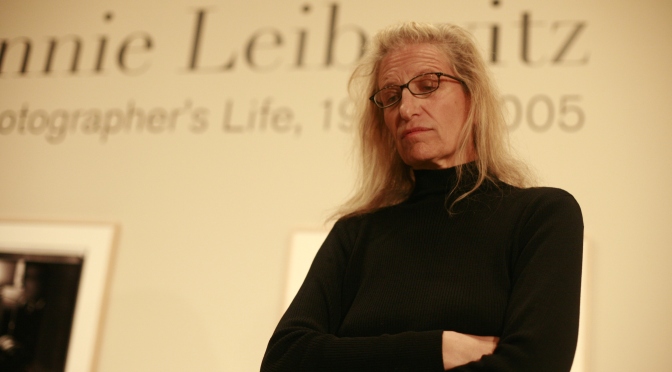
Photographers: Annie Leibovitz On Her Career, Andy Warhol, & Upcoming Show (Art Review)
From an Art Review online article:
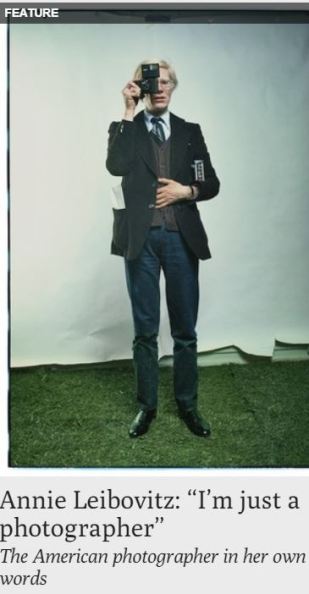 I chose to call myself a portrait photographer because labels were always being thrown on me. When I was at Rolling Stone I was a ‘rock-and-roll photographer’, at Vanity Fair I was a ‘celebrity photographer’. You know, I’m just a photographer. I realised I wasn’t really a journalist. I have a point of view and, while these photographs that I call portraits can be conceptual or illustrative, that keeps me on the straight and narrow. So I settled on this brand called ‘portraits’ because it had a lot of leeway. But I don’t think of myself that way now: I think of myself as a conceptual artist using photography.
 I remember going to the Factory in 1976 and watching Andy Warhol work. I’d been there before, earlier in the 70s, photographing Joe Dallesandro and Holly Woodlawn, and then Paul Morrissey. Warhol was a fixture of New York. It was just shocking when he died, because he was everywhere. I don’t know how he did it, but he was out at everything. You felt that if he was at a place you were at, then you were at the right place.
Warhol had things everywhere in the Factory – silkscreens all over the place, and tables of artwork – and things were always going on. I think Fran Lebowitz was there for Interview magazine, and [Warhol] was photographing the sisters from Grey Gardens [1975]. I was just a fly on the wall: there were people milling around doing all kinds of things, it was a pretty active place.
To read more: https://artreview.com/features/ara_winter_2019_annie_leibovitz/

Top Arts Podcasts: “The Lives Of Titian” (The Getty)
 One of the most successful artists of the Italian Renaissance, Titian was the master of the sixteenth-century Venetian school and admired by his royal patrons and fellow artists alike. Several of his contemporaries, including the authors and art theorists Giorgio Vasari, Francesco Priscianese, Pietro Aretino, and Ludovico Dolce, wrote accounts of Titian’s life and work.
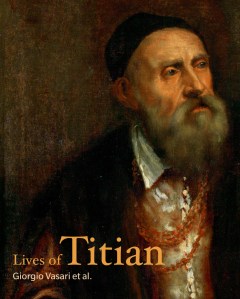 In this episode, Getty assistant curator of paintings Laura Llewellyn discusses what these “lives” teach us about Titian and the artistic debates and rivalries of his time. All of these biographies are gathered together in Lives of Titian, recently published by the Getty as part of our Lives of the Artists series.
Website: https://blogs.getty.edu/iris/podcast-the-lives-of-titian/

Celebrity Book Reviews: “Touched By The Sun” By Singer Carly Simon (WSJ)
From a Wall Street Journal online review:
 The complementary pair—Onassis the sophisticate, and Simon the nervous hippie—were close until Onassis died in 1994. Over a sprawling conversation, Simon discussed seeing the “goofy” side of Onassis, what she misses about performing and what she envied about Onassis.
Carly Simon has a voice that fits the Shakespearean ideal: “ever soft, gentle, and low.” The 74-year-old singer and writer has a mind that wanders before suddenly homing in on a detail with the perfectly chosen phrase or word. As in her new book, Touched by the Sun: My Friendship with Jackie, about her unlikely camaraderie with Jacqueline Kennedy Onassis, she is chronically honest about her feelings and her experiences.
Touched by the Sun, Simon says, started off as a broader project about some of the important women who have influenced her. But she kept coming back to her friend Onassis, whom she met on Martha’s Vineyard. Simon spoke to WSJ. by phone from the island, sitting on her bed in the house where she’s lived since 1971—and where she also keeps four dogs, two donkeys, two miniature horses, sheep, a few goats, an organic vegetable garden and a flower and herb garden. Not to overlook the miniature horse rink.
To read more: https://www.wsj.com/articles/carly-simon-jacqueline-kennedy-onassis-book-marthas-vineyard-11574687335

Debates: “AI Will Bring More Harm Than Good” (Cambridge Video)
MOTION:
“This House Believes AI Will Bring More Harm Than Good”
This debate was run in association with IBM Research.

Proposition:
Project Debater Project Debater is designed by IBM research. It will deliver a speech based on over 1,100 arguments collected from Union members and others over the past week. It will not be taking points of information.
Sharmila Parmanand
Sharmila Parmanand is a PhD Candidate in Gender Studies at the University of Cambridge and a Gates Scholar. She has served as a debate trainer or chief judge in debating events in 45 countries. She served as a chief judge for most major global debating competitions (World Universities, World Schools, European Universities, Asian Universities, Austral-Asian Universities, North American Universities, and PanAmerican Universities).
Professor Neil Lawrence
Neil Lawrence is the DeepMind Professor of Machine Learning at the University of Cambridge and the co-host of Talking Machines. Neil’s main research interest is machine learning through probabilistic models. He focuses on both the algorithmic side of these models and their application. His recent focus has been on the deployment of machine learning technology in practice, particularly under the banner of data science.
Opposition
Project Debater
Project Debater is designed by IBM research. It will deliver a speech based on over 1,100 arguments collected from Union members and others over the past week. It will not be taking points of information.
Harish Natarajan
Harish Natarajan is a graduate of the University of Oxford and the University of Cambridge. He was a grand fnalist and 2nd best speaker at the 2016 World Debating Championships and won the European Debating Championship in 2012. Harish holds the record for most competition victories. He currently works as the Head of Economic Risk Analysis at AKE International in London.
Professor Sylvie Delacroix
Sylvie Delacroix is professor in Law and Ethics at the University of Birmingham. Her work has notably been funded by the Wellcome Trust, the NHS and the Leverhulme Trust, from whom she received the Leverhulme Prize. She has recently been appointed to the Public Policy Commission on the use of algorithms in the justice system.
Website: https://www.cus.org/

Artist Profiles: “Van Gogh & Gaughin” Controversy Anaylized By Author Bernadette Murphy (National Gallery Video)
Gauguin’s stay at the Yellow House is mired in controversy. What really happened? Bernadette Murphy, author of ‘Van Gogh’s Ear: The True Story’, considers those fateful days from Gauguin’s point of view.
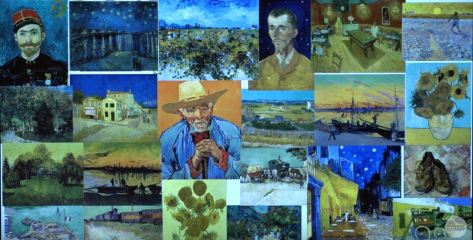
 The Credit Suisse Exhibition: Gauguin Portraits 7 October 2019 – 26 January 2020 Book tickets online and save, Members go free: https://bit.ly/2IspPWH
The first-ever exhibition devoted to the portraits of Paul Gauguin. Spanning his early years as an artist through to his later years spent in French Polynesia, the exhibition shows how the French artist revolutionised the portrait.
Exhibition organised by the National Gallery and the National Gallery of Canada, Ottawa.

Top Political Podcasts: Tamara Keith And Amy Walter Discuss Latest In Washington (PBS)
 NPR’s Tamara Keith and Amy Walter of the Cook Political Report join Judy Woodruff to discuss the latest political news, including whether two weeks of public impeachment hearings have shifted public opinion about President Trump and the investigation into his Ukraine policy, potential pressure on Republican lawmakers and the late entrance of Michael Bloomberg into the 2020 Democratic race.
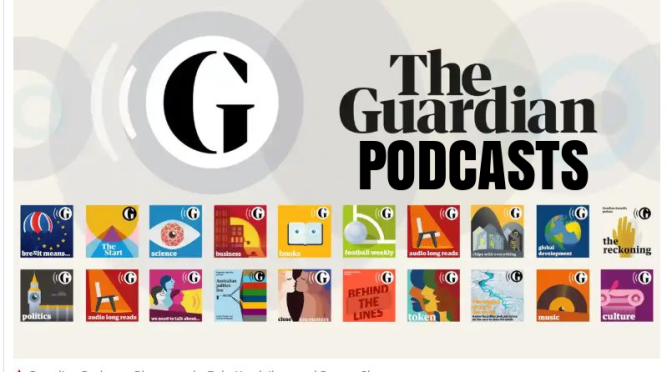
Media: “The Rise Of Netflix – An Empire Built On Debt” (The Guardian Podcasts)
 Netflix has risen from obscurity to be one of the most powerful media companies in the world with more than 150 million global subscribers. It has launched critically acclaimed hits such as House of Cards, The Crown and Unbelievable, as well as showcasing the back catalogues of popular television series. But as part of its rapid growth, the company has racked up huge debts.

Joining Anushka Asthana to discuss the long-term sustainability of Netflix are the TV critic Mark Lawson and the Guardian’s deputy business editor Dan Milmo.

Profiles: Remembering “Postmodernist” Theorist & Architecture Historian Charles Jencks (1939-2019)
From an Apollo Magazine article:
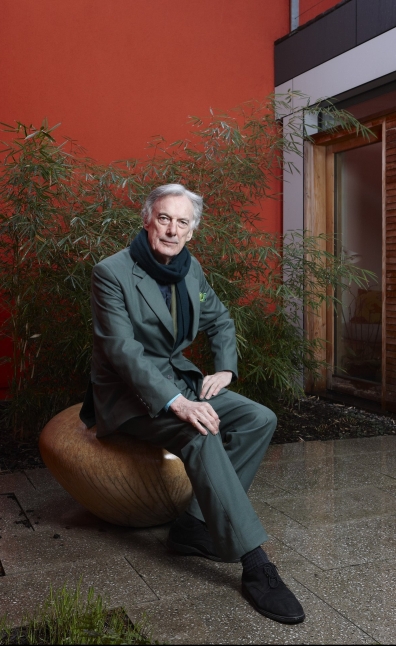 Jencks’s book grew out of his PhD thesis, supervised by Reyner Banham at the University of London in the late 1960s, and paved the way for his later, more explicitly polemical The Language of Post-Modern Architecture (1977). In this bestselling book, Jencks set out his stall for a pluralist architecture that rejected what he saw as modernism’s reductive ‘univalent’ approach, swapping it for a symbolically rich and historically engaged ‘multivalent’ postmodernism. For good or bad it became the defining book of its era, an unabashed rejection of mainstream modernism that ushered in a new architectural style.
 Modern Movements in Architecture (1973) by Charles Jencks was one of the first books on architecture I read, a birthday present given to me the summer before I started my degree. In some ways, it spoiled things: I thought all architecture books would be that much fun. Modern Movements in Architecture is a complex and sophisticated history, but it wears its learning lightly. It relates architecture to a wider cultural discourse and it is unafraid to be critical, even of some architects, such as Mies van der Rohe, who were previously considered to be above criticism.
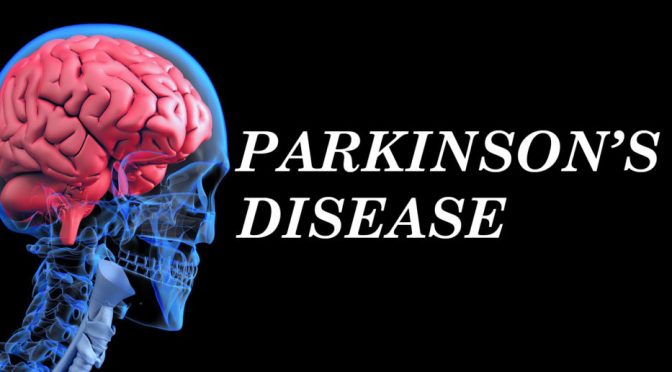
Studies: High Usage Of Commonly Used Oral Antibiotics Increases Risk Of Parkinson’s Disease
From a Neuroscience News & Research online article:
 “The link between antibiotic exposure and Parkinson’s disease fits the current view that in a significant proportion of patients the pathology of Parkinson’s may originate in the gut, possibly related to microbial changes, years before the onset of typical Parkinson motor symptoms such as slowness, muscle stiffness and shaking of the extremities. It was known that the bacterial composition of the intestine in Parkinson’s patients is abnormal, but the cause is unclear. Our results suggest that some commonly used antibiotics, which are known to strongly influence the gut microbiota, could be a predisposing factor,” says research team leader, neurologist Filip Scheperjans MD, Ph.D. from the Department of Neurology of Helsinki University Hospital.
Higher exposure to commonly used oral antibiotics is linked to an increased risk of Parkinson’s disease according to a recently published study by researchers from the Helsinki University Hospital, Finland.
The strongest associations were found for broad-spectrum antibiotics and those that act against anaerobic bacteria and fungi. The timing of antibiotic exposure also seemed to matter.
The study suggests that excessive use of certain antibiotics can predispose to Parkinson’s disease with a delay of up to 10 to 15 years. This connection may be explained by their disruptive effects on the gut microbial ecosystem.
 Boomers Daily