

From a New Atlas online article (Jan 1, 2020):
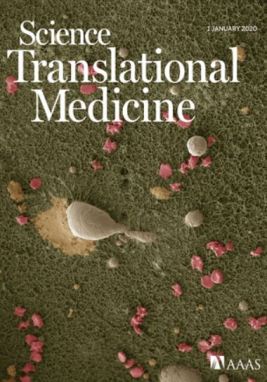 “This is an entirely new approach with no current treatments able to change scar in this way,” says Associate Professor James Chong who led the research. “By improving cardiac function and scar formation following heart attack, treatment with rhPDGF-AB led to an overall increase in survival rate in our study.”
The research centers on a protein therapy called recombinant human platelet-derived growth factor-AB (rhPDGF-AB), which had previously been shown to improve heart function in mice that had suffered a heart attack. In a new study aimed at bringing the treatment closer to human trials, a team set out to discover if it produced similar results in large animals, namely pigs.
The researchers from the Westmead Institute for Medical Research (WIMR) and the University of Sydney found that when pigs that had suffered a heart attack received an infusion of rhPDGF, it did indeed prompt the formation of new blood vessels in the heart and led to a reduction of potentially fatal heart arrhythmia.

 The podcast team share some of their highlights from the past 12 months:
 Hundreds of miles south of Japan’s main islands, in the East China Sea, is a Jurassic Park of longevity, with a higher percentage of centenarians (people who live to 100 years old) than anywhere else on Earth.




 Rossini’s 1829 opera “William Tell” is rarely performed today, but its Overture lives on as one of the most popular works in the classical repertoire. The Overture is essentially an instrumental suite written in four parts and performed without pause. The best-known section is the last, the allegro vivace, famously used as the rousing theme music for “The Lone Ranger” radio and TV series (and notoriously so in “A Clockwork Orange).



 Boomers Daily