

Infographic: The ‘3 Types Of Covid-19 Vaccines’

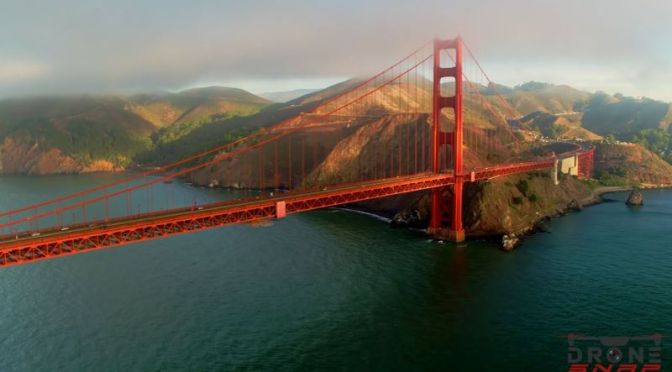
The Golden Gate Bridge stands at the entrance to California’s San Francisco Bay as a symbol of American ingenuity and resolve, having been constructed during the era of the Great Depression. Today, this beloved international icon and true engineering marvel carries about 40 million vehicles a year and serves not only as a vital transportation link but also as a major travel destination for millions of visitors from around the world.
Construction began on January 5, 1933. This was followed by the official ground breaking ceremony held on February 26, 1933, at nearby Crissy Field (now part of the Golden Gate National Recreation Area). The start of construction was met with great delight. A celebration at nearby Crissy Field went on for hours with at least 100,000 people in attendance. The San Francisco newspaper wrote the next day, “Two hundred and fifty carrier pigeons, provided by the San Francisco Racing Pigeon Club to carry the message of groundbreaking to every corner of California, were so frightened by the surging human mass that small boys had to crawl into their compartments in the bridge replica to shoo them out with sticks.”
December 22, 1932: Extending from Fort Baker pier, the construction of a 1,700 foot-long access road began to access the construction sites for the Marin anchorage, pier and tower.
January 5, 1933: Construction officially started.
January 1933 to February 1936: Marin and San Francisco anchorages and associated pylons.
January 1933 to May 1935: San Francisco anchorage.
January 1933 to June 1933: Marin pier.
January 1933 to June 1935: Marin anchorage.
February 1933: Work began on the east approach road from San Francisco that extended through the Presidio to the south end of the Golden Gate Bridge.
March 1933: Steel for the San Francisco and Marin towers that was prefabricated in Bethlehem steel foundries in Pottstown and Steelton, PA was brought by flatcar to Philadelphia and transferred to barges and shipped through the Panama Canal to Alameda, CA where it was stored until the Marin pier was completed and ready for tower erection.
March 1933 to March 1934: San Francisco tower access trestle was constructed extending 1100 feet offshore. Just as the trestle was completed, it was significantly damaged for the first time on August 14, 1933, when the McCormick Steamship Line’s Sidney M. Hauptman plowed through the thick fog and crashed into the access trestle, damaging about 400 feet. After repairs were made, on December 13, 1933, as a southwest gale battered the Golden Gate Strait for two days, the access trestle was again battered and this time there was 800 feet of wreckage. Trestle repairs began shortly thereafter and completed March 8, 1934.
November 7, 1933: Marin tower construction started. Depending on the source referenced, it was completed either on June 28, 1934 or sometime in November 1934.
October 24, 1934: San Francisco fender wall completed.
November 27, 1934: San Francisco pier area within the fender wall was un-watered.
January 3, 1935: San Francisco pier reached its final height of 44 feet above the water.
January 1935 to June 28, 1935: San Francisco tower construction.
August 2, 1935 to September 27, 1935: Harbor Tug and Barge Company strung the first wire cables to support the footwalks (aka catwalks) constructed across the Golden Gate Strait in preparation for main cable spinning.
October 1935 to May 1936: Main cable spinning and compression.
April 1936: Start of the Sausalito lateral approach road which was constructed as a W.P.A. project.
July 1936 to December 14, 1936: Suspended structure.
July 21, 1936: Start of San Francisco approach viaduct structures and Fort Point arch construction.
November 18, 1936: Two sections of the Bridge’s main span were joined in the middle. A brief ceremony marked the occasion when groups from San Francisco and Marin met and exchanged remarks at the center of the span. Major Thomas L. McKenna, Catholic Chaplin of Fort Scott, blessed the span while sprinkling holy water.
January 19, 1937 to April 19, 1937: Roadway completed.
Escape your everyday life with these 9 lion videos that’ll transport you as you watch them protect their young, encounter crocs, and so much more.
Video Timeline: 0:00 – Intro to Top 9 Big Cat Videos 0:35 – Lost Lion Reunites w/ His Brother 4:26 – Lioness Protects Her Young 8:05 – Lion Cubs Have a Close Call w/ a Croc 11:36 – Lazy Lions Rely on Lionesses 14:50 – How Lions Choose Their Prey 18:53 – Young Lions Cross Croc-Infested Waters 22:28 – Lioness Guards Her Dinner 24:34 – Lioness Must Kill to Feed Her Cub 27:18 – Angry Hippo Charges Trespassing Lion
From Big Cat Country: https://bit.ly/3j4hgkh
Taiwanese Street Food – 台灣街頭美食 / Night Market, New Taipei City, Taiwan.
Taiwan probably has the best night market scene in the world and some of the most exciting street food in Asia. With little space at home to cook, the Taiwanese prefer to head out almost every night to the heaving markets for the cheap snacks – or xiaochi – that are found across the island – on corners, in clusters of food-devoted streets or at one of over 100 night markets. Those with no language skills simply stand in front of the stall, point to what they want and use their digits to say how many. Stallholders then write the price down, with dishes generally costing between 60p and £1.20. (From The Guardian)
New Taipei City is a special municipality and the most populous city in Taiwan. Located in northern Taiwan, the city includes a substantial stretch of the island’s northern coastline and surrounds the Taipei Basin, making it the second largest special municipality by area, behind Kaohsiung.
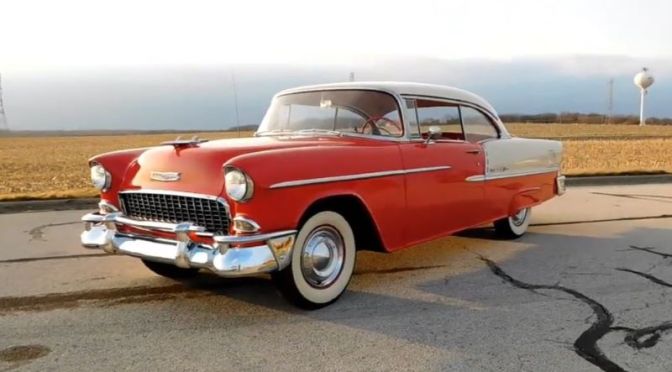
The 1955 Chevrolet (sometimes referred to as ‘55 Chevy) is an automobile which was introduced by Chevrolet in Autumn 1954 for the 1955 model year. It is considered a huge turning point for the manufacturer and a major success. It was available in three models: the 150, 210, and Bel Air.
The ’55’s top trim offering was the Bel-Air, which had more chrome than the 150 or 210. The Bel-Air, 210 and 150 model could be bought as a four-door, or could be bought as a two door with a post between the front and rear passenger windows, known as the two-door sedan.
The Bel-Air or 210 model could also be had as a two door with no post between the side windows. This was known as the sport coupe, or better known by collectors as “the two door hardtop”. Since this model had no post between the two side windows, it had a shorter roof and longer rear deck than the two door sedan had. Chevy also offered a convertible, with the same shorter roof and longer rear deck as the sport coupe, and it was offered in Bel-Air trim only.
1955 also saw the introduction of the Bel Air Nomad, a sporty two-door station wagon which featured frameless door glass and elongated side windows. The unique roof design of the Nomad came directly from the 1954 Corvette Nomad, a “dream car” designed to be shown at auto shows as a concept sport wagon. Although regarded as one of the most beautiful station wagon designs of Fifties, the Nomad sold poorly, partly due to its price tag (one of the most expensive models in the Bel Air lineup) as well as its lack of four doors. Also the Nomad’s two-piece tailgate design was prone to let excess rainwater leak through to the interior.
The ’55 offered a wide array of colors. One solid color, which was standard for the 150, could be had for the 210 or Bel Air…or nineteen different two-tone color combinations were also available.
Most of Bath’s buildings are made from the local, golden-coloured, Bath Stone. The dominant architectural style is Georgian, which evolved from the Palladian revival style that became popular in the early 18th century. The city became a fashionable and popular spa and social centre during the 18th century.
Filmed in December 2020.
Video timeline: 0:00 Marlborough Street 0:08 St James’s Square 1:22 Park Street 8:15 Lansdown Place East 9:07 Lansdown Crescent 11:44 Lansdown Place West 13:18 Somerset Place 16:10 Sion Hill 16:22 Cavendish Road 16:52 Cavendish Crescent 19:43 Bath Approach Golf Course
Sri Lanka, officially the Democratic Socialist Republic of Sri Lanka is an island country in South Asia, located in the Indian Ocean southwest of the Bay of Bengal and southeast of the Arabian Sea. Sri Lanka has been called “the pearl of the Indian ocean” because of its shape and location.
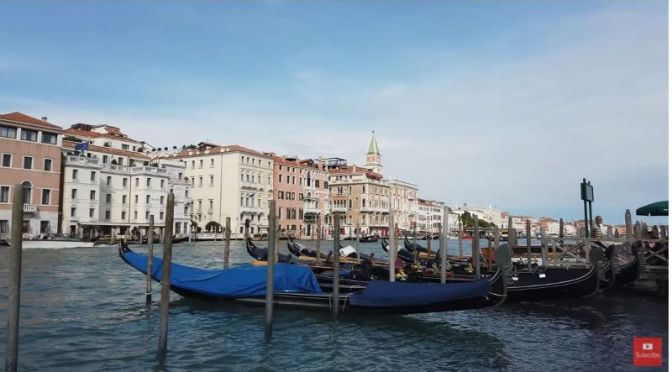
Venice, the capital of northern Italy’s Veneto region, is built on more than 100 small islands in a lagoon in the Adriatic Sea. It has no roads, just canals – including the Grand Canal thoroughfare – lined with Renaissance and Gothic palaces. The central square, Piazza San Marco, contains St. Mark’s Basilica, which is tiled with Byzantine mosaics, and the Campanile bell tower offering views of the city’s red roofs.
Filmed in September 2020
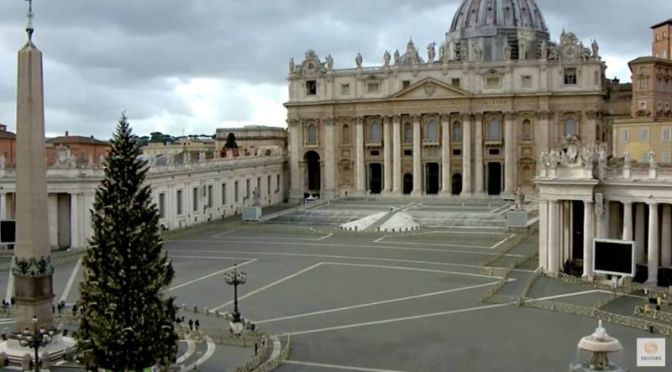
St. Peter’s Square was eerily empty on Christmas Day Friday as Italians are under a nationwide lockdown for much of the Christmas and New Year holiday period.
St. Peter’s Square is a large plaza located directly in front of St. Peter’s Basilica in the Vatican City, the papal enclave inside Rome, directly west of the neighborhood or rione of Borgo. Both the square and the basilica are named after Saint Peter, an apostle of Jesus considered by Catholics to be the first Pope.
Havana is Cuba’s capital city. Spanish colonial architecture in its 16th-century Old Havana core includes the Castillo de la Real Fuerza, a fort and maritime museum. The National Capitol Building is an iconic 1920s landmark. Also in Old Havana is the baroque Catedral de San Cristóbal and Plaza Vieja, whose buildings reflect the city’s vibrant architectural mix.
Cuba, officially the Republic of Cuba is a country comprising the island of Cuba, as well as Isla de la Juventud and several minor archipelagos. Cuba is located in the northern Caribbean where the Caribbean Sea, Gulf of Mexico and Atlantic Ocean meet.





 Boomers Daily