Books: ‘Pre-Fab Living’ – A “Golden Age Of Housing”

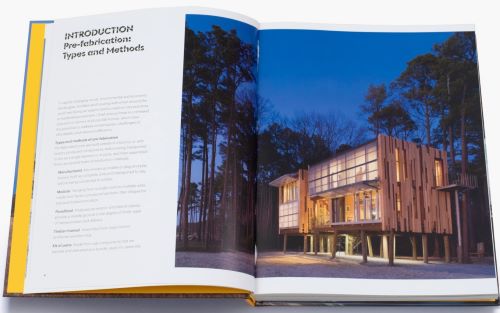
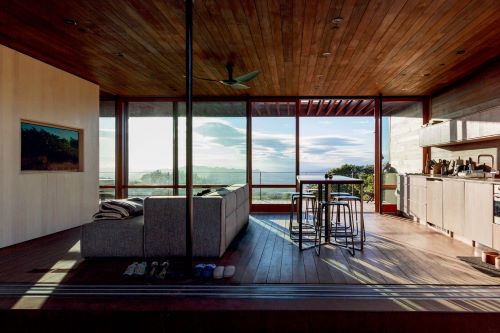
From net-zero houses to plug-and-play dwellings and converted shipping containers, each chapter explores the varied and exciting ways that architects and designers are using pre-fabricated technology to address today’s living and world challenges.
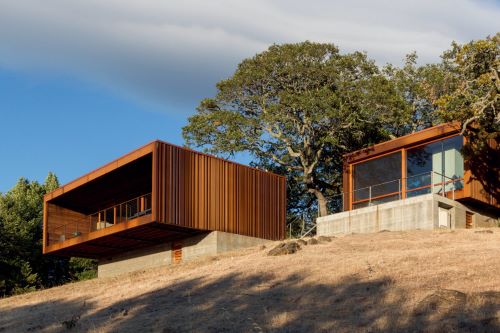
This survey of the world’s most innovative and successful examples of pre-fabricated homes explores the full range of possibilities, open to anyone seeking to find clever and up-to-date solutions for building their own home.

A reference section includes in-depth essays, which explore the latest manufacturing methods, trends and technologies, presenting a wide range of possibilities to suit every need, taste and desire.

Richly illustrated with photography and drawings, with projects selected by a long-time expert in pre-fab architecture, this fresh take on new solutions presents the factory-made house in a new light. Whether designing on a tight budget, crafting something self-sustaining or simply looking for new spatial ideas, this is an essential and future source of inspiration for architects, designers and home-builders.


Read more

Video Trailer: ‘Exploring Hemingway’ – A Film By Ken Burns & Lynn Novick (PBS)

Get an inside look at Hemingway and discover why Ken Burns and Lynn Novick chose to explore the complex and iconic writer. Hemingway premieres April 5, 2021 on PBS.

Media Streaming: ‘How Disney+ Quickly Became A Top-Tier Player’ (WSJ)

The launch of Disney+ has brought a bit of magic to a company whose stock had taken a nosedive after the coronavirus shut down theme parks and movie theaters. WSJ explains how Disney’s streaming platform has become a top competitor in an already crowded field. Photo illustration: Jacob Reynolds/WSJ

Walks In Snow: ‘Haarlem – Netherlands’ (4K Video)

Haarlem is a city outside of Amsterdam in the northwest Netherlands. Once a major North Sea trading port surrounded by a defensive wall, it retains its medieval character of cobblestone streets and gabled houses. It’s the center of a major flower-bulb-growing district, and famous for its outlying tulip fields, art museums and hofjes (almshouses built around leafy courtyards).

Village Walks: ‘Barbarano Romano – Italy’ (4K Video)

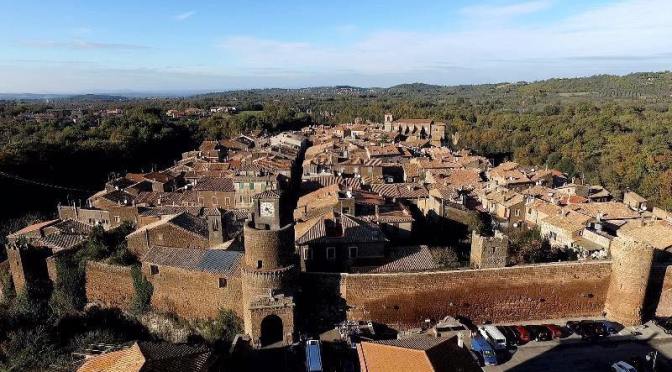
Barbarano Romano is a comune in the Province of Viterbo in the Italian region Latium, located about 50 kilometres northwest of Rome and about 20 kilometres south of Viterbo. Barbarano Romano borders the following municipalities: Blera, Capranica, Vejano, Vetralla, Villa San Giovanni in Tuscia. 

Video timeline: 0:00​ – [Brief Intro] 2:05​ – [Tour begins] 2:28​ – [*Roman Gate*] 7:50​ – [*Church of St.Angel*] 12:44​ – [Via Roma] 13:54​ – [Largo di Porta Canale] 17:30​ – [*Municipal Palace*] 18:28​ – [*Church of St.Maria Assunta*] 26:00​ – [Panormaa on the countryside] 26:30​ – [Back into the town] 30:42​ – [*Church of the Cross*] 33:00​ – [Back into the town] 39:54​ – [Via Garibaldi] 42:23​ – [*City Walls*]

The town consists of a first nucleus probably dating back to the 10th century, to which are added various buildings, from the 13th to the 17th century. It constitutes an example of a medieval village, with a main central road flanked by two secondary parallels, stretched on the wedge between two gorges and closed by walls with quadrilateral open-gorge towers dating back to 14th century, further lined by a wall towards the end of the 15th century with the addition of circular towers. The volcanic hill on which the town stands was probably the seat of a village from the Ancient Bronze Age in prehistoric times, as attested by the numerous artefacts identified at the foot of the acrocoro. However, news of a permanent settlement only dates back to the Middle Ages. Almost at the end of the main street, Via Vittorio Emanuele, until 1930 stood a pentagonal tower that was left over from a Longobard fortress, known as Desiderio – the last Lombard King who around 771 fortified Viterbo and the nearby villages to counter the Franks of Charlemagne. An original marble plaque from 1280 – located at the entrance to the main church of S. Maria Assunta – indicates that it was built in 1280, during the vacant seat of the papacy following the death of Pope Nicholas III Orsini. Barbarano was therefore part of the Longobard Roman Duchy which, following the donation of Liutprando in 728, had then become a possession of the Church in the eighth century. Feud of the Anguillara family in the 14th century, then it passed to the Orsini and finally to the Borgias in the 15th century.

Innovation: ‘Norrbotten, Sweden’ – “Arctic Green”

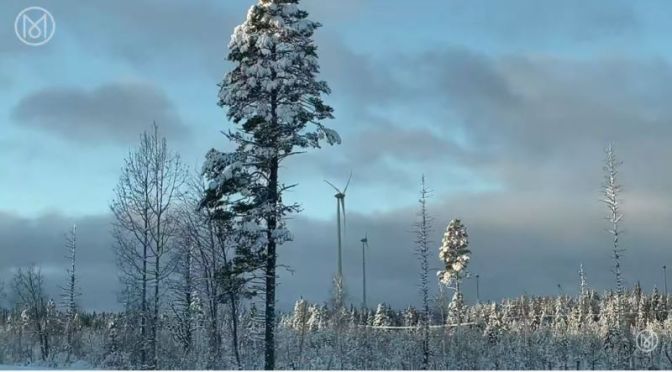
Norrbotten in Sweden is blessed with natural resources but more recently has been turning heads because of its growing roster of innovative start-ups. We bear witness to the region’s effort to change heavy industries into clean businesses.

Norrbotten County is the northernmost county or län of Sweden. It is also the largest county by land area, almost a quarter of Sweden’s total area.

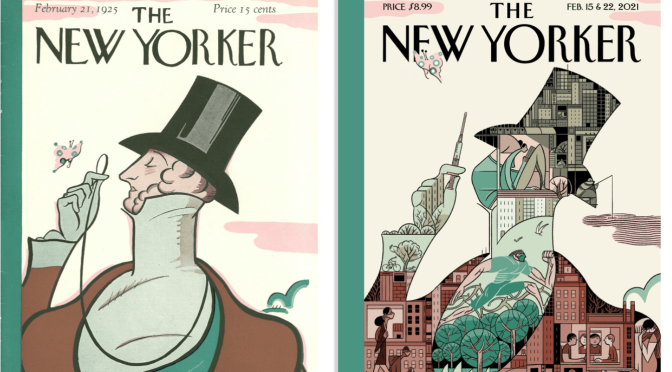
Illustrations: ‘The New Yorker Cover’ (1925-2020)

For The New Yorker’s ninety-sixth anniversary, Sergio García Sánchez draws the magazine’s trademark dandy, Eustace Tilley, masked and with a vaccine dose in hand. We also see scenes of pandemic life, and the contours of a city waiting to reëmerge.

“With masks, social distancing, and vaccines, we’ll slowly recover life in the city,” Sánchez told us. “The chance encounters with people of all cultures; the thrill of eating outside at any hour. The city is a container for so many stories, and soon they’ll be out in the open again.”

This is Sánchez’s début cover, but he isn’t the first to reimagine our mascot. When Rea Irvin, the magazine’s inaugural art editor, drew a Regency dandy for the first issue, in February, 1925, he likely wanted readers to laugh—this self-serious gentleman was a caricature of the dour, bourgeois old guard. A year later, to celebrate The New Yorker still being afloat, Irvin and the magazine’s editor, Harold Ross, decided to republish the cover, establishing an anniversary tradition that endures to this day. Tilley, of course, has changed with the times, and we’ve collected, below, a few of the ways in which artists have remade him.

Read more

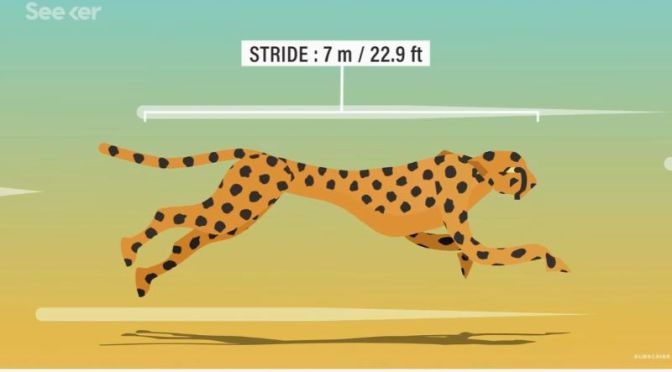
Wildlife Science: ‘Why Cheetahs Are So Fast’

Cheetahs are the fastest land animals on Earth. So what’s the secret to their incredible speed?

A cheetah has a short muzzle, small canines, and other features to help reduce the overall weight of its head. All this results in a skull that weighs around 500 grams. That’s just over a pound. Now, cheetahs need this light skull to make space for a large nasal cavity. Because cheetahs need LOTS of oxygen. To help meet this need, they have large nostrils that allow for quick and large intakes of air while the cheetah’s large chest holds its lungs and heart, which work together to help circulate the oxygen throughout its body. And that’s crucial, since a cheetah can take anywhere between 60 to 150 breaths per minute. This is a drastic increase, since at rest, a cheetah takes in about 9 breaths per minute. That means that when these cats really get going, their breathing rate goes up to SIXTEEN TIMES faster. What’s even more fascinating is that while running, you’ll notice that a cheetah’s head doesn’t move. It stays incredible still.

Morning News Podcast: Impeachment Trial Begins, Stimulus Legislation

Democrats’ plan offers $1,400 stimulus checks at same income levels as previous rounds, Former President Trump’s lawyers call impeachment trial political theater, Cincinnati ‘tip war’ raises over $34,000 for restaurant workers in hometown rivalry.

News, Views and Reviews For The Intellectually Curious