Will the coronavirus pandemic lead to long-term changes in how we shop for food? To better understand the challenges facing grocery stores, WSJ’s Alexander Hotz spoke with an industry insider, a store owner and a Walmart executive.
The spread of misinformation is crippling our fight against the coronavirus. Social media and a deeply partisan divide are fueling what the World Health Organization calls an “infodemic,” which is just as urgent as the virus itself.

With investigations into everything from black holes to exoplanets, the Hubble Telescope has changed not only the face of astronomy but also our very sense of being in the universe. On the 30th anniversary of its launch into low-earth orbit, this updated edition of Expanding Universe presents 30 brand new images, unveiling more hidden gems from the Hubble’s archives.

Ultra-high resolution and taken with almost no background light, these pictures have answered some of the most compelling questions of time and space while also revealing new mysteries, like the strange “dark energy” that sees the universe expanding at an ever-accelerating rate.
The collection is accompanied by an essay from photography critic Owen Edwards and an interview with Zoltan Levay, who explains how the pictures are composed. Veteran Hubble astronauts Charles F. Bolden, Jr. and John Mace Grunsfeld also offer their insights on Hubble’s legacy and future space exploration.
When it comes to getting from A to B, the future is electric. From autonomous cars in tomorrow’s smart cities, to e-scooters and flying taxis, the FT’s Daniel Garrahan looks at just how far electricity will take us.
In recent weeks, protests have erupted in response to police violence against citizens – specifically communities of color – forcing departments to reconsider how officers do their jobs. Police forces have been using tech – like Tasers and body cameras – to try and reduce the use of lethal force and improve accountability.
In this episode, we’ll explore how emerging technology – like virtual reality training – could improve police training by boosting empathy and tackling racial bias.
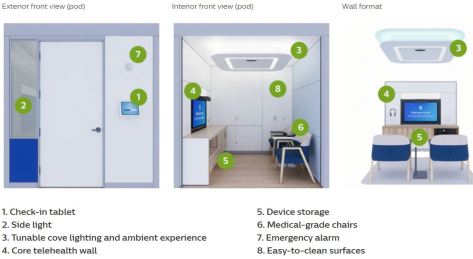
Diagnostics World (June 30, 2020): The shift from face-to-face patient visits to remote medical appointments is a worldwide phenomenon, but most especially in the U.S., finds a recent global survey conducted by the doctors-only social networking platform Sermo. Unsurprisingly, Zoom tops the list of most-mentioned technologies. About one-fifth of surveyed doctors say they expect to be using telehealth tools “significantly” more post-pandemic than before COVID-19 upended business as usual.

Island is a double-decker driverless tram designed for the city of Hong Kong in the post-Covid era. This highly innovative design concept incorporates industrial design, transportation design, public design, urban mobility and sustainability.
The project includes exterior, interior and tram stop design. With the Coronavirus pandemic, people are shunning public transport and relying much more on private transport.
The name Island references the innovative design of the interiors, where large circular benches facilitate social distancing and passengers sit facing outwards in a radial pattern. The exterior design is inspired by the Hong Kong urban landscape, which features vast surfaces of glass and rounded-corner buildings. Natural light floods the interiors during the day through the curved windows and a domed top, which also provide awe-inspiring views at night.
The driverless technology optimizes the interior space of the tram, making it easier to manage travel times and increase onboard safety. The tram has a retractable connector for rapid charging at tram stops. Large vertical LEDs enhance visibility in all weather conditions. The interior design contrasts with the exterior.

Minimalist design, charcoal black walls, soft circular seating, wooden floors and trims with natural finish all create a neutral and friendly environment. This chromatic diversity, in addition to the dark color palette, frames and accentuates the beauty of the Hong Kong urban landscape.
QuenchSea is an innovative technology that combines a hydraulic system, triple pre-filtration and a small reverse osmosis membrane to desalinate seawater into freshwater using manual human power. At sea or on the coast, convert seawater into clean fresh drinking water instantly.

H4D facilitates access to healthcare by allowing patients to consult a doctor remotely in the Consult Station®, the first connected local telemedicine booth. This medical device allows quality healthcare to be delivered for primary care, occupational health, and general health promotion.

You can enjoy everything about your Bevi machine with touchless dispensing from your mobile. Available July 13th for all new and existing Bevi machines.