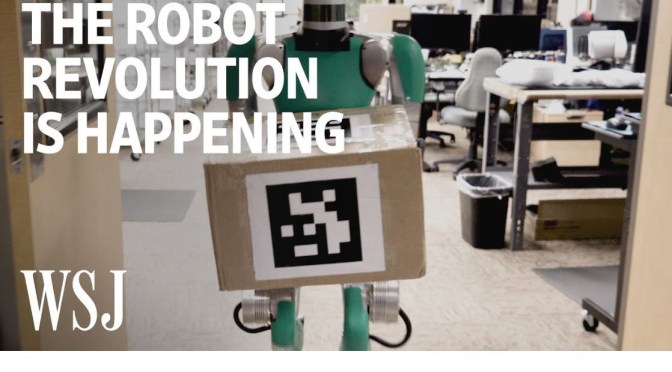
Nearly every company across every industry is looking for new ways to minimize human contact, cut costs and address the labor crunch in repetitive and dangerous jobs. WSJ explores why many are looking to robots as the solution for all three.
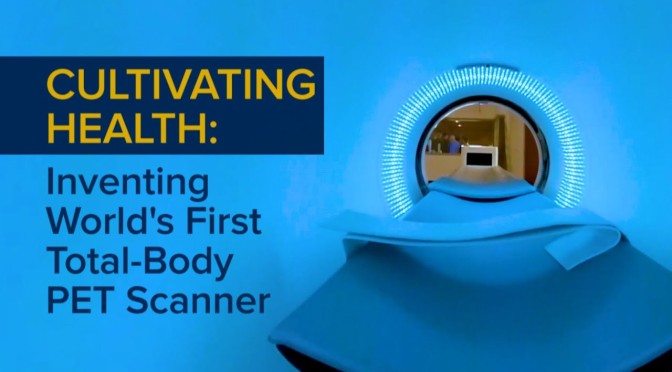
UC Davis Health scientists Simon Cherry and Ramsey Badawi spent 15 years developing the world’s first total-body PET scanner, called EXPLORER. This imaging machine scans a patient’s entire body at one time, delivering breathtaking image quality that improves patient diagnoses and disease research.
“What if we built a bridge, between and above all nations, to jointly discover the galaxy’s great unknowns?” Join us this fall as we prepare to celebrate the 20th anniversary of the the International Space Station. As a global endeavor, 240 people from 19 countries have visited the unique microgravity laboratory, which has hosted more than 2,800 research investigations from scientists in over 100 nations.
The International Space Station is a modular space station in low Earth orbit. The ISS program is a multi-national collaborative project between five participating space agencies: NASA, Roscosmos, JAXA, ESA, and CSA. It is an international collaborative effort between multiple countries.
Autonomous-vehicle road testing has skidded to a halt in the U.S. amid the Covid-19 pandemic. But China’s startups have pushed ahead by more than doubling the number of self-driving car projects, with a boost from the country’s 5G network.
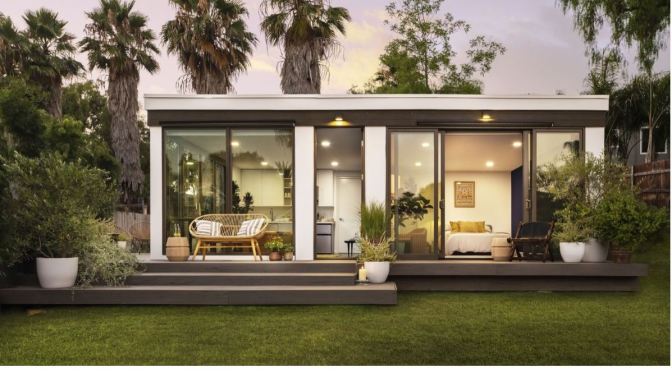
From an Oakland warehouse, startup company Mighty Buildings constructs prefab homes with their Big-G Printer, a 20-foot-tall 3D printer that, at speeds of 120 millimeters per second, can print a 350-square-foot studio in less than 24 hours. The homes are made of Light Stone, a thermoset composite material that hardens when exposed to UV light.
This slideshow requires JavaScript.
Instead of 3D printing sections of each home for on-site assembly, the machine maximizes cost savings by printing the home’s entire structural shell—thus automating the building process by up to 80% with cost savings of 20% to 30% compared to traditional prefab methods.
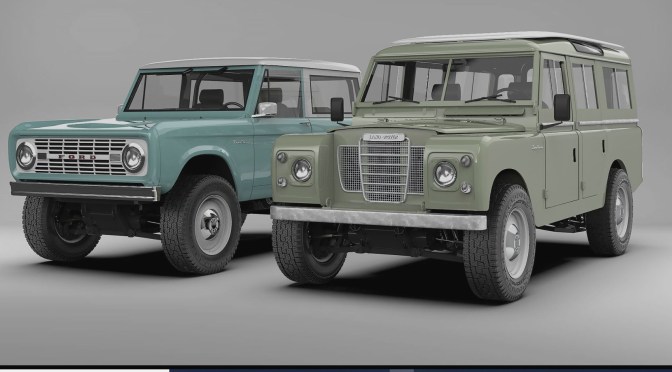
First Generation vintage 4×4’s holds a very special place in the heart of auto enthusiasts across the world. Here at Zero Labs, we share that enthusiasm and love of these iconic vehicles, but also want to see them driven well into the future in a way responsible for the environmental and safety demands needed in today’s world.
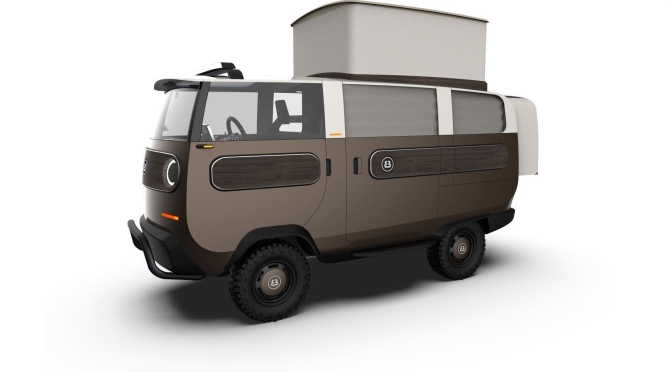
The eBussy is the most innovative and modular light vehicle in the world. It generates a daily range of up to 200 km via its integrated solar modules and recuperating drives.
Its maximum range without charging, with full battery and solar modules is over 600 km. With more than 10 modular and interchangeable bodies, it can be transformed into a convertible, off-roader, box body, station wagon, pick-up or van and camping bus in just a few steps.
With its permanent, electronically controlled all-wheel drive in combination with its innovative all-steering system, its digital exterior mirrors and app-controlled communication system, as well as its 1000Nm torque, the eBussy sets new standards not only as a light vehicle.
Its empty weight without batteries, load and superstructure is only 450-600kg, but it can still carry up to 1000kg of load.
eBussy “Camper”
Standard chassis with camping module I + II. Couch surface approx. L210cm – W130cm.
Fridge, TV, hob, fresh water tank and sink.
10 kWh Battery capacity with approx. 200km range (optionally up to 30 kWh and 600km range)
All-wheel drive and solar roof in 3 modules, sound system, recuperation and much more.
Estimated price 28.800,- EUR (incl. statutory value added tax)
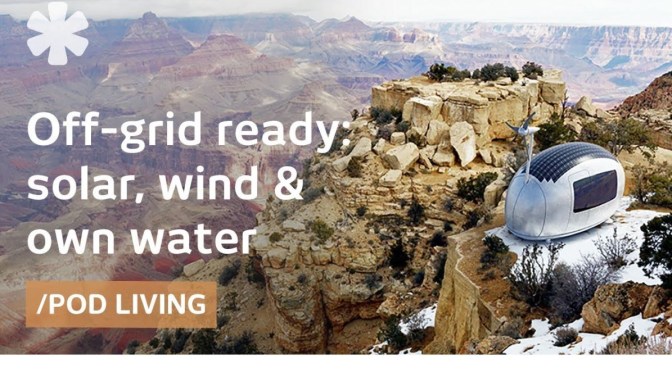
The Ecocapsule is an egg-shaped, mobile dwelling that utilises solar and wind energy. Sona Pohlova and Tomáš Žáček created the original design in 2014 for an American client “who had a big ranch where he didn’t have any infrastructure and he needed some living units for visitors”.
This slideshow requires JavaScript.
They didn’t win the project, but were published worldwide and received requests from people to buy it. They weren’t prepared for the reaction, but they spent 5 years turning their plans into a prototype.
Today they are selling their EcoCapsule – complete with shower and toilet, sleeping area for two, and kitchenette – to anyone looking to “stay in the nature for long time, for example scientists, photographers, rangers or extreme tourists” or someone interested in installing one on a city rooftop.
The pods are highly mobile: they can easily be pulled by a pickup truck or even airlifted by helicopter (for those rooftop needs). The units capture sun energy (PV) as well as their own rainwater (and grey and blackwater). There’s even an app-controlled smart-home system and sensors that help you monitor your energy and water use.
News, Views and Reviews For The Intellectually Curious







 Boomers Daily