Equipped with a state-of-the-art medical facility and high-tech safety features, Legacy Hotel and Residences is not your typical high-rise building.
Category Archives: Technology
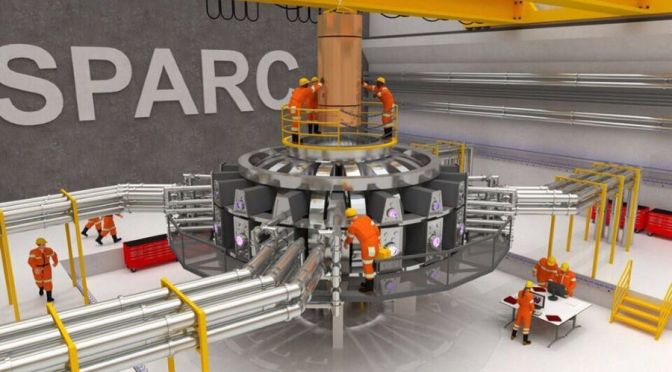
Reviews: Commercial Fusion Energy At MIT
On Sept. 5, 2021, for the first time, a large high-temperature superconducting electromagnet was ramped up to a field strength of 20 tesla, the most powerful magnetic field of its kind ever created on Earth. That successful demonstration helps resolve the greatest uncertainty in the quest to build the world’s first fusion power plant that can produce more power than it consumes, according to the project’s leaders at MIT and startup company Commonwealth Fusion Systems.

Health: Annual Physical Exams Are Going Virtual

Smart Homes: Do Smart Locks Increase Security?
Can smart locks provide more than convenience? Do they actually increase the security of your home? WSJ asked Marc Tobias, a lock security expert, to test out the Nest x Yale Lock. Photo: Cesare Salerno

Reviews: GM’s Cadillac Electric Vehicle Shift
General Motors plans to phase out nearly all of its gas and diesel vehicles by 2035. Leading that transition is the first fully electric Cadillac. WSJ’s Mike Colias visited a GM testing site for a ride and an exclusive interview with GM’s President Mark L. Reuss. Photo Illustration: Alexander Hotz
Views: Hi-Tech Factory-Built Portable Micro Homes From ‘MICROHAUS’
MicroHaus structures are portable and easy to transport. You can rapidly respond to changing circumstances and environments and change your rental business location in hours.
MicroHaus’ natural wood and fabric interiors are durable and beautiful. Designed in Europe and crafted in the USA, the interior elements are also a sign of our modern times.
These homes are energy efficient with low operating costs. They are durable and made from eco-friendly materials that are safe for you and the environment. Back-up power, a large water tank, and our Cloud Self-Diagnosis system make each one perfectly sustainable.
Environment: Investing In Carbon Capture Systems
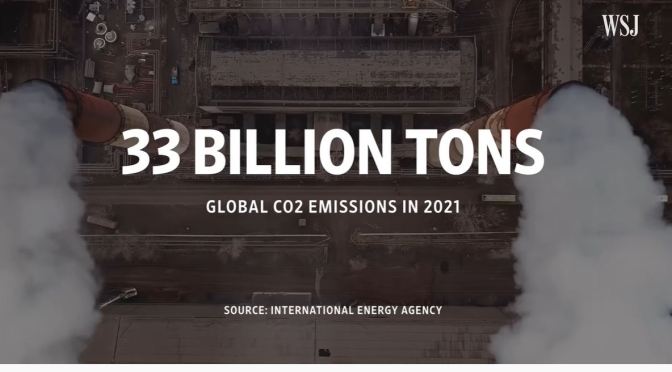
The system could be one answer to slashing Earth’s carbon emissions. A Swiss startup has created a giant vacuum cleaner to capture carbon dioxide from the air, helping companies offset their emissions. WSJ visits the facility to see how it traps the gas for sale to clients like Coca-Cola, which uses it in fizzy drinks. Composite: Clément Bürge.
Analysis: Why Uber & Lyft Rides Got So Expensive
According to Rakuten Intelligence, the cost of a ride from a ride-sharing app like Uber or Lyft increased 92% between January of 2018 and July of 2021. Many riders have also noticed increased wait times for rides, and a recent driver shortage is likely to blame. In early July 2021, Uber and Lyft drivers were about 40% below capacity. The companies have taken notice of this driver shortage, and are investing millions worth of bonuses and base rates to convince drivers to return. But will it be enough to get drivers back on the roads?
Views: Goat Herding With Drones & Smartphones In Inner Mongolia (Video)
Troubled by his missing goat, Hu-Chun, a herder living in the steppes of Inner Mongolia, embarks on a journey to bring Ghalatar back into the fold. With a smartphone in hand and a motorcycle as his faithful steed, Hu-Chun traverses the mountain and desert plains herding around 500 goats. As a college-educated man who has returned from the city to continue his family’s agricultural way of life, Hu-Chun is part of a new generation of Mongolian herders embracing technology and a traditional lifestyle. He has also installed a 360-degree camera on top of a hill to monitor the precipitous terrain surrounding his home… continue reading on https://o6g7.app.link/kCWWETUZ1ib
Analysis: How Moderna & Pfizer-BioNTech Created Vaccines In Record Time
The decision to pivot an entire business to focus on the coronavirus is an obvious one in hindsight, at least for Moderna, BioNTech and Pfizer, which succeeded beyond anyone’s expectations — and will reap billions of dollars in sales of their vaccines this year alone.
It wasn’t such a clear decision in the early months of 2020, though that’s when Moderna’s chief executive, Stephane Bancel, and BioNTech’s chief, Ugur Sahin, starting turning their ships, they told CNBC in interviews for this documentary about the vaccine race, produced by CNBC senior health and science reporter Meg Tirrell and senior digital producer Sam Rega.
“The night that China locked down Wuhan, I’m like: ‘When was the last time I know a city has been locked down because of an infectious disease?’” Bancel recalled. “And what goes through my mind is: what do the Chinese know that we don’t know?“ Bancel said he awoke sweating at 4 a.m., realizing, “Jeez, there’s going to be a pandemic like 1918.” For Sahin, it was reading a paper in the Lancet in late January describing the outbreak in China.
“I did a number of calculations, fast calculations, and realized it had already spread,” Sahin said. “And it was clear that it was already too late to stop the disease.” But he was convinced BioNTech, then focused mainly on personalized cancer therapies, may be able to do something. His company reached out to Pfizer, he said, proposing to work on a vaccine for the novel coronavirus using the same technology, messenger RNA, on which they’d already partnered to try to tackle the flu.
“We had the first contact a few days after starting the project,” Sahin said. “At that time, Pfizer was not yet interested.” Albert Bourla, Pfizer’s CEO, confirmed Sahin’s account, saying in the earliest months of 2020, he was focused on maintaining the company’s operations in China. But by late February, he said, he’d determined Pfizer needed to work on a treatment and a vaccine.
“What is the best approach?” Bourla said he asked his team. Kathrin Jansen, head of Pfizer’s vaccine research and development, said they assessed all existing technologies, including protein-based vaccines and vaccines using viral vectors. “They all have too few pros and too many cons,” she said.
But messenger RNA was a risk; it had never been used before as an approved vaccine or drug. “I wrestled a little bit with the decision,” Bourla said. But after another meeting with the team, “they convinced me.” That’s when Sahin called a second time. The outbreak, by that point, was already in New York, he said. Reaching Jansen, he described the work that BioNTech already had underway, and asked if Pfizer would like to work together. “And I said: absolutely,” Jansen remembered. “Let’s talk about this.”
At Moderna, it was never a question that messenger RNA would be the way forward; that was the technology around which the company was founded in 2010. But that didn’t mean questions didn’t exist. “Even going into March, there were voices that said vaccines were false hope,” recalled Dr. Stephen Hoge, Moderna’s president.
“It did feel for a period of time that we needed to defend even the idea of trying.” “When we were thinking about how do we get into Phase 1, what does it look like to prepare for a pandemic, the eyes of the world felt as though they were looking at Moderna as this biotech … ‘what are they trying to do?’” said Hamilton Bennett, Moderna’s senior director of vaccine access and partnerships.
“It was only when we transitioned in that March notification from the WHO that this was a global pandemic, it’s an emergency, that I think people started to realize that what we’re doing isn’t playing in a sandbox trying to demonstrate our technology,” Bennett said. “We’re developing a vaccine that’s going to stop the pandemic.” The companies succeeded, in what became one of the greatest medical races in history. Here, they recall how it happened.