

From a sore arm to anaphylaxis, a wide range of adverse events have been reported after people have received a COVID-19 vaccine. And yet it is unclear how many of these events are actually caused by the vaccine. In the vast majority of cases, reactions are mild and can be explained by the body’s own immune response.
But monitoring systems designed to track adverse events are catching much rarer but more serious events. Now scientists need to work out if they are causally liked to the vaccine, or are just statistical anomalies – and that is not an easy task.News: Why is it so hard to investigate the rare side effects of COVID vaccines?Subscribe to Nature Briefing, an unmissable daily round-up of science news, opinion and analysis free in your inbox every weekday.
Bees, termites, and ants can teach us a lot about cooperation, communication, and the skills that keep societies together. But these so-called social insects may also hold secrets that could reshape our understanding of human aging. Many social insects exhibit surprising aging characteristics that cause their life spans to shift depending on their roles.
Following the death of a queen Indian jumping ant, for example, workers fight for the right to transform into an egg-laying ant. Much is at stake: the life expectancy of an egg-layer is five times longer than that of a worker’s. Though fruit flies, mice, and nematodes currently dominate aging research, some scientists say social insects’ aging behaviors could help dissect aging mechanisms in humans. This video will take you deep into the catacombs—er, honeycombs—of insect aging.
Read the story ($): https://scim.ag/3cFO0k0
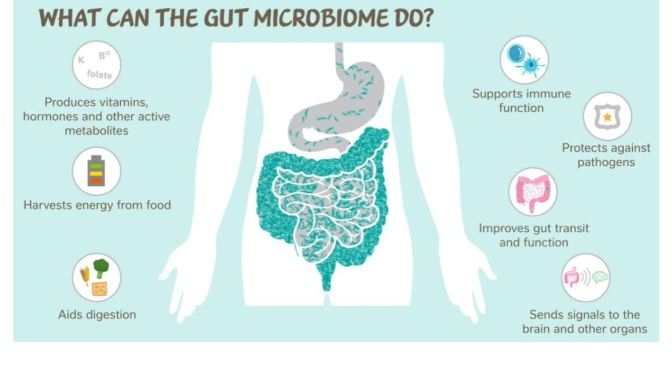
Microbiomes are complex microbial ecosystems, and amongst those found in and on human body, gut microbiome is the most complex. It performs important functions, and is increasingly recognized as a key element influencing long-life health. Specific nutritional components, such as prebiotics and probiotics, can be used to shape healthy gut microbiome. Nestlé Research has made significant contributions in this field for over 30 years.
Laser-cooled antimatter opens up new physics experiments, and the staggering economic cost of invasive species.
In this episode:
00:44 Cooling antimatter with a laser focus
Antimatter is annihilated whenever it interacts with regular matter, which makes it tough for physicists to investigate. Now though, a team at CERN have developed a way to trap and cool antihydrogen atoms using lasers, allowing them to better study its properties.
Research Article: Baker et al.
News and Views: Antimatter cooled by laser light
09:27 Research Highlights
A dramatic increase in Arctic lightning strikes, and an acrobatic bunny helps researchers understand hopping.
Research Highlight: Rising temperatures spark boom in Arctic lightning
Research Highlight: Rabbits that do ‘handstands’ help to find a gene for hopping
11:53 Cost of invasion
Invasive alien species are organisms that end up in places where they don’t really belong, usually as a result of human activity. These species can cause loss of biodiversity and a host of damage to their new environments. This week, researchers estimate that the economic impact of invasive species to be over US $1 trillion.
Research Article: Diagne et al.
19:04 Briefing Chat
We discuss some highlights from the Nature Briefing. This time, the physics that might explain how a ship blocked the Suez Canal, and a new insight into octopuses’ sleep patterns.
The Financial Times: The bank effect and the big boat blocking the Suez
The virus that causes COVID-19 is mutating. Here is what you should know if you want to understand how variants are (and aren’t) complicating the pandemic.
Learn more at: https://gatesnot.es/3sP668R.SHOW LESS

The dream of mRNA persevered in part because its core principle was tantalizingly simple, even beautiful: The world’s most powerful drug factory might be inside all of us.

Like so many breakthroughs, this apparent overnight success was many decades in the making. More than 40 years had passed between the 1970s, when a Hungarian scientist pioneered early mRNA research, and the day the first authorized mRNA vaccine was administered in the United States, on December 14, 2020. In the interim, the idea’s long road to viability nearly destroyed several careers and almost bankrupted several companies.
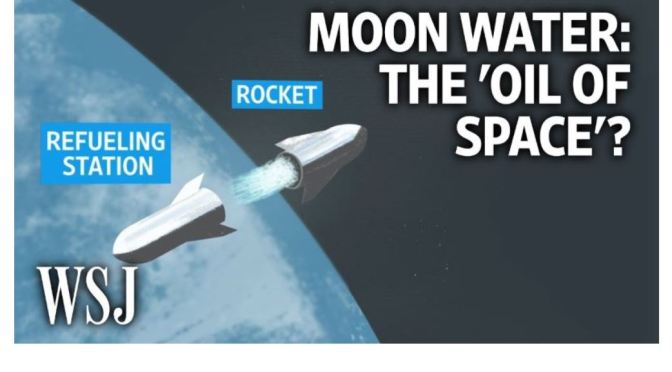
NASA is partnering with SpaceX, Blue Origin and others to search for water on the moon. Water is the foundation for rocket propellant, which could supply refueling stations in the cosmos and make Mars trips cheaper. Photo illustration: Crystal Tai
A selection of three essential articles read aloud from the latest issue of The Economist. This week: science after the pandemic, Rwanda: paragon or prison? (9:10) And Herbie goes electric (33:55)






 Boomers Daily