

From a National Geographic online release:
 Travelers are dreamers who act on their inspirations. The new National Geographic book Epic Journeys: 245 Life-Changing Adventures is for the people who go beyond their comfort zones to experience the wild beauty of the natural world. The book features adrenaline-fueled forays to all seven continents. (See the most breathtaking national parks around the world.)
While the spirit of exploration spans the globe, being an intrepid traveler doesn’t have to mean summiting Mount Everest or surveying icebergs in Antarctica. Some of the planet’s wildest places—launchpads for all sorts of discoveries about the world and yourself—are in North America’s national parks. We’ve selected 15 mind-blowing adventures to inspire your inner explorer.
To read more: https://www.nationalgeographic.com/travel/national-parks/15-epic-national-park-excursions/



 Of course, Cool & Vintage is one of hundreds of companies building Land Rover ‘restomods’, but it’s forged its premier reputation for two reasons: the unparalleled quality of its work and its aesthetic positioning. “I’ve always thought that the Land Rover is among the greatest pieces of industrial design, so it was never my intention to mess around with it too much. We try to stay true to its shape and its history while adding our own creative twist, which could be anything from a bright colour to a more aggressive stance.” Ricardo initially wanted to fuse his vision of the quintessential beach car with a southern European summer vibe.
 The PrinCube sits on the throne of being the smallest (and the lightest) handheld color-printer. With a swift motion of your hand, the printer rapidly prints out one line at a time, measuring up to 0.56 inches in thickness. PrinCube’s multi-line feature lets you extend your prints by printing up to nearly 10 feet of content line after line. The wireless printer conveniently pairs with any device like your phone, tablet, or even laptop over a Wi-Fi connection, and each individual ink cartridge can handle approximately 415 A4 pages worth of printing before replacing. The battery on PrinCube’s pretty remarkable too, with the ability to print for 6 continuous hours before needing a recharge via the Type-C port in the PrinCube’s size.
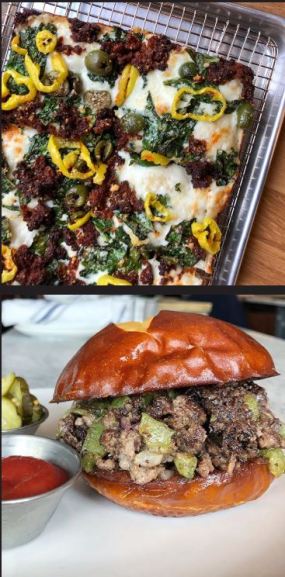 Most pizza places, Detroit-style places, the dough is sitting in a portioned-out container and it gets pressed into the pan. We let it rise in the pan. I knew from the beginning, that’s what’s going to separate our pizza. … It’s built in that we need larger walk-ins to have those extra pans. It’s just part of the plan.
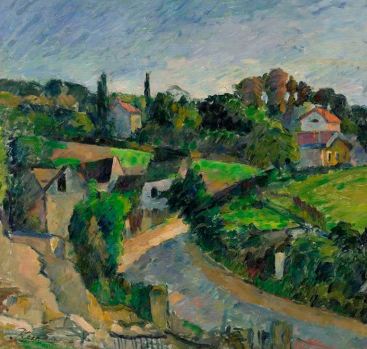 While all of the works on exhibit hold special interest, Aurisch identifies several gems. For example, Van Gogh fans will enjoy his spectacular perspectival rooftop view from the window of his room in The Hague in 1882. Maurice de Vlaminc’s 1906 Dancer at the “Rat Mort” (La danseuse du “Rat Mort”) is a delight with his Fauve treatment of the figure; through color and gestural line, it’s as though we are witnessing a shift into the 20th century. And Henri Matisse’s 1943 still life titled Lemons against a Fleur-de-lis Background (Citrons sur fond rose fleurdelisé) vibrates with lively pink patterned wallpaper and a stacked brick platform, charged with Japonisme energy.
 Today’s edition features Harvard professor Steven Pinker. As an experimental psychologist, Steven has written extensively about violence – and for his choice from the gallery’s collection he has selected two of Pablo Picasso’s most gruesome depictions of man’s inhumanity, Charnel House and Guernica, now housed in Madrid.



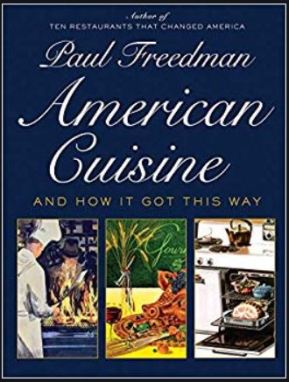 One way to understand American cuisine is through its regions — and the regional traditions that underlie the history of American cuisine. New England, the South, and New Orleans Creole are the regional cuisines of America. Examples of New England cuisine are “Yankee Pot Roast,” the lobster roll, and clam chowder. Southern favorites include grits, collard greens, okra, fried tomatoes, and sweet potato pie. Louisiana’s signature creole dishes are jambalaya, gumbo, and étouffée.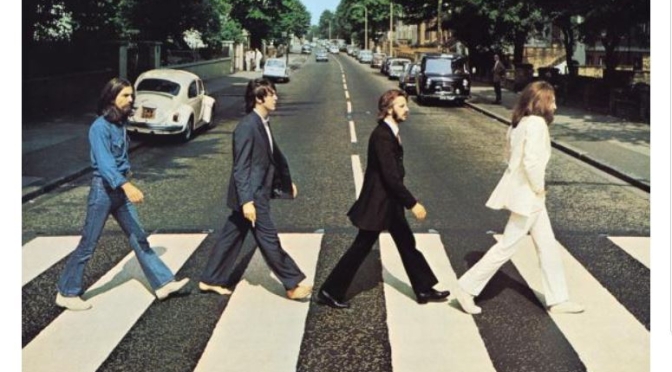
 “Abbey Road” was the Beatles’ last word—the final recordings by the most popular and influential artists of the nineteen-sixties. Now, on the occasion of its fiftieth anniversary, “Abbey Road” has been expertly remixed by Giles Martin, George Martin’s son and protégé, and reissued in a super-deluxe edition that comes with an archive of studio outtakes and a hundred-page book of essays and liner notes that chronicle how the recordings were made. “The Beatles are good even though everybody already knows that they’re good,” the classical composer Ned Rorem observed in 1968, alluding to how the band’s immense popularity confounded the usual notions of discriminating taste. If anyone needs to be reminded of this, this new edition of “Abbey Road” should do the trick.
 Boomers Daily