
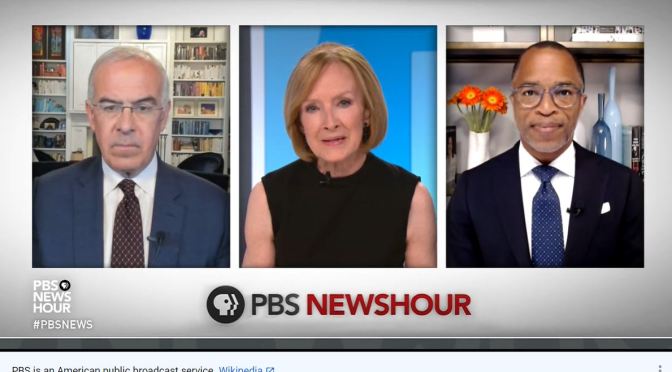
New York Times columnist David Brooks and Washington Post columnist Jonathan Capehart join Judy Woodruff to discuss the week in politics, including QAnon conspiracy theories and the relation to Congress’ failure to establish a Jan. 6 commission, President Joe Biden’s budget plan and its influence on deficit and economic inflation, and how far America has come since George Floyd’s killing.
Category Archives: Reviews
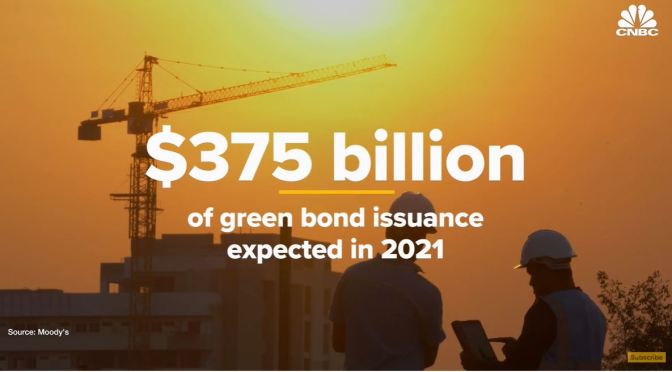
Finance: The $1 Trillion Market For ‘Green Bonds’
So-called green bonds have become more popular in recent years, and this fast-growing segment of the $128.3 trillion global bond market could grow even more. When an issuer sells a green bond, they’re making a nonbinding commitment to earmark the sale’s proceeds for environmentally friendly projects. That could include renewable energy projects, constructing energy efficient buildings or making investments in clean water or transportation. Green bonds fall under the wider umbrella of sustainable bonds, which include fixed-income instruments whose proceeds are set aside for social or sustainability projects. Big household names such as Apple and PepsiCo are diving into this space. A handful of massive banks and governments around the world are also issuing sustainable bonds, including China, Russia and the European Union. This may be contributing to the space’s rapid growth. A report from Moody’s said new sustainable bond issuance may top $650 billion in 2021. That would represent a 32% jump from 2020.

Sports: How Big Money Changed Soccer (Video)
Soccer has its roots in the working class. So how did working class entertainment known as the ‘people’s game’ become a coveted business that remade fans into customers with billion-dollar deals?

TOP JOURNALS: RESEARCH HIGHLIGHTS FROM SCIENCE MAGAZINE (MAY 28, 2021)


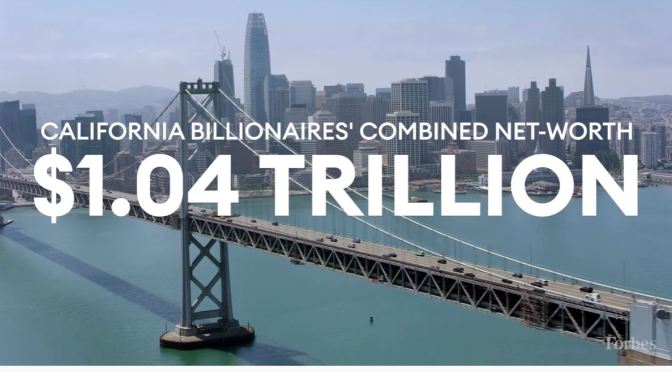
Wealth In 2021: U.S. States With Most Billionaires
News about billionaires like Elon Musk and Larry Ellison moving out of California might lead you to believe that tycoons have abandoned the state. Tesla’s “Technoking” Musk confirmed in December that he had moved to Austin, Texas. And that same month Ellison told employees at software firm Oracle that he was moving to the Hawaiian island of Lanai, which he owns. But it turns out that the Golden State has yet to lose its appeal for the ultra-wealthy. Forbes just released the 2021 list of the World’s Billionaires, and California is once again home to more billionaires than any other state, with 189 billionaire residents out of the 2,755 billionaires Forbes tracked globally. That’s 24 more than a year ago, due mostly to a surge in the number of new billionaires. New York comes in second with 126 billionaires, up from 118 last year. Altogether, 732 members of the 2021 list live in the U.S., including non-U.S. citizens, like Ireland’s John and Patrick Collison, the brothers who founded San Francisco-based payments firm Stripe. (There are 724 U.S. citizens on the list.) Large states dominate the top 10 states for these tycoons: seven out of the ten most populous U.S. states are also home to the most billionaires. One of the outliers, Massachusetts, a tech hub, has 7 more billionaires than a year ago; the fastest vaccine development in history—spurred by the Covid-19 pandemic—minted several new biotech billionaires who live in the state. Seven states don’t have any billionaire residents that Forbes could find: Alabama, Alaska, Delaware, New Hampshire, North Dakota, Vermont and West Virginia. (Jim Justice, the governor of West Virginia, used to be a billionaire but was recently revealed to have borrowed $850 million from Greensill Capital, a U.K. based lender that has filed for insolvency.) Read the full profile on Forbes: https://www.forbes.com/sites/krisztia…

Post Covid-19: How Our Brains Will Weigh Risks
Indoor dining, workout classes, concerts. These once commonplace events are coming back into daily life. But because of Covid-19, everyone now has a different level of comfort. What happens in the brain as we decide what’s risky or not? Photo illustration: Laura Kammermann
Remote Work: How It Is Changing Cities & Offices
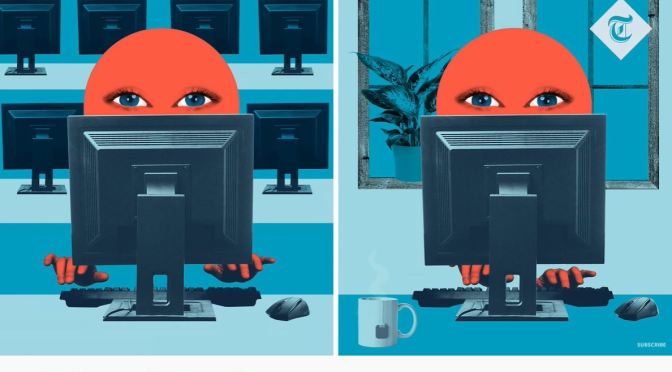
From commuting to office time, automation to virtual reality – here’s how we’ll be working in 2030

Innovation: ‘Brooklyn Dumpling Shop’ Rolls Out ‘Automat’ Food Service
Moving towards the future – by taking from the past? This is the story of how one restauranteur is drawing upon nostalgia in order to break into a new era of innovation in the food industry.
AUTOMAT HISTORY
Originally, the machines in U.S. automats took only nickels. In the original format, a cashier sat in a change booth[citation needed] in the center of the restaurant, behind a wide marble counter with five to eight rounded depressions. The diner would insert the required number of coins in a machine and then lift a window, hinged at the top, and remove the meal, usually wrapped in waxed paper. The machines were replenished from the kitchen behind. All or most New York automats had a cafeteria-style steam table where patrons could slide a tray along rails and choose foods, which were ladled from tureens.
The first automat in the U.S. was opened June 12, 1902, at 818 Chestnut St. in Philadelphia by Horn & Hardart; Horn & Hardart became the most prominent American automat chain. Inspired by Max Sielaff’s AUTOMAT Restaurants in Berlin, they became among the first 47 restaurants, and the first non-Europeans, to receive patented vending machines from Sielaff’s Berlin factory. The automat was brought to New York City in 1912 and gradually became part of popular culture in northern industrial cities.
The automats were popular with a wide variety of patrons, including Walter Winchell, Irving Berlin and other celebrities of the era. The New York automats were popular with unemployed songwriters and actors. Playwright Neil Simon called automats “the Maxim’s of the disenfranchised” in a 1987 article.

Analysis: Why U.S. Houses Are So Expensive (CNBC)
With Covid encouraging city-dwellers to emigrate to the suburbs and families looking for home offices and bigger yards, prices for the American dream home have skyrocketed. Home prices surged in March 2021 up 13% from the year prior, according to the S&P Case-Shiller index. With homeowners unwilling to sell, a record-low supply of homes for sale has forced buyers into intense bidding wars. At the end of April 2021 there were only 1.16 million houses for sale in the U.S. down more than 20.5% from the year prior. Higher costs for land, labor and building materials including lumber have also impacted homebuilders. With the 30-year fixed mortgage rate hovering near a 50-year low and strong demand pushing prices to all-time highs, why is the housing supply so meager? Watch the video to find out if the U.S. is running out of houses.

Morning News: Police Reform 1-Year After George Floyd Murder
Protests have followed police killings in America with saddening regularity, but the scope of demonstrations following George Floyd’s murder may mark a turning point in how policing is monitored and regulated.
We speak to Lee Merritt, an attorney for Mr Floyd’s family, and to our United States editor—asking how likely cultural and structural changes are to take hold.
 Boomers Daily