Category Archives: Reviews

Reviews: New Books On Food Science – May 2022

May 2, 2022 – Our food system is a rich, complex blend of biology and culture. From the biodiversity in forests, oceans, and farms to the living weave of long-standing traditions and emerging trends, food touches every aspect of life on Earth. This diversity hasn’t always carried through to agricultural and culinary literatures, but fortunately this is changing. Fresh perspectives are emerging in the literary discussions of food, addressing a range of topics and cuisines. In 2022, Science will share this tapestry in a limited podcast series on science and food. Hosted by journalist Angela Saini, the series will highlight books from around the world that intersect with this theme. A different book and its author will appear monthly on the Science podcast, beginning on 26 May 2022.

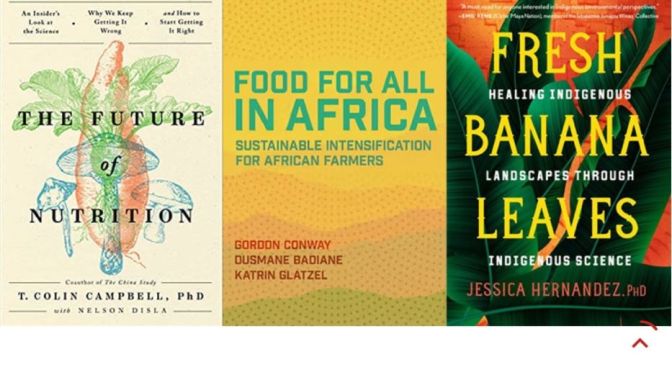
Together, the books discussed in these segments expose an entanglement of biology, culinary science, and culture. In Eating to Extinction: The World’s Rarest Foods and Why We Need to Save Them, Dan Saladino addresses biodiversity loss and the future of food. Saladino covers vast swaths of time and space, taking us from wild honey gatherers in Africa to rare Orkney barley as he demonstrates that species loss is linked to cultural loss.

Food literatures also demand that we confront ourselves and our blind spots. T. Colin Campbell’s The Future of Nutrition: An Insider’s Look at the Science, Why We Keep Getting It Wrong, and How to Start Getting It Right explores the evidence of the health benefits of plant-based diets. Crucially, this book exposes the cultural and political inertia protecting animal protein from scrutiny, reminding us that scientific research is never detached from society.

Political Review: Russia’s ‘Rotten Army’, Macron’s Challenge, Culture Wars

A selection of three essential articles read aloud from the latest issue of The Economist. This week, how rotten is Russia’s armyFrance’s re-elected president prepares for a tough second term (10:30) and a struggle over artistic freedom suggests a better way out of the culture wars (15:25). 

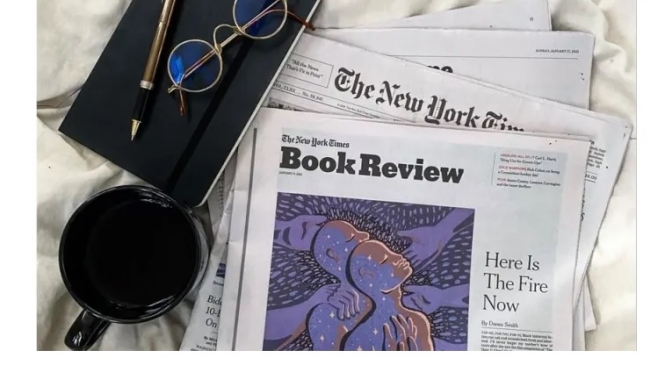
Previews: New York Times Book Review – May 1, 2022

Travel Study: Barcelona Is The Best City In The World

Barcelona

“Barcelona combines everything that is most charming about Mediterranean cities – a relaxed pace, months of endless sunshine, unbeatable food – with the cultural and design clout of almost any city in the cold north.”

SALLY DAVIES, TELEGRAPH DESTINATION EXPERT

DINING & HOTELS


36/50

CULTURE & HISTORY


31/50

OUTDOOR ACTIVITIES


35/50

TRANSPORT & GETTING THERE


43/50

Science: Dark Matter Quantum Sensors, Rabies Risks, New Book Reviews

On this week’s show: How physicists are using quantum sensors to suss out dark matter, how rabies thwarts canine vaccination campaigns, and a kickoff for our new series with authors of books on food, land management, and nutrition science

Dark matter hunters have turned to quantum sensors to find elusive subatomic particles that may exist outside physicists’ standard model. Adrian Cho, a staff writer for Science, joins host Sarah Crespi to give a tour of the latest dark matter particle candidates—and the traps that physicists are setting for them.

Next, we hear from Katie Hampson, a professor in the Institute of Biodiversity, Animal Health & Comparative Medicine at the University of Glasgow, about her work contact tracing rabies in Tanzania. Her group was able to track rabies in a population of 50,000 dogs over 14 years. The massive study gives new insight into how to stop a virus that circulates at superlow levels but keeps popping up, despite vaccine campaigns.

Finally, we launch our 2022 books series on food and agriculture. In six interviews, which will be released monthly for the rest of the year, host and science journalist Angela Saini will speak to authors of recent books on topics from Indigenous land management to foods that are going extinct. This month, Angela talks with Lenore Newman, director of the Food and Agriculture Institute at the University of the Fraser Valley, who helped select the books for the series.

Reviews: The Week In Art

This week, now that the pro-European centrist Emmanuel Macron has defeated the far-right candidate Marine Le Pen in the French presidential election, we speak to Anaël Pigeat, editor-at-large at The Art Newspaper France, about the Macron government’s cultural record so far and what we can expect from his second term. 

Tate Britain has opened an exhibition of work by the late 19th- and early 20th-century British painter Walter Sickert; we take a tour of the show with one of its curators, Thomas Kennedy. And in this episode’s Work of the Week, The Art Newspaper’s associate editor, Tom Seymour, talks to Dan Leers of the Carnegie Museum of Art in Pittsburgh, US, about A workman lifts a drum from a boiling lye solution, March 1944, a photograph in the museum’s new exhibition, Gordon Parks in Pittsburgh, 1944/1946.

Walter Sickert, Tate Britain, London, until 18 September; Petit Palais, Paris, 14 October-29 January 2023.

Gordon Parks in Pittsburgh, 1944/1946, Carnegie Museum of Art, Pittsburgh, 30 April-7 August.

Cover Preview: Nature Magazine – April 28, 2022

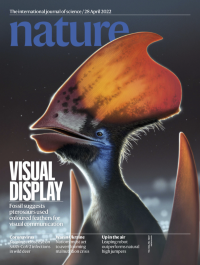
The cover shows an artist’s impression of the pterosaur Tupandactylus imperator. Although feathered pterosaurs have been reported, these claims have been controversial and it has not been clear whether these leathery-winged flying reptiles had feathers of different colours like modern-day birds.

Volume 604 Issue 7907

In this week’s issue, Aude Cincotta and her colleagues present evidence that not only did pterosaurs have feathers but that the feathers probably had varied coloration. The researchers analysed a partial skull of Tupandactylus, found in Brazil and dated to around 113 million years ago. They identified two types of feather along the base of the crest, one of which featured branched structures very similar to modern feathers. They also found pigment-producing organelles in both types of feather and the skin on the head crest. The team suggests that these coloured feathers would have been used in visual communication and that their presence in Tupandactylus indicates the ability to manipulate feather colour stretches back farther than was previously realized. 

Architecture: 2022 Design Educates Award Winners

Winners of the 2022 Design Educates Awards. Each year, the Design Educates Awards highlight international design projects that tackle context-specific concerns and educate users about sustainability.

Preview: MIT Technology Review – May 2022 Issue

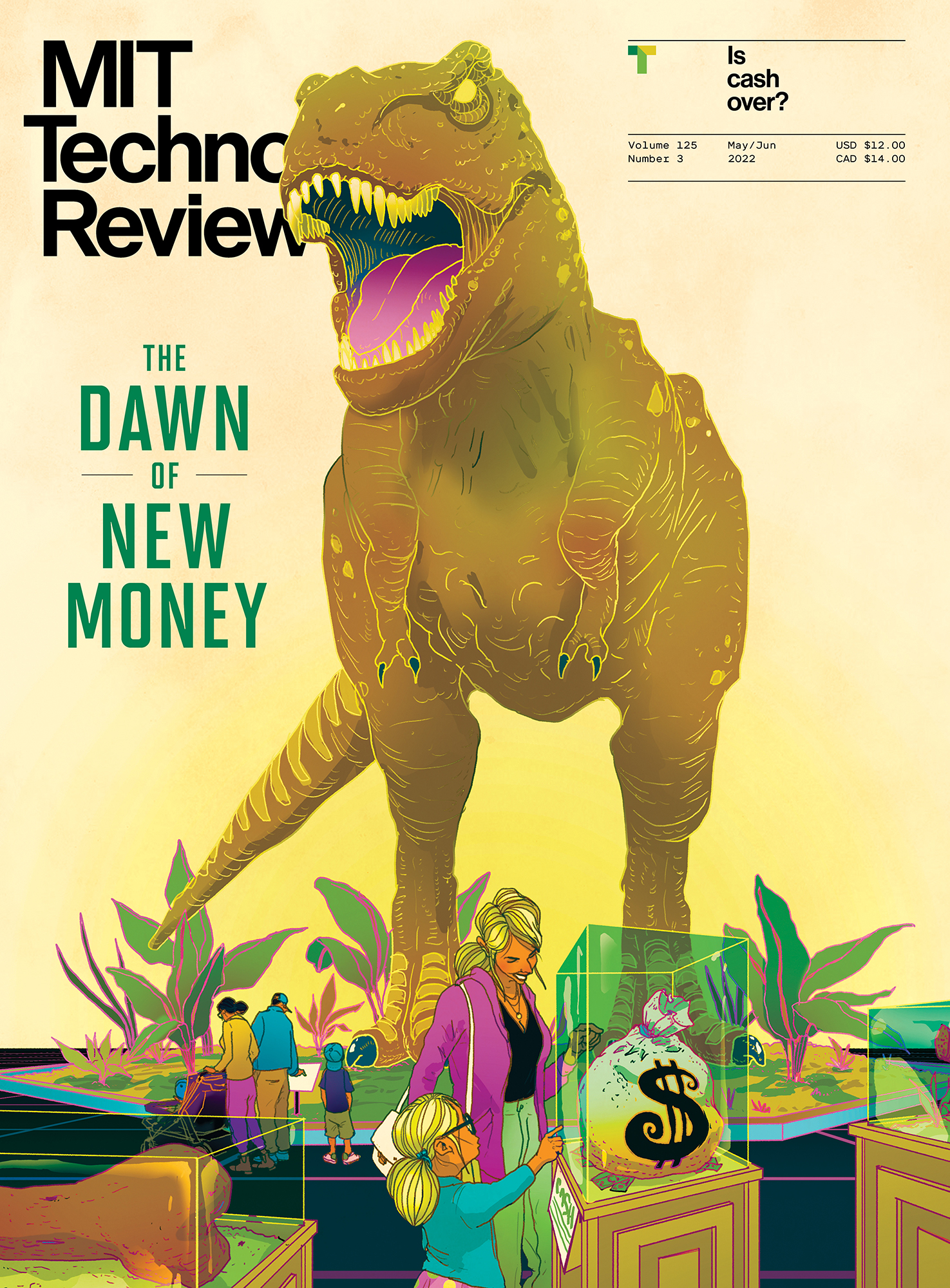
MJ22 cover

The Money issue – May 2022

Money changes everything: But who is the shift toward digital transactions really helping?

Humans and technology

Money is about to enter a new era of competition

Digital technology is poised to change our relationship with money and, for some countries, the ability to manage their economies.