‘Science Magazine – April 25, 2024: The new issue features ‘Born to Explore’ – Exploratory tendency leads to diversification; Can science address loneliness?; Vitamin D, microbiota, and cancer immunity; A safer version of a 140-year-old chemical reaction…
Vitamin D modulates intestinal epithelial cell function to enhance antitumor microbes
The gut microbiome has been shown to modulate the response of cancer patients to therapy, but precisely how microbiota affect anticancer immunity is still being elucidated. Giampazolias et al. report that vitamin D bioavailability in mice influences the composition of the gut microbiome (see the Perspective by Franco and McCoy). After dietary manipulation, vitamin D levels were observed to affect gut bacteria, which in turn improved cancer immunotherapy and antitumor immunity. In humans, low vitamin D levels were correlated with tumor development, and gene signatures of vitamin D activity were associated with improved patient responses to immunotherapy. These findings highlight the connection between vitamin D and the immune system through gut bacteria and may have applications for improving cancer therapies.
The power of curiosity
Lake Tanganyika contains one of the most impressive adaptive radiations, with about 250 species of cichlid occupying a variety of niches. Much research has focused on understanding the drivers of this and other adaptive radiations. Trembo et al. looked in depth at 57 of these cichlid species with regard to their behavior, ecomorphology, and genomics. They found that one behavior in particular, a tendency to explore, was related to niche adaptation, and they identified a regulatory gene that is highly associated with this behavior. These findings suggest the existence of an adaptive syndrome driven in part by a tendency to explore what is new.
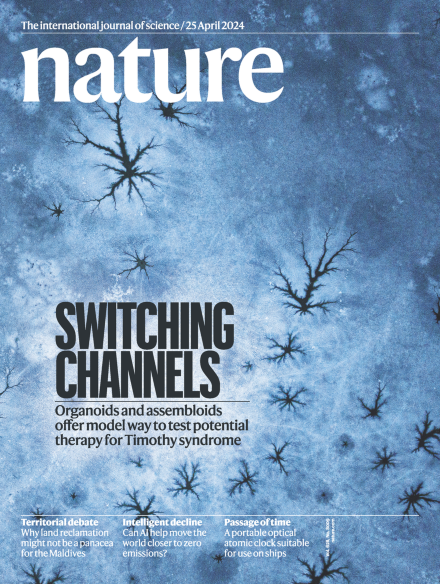
‘Nature Magazine – April 24, 2024: The latest issue cover features‘ Switching Channels’ – Organoids and assembloids offer model way to test potential therapy for Timothy syndrome…
Times Literary Supplement (April 24, 2024): The latest issue features ‘The Mormon Conquest’ – Seth Perry on a people of the book; Is ‘green growth’ a mirage; Virginia Woolf’s rural retreat; China’s Shakespeare…
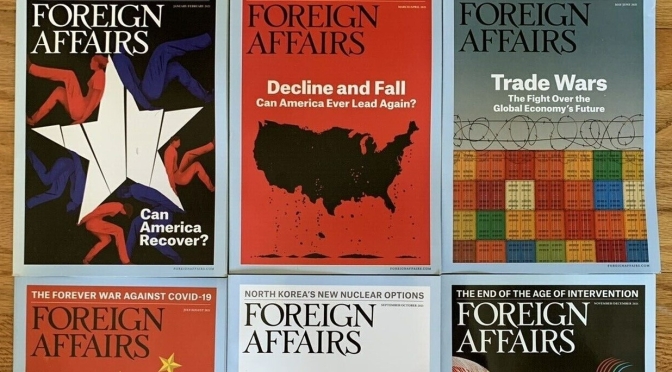
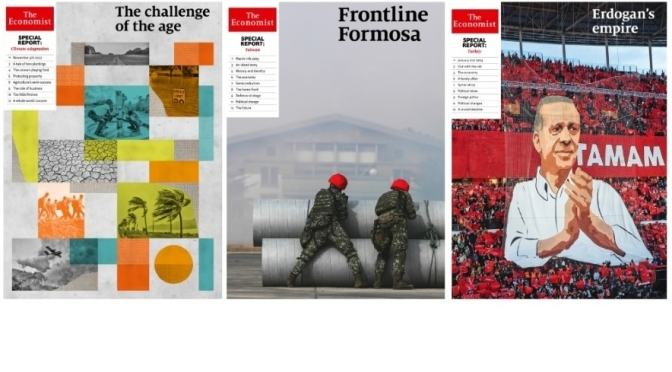
By now, Chinese President Xi Jinping’s ambition to remake the world is undeniable. He wants to dissolve Washington’s network of alliances and purge what he dismisses as “Western” values from international bodies. He wants to knock the U.S. dollar off its pedestal and eliminate Washington’s chokehold over critical technology. In his new multipolar order, global institutions and norms will be underpinned by Chinese notions of common security and economic development, Chinese values of state-determined political rights, and Chinese technology. China will no longer have to fight for leadership. Its centrality will be guaranteed.
With the right changes, it can continue as an engine of global growth, say Arjun Ramani and Thomas Easton
The consecration of the Ram temple in Ayodhya, a city in Uttar Pradesh, in January was a matter of supreme importance to Narendra Modi, India’s prime minister; attendance was thus de rigueur for those seeking his approval. The attendant courtiers included not just politicians, officials and foreign dignitaries but also India’s biggest corporate bosses. Uttar Pradesh is not their normal stamping ground, and Ayodhya has not until recently been much of a destination for tycoons. Now it has 115 hotels under construction, and some of those January visitors may soon be finding reasons to return.
Not every workplace features a guillotine. At a book conservation lab tucked beneath the first floor of the Metropolitan Museum of Art, the office guillotine might as well be a water cooler ora file cabinet for all that it fazes the staff. “We have a lot of violent equipment,” said Mindell Dubansky, who heads the Sherman Fairchild Center for Book Conservation.































 Boomers Daily