Category Archives: Old Age

Studies: Elderly In 3rd Highest Level Of Exercise Reduce Brain Shrinkage, Aging By 4 Years (AAN)

From a March 5, 2020 American Academy of Neurology release:

American Academy of Neurology (AAN) Logo“These results are exciting, as they suggest that people may potentially prevent brain shrinking and the effects of aging on the brain simply by becoming more active,” said study author Yian Gu, Ph.D., of Columbia University in New York and a member of the American Academy of Neurology.

“Recent studies have shown that as people age, physical activity may reduce the risk of cognitive decline and dementia. Our study used brain scans to measure the brain volumes of a diverse group of people and found that those who engaged in the top third highest level of physical activity had a brain volume the equivalent of four years younger in brain aging than people who were at the bottom third activity level.”

Older people who regularly walk, garden, swim or dance may have bigger brains than their inactive peers, according to a preliminary study to be presented at the American Academy of Neurology’s 72nd Annual Meeting in Toronto, Canada, April 25 to May 1, 2020. The effect of exercise was equal to four fewer years of brain aging. The study used magnetic resonance imaging (MRI) scans to measure the brains of people with a range of activity levels, including those who were inactive to those who were very active. The scans showed less active people had smaller brain volume.
Read full article

Health Talk: “Prostate Cancer – Diagnosis And Treatments” (Mayo Clinic)

On the Mayo Clinic Radio program, Dr. Derek Lomas, a Mayo Clinic urologist, discusses prostate cancer, including a new biopsy method.

This interview originally aired Feb. 22, 2020. Prostate cancer is the second most common cancer — second to skin cancer — among men in the U.S. One in 9 men will be diagnosed with prostate cancer in his lifetime, according to the American Cancer Society. Screening is important because early detection greatly improves the chances of survival. While some types of prostate cancer grow slowly, and may need minimal or even no treatment, other types are aggressive and can spread quickly. If prostate cancer is suspected, a biopsy can confirm the diagnosis.

Learn more about prostate cancer: https://www.mayoclinic.org/diseases-c…

Studies: Dementia Risk Is Up To 11 Times Greater With Declines In Both Memory And Gait (JAMA)

From a JAMA Network Open online release (February 21, 2020):

JAMA Network OpenAcross the 6 studies of 8699 participants, mean age ranged between 70 and 74 years and mean gait speed ranged between 1.05 and 1.26 m/s. Incident dementia ranged from 5 to 21 per 1000 person-years. Compared with usual agers, participants with only memory decline had 2.2 to 4.6 times higher risk for developing dementia… 
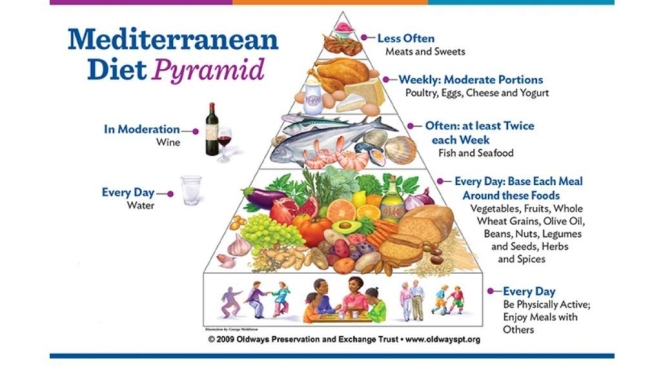
Those with only gait decline had 2.1 to 3.6 times higher risk. Those with dual decline had 5.2 to 11.7 times the risk…

Impaired mobility, such as slow gait, is associated with an increased risk of dementia, but the effect size of this association is generally modest.16 Identifying persons who experience both mobility decline and memory decline, a main symptom in the early stage of dementia, may have a greater prognostic value in assessing risk of dementia because the combination could identify a group in whom gait speed decline is at least in part caused by neurodegenerative pathologic conditions of the central nervous system rather than local musculoskeletal problems, such as sarcopenia or osteoarthritis.79 A recent study of 154 participants with mild cognitive impairment reported that those who declined in both cognition and gait speed had the highest risk of dementia.

Read full study


Study: “Med-Diet” Alters Gut Microbiota, Lowers Frailty & Inflammation, Improves Cognition (BMJ)

From BMJ Journal “Gut” study (February 17, 2020):

BMJ Journal GUT Februrary 2020We observed that increased adherence to the MedDiet modulates specific components of the gut microbiota that were associated with a reduction in risk of frailty, improved cognitive function and reduced inflammatory status.
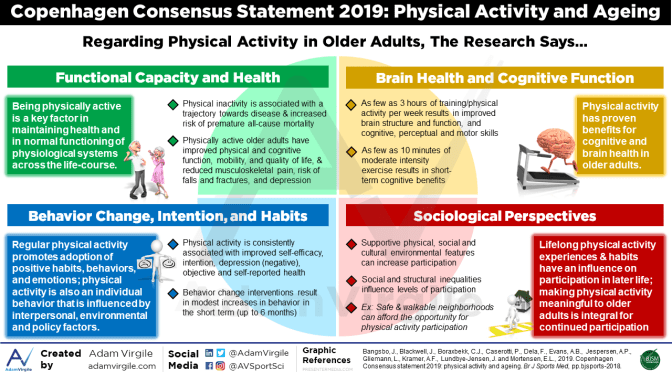
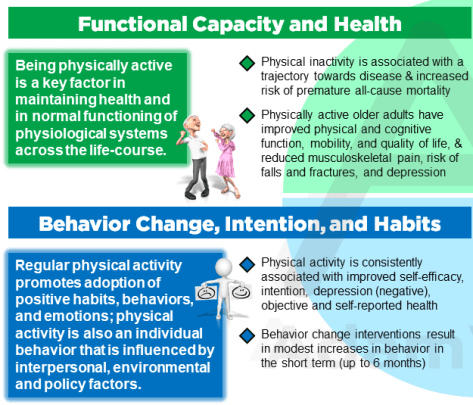
Objective Ageing is accompanied by deterioration of multiple bodily functions and inflammation, which collectively contribute to frailty. We and others have shown that frailty co-varies with alterations in the gut microbiota in a manner accelerated by consumption of a restricted diversity diet. The Mediterranean diet (MedDiet) is associated with health. In the NU-AGE project, we investigated if a 1-year MedDiet intervention could alter the gut microbiota and reduce frailty.

Design We profiled the gut microbiota in 612 non-frail or pre-frail subjects across five European countries (UK, France, Netherlands, Italy and Poland) before and after the administration of a 12-month long MedDiet intervention tailored to elderly subjects (NU-AGE diet).

Results Adherence to the diet was associated with specific microbiome alterations. Taxa enriched by adherence to the diet were positively associated with several markers of lower frailty and improved cognitive function, and negatively associated with inflammatory markers including C-reactive protein and interleukin-17. Analysis of the inferred microbial metabolite profiles indicated that the diet-modulated microbiome change was associated with an increase in short/branch chained fatty acid production and lower production of secondary bile acids, p-cresols, ethanol and carbon dioxide. Microbiome ecosystem network analysis showed that the bacterial taxa that responded positively to the MedDiet intervention occupy keystone interaction positions, whereas frailty-associated taxa are peripheral in the networks.

Conclusion Collectively, our findings support the feasibility of improving the habitual diet to modulate the gut microbiota which in turn has the potential to promote healthier ageing.

Read full study

Health: Management Of Chronic In Older Adults (Mayo Clinic Video)

Geriatricians like Dr. Brandon Verdoorn see the wide range of effects of chronic pain on older patients. Minor, short-lived pain can be managed at home with ice, heat or over-the-counter medication.

If you have severe pain, persistent pain or pain that affects function, you should see your health care provider to determine the underlying cause and develop a pain management plan. That might mean physical therapy, exercise, massage or acupuncture.

Medication strategies often are used, too — typically starting with lower-risk approaches like acetaminophen and topical medications, and reserving higher-risk medications for more difficult cases.

Website

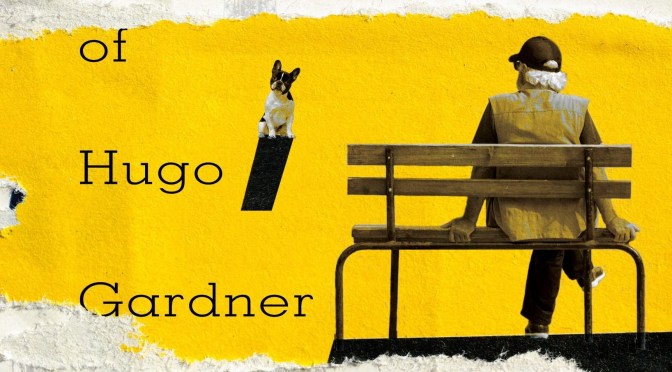
New Fiction Books In 2020: “The New Life Of Hugo Gardner” By Louis Begley

With an ominous oncologist’s report hanging over his head, Hugo decides to get away for a bit, to a conference in Paris. There, a new romance blooms and HugThe New Life of Hugo Gardner by Louis Begley March 2020 releaseo finds himself wondering if growing old in Paris might be the perfect antidote to the drama he left behind in New York. Unflinching, witty, and urbane as ever, Louis Begley delivers a spot-on satire of the world of New York’s aging elite, and uncovers the unexpected delights a late-in-life change can offer.


After four decades of what he believes to be a happy, healthy partnership, Hugo Gardner’s world is overturned when he learns that his wife, Valerie, is not only requesting a divorce but has left him for a younger, more vital man. Hugo, an octogenarian political writer and retired journalist for Time, must rethink the way he’s lived, and reassess how he’d like to spend his remaining years.

Reconsidering past relationships in his mind, with years of distance, Hugo begins to see things in a new light: Valerie, whose youth and ambition eventually came between them; his children, whose support might be more financially than emotionally motivated; and his friends, who, like him are rapidly aging before his very eyes.

Publisher

Retirement: Colleges Cater To Baby Boomers By Building On-Campus Living Facilities (WSJ)

From a Wall Street Journal online article:

Mirabella Senior Living at Arizona State UniversityMirabella Senior Living at Arizona State UniversityMore schools are building or planning senior-living facilities on or near campus to cater to baby boomers who view college as a stimulating alternative to bingo at an archetypal retirement home. Some savor the pursuit of academic and cultural interests. Others are lured by the promise of interaction with younger students, for whom many hope to act as mentors.

It is the latest way for universities to profit from one of their greatest assets, land. Colleges have already taken advantage of this privilege by developing hotels and high-end student housing. Now, some see sales of upscale senior housing as the next step.

Lasell University, just west of Boston, built one of the first on-campus senior communities two decades ago. It requires members to take 450 hours of coursework or activities each year. Other programs have since sprouted up in places like the University of Michigan and Oberlin College in Ohio. Some communities are on campus; others are situated nearby and may have only a loose affiliation with the school. Many offer assisted living and nursing options.

To read more: https://www.wsj.com/articles/seniors-want-to-go-back-to-class-universities-want-to-sell-them-real-estate-11576751403

Crime: “Social Security Administration Scams” Are #1 Fraud Reported To FTC

From an FTC online release:

FTC LogoThe Social Security Administration (SSA) scam is the number one scam reported to the FTC right now.
As soon as a caller threatens you, or demands you pay them with a gift card or by wiring money.  It’s a scam. Even if the caller ID tells you otherwise.

If you get a call from someone claiming to be from the Social Security Administration, hang up the phone and remember:

  • Your Social Security number is not about to be suspended.
  • The real Social Security Administration will never call to threaten your benefits.
  • The real SSA will never tell you to wire money, send cash, or put money on a gift card.


To read more: https://www.consumer.ftc.gov/blog/2019/12/getting-bombarded-scam-calls-youre-not-alone?utm_source=govdelivery

Surgery: There Are No Low-Risk Procedures For Frail Older Patients (NYT)

From a New York Times online article:

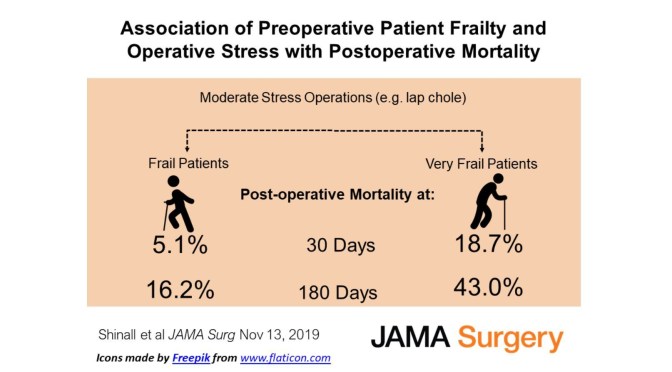
JAMA Surgery“Our data indicate that there are no low-risk procedures among patients who are frail,” Dr. Hall and his co-authors concluded in their study.

Dr. Hall’s research, recently published in JAMA Surgery, has found that frail, older adults are more likely than other patients to die after even supposedly minor procedures — and even when the surgery goes well, without complications.

After operations, frail patients find it harder than others to regain strength and mobility, and to return to independent lives. Doctors and researchers assess frailty in a variety of ways. Geriatricians often measure things like gait and grip strength, and look for unintended weight loss and exhaustion.


To read more: https://www.nytimes.com/2019/12/13/health/frail-elderly-surgery.html