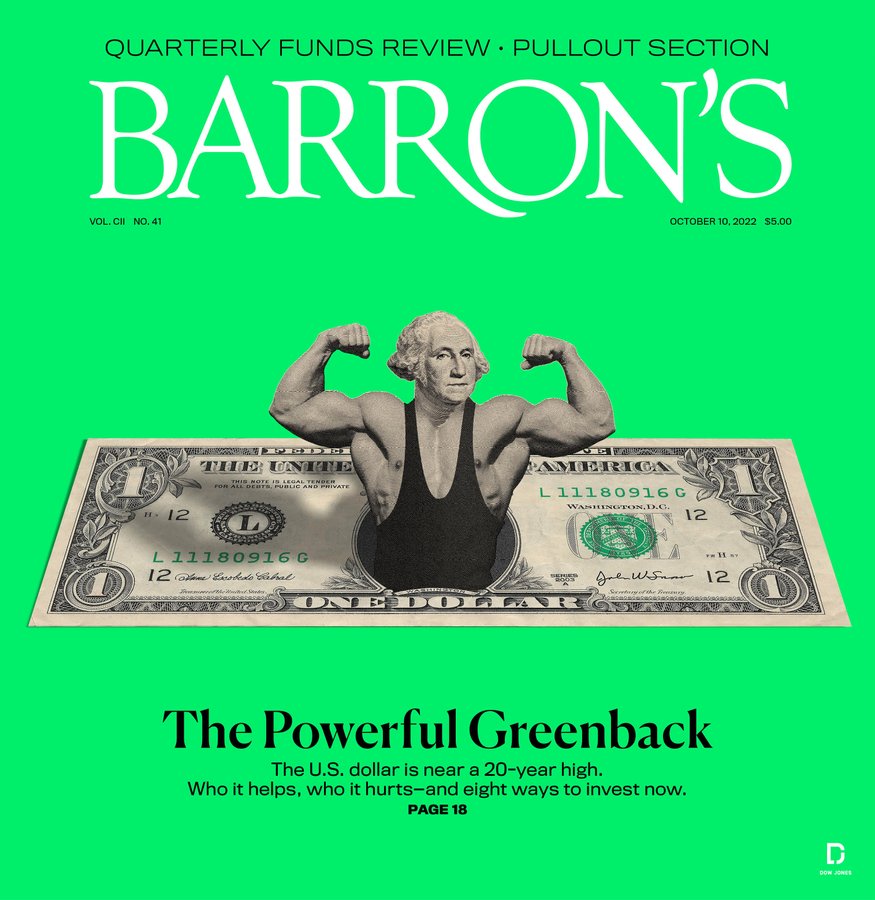
The U.S. dollar got a brief, welcome walloping this past week, falling 1.5% on Tuesday alone against a basket of six major currencies. It remains up a hefty 17% for the year, and close to its strongest level in decades. That matters for ordinary savers, and not just forex flippers.
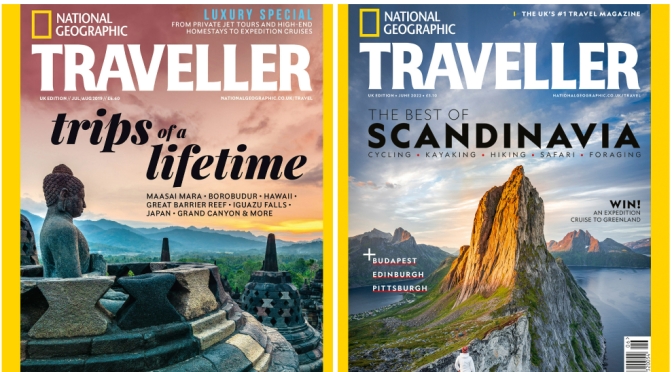
The November issue of National Geographic Traveller (UK) is out now. The cover story this month looks at Colombia, South America’s rising star, with a focus on wild river safaris in the Amazon jungle, the vibrant cities of Bogotá, Cartagena and Medellín, the innovative Indigenous communities, the stunning archipelago of the Rosario Islands and the best of the Coffee Triangle.
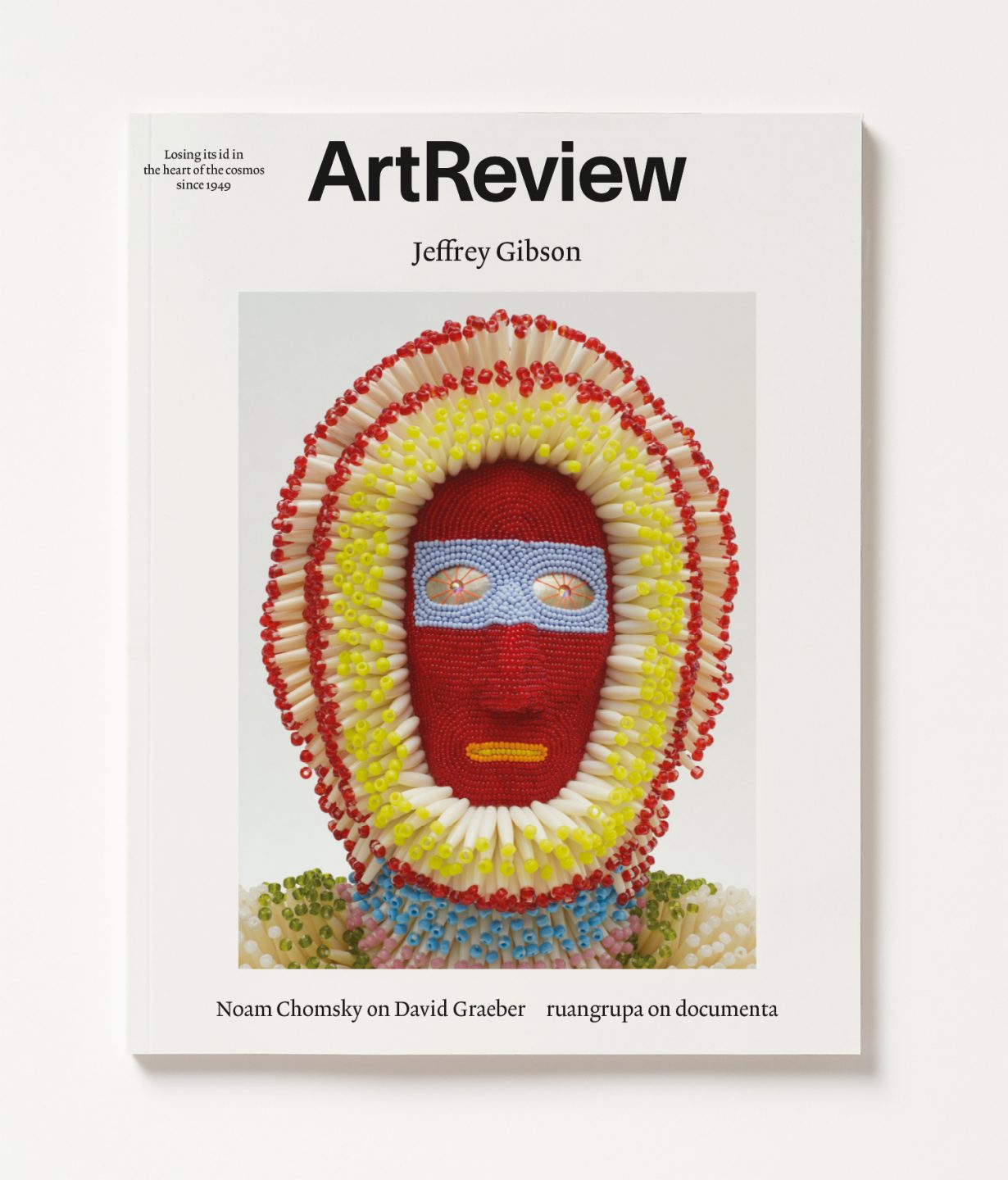
In ArtReview’s October issue – out now – Chris Fite-Wassilak profiles Jeffrey Gibson, the artist whose works unpick and repattern mythologies around the depiction of native cultures: ‘Dolled up in intricate beadwork and bright kitsch plumes, Gibson’s flamboyant artefacts mock the anthropological impulse, while buzzingly suggesting new rituals’.
Renewal can be a fraught process, as ruangrupa found at this year’s documenta fifteen. ArtReview’s Mark Rappolt and J.J. Charlesworth spoke to the collective’s farid rakun and Ade Darmawan about their hopes for and the results of ruangrupa’s artistic direction of documenta fifteen – and what happens next. Their work confounded many assumptions about how this major survey exhibition should be organised – and who and what it should be for. One thing was certain: they “had to fight for every inch”.
It’s a story that has dominated recent cultural discourse – and is touched on by Naom Chomsky, interviewed by Nika Dubrovsky for ArtReview October. Chomsky, a keen admirer of David Graeber’s work, discusses with Dubrovsky the late anthropologist’s last project, neoliberalism and democracy, Western empiricism and imperialism, free speech, Roe v. Wade, and the war in Ukraine.
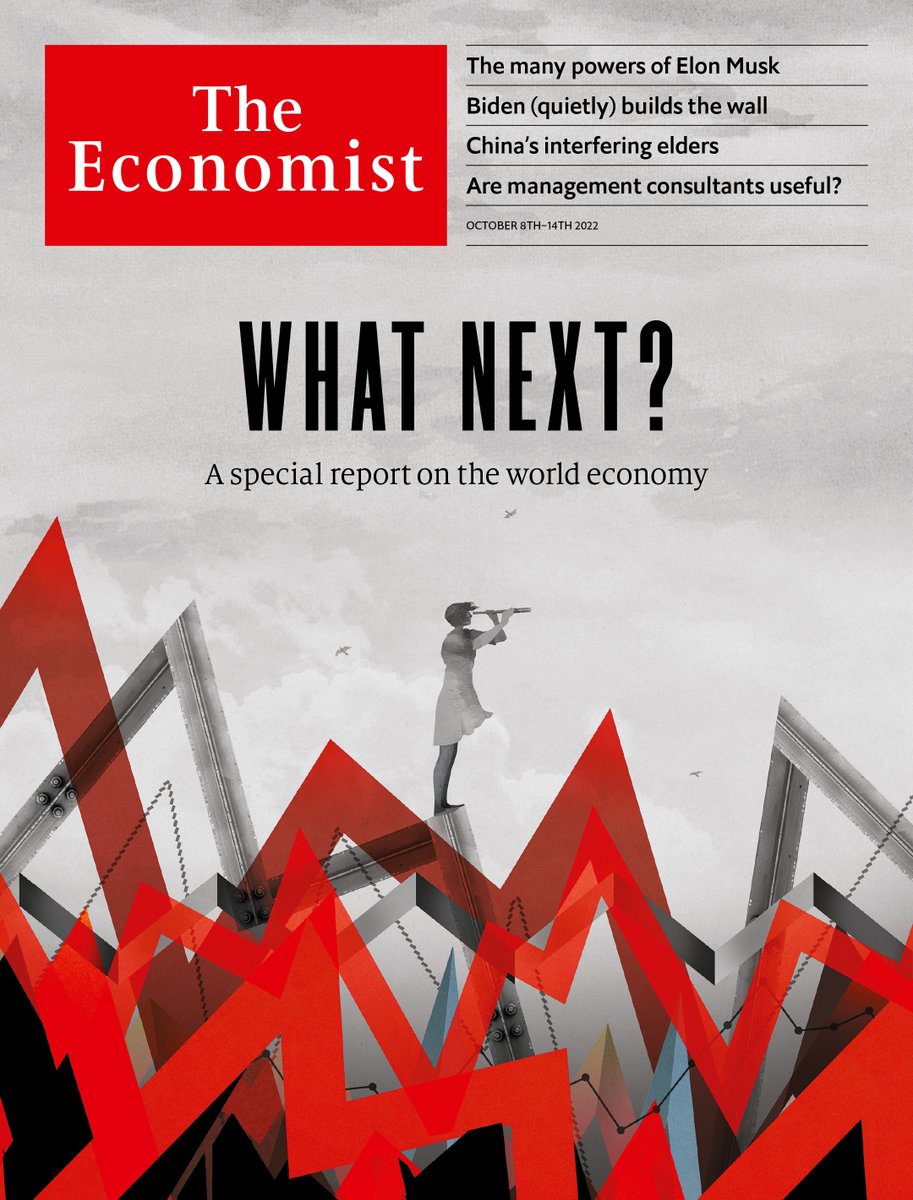
A great rebalancing between governments and central banks is under way.
For months there has been turmoil in financial markets and growing evidence of stress in the world economy. You might think that these are just the normal signs of a bear market and a coming recession. But, as our special report this week lays out, they also mark the painful emergence of a new regime in the world economy—a shift that may be as consequential as the rise of Keynesianism after the second world war, and the pivot to free markets and globalisation in the 1990s.





 Boomers Daily