

Category Archives: Health

Health Study: Low-Dose Aspirin Reduces Risks Of Bone Fracture (BMJ)
From a BMJ Open Journal study release (February 20, 2020):
 Aspirin is an inhibitor of prostaglandin production and may influence the cellular basis of bone remodelling responsible for maintaining the material and structural strength of bone.
The consistent findings of reduced risk of fracture across studies included in this review is encouraging. It is important to keep in mind that studies were quite diverse in design, populations included, data collection methods and follow-up periods and we did observe high heterogeneity especially for fracture risk. While we need to interpret this finding with some caution, there appeared to be a consistent indication that aspirin use is associated with positive bone outcomes.
The anti-inflammatory effects of aspirin via prostaglandin inhibition have recently gained attention. Chronic low-grade inflammation contributes to age-related cardiovascular, neurological, respiratory and musculoskeletal conditions. Low-grade inflammation is associated with increased bone loss and fracture risk. Prostaglandin, an important inflammatory mediator, is likely to have a key role in bone remodelling attributable to inflammation. Prostaglandin E2 stimulates bone resorption and formation and is produced largely from cyclooxygenase-2 induction. Prostaglandins acutely inhibit osteoclast function. However, their chronic effect is to stimulate bone resorption by increasing replication of osteoclast precursors, and differentiation to mature osteoclasts.

Health Talk: “Prostate Cancer – Diagnosis And Treatments” (Mayo Clinic)
On the Mayo Clinic Radio program, Dr. Derek Lomas, a Mayo Clinic urologist, discusses prostate cancer, including a new biopsy method.
This interview originally aired Feb. 22, 2020. Prostate cancer is the second most common cancer — second to skin cancer — among men in the U.S. One in 9 men will be diagnosed with prostate cancer in his lifetime, according to the American Cancer Society. Screening is important because early detection greatly improves the chances of survival. While some types of prostate cancer grow slowly, and may need minimal or even no treatment, other types are aggressive and can spread quickly. If prostate cancer is suspected, a biopsy can confirm the diagnosis.
Learn more about prostate cancer: https://www.mayoclinic.org/diseases-c…
Diet Studies: Repeated “Diet Switching” Found To Increase Mortality Risks
From a Science Journal study (Feb 21, 2020):
 We suggest this increase in mortality seen on DR in the 4-day switch treatment is due to either accrued physiological costs or more probable, a carryover of deaths directly resulting from the rich diet, but recorded on the DR diet.
A closer examination of the timing of mortality within the 4-day switching paradigm showed that the mortality response was strongest in the second 48 hours after exposure to both DR and rich diets.
Ageing has attracted extensive scientific interest, from both a fundamental and biomedical perspective. Dietary restriction (DR) extends health and life span across taxa, from baker’s yeast to mice, with very few exceptions (1, 2). The reduction in total calories—or restriction of macronutrients, such as protein—extends life span reliably (3–5). Although the precise universal mechanisms that connect DR to ageing remain elusive, translation of DR’s health benefits to human medicine is deemed possible. The widespread assumption of DR’s translational potential originates from the notion that DR’s beneficial effects are facilitated by shared evolutionary conserved mechanisms, as beneficial effects of DR are observed across taxa.
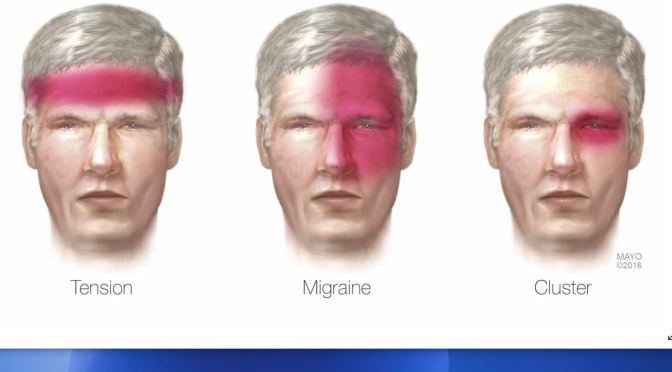
Health Talk: “Treating Headaches, Migraines And Cluster” (Mayo Clinic)
On the Mayo Clinic Radio program, Dr. Beth Robertson, a Mayo Clinic neurologist, discusses headaches and treatment for migraines.
This interview originally aired Feb. 22, 2020. Learn more about headaches: https://www.mayoclinic.org/diseases-c…
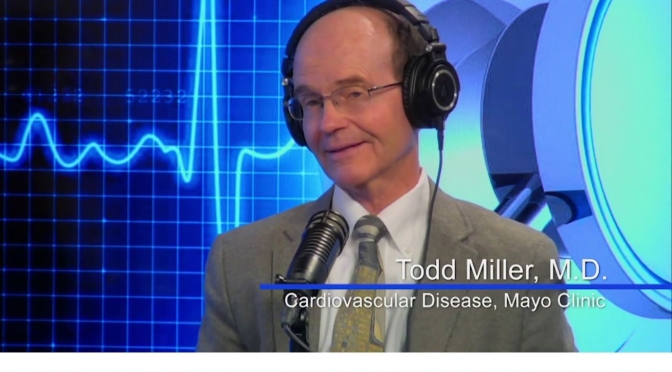
Health Talk: “Exercise And The Heart” (Mayo Clinic)
On the Mayo Clinic Radio program, Dr. Todd Miller, a Mayo Clinic cardiologist, explains how exercise affects the heart. This interview originally aired Feb. 22, 2020. Learn more about exercise and the heart: https://www.mayoclinic.org/healthy-li…
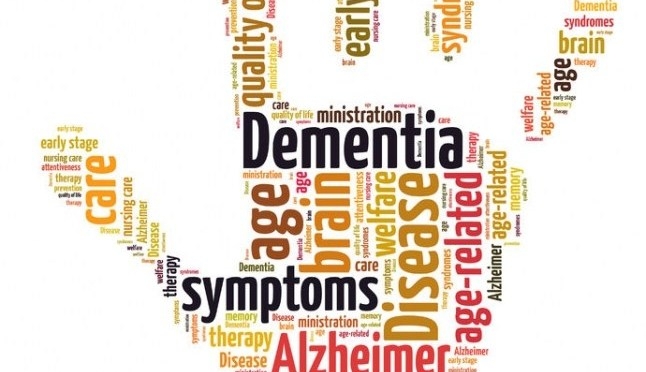
Studies: Dementia Risk Is Up To 11 Times Greater With Declines In Both Memory And Gait (JAMA)
From a JAMA Network Open online release (February 21, 2020):
 Across the 6 studies of 8699 participants, mean age ranged between 70 and 74 years and mean gait speed ranged between 1.05 and 1.26 m/s. Incident dementia ranged from 5 to 21 per 1000 person-years. Compared with usual agers, participants with only memory decline had 2.2 to 4.6 times higher risk for developing dementia…
Those with only gait decline had 2.1 to 3.6 times higher risk. Those with dual decline had 5.2 to 11.7 times the risk…
Impaired mobility, such as slow gait, is associated with an increased risk of dementia, but the effect size of this association is generally modest.1–6 Identifying persons who experience both mobility decline and memory decline, a main symptom in the early stage of dementia, may have a greater prognostic value in assessing risk of dementia because the combination could identify a group in whom gait speed decline is at least in part caused by neurodegenerative pathologic conditions of the central nervous system rather than local musculoskeletal problems, such as sarcopenia or osteoarthritis.7–9 A recent study of 154 participants with mild cognitive impairment reported that those who declined in both cognition and gait speed had the highest risk of dementia.
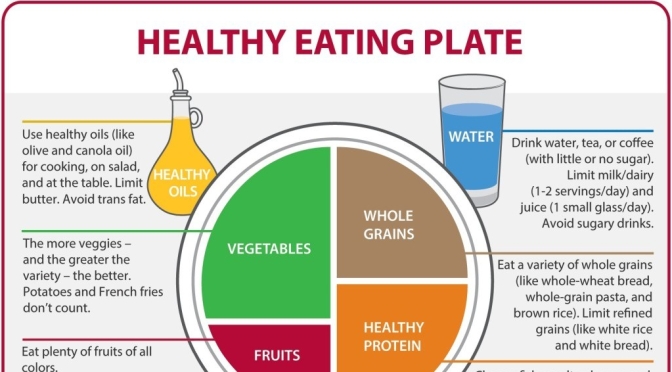
Nutrition Infographic: Harvard Unveils A “Healthy Eating Plate” As Guide For Balanced Meals
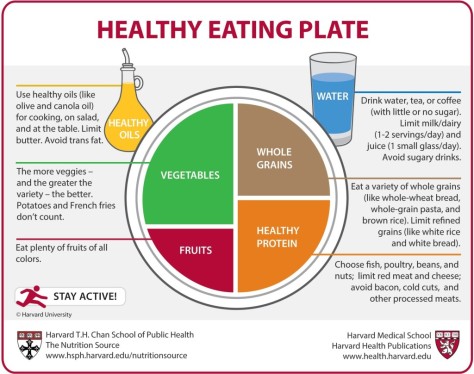
- Make most of your meal vegetables and fruits – ½ of your plate:
Aim for color and variety, and remember that potatoes don’t count as vegetables on the Healthy Eating Plate because of their negative impact on blood sugar.
- Go for whole grains – ¼ of your plate:
Whole and intact grains—whole wheat, barley, wheat berries, quinoa, oats, brown rice, and foods made with them, such as whole wheat pasta—have a milder effect on blood sugar and insulin than white bread, white rice, and other refined grains.
- Protein power – ¼ of your plate:
Fish, poultry, beans, and nuts are all healthy, versatile protein sources—they can be mixed into salads, and pair well with vegetables on a plate. Limit red meat, and avoid processed meats such as bacon and sausage.
- Healthy plant oils – in moderation:
Choose healthy vegetable oils like olive, canola, soy, corn, sunflower, peanut, and others, and avoid partially hydrogenated oils, which contain unhealthy trans fats. Remember that low-fat does not mean “healthy.”
Skip sugary drinks, limit milk and dairy products to one to two servings per day, and limit juice to a small glass per day.
The red figure running across the Healthy Eating Plate’s placemat is a reminder that staying active is also important in weight control.
The main message of the Healthy Eating Plate is to focus on diet quality.
- The type of carbohydrate in the diet is more important than the amount of carbohydrate in the diet, because some sources of carbohydrate—like vegetables (other than potatoes), fruits, whole grains, and beans—are healthier than others.
- The Healthy Eating Plate also advises consumers to avoid sugary beverages, a major source of calories—usually with little nutritional value—in the American diet.
- The Healthy Eating Plate encourages consumers to use healthy oils, and it does not set a maximum on the percentage of calories people should get each day from healthy sources of fat. In this way, the Healthy Eating Plate recommends the opposite of the low-fat message promoted for decades by the USDA.
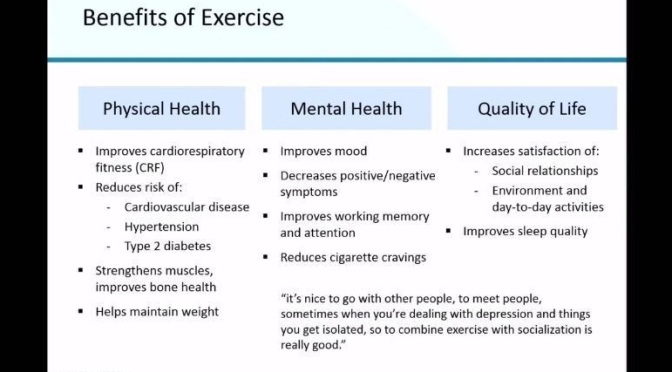
Exercise Health Benefits: “Should I Go To The Gym Today?” (MGH Video)
This presentation by Julia Browne, PhD, a clinical and research fellow in the Center of Excellence for Psychosocial and Systemic Research at Massachusetts General Hospital and Harvard Medical School was part of Schizophrenia Education Day 2019.

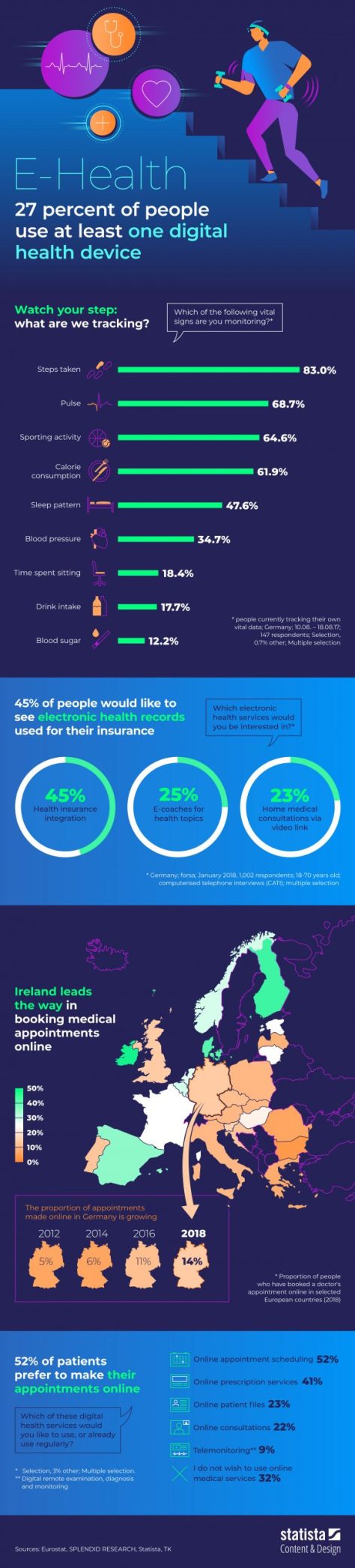
Health Inforgraphics: “E-Health” & The Increasing Use Of Digital Devises
 Boomers Daily