A new study suggests a high-fiber diet may protect against dementia. In a group of about 3,700 older adults, those who consumed the most fiber had the lowest rates of dementia, and those who ate the least fiber had the highest rates: https://t.co/XbUNndYghs#HarvardHealth
Fiber is known for keeping your digestive system healthy and lowering cholesterol levels. Now, study findings suggest it also may protect the brain from dementia.
The study involved approximately 3,700 healthy adults, ages 40 to 64, who completed routine dietary surveys for 16 years. Researchers then monitored the participants for two decades to see which ones developed dementia. The study revealed that people who consumed the most daily fiber had the lowest rates of dementia. The reverse also was true — those who ate the least fiber had the highest rates. Specifically, the low-risk group consumed an average of 20 grams daily, while those with the highest risk averaged only 8 grams. (The USDA recommends that men over age 50 eat 30 grams of fiber daily.)
Can the aging process be reversed – or even halted, altogether? If we manage to decode this final mystery of our human biology, we might soon be able to eradicate age-related illnesses like cancer, dementia and heart problems. The race to invent the miracle pill is well underway.
Today, international researchers are getting astonishingly close to realizing humanity’s dream of immortality. The hunt for immortality gained traction with the discovery of Costa Rica’s so-called “Blue Zone,” by Luis Rosero-Bixby. In the “Blue Zone,” on the Nicoya Peninsular, he found a remarkable number of centenarians.
Here, male life expectancy is the highest in the world. Their healthy lifestyle is one factor, but the promise of longevity is probably also because their telomeres – sections of DNA found at the end of chromosomes – are longer than those of the average person. It’s a field of research currently being explored by Maria Blasco in Madrid.
But this is just one of many possible factors influencing the process of aging. Senescent cells may also play a key role. Also known as “zombie cells”, these attack our body in old age and flood it with alarm signals until, at some point, we collapse under their weight. That’s a theory proposed by another researcher in Spain, Manuel Serrano. A billion-dollar industry is already knocking impatiently at the lab doors.
The first to market the miracle pill is guaranteed incredible wealth. That’s why investors are sponsoring young bio-startups in Hong Kong. Keen not be left out, US Big Tech is vying for the world’s best scientists. Alex Zhavoronkov has secured a slice of that pie, with a cash injection of more than 250 million dollars for his company’s work on aging research. Whereas some pioneers’ visions burst like bubbles, others rush to get other, rather more dubious products onto the market. But their efficacy is now measurable.
The epigenetic clock devised by Steve Horvath can measure our biological age, regardless of our actual age in years. With his research on the thymus gland, California’s Greg Fahy managed to not only decelerate the aging process, but reverse it. His initial study on humans showed that a particular drug cocktail took an average two-and-a-half years off their age.
Young biohackers like Nina Khera from Boston want everyone to benefit from this research. Together with friends, she’s working on the “epigenetic clock for all”. But while we’re busy trying to counter the aging process and all the illnesses it entails, fundamental questions arise: Should we be messing with nature like this? Are we about to overwhelm the planet with more and more people? Criminal biologist Mark Benecke in Cologne says that these questions are coming far too late.
The sudden surge of monkeypox cases outside Africa has alarmed public health authorities around the world. In Europe and North America it’s the first time community transmission has been recorded among people with no links to west or central Africa. So what is happening?
Ian Sample talks to virologist Oyewale Tomori about why monkeypox is flaring up, whether we should fear it, and what we can learn from countries such as Nigeria and the Democratic Republic of the Congo, which have been tackling this virus for decades.
Learning about a herniated disk can be intimidating. Let our experts walk you through the facts, the questions, and the answers to help you better understand this condition.
0:00 Introduction 0:24 What is a herniated disk? 1:16 What causes a herniated disk? / Risk factors 2:10 Symptoms of a herniated disk 2:49 How is a herniated disk diagnosed? 3:38 Treatment options 4:50 Coping methods/ What now? 5:16 Ending
For more reading visit:https://mayocl.in/3PyJMvJ. When it comes to your health, Mayo Clinic believes credible and clear information is paramount. There’s a lot to learn about a herniated disk. We’re here to help.
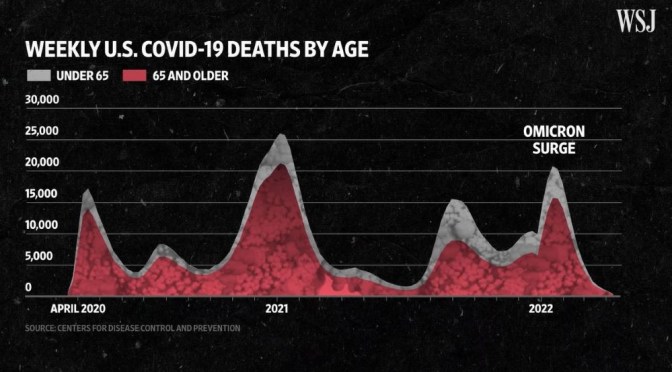
More than one million Americans were killed by Covid-19 in just over two years, the CDC reports. But the disease has hit some segments of the U.S. population far more than others. Photo illustration: Todd Johnson
Watch: Intermittent fasting can help improve focus and brain health for animals, studies show. We explain how some of these cognitive benefits can also apply to humans. https://t.co/msrfUFoTkn
Although intermittent fasting is most widely known as a weight-loss strategy, emerging research suggests that it could have benefits for brain health and cognition. But does it actually work, are there any drawbacks and how long would you have to fast to see benefits? WSJ’s Daniela Hernandez breaks down what’s known and what’s not about the neuroscience of intermittent fasting.
Timeline: 0:00 Could intermittent fasting help our brains work better and longer? 0:31 How long would you have to fast to see any potential cognitive benefits? 1:04 How intermittent fasting could affect your ability to focus 2:27 Potential mood-related benefits of intermittent fasting 2:48 How intermittent fasting can affect brain health 4:03 Potential drawbacks of intermittent fasting
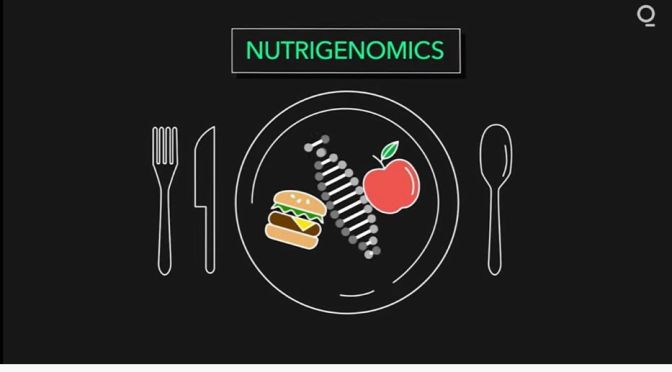
The burgeoning field of “nutrigenomics” claims that the food we eat can alter our genetics. Dietitians, scientists and lifestyle companies have all hopped on the bandwagon.
Nutrigenomics (also known as nutritional genomics) is broadly defined as the relationship between nutrients, diet, and gene expression. The launch of the Human Genome Project in the 1990s and the subsequent mapping of human DNA sequencing ushered in the ‘era of big science’, jump-starting the field of nutrigenomics that we know today.
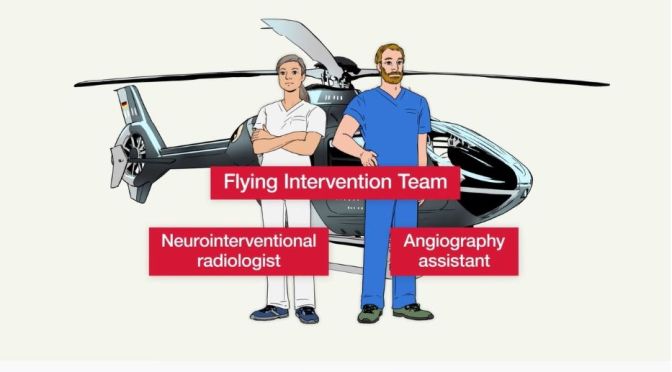
In a nonrandomized controlled intervention study published in JAMA, researchers in Germany assessed whether deployment of a flying interventional team, consisting of a neurointerventional radiologist and an angiography assistant, was associated with a shorter time to endovascular thrombectomy for patients in rural or intermediate population areas in Southeast Bavaria.
This video explains the study design. Click https://ja.ma/FIT for full details.
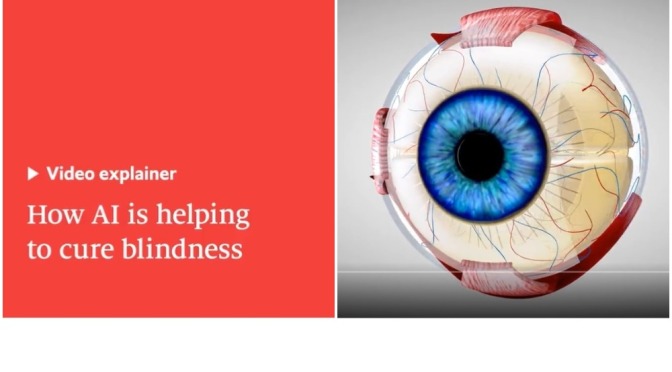
England’s health service handles 10m clinic appointments for eyes every year. Artificial intelligence could help speed up and improve diagnoses for patients. Film supported by @Maersk.
England’s health service handles 10m clinic appointments for eyes every year. Artificial intelligence could help speed up and improve diagnoses for patients.
News, Views and Reviews For The Intellectually Curious




 Boomers Daily