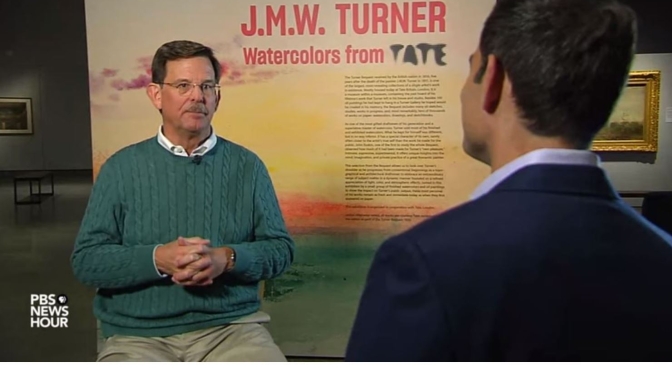
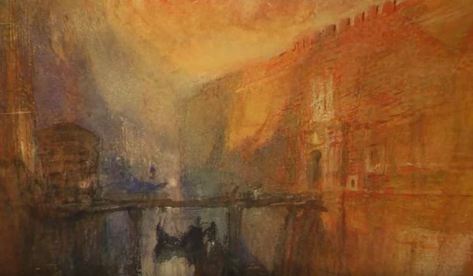
British painter J.M.W. Turner was both prolific and peripatetic, producing more than 30,000 watercolors during a lifetime in which he traveled throughout Europe.
But these works are extremely susceptible to light damage and can be shown only once in a generation. Now, they’re on view at the Mystic Seaport Museum in Connecticut — their only North American stop. Jared Bowen of WGBH reports.
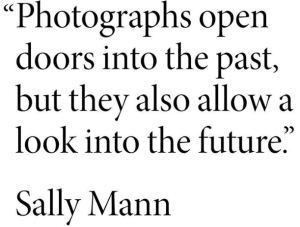
“People want to see photography and right now there are not a lot of places to do that,” he says. Showing “the best photography in the world” remains Fotografiska’s core mission, Broman says.
The global expansion of Fotografiska is finally taking shape. The Stockholm-based photography hub, founded in 2010 by brothers Jan and Per Broman, will open its New York outpost on 14 December, almost two months later than previously announced.
This follows a venue launched in June in Tallinn, Estonia, and anticipates the arrival in late 2020 of Fotografiska London, billed as the world’s largest photography gallery by the British Journal of Photography.
…the Ronald Reagan Presidential Foundation and Institute announced its “Operation Nighthawk Landing” project – a Reagan Foundation & Institute and Lockheed Martin Skunk Works® joint effort that will soon bring an F-117 Nighthawk Stealth Fighter to the Reagan Museum for permanent exhibition. Made possible by loan from the National Museum of the U.S. Air Force, the F-117 placed on display will serve as a visible reminder to the Library’s near half-million annual visitors of President Reagan’s commitment to the rebuilding of the U.S. military through his “Peace through Strength” program. The F-117 Nighthawk, Tail #803, nicknamed “Unexpected Guest,” flew more combat sorties (78) than all other F-117s combined. The aircraft entered service in May 1984, during President Reagan’s administration.
“The Reagan Library will now be one of two places in the nation where the general public can visit an F-117 Stealth Fighter on permanent display,” said John Heubusch, executive director of the Ronald Reagan Presidential Foundation and Institute. “We are deeply grateful to Lockheed Martin for their outstanding assistance in restoring the aircraft for such a meaningful display and to the U.S. Air Force for making it possible for the Reagan Library to exhibit the plane for millions of visitors to enjoy for years to come.”
The F-117 Nighthawk was the world’s first operational stealth aircraft. Between 1981 and 2008, Lockheed Martin produced 59 operational F-117s and five developmental prototypes, but the aircraft weren’t publicly acknowledged until 1988. Known as “stealth fighters,” the F-117’s angular shape was designed to reflect radar waves and was bolstered by the use of a radar-absorbing material. Because the aircraft was only expected to operate at night, it was painted black to make it more difficult to discern against the night sky.
An exhibit at South Carolina’s Columbia Museum of Art shows Vincent van Gogh in a new light. “Van Gogh and His Inspirations” presents the younger, wayward artist who learned from looking hard at the world — and the work of artists around him. A private collection of his inspirations is made public for the first time and presented alongside a dozen original van Gogh works. Jeffrey Brown reports.
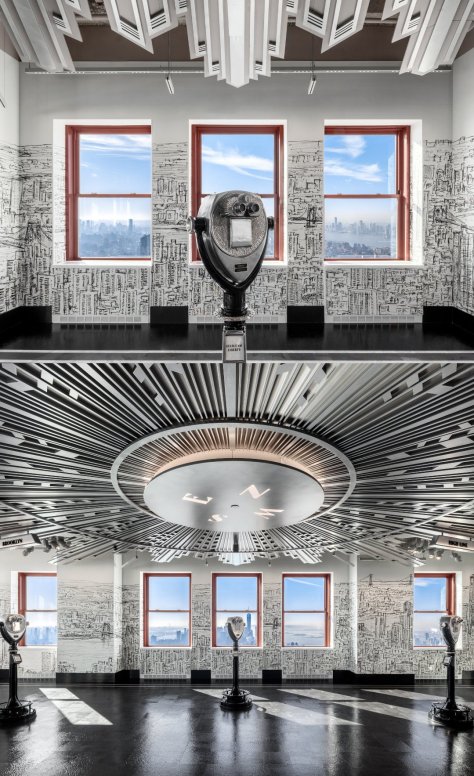
Our 80th Floor is officially re-opened – the final stage of our visitor experience redesign! The floor includes a special @nycgo exhibit that will create a custom itinerary for the rest of your trip, based on questions you answer about your interests! http://esbo.nyc/bc1
Over 200 of the world’s leading international Modern and contemporary art galleries display artworks by over 4,000 artists, including paintings, sculptures, installations, photography, film, video, and digital art. Visitors can find works ranging from editioned pieces by young artists to museum-caliber masterpieces.
A key writer of the late 19th century, Joris-Karl Huysmans (1848-1907) was an art critic who is still little known or little understood by the general public. However, his contribution to the artistic press and the aesthetic debate was as decisive as the impact of his novel Against Nature.
More passionate about Hals and Rembrandt until his discovery of Degas in 1876-1879, Huysmans admitted that this was a defining moment. And yet, his art criticism immediately accepted the possibility of a double modernity. The modernity of the painters of modern life and that of the explorers of dreams were not mutually exclusive. Here, Manet coexists with Rops and Redon. The desire Huysmans showed very early on to escape from the logic of church doctrine no doubt blurred the perception of his aesthetic choices.
How is a drapery put in place? For what reasons does this motive persist until today? How to explain its power of fascination? These are the questions that this exhibition intends to pose, in order to enter the “factory” of the drapery and to get closer to the artistic gesture. By showing the stages of making a drapery, the visitor will discover the singular practices of artists from the Renaissance to the second half of the 20th century.
November 30, 2019 – March 8, 2020, Museum of Fine Arts of Lyon
Albrecht Dürer, Drapery Study, 1508, Brush and Indian Ink, heightened white on dark green paper
The Musée des Beaux-Arts in Lyon retains an exceptional drawing by Albrecht Dürer studying a piece of drapery. This meticulous study reveals how the flexibility of a fabric lends itself to an infinity of folds, underlined by shadows and lights.
Caravaggio & Bernini: The Discovery of Emotions features some of the artists’ greatest works, but also charts their influence on others. And that influence proved to be powerful and enduring. Caravaggistas spread across Europe like termites. And so we could call this exhibition a battle of the swaggerers, the pomp of a very eclectic brand of Viennese historicism facing off against the theatrical push and preen of two great Italians.
Bernini, “Medusa” (1638–40)
From almost the beginning, Caravaggio, that man who arrived in Rome in the 1590s, is completely outrageous. Whom did he think were his principal patrons? Churchmen, of course. Did they care that he depicted John the Baptist in an extraordinary painting, circa 1602, as a carefree, lascivious, curly-haired boy with the cheekiest of grins imaginable?
The new MoMA opens. Cherished works return to the walls of the galleries in brand new frames, while curators and artists watch the completion of the reinstallation. After being closed for four months, MoMA reopens its doors to the public.
TABLE OF CONTENTS
0:13 – Associate sculpture conservator Roger Griffith and sculpture conservation fellow Joy Bloser clean Arthur Young’s Bell-47D1 Helicopter.
0:52 – Senior curator of Painting and Sculpture Anne Umland and chief curator of Painting and Sculpture Ann Temkin oversee the hanging of Pablo Picasso’s “Les Demoiselles d’Avignon.”
1:20 – Peter Perez, frame shop foreman, discusses “The Starry Night’s” new, black frame.
2:53 – Artist Amy Sillman explains how she curated and arranged “The Shape of Shape,” part of the long-running Artist’s Choice exhibition series in which artists selects works to show from the Museum’s collection
4:17 – Photography curator Sarah Meister and conservator Lee Ann Daffner adjust the lighting on Joseph-Philibert Girault de Prangey’s “Rome. Arch of Septimus Severus and Capitoline Lion.”
5:02 – Senior deputy director of exhibitions and collections Ramona Bronkar Bannayan and director of exhibition design and production Lana Hum make a final checklist of things to accomplish before the opening.
5:32 – Artist Betye Saar sees her exhibition for the first time.
7:11 – Manager of enterprise applications Rik Vanmechelen and developer Ryan Sprott check the new ticket machines.
8:04 – Chief facilities and safety officer Tunji Adeniji welcomes the public to the new MoMA on opening day.
8:30 – Silent film accompanist Ben Model improvises a live piano soundtrack for Frank Powell’s 1915 film “A Fool There Was.”
9:12 – Security supervisor Chet Gold greets volunteer Fred Liberman. Gold returns to his favorite room in the new MoMA.
News, Views and Reviews For The Intellectually Curious


 “People want to see photography and right now there are not a lot of places to do that,” he says. Showing “the best photography in the world” remains Fotografiska’s core mission, Broman says.


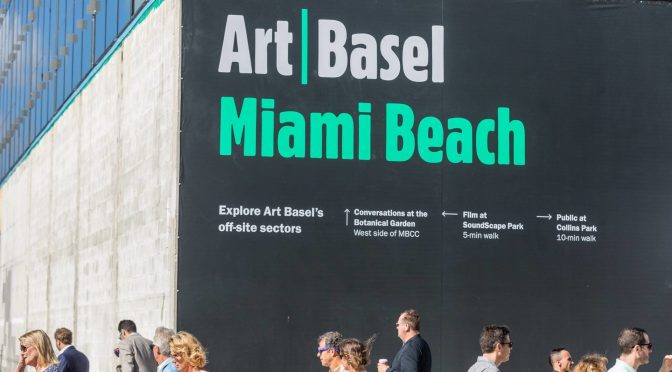
 Over 200 of the world’s leading international Modern and contemporary art galleries display artworks by over 4,000 artists, including paintings, sculptures, installations, photography, film, video, and digital art. Visitors can find works ranging from editioned pieces by young artists to museum-caliber masterpieces.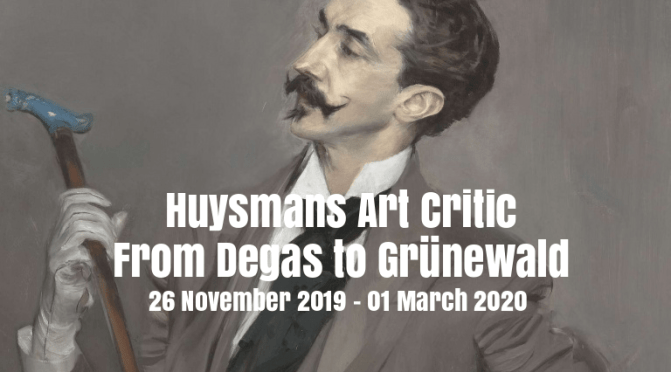
 A key writer of the late 19th century, Joris-Karl Huysmans (1848-1907) was an art critic who is still little known or little understood by the general public. However, his contribution to the artistic press and the aesthetic debate was as decisive as the impact of his novel
 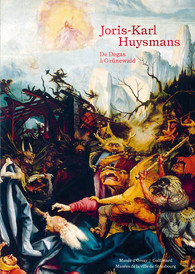 More passionate about Hals and Rembrandt until his discovery of Degas in 1876-1879, Huysmans admitted that this was a defining moment. And yet, his art criticism immediately accepted the possibility of a double modernity. The modernity of the painters of modern life and that of the explorers of dreams were not mutually exclusive. Here, Manet coexists with Rops and Redon. The desire Huysmans showed very early on to escape from the logic of church doctrine no doubt blurred the perception of his aesthetic choices.
 How is a drapery put in place? For what reasons does this motive persist until today? How to explain its power of fascination? These are the questions that this exhibition intends to pose, in order to enter the “factory” of the drapery and to get closer to the artistic gesture. By showing the stages of making a drapery, the visitor will discover the singular practices of artists from the Renaissance to the second half of the 20th century.
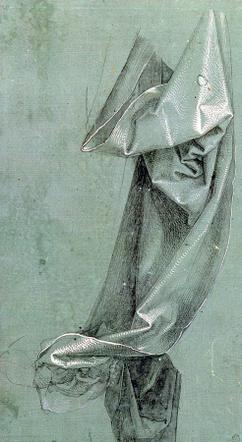 Albrecht Dürer, Drapery Study, 1508, Brush and Indian Ink, heightened white on dark green paper


 Boomers Daily