Over 200 of the world’s leading international Modern and contemporary art galleries display artworks by over 4,000 artists, including paintings, sculptures, installations, photography, film, video, and digital art. Visitors can find works ranging from editioned pieces by young artists to museum-caliber masterpieces.
A key writer of the late 19th century, Joris-Karl Huysmans (1848-1907) was an art critic who is still little known or little understood by the general public. However, his contribution to the artistic press and the aesthetic debate was as decisive as the impact of his novel Against Nature.
More passionate about Hals and Rembrandt until his discovery of Degas in 1876-1879, Huysmans admitted that this was a defining moment. And yet, his art criticism immediately accepted the possibility of a double modernity. The modernity of the painters of modern life and that of the explorers of dreams were not mutually exclusive. Here, Manet coexists with Rops and Redon. The desire Huysmans showed very early on to escape from the logic of church doctrine no doubt blurred the perception of his aesthetic choices.
How is a drapery put in place? For what reasons does this motive persist until today? How to explain its power of fascination? These are the questions that this exhibition intends to pose, in order to enter the “factory” of the drapery and to get closer to the artistic gesture. By showing the stages of making a drapery, the visitor will discover the singular practices of artists from the Renaissance to the second half of the 20th century.
November 30, 2019 – March 8, 2020, Museum of Fine Arts of Lyon
Albrecht Dürer, Drapery Study, 1508, Brush and Indian Ink, heightened white on dark green paper
The Musée des Beaux-Arts in Lyon retains an exceptional drawing by Albrecht Dürer studying a piece of drapery. This meticulous study reveals how the flexibility of a fabric lends itself to an infinity of folds, underlined by shadows and lights.
Caravaggio & Bernini: The Discovery of Emotions features some of the artists’ greatest works, but also charts their influence on others. And that influence proved to be powerful and enduring. Caravaggistas spread across Europe like termites. And so we could call this exhibition a battle of the swaggerers, the pomp of a very eclectic brand of Viennese historicism facing off against the theatrical push and preen of two great Italians.
Bernini, “Medusa” (1638–40)
From almost the beginning, Caravaggio, that man who arrived in Rome in the 1590s, is completely outrageous. Whom did he think were his principal patrons? Churchmen, of course. Did they care that he depicted John the Baptist in an extraordinary painting, circa 1602, as a carefree, lascivious, curly-haired boy with the cheekiest of grins imaginable?
The new MoMA opens. Cherished works return to the walls of the galleries in brand new frames, while curators and artists watch the completion of the reinstallation. After being closed for four months, MoMA reopens its doors to the public.
TABLE OF CONTENTS
0:13 – Associate sculpture conservator Roger Griffith and sculpture conservation fellow Joy Bloser clean Arthur Young’s Bell-47D1 Helicopter.
0:52 – Senior curator of Painting and Sculpture Anne Umland and chief curator of Painting and Sculpture Ann Temkin oversee the hanging of Pablo Picasso’s “Les Demoiselles d’Avignon.”
1:20 – Peter Perez, frame shop foreman, discusses “The Starry Night’s” new, black frame.
2:53 – Artist Amy Sillman explains how she curated and arranged “The Shape of Shape,” part of the long-running Artist’s Choice exhibition series in which artists selects works to show from the Museum’s collection
4:17 – Photography curator Sarah Meister and conservator Lee Ann Daffner adjust the lighting on Joseph-Philibert Girault de Prangey’s “Rome. Arch of Septimus Severus and Capitoline Lion.”
5:02 – Senior deputy director of exhibitions and collections Ramona Bronkar Bannayan and director of exhibition design and production Lana Hum make a final checklist of things to accomplish before the opening.
5:32 – Artist Betye Saar sees her exhibition for the first time.
7:11 – Manager of enterprise applications Rik Vanmechelen and developer Ryan Sprott check the new ticket machines.
8:04 – Chief facilities and safety officer Tunji Adeniji welcomes the public to the new MoMA on opening day.
8:30 – Silent film accompanist Ben Model improvises a live piano soundtrack for Frank Powell’s 1915 film “A Fool There Was.”
9:12 – Security supervisor Chet Gold greets volunteer Fred Liberman. Gold returns to his favorite room in the new MoMA.
Featured cars have won many of the world’s most iconic races, including Le Mans, the Indianapolis 500, and the Italian Grand Prix, and were loaned to the Museum by internationally recognized collectors from Arizona and across the United States. Legends of Speed offers an unparalleled opportunity for Museum guests to experience and learn about some of the most successful and famous racecars of all time.
Legends of Speed is the first major exhibition of racing cars presented at Phoenix Art Museum. Opening in fall 2019 and featuring more than 20 legendary cars by Maserati, Mercedes, Alfa Romeo, Ford, and more, the landmark exhibition showcases an unprecedented collection of cars driven by some of the greatest drivers in the history of racing, including A.J. Foyt, Dan Gurney, and Stirling Moss.
In “Unto This Last and Other Essays on Art and Political Economy” (1860), which gives the exhibition its title, Ruskin “sees” interconnected social injustices. He attacks economic inequality. Later, he sets out to establish a utopian community in working-class Sheffield, England. In one gallery we see his influence on “progressive thinkers worldwide.” Gandhi said that reading “Unto This Last” in 1904 transformed his life and ideas.
The novelist Charlotte Brontë exclaimed after reading that first volume, “I feel now as if I had been walking blindfold[ed]—this book seems to give me eyes.”
‘If you can paint one leaf,” John Ruskin once declared, “you can paint the world.” And in “Unto This Last: Two Hundred Years of John Ruskin”—the hypnotically potent (though flawed) exhibition at the Yale Center for British Art marking the bicentennial of his birth—we see how wonderfully he kept trying.
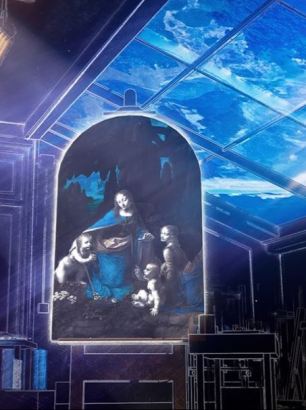
The secrets of Leonardo’s masterpiece are revealed in four distinct spaces. Each space invites you to look at ‘The Virgin of the Rocks’ in a new way.
The mind of Leonardo
Start your journey in a landscape populated by the thoughts and ideas of Leonardo as he sets about painting ‘The Virgin of the Rocks’.
The studio
Discover the secrets only science and conservation can reveal in this projection-filled space which unlocks the mysteries of how ‘The Virgin of the Rocks’ was painted and reveals the lost composition hidden beneath the painted surface.
The light and shadow experiment
Take part in the room-sized experiment to discover the dramatic effects of light and shadow on Leonardo’s composition for ‘The Virgin of the Rocks’.
The imagined chapel
At the end of your journey, you will come face to face with the original masterpiece where it hangs on the walls of an imagined chapel for you to contemplate how ‘The Virgin of the Rocks’ might have appeared in its original setting as part of an elaborate altarpiece.
James McElhinney: Discover the Hudson Anew presents the painter’s sketch books and prints related to the River in a comprehensive showing for the first time. A video program, animating turning pages, will allow visitors to see additional sketchbook paintings. McElhinney says he wants his art to demonstrate “that constructive dialogue between humanity and nature is alive and well, while underscoring how art provides durable and dynamic modes of engagement.”
Big ideas often come in small packages. James McElhinney has journeyed around the world with a pocket-size sketchbook and watercolor tin, communing with nature, and stopping to observe and record the glorious views around him. Fourteen years ago, during a period of convalescence, he used a sketchbook and watercolor to paint views from his hospital windows. That pragmatic decision was pivotal for the artist. He fell in love with the mobility and intimacy of this small-format media, which can be packed into the lining of a hiking vest, following in the footsteps of historical expeditionary artists. Since then, he has engaged in pictorial conversation with the Hudson River, always with materials on hand.
While all of the works on exhibit hold special interest, Aurisch identifies several gems. For example, Van Gogh fans will enjoy his spectacular perspectival rooftop view from the window of his room in The Hague in 1882. Maurice de Vlaminc’s 1906 Dancer at the “Rat Mort” (La danseuse du “Rat Mort”) is a delight with his Fauve treatment of the figure; through color and gestural line, it’s as though we are witnessing a shift into the 20th century. And Henri Matisse’s 1943 still life titled Lemons against a Fleur-de-lis Background (Citrons sur fond rose fleurdelisé) vibrates with lively pink patterned wallpaper and a stacked brick platform, charged with Japonisme energy.
This fall season, the Museum of Fine Arts, Houston presents Monet to Picasso: A Very Private Collection and Berthe Morisot: Impressionist Original, billed together under the theme of “An Impressionist Autumn,” on view Oct. 20, 2019 through Jan. 12, 2020. The two exhibitions offer museum visitors the chance to peek into the private lives of artist, muse, and society at large.


 Over 200 of the world’s leading international Modern and contemporary art galleries display artworks by over 4,000 artists, including paintings, sculptures, installations, photography, film, video, and digital art. Visitors can find works ranging from editioned pieces by young artists to museum-caliber masterpieces.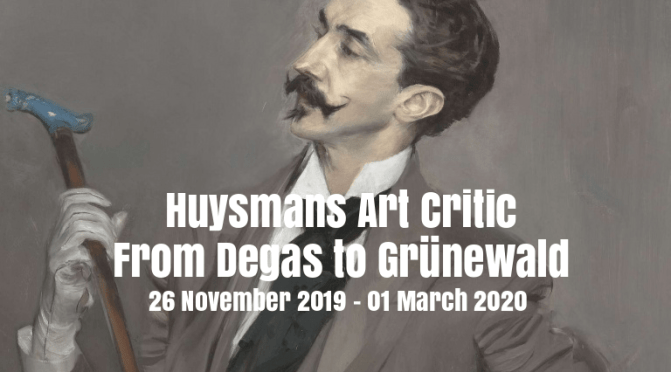
 A key writer of the late 19th century, Joris-Karl Huysmans (1848-1907) was an art critic who is still little known or little understood by the general public. However, his contribution to the artistic press and the aesthetic debate was as decisive as the impact of his novel
 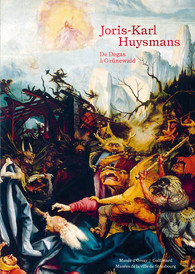 More passionate about Hals and Rembrandt until his discovery of Degas in 1876-1879, Huysmans admitted that this was a defining moment. And yet, his art criticism immediately accepted the possibility of a double modernity. The modernity of the painters of modern life and that of the explorers of dreams were not mutually exclusive. Here, Manet coexists with Rops and Redon. The desire Huysmans showed very early on to escape from the logic of church doctrine no doubt blurred the perception of his aesthetic choices.
 How is a drapery put in place? For what reasons does this motive persist until today? How to explain its power of fascination? These are the questions that this exhibition intends to pose, in order to enter the “factory” of the drapery and to get closer to the artistic gesture. By showing the stages of making a drapery, the visitor will discover the singular practices of artists from the Renaissance to the second half of the 20th century.
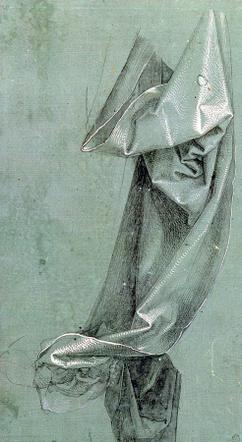 Albrecht Dürer, Drapery Study, 1508, Brush and Indian Ink, heightened white on dark green paper


 In “Unto This Last and Other Essays on Art and Political Economy” (1860), which gives the exhibition its title, Ruskin “sees” interconnected social injustices. He attacks economic inequality. Later, he sets out to establish a utopian community in working-class Sheffield, England. In one gallery we see his influence on “progressive thinkers worldwide.” Gandhi said that reading “Unto This Last” in 1904 transformed his life and ideas.
 ‘If you can paint one leaf,” John Ruskin once declared, “you can paint the world.” And in “Unto This Last: Two Hundred Years of John Ruskin”—the hypnotically potent (though flawed) exhibition at the Yale Center for British Art marking the bicentennial of his birth—we see how wonderfully he kept trying.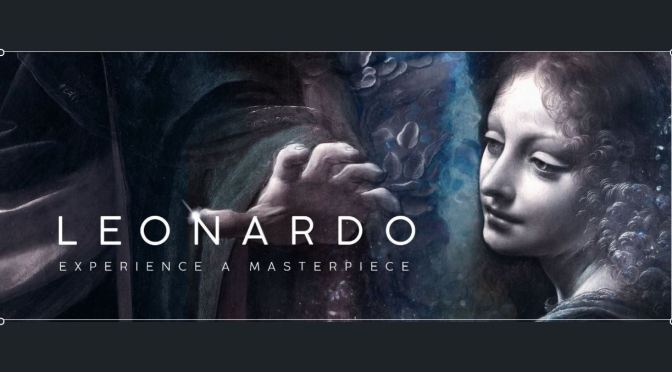
 The mind of Leonardo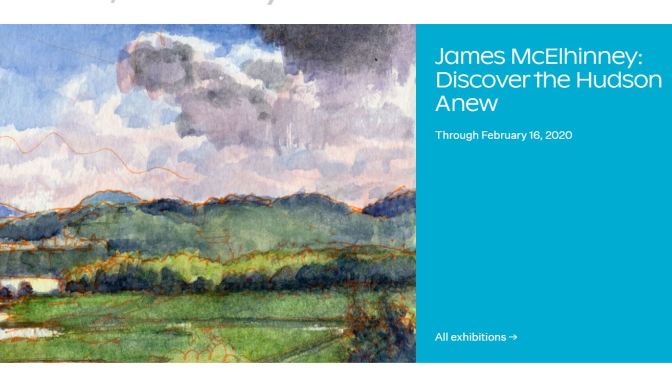
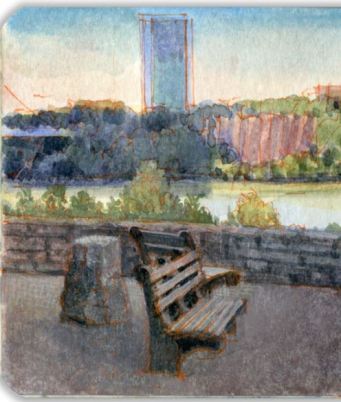 James McElhinney: Discover the Hudson Anew presents the painter’s sketch books and prints related to the River in a comprehensive showing for the first time. A video program, animating turning pages, will allow visitors to see additional sketchbook paintings. McElhinney says he wants his art to demonstrate “that constructive dialogue between humanity and nature is alive and well, while underscoring how art provides durable and dynamic modes of engagement.”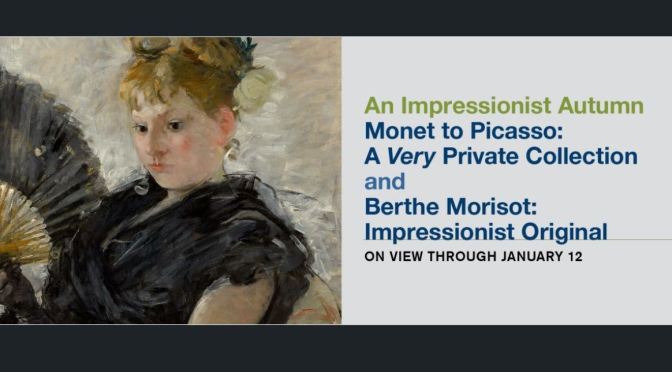
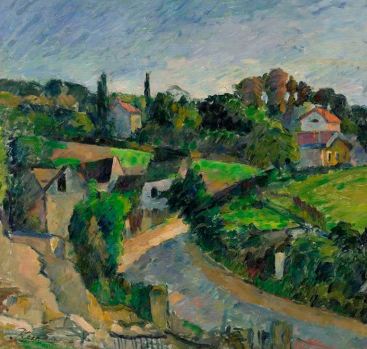 While all of the works on exhibit hold special interest, Aurisch identifies several gems. For example, Van Gogh fans will enjoy his spectacular perspectival rooftop view from the window of his room in The Hague in 1882. Maurice de Vlaminc’s 1906 Dancer at the “Rat Mort” (La danseuse du “Rat Mort”) is a delight with his Fauve treatment of the figure; through color and gestural line, it’s as though we are witnessing a shift into the 20th century. And Henri Matisse’s 1943 still life titled Lemons against a Fleur-de-lis Background (Citrons sur fond rose fleurdelisé) vibrates with lively pink patterned wallpaper and a stacked brick platform, charged with Japonisme energy.
 Boomers Daily