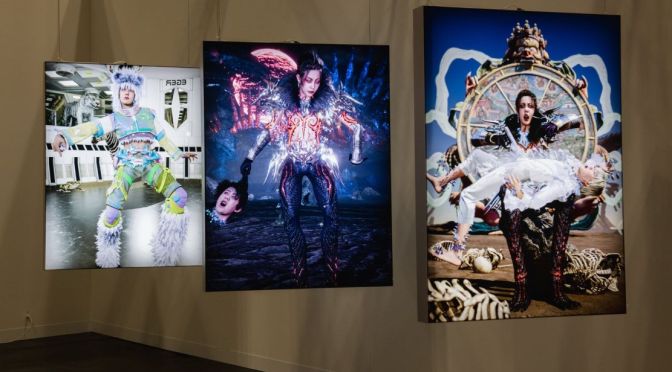
A cornerstone of New York’s cultural landscape since its founding in 1994, The Armory Show brings the world’s leading international contemporary and modern art galleries to New York each year.
The fair plays a leading role in the city’s position as an important cultural capital through elevated presentations, thoughtful programming, curatorial leadership, meaningful institutional partnerships, and engaging public art activations.
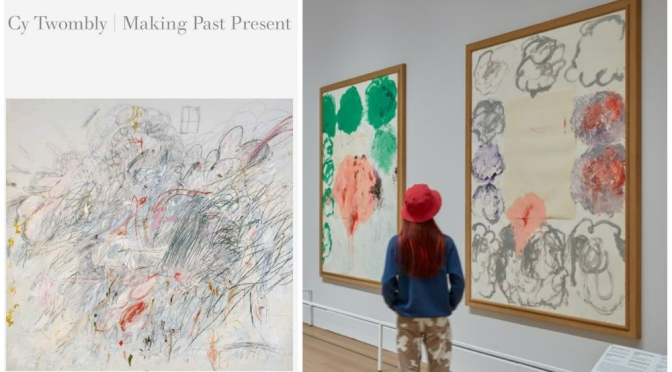
American artist Cy Twombly’s engagement with the art and poetry of ancient Greece and Rome played a central role in his creative process. This exhibition explores Twombly’s lifelong fascination with the ancient Mediterranean world through evocative groupings of his paintings, drawings, prints, and sculpture made from the mid-20th to the early 21st century, tracing an imaginative journey of encounters with and responses to ancient texts and artifacts. The presentation includes Greek and Roman antiquities from the artist’s personal collection, on public display for the first time.
Organized by the J. Paul Getty Museum, Los Angeles, and the Museum of Fine Arts, Boston Supported by an indemnity from the Federal Council on the Arts and the Humanities Major support from Jo Carole and Ronald S. Lauder Generously sponsored by
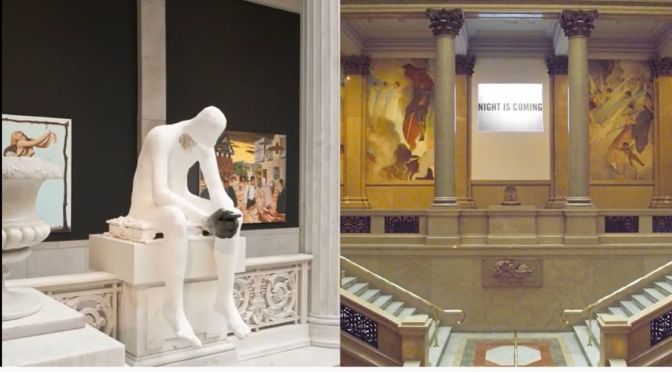
Established in 1896, the Carnegie International is the longest-running North American exhibition of international art. Organized every three to four years by Carnegie Museum of Art, the International presents an overview of how art and artists respond to the critical questions of our time.
Discover the history of this storied exhibition through archival footage and historical photographs, accompanied by the voices of curators and artists.
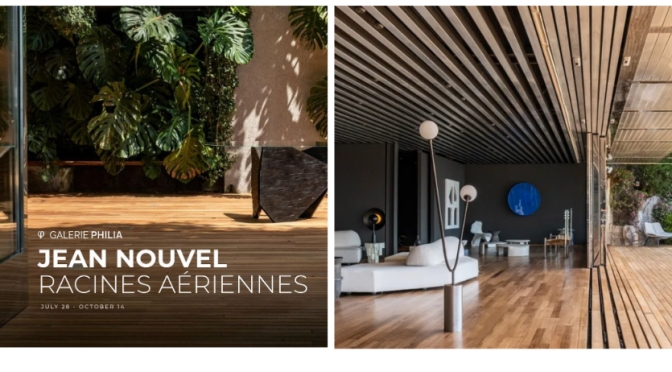
Galerie Philia is proud to announce its summer exhibition taking place in two villas designed by Jean Nouvel and commissioned by Rivere Group on the luxurious Cote d’Azur. Villa Maeterlinck in Nice and villa in St Jean Cap Ferrat, both are perfectly integrated into the landscape and boast terrace gardens in front of wide private sea views on the Mediterranean.
Tillandsias in Saint Jean Cap Ferrat and Monsteras in Nice were planted by Jean Nouvel as an ode to their aerian roots. This specific fauna is in complete harmony with the asesthetic of the influential architect whose innovative aerian principle transforms buildings into dematerialized natural environments. Set in a mesmerizing atmosphere, between the breath-taking coast and the unassuming minimalism of Nouvel, Galerie Philia enhances this dialogue between the aesthetic of the architecture and its natural surroundings.
The concept of aerian roots is in the heart of the scenography of Galerie Philia as transcultural art and design works were selected for the plural and complex aesthetic and national identities they convey. Completed in 2015 and placed right by the famous Maeterlinck Palace, Villa Maeterlink is carved into the rock. Situated just by the waterfront, all of the rooms in the villa have a full view of the sea, with a living room spanning 40m2 without posts (cantilevered).
Set in a grand plot of 8600 m2, the entire house is made to measure including the stainless steel ceilings, light fixtures, and inox surfaces along with a multitude of special details that make this a truly unique place. The space breaths at all times thanks to the sliding partitions that were built in a studied way to dissipate the boundary between interior and exterior in this house that opens to the sea, and the stainless steel ceiling of the house allows one to see the sea at all times.
Blending with the unique and entirely customized architecture of Jean Nouvel, Galerie Philia’s elegant collection of sculptural design and art dresses these villas in a new look and create stunning vistas, transforming them into a living and breathing homes. The gardens and the interior of both villas are united by a harmonious scenography and become a reflection of the lightness of Nouvel’s aesthetic. The exhibition features unique pieces by Frederic Saulou, Andrés Monnier, Arno Declercq, Jojo Corväiá, Rick Owens, Elsa Foulon, Jan Ernst and many more designers represented by Galerie Philia.
The hand-carved stone firepit of Andres Monnier creates a radiant atmosphere in the patio with the ravishing views of plants as Gerard Kuijpers’ Dancing Stones move with the breeze from the mediterranean. Arno Declercq’s unique daybed accommodates a relaxing environment in the cozy living space and Jörg Pietschmann’s solid oak unique bench invites one to enjoy the monstera haven. The Revue Eclipse collaborated with Galerie Philia on the fine art selection, and internationally known artists will be exhibited such as Sam Szafran, Flora Temnouche, Edgar Sarin, Manuel Merida, Francisco Salazar, Jörg Kratz and Mateo Revillo.
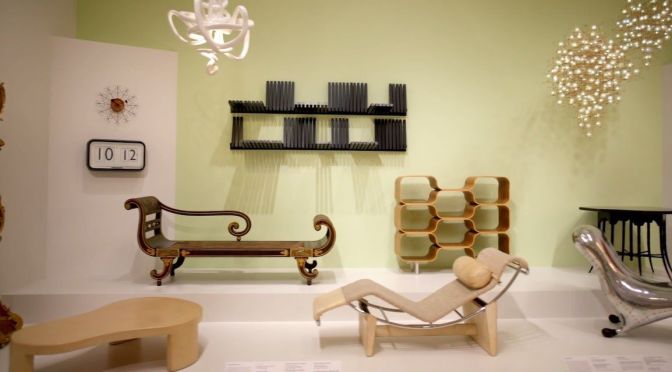
Extraordinary Ordinary Things, Carnegie Museum of Art’s latest decorative arts and design exhibition, features more than 300 objects from our expansive collection, which dates back to the founding of the museum in 1895.
In this video, the museum team takes you behind the scenes for a look at how this exhibition came to be, while sharing stories about a few of the remarkable objects in the show! Spanning some of the most significant design developments of the past three centuries, the works on view in Extraordinary Ordinary Things offer boundless inspiration and present the endless possibilities for functional design for visitors to learn about, consider, and enjoy.
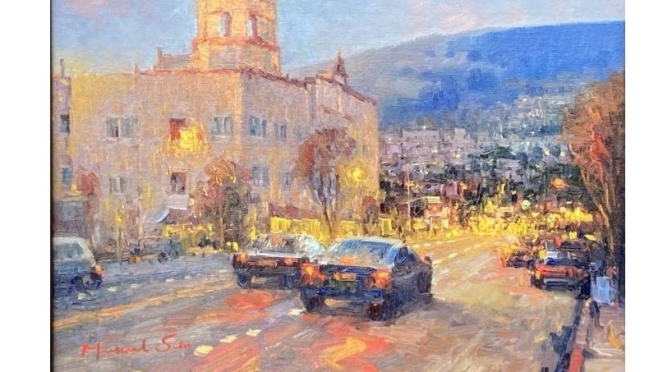
As one of the nation’s oldest and most highly acclaimed juried fine art shows, the Laguna Beach Festival of Arts has offered a breathtaking showcase for artists and art lovers for 90 years.
Set in a beautiful open-air gallery, this highly acclaimed juried fine art show features the work of over 100 award-winning Orange County artists. From paintings, glass, ceramics, photography and more, the Festival showcases a variety of mediums and artwork styles for avid collectors and festivalgoers to browse and purchase directly from the artists.
From early July through the end of August, the Festival of Arts opens its doors daily for visitors to not only enjoy the award-winning work of exhibited artists, but also art demonstrations, live music performances on select days, opportunities to meet the artists and more.
Picasso & Braque: Radicals highlights significant work by the two pioneers of the Cubist art movement—Pablo Picasso and Georges Braque. Cubism, one of the most influential artistic developments of the twentieth century, challenged traditional perspectives of how we see the world. The movement is characterized by fractured viewpoints and abstracted forms and defies established notions of three-dimensionality. Cubism can be intellectually challenging but beautifully reflects the dynamism, rhythm, and innovation of the early 1900s.
Although there is debate on who developed Cubism first, Picasso and Braque are credited with establishing this new visual language that presented infinite possibilities and catalyzed future developments in the visual arts. This exhibition features work by twentieth-century artists who took inspiration from these revolutionary ideas and practices, including American artists Fannie Hillsmith and John Marin, and Texas artist Bill Reily, among others. Paintings, drawings, sculptures, and prints demonstrate how Cubism transcended time and space.
Picasso & Braque: Radicals is organized for the McNay Art Museum by Lyle W. Williams, Curator of Prints and Drawings, Curator of Modern Art; and Rafael Fernando Gutierrez Jr., the inaugural Douglass Foundation Intern in Curatorial Studies.
With nearly 1,500 artworks on display, there is a lot to see at the Royal Academy of Arts (RA) Summer Exhibition 2022. If you want a taste of what’s on show then here is a quick tour. The theme chosen by the exhibition’s coordinator, Alison Wilding RA, is Climate. It begins outside, where a large-scale immersive installation by Spanish artist Cristina Iglesias brings nature and water to the courtyard. Inside, the artworks are spread over 11 rooms, including two galleries of prints selected by Grayson Perry RA.
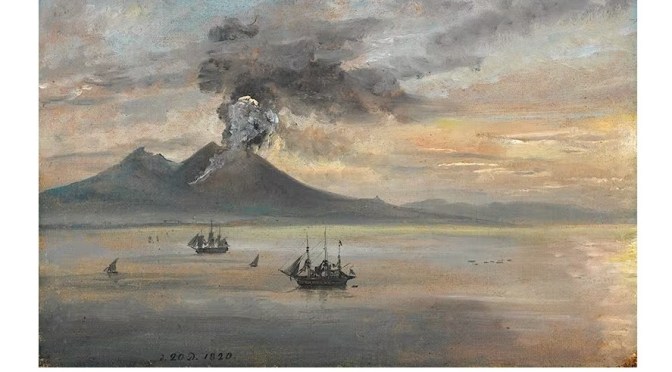
‘It is desirable for a Painter, at least once in his life, to witness the Eruption of a volcano.’ – Pierre-Henri de Valenciennes (1799). Join exhibition contributor Clive Oppenheimer, Professor of Volcanology at the Department of Geography at the University of Cambridge, and explore the ‘Volcanoes’ section of True to Nature. #TrueToNature is open at the Fitzwilliam Museum until 29 August 2022 https://fitz.ms/ttn
“The underworld, the afterlife, is fairly dank, dark, shadowy; quite frankly, it’s a bit boring. Somewhat like waiting at a bus depot.”
Homer’s Odyssey depicts an afterlife that is relatively dull, with heroic actions and glory reserved for the living. Nonetheless, people in Southern Italy in the fourth century BCE were captivated by the underworld and decorated large funerary vases with scenes of the afterlife—the domain of Hades and Persephone, where sinners like Sisyphus are tortured for eternity and heroes like Herakles and Orpheus performed daring feats.
Little is known about precisely how these vases were used and seen in death rituals. A new book by Getty Publications, Underworld: Imagining the Afterlife in Ancient South Italian Vase Painting, brings together 40 such vases and explores new research on them.
In this episode, Getty Museum curator of antiquities David Saunders discusses these enormous and often elaborate vases, explaining the myths they depict and what is known about the ways in which they were used. Saunders is editor of Underworld.



 Boomers Daily