

This week’s stories of the week include: 00:18 Best ways to stay cool 01:31 Berlin Airport to become Eco neighbourhood 02:58 German city goes dark to save energy 04:22 South African Clean Water Solution
Category Archives: Economics
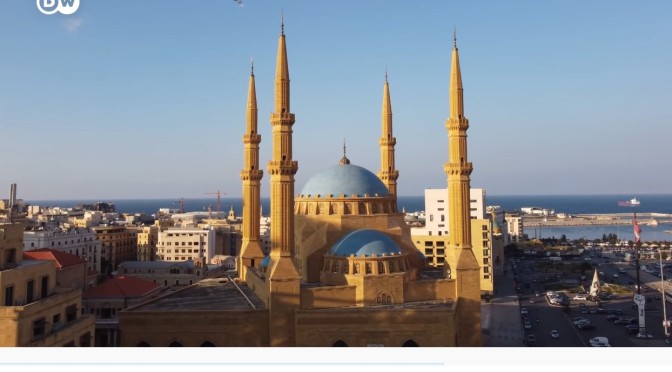
Documentary: Lebanon’s Historic Economic Crisis
Lebanon is now going through the worst economic crisis in its history. 80 per cent of the population lives below the poverty line. In one year, food prices have jumped 500 per cent due to galloping inflation. Lebanon was long regarded as the Switzerland of the Middle East.
But those days are gone. A series of crises have plunged the nation into the abyss. And its people are suffering. For Riad, who runs a grocery store in the suburbs of Beirut, business has become hellish. Every morning, calculator in hand, he changes the labels of his products according to the day’s exchange rate. An operation made all the more complex by the fact that his store is plunged into darkness, due to a lack of electricity.
The Lebanese government no longer provides more than two hours of electricity per day in the country. It is impossible for the population to heat, light or use their refrigerators. Taking advantage of the situation, a network of private generators has emerged. The Lebanese pound, the local currency, has lost 90 per cent of its value.
The only people unaffected are those paid in dollars. The greenback, which can be exchanged for a small fortune against the local currency, has created a new privileged social class in the country. A salesman in an international pharmaceutical company, Joseph lives like a king in a ruined Lebanon. Thanks to his new purchasing power, he repaid his mortgage in two months, instead of… twenty years!
In a bankrupt state, plagued by corruption, six out of ten Lebanese now dream of leaving the country. In Tripoli, in northern Lebanon, Mohammed and his son set out for Germany by sea. Even though the trip was cut short off the Turkish coast, the young father is still ready to take all possible risks to reach the European Eldorado.
Opinion: Ukrainians Who Fled To Russia, Notions Of The Sun, Economic Magic
A selection of three essential articles read aloud from the latest issue of The Economist. This week, what happened to the Ukrainians who fled to Russia, how the sun is both our creator and destroyer (27:56), and how magicians won the attention economy (34:32).
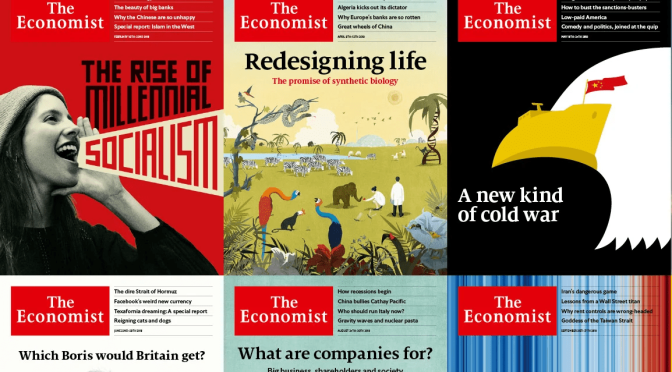
Covers: The Economist Magazine – July 23, 2022
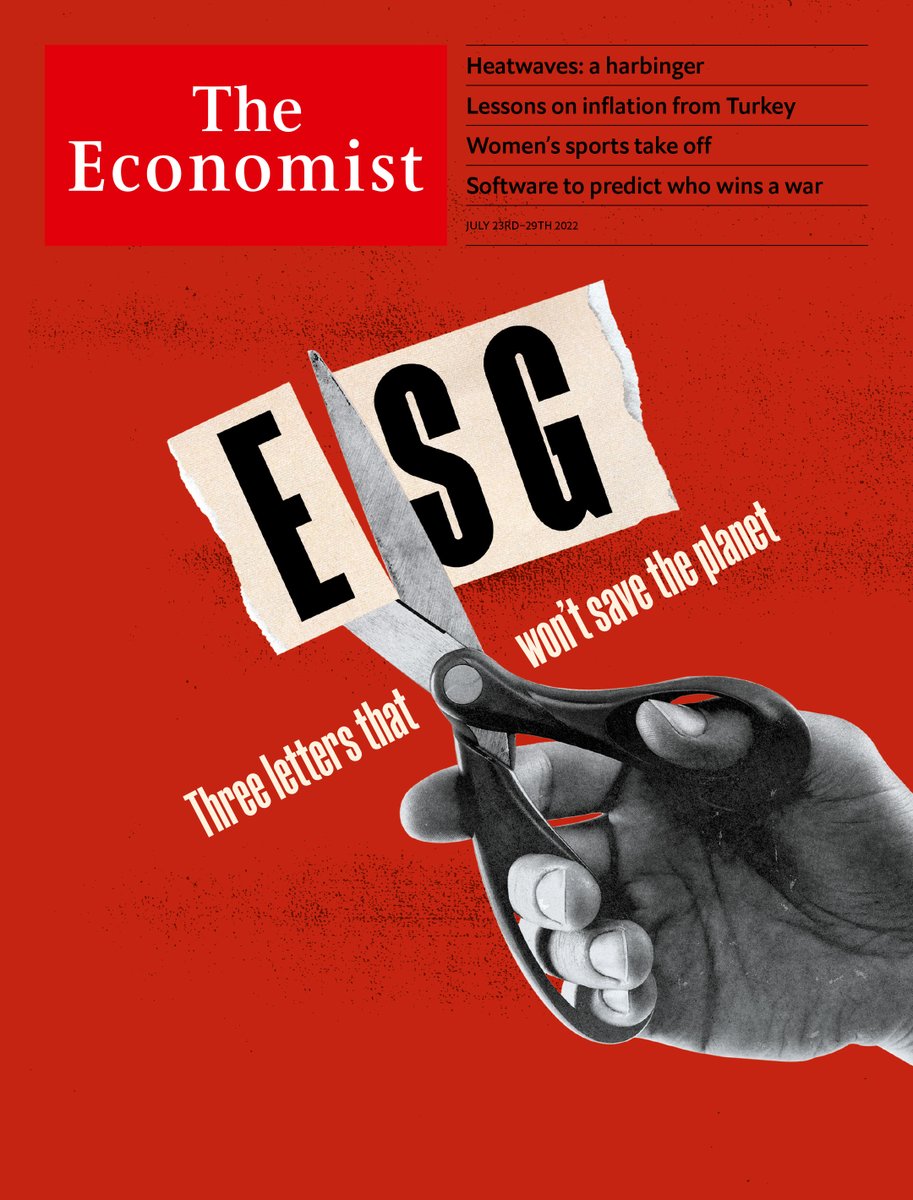
ESG is often well-meaning but it is deeply flawed. The industry is a mess and needs to be ruthlessly streamlined.
If you are the type of person who is loth to invest in firms that pollute the planet, mistreat workers and stuff their boards with cronies, you will no doubt be aware of one of the hottest trends in finance: environmental, social and governance (esg) investing. It is an attempt to make capitalism work better and deal with the grave threat posed by climate change. It has ballooned in recent years; the titans of investment management claim that more than a third of their assets, or $35trn in total, are monitored through one esg lens or another. It is on the lips of bosses and officials everywhere.
Preview: The Economist Magazine – July 18, 2022
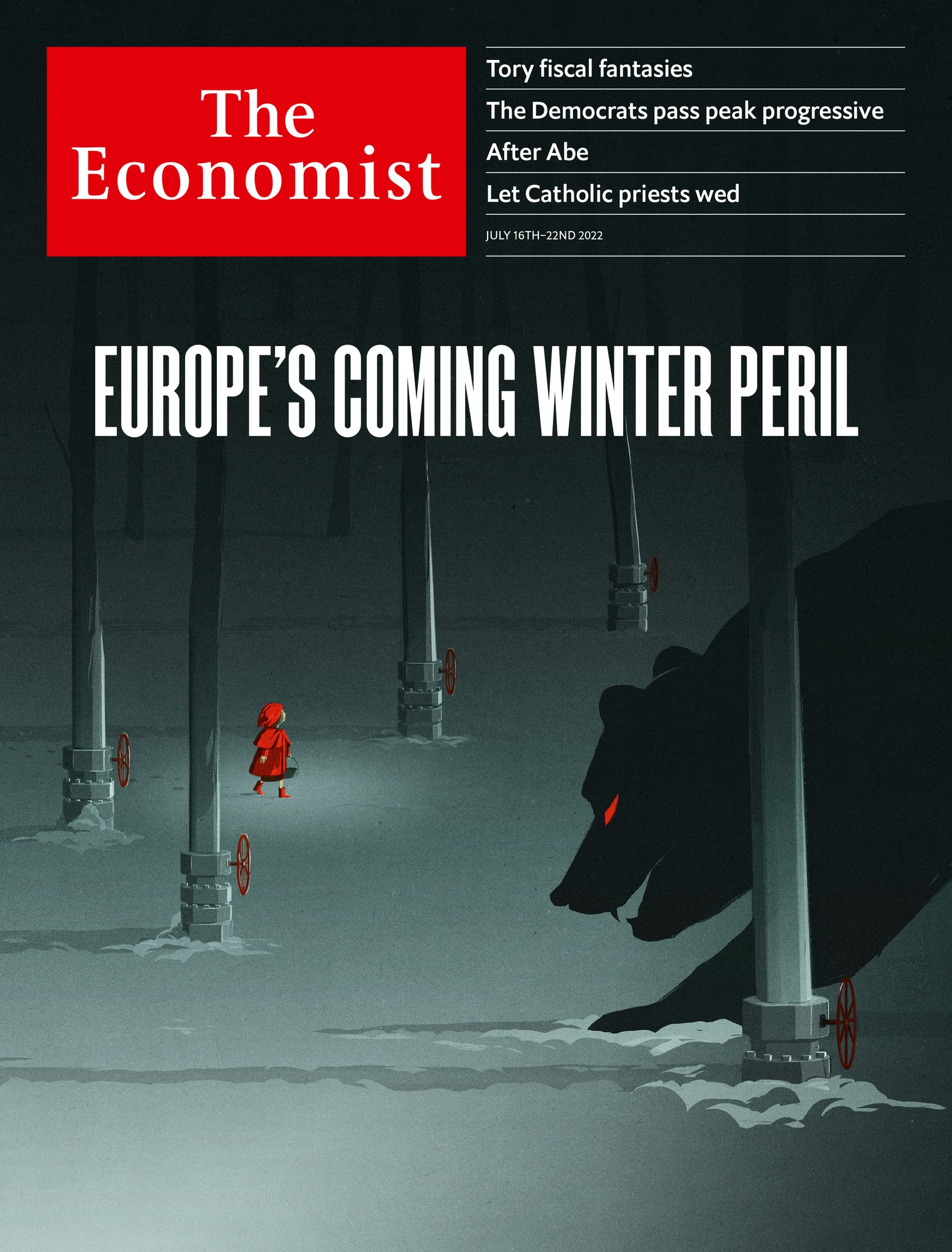
The Economist, July 18, 2022 – Europe’s winter of discontent
Even as temperatures soar Europe faces a bitter energy crisis later this year
There may be a heatwave in Europe, but winter is coming. It promises to be brutal and divisive: the energy crisis is rapidly worsening as Vladimir Putin strangles gas supplies https://econ.st/3aJz3ir
Preview: The Economist Magazine – July 9, 2022

The hype about TikTok is justified—and so are the concerns. There’s a reason why the world’s most exciting app is also its most mistrusted https://econ.st/3bQE9JX
Preview: The Economist Magazine – July 2, 2022
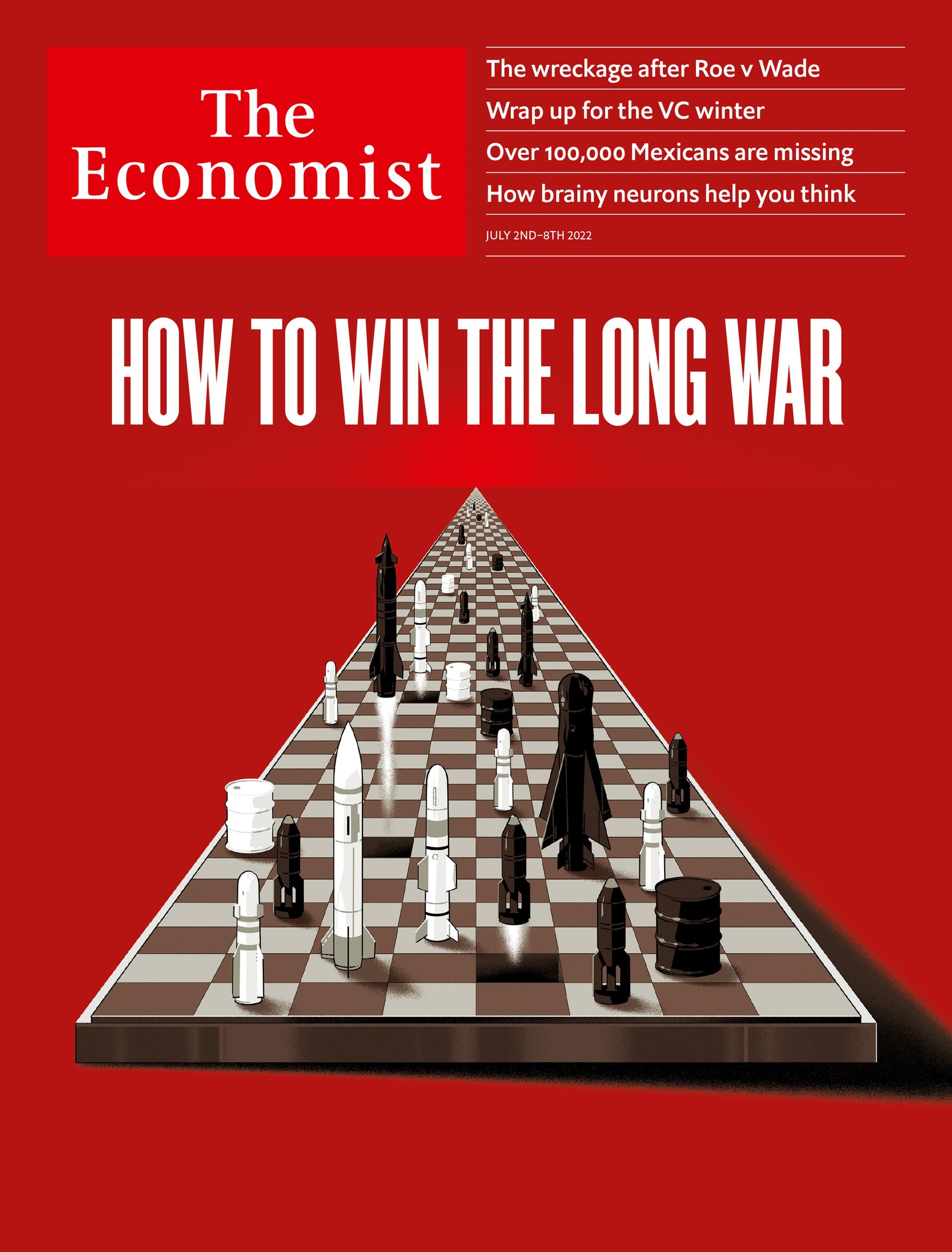
Ukraine won the short war. Now comes the long war, and so far, Russia is winning. But it does not have to be fought on Vladimir Putin’s terms
Ukraine won the short war. Mobile and resourceful, its troops inflicted terrible losses and confounded Russian plans to take Kyiv. Now comes the long war. It will drain weapons, lives and money until one side loses the will to fight on. So far, this is a war that Russia is winning.
In recent days its forces have taken the eastern city of Severodonetsk. They are advancing on Lysychansk and may soon control all of Luhansk province. They also threaten Slovyansk, in the north of next-door Donetsk. Ukrainian leaders say they are outgunned and lack ammunition. Their government reckons as many as 200 of its troops are dying each day.
Read more: https://econ.trib.al/tGgFvii
Preview: The Economist Magazine – June 25, 2022
How to fix the world’s energy emergency without wrecking the environment
Even as they firefight, governments must resolve the conflict between safe supply and a safe climate.
This year’s energy shock is the most serious since the Middle Eastern oil crises of 1973 and 1979. Like those calamities, it promises to inflict short-term pain and in the longer term to transform the energy industry. The pain is all but guaranteed: owing to high fuel and power prices, most countries are facing soggy growth, inflation, squeezed living standards and a savage political backlash. But the long-run consequences are far from preordained. If governments respond ineptly, they could trigger a relapse towards fossil fuels that makes it even harder to stabilise the climate. Instead they must follow a perilous path that combines security of energy supply with climate security.
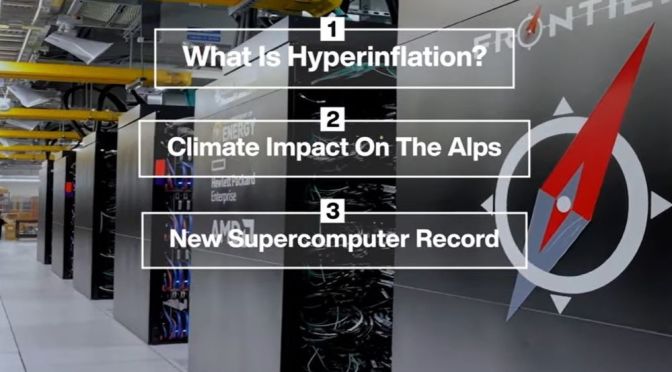
World Economic Forum: Top Stories Of The Week
This week The World Economic Forum are highlighting 4 top stories:
- What is hyperinflation,
- the impact of climate change on the Alps,
- a record breaking super computer and
- the world’s first autonomous ship.
The World Economic Forum is the International Organization for Public-Private Cooperation. The Forum engages the foremost political, business, cultural and other leaders of society to shape global, regional and industry agendas. We believe that progress happens by bringing together people from all walks of life who have the drive and the influence to make positive change.
Opinion: A New Nuclear Era, U.S. Recession Views, The Whole Self At Work
A selection of three essential articles read aloud from the latest issue of The Economist. This week, a new nuclear era, what America’s next recession will look like (10:15), and why you shouldn’t bring your whole self to work (31:40).
 Boomers Daily