Category Archives: Documentaries

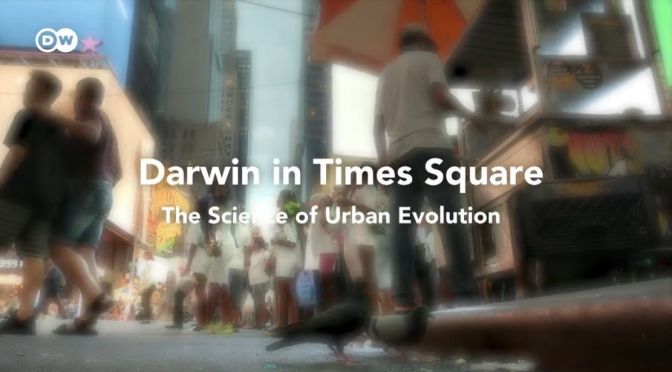
Evolution: How Nature Is Adapting To Urban Sprawl

It’s a new and surprising chapter in the theory of evolution. According to recent studies, it’s in our cities, of all places, that animals and plants adapt particularly quickly to changing living conditions.

Nature’s response to the spread of cities is astonishing: Why do catfish in the river of a French city systematically prey on urban pigeons on the banks? Why do female birds on a university campus in California suddenly change their mating behavior? How do mice in New York’s Central Park cope with an altered diet of human food waste? How have killifish in the Atlantic built up resistance to deadly chemical waste?

And, is it possible for moths to adapt to nighttime light pollution? New research provides surprising new insights into Darwin’s theory of evolution. Nowhere else do animals and plants adapt so quickly to new living conditions as in cities. Biologists have long known that animals and plants occupy new habitats in the vicinity of humans.

But now, new genetic analyses show that these adaptations are accompanied by significant changes in DNA. Even more surprising: these evolutionary changes have not occurred over periods of millennia, but within just a few decades. The process has amazed scientists, who watch as nature transforms even our most hostile man-made interventions — pollution, light pollution, noise, garbage and dense development — into creative energy for new adaptations. Some researchers believe that our cities may soon develop their own, brand-new life forms. What are the implications of these developments for the balance between humans and nature on our planet?


Droughts: Competing With Nature For Water

Climate change is causing rising temperatures, extreme weather events and more and more drought. And, in this changing reality, everyone needs more water. Humans are competing with the natural world for water. What does this mean for biodiversity? Fewer and fewer countries still have an abundance of water. The climate crisis, overpopulation and overexploitation are the root of this global problem. And, in a warming world, everyone is using more water: people, agriculture and industry. In Germany, streams and ponds are disappearing, forests and soils are drying out. What does this mean for biodiversity? And how do people cope with drought in countries that have even less water — for example, in the USA or Mexico? What happens when our water dries up?

Documentary: Lebanon’s Historic Economic Crisis

Lebanon is now going through the worst economic crisis in its history. 80 per cent of the population lives below the poverty line. In one year, food prices have jumped 500 per cent due to galloping inflation. Lebanon was long regarded as the Switzerland of the Middle East.

But those days are gone. A series of crises have plunged the nation into the abyss. And its people are suffering. For Riad, who runs a grocery store in the suburbs of Beirut, business has become hellish. Every morning, calculator in hand, he changes the labels of his products according to the day’s exchange rate. An operation made all the more complex by the fact that his store is plunged into darkness, due to a lack of electricity.

The Lebanese government no longer provides more than two hours of electricity per day in the country. It is impossible for the population to heat, light or use their refrigerators. Taking advantage of the situation, a network of private generators has emerged. The Lebanese pound, the local currency, has lost 90 per cent of its value.

The only people unaffected are those paid in dollars. The greenback, which can be exchanged for a small fortune against the local currency, has created a new privileged social class in the country. A salesman in an international pharmaceutical company, Joseph lives like a king in a ruined Lebanon. Thanks to his new purchasing power, he repaid his mortgage in two months, instead of… twenty years!

In a bankrupt state, plagued by corruption, six out of ten Lebanese now dream of leaving the country. In Tripoli, in northern Lebanon, Mohammed and his son set out for Germany by sea. Even though the trip was cut short off the Turkish coast, the young father is still ready to take all possible risks to reach the European Eldorado.

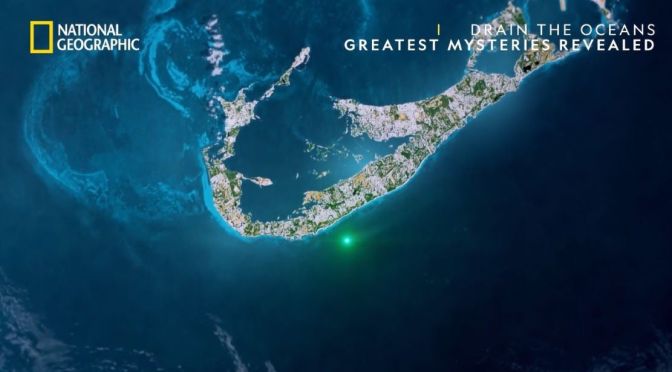
National Geographic: The Bermuda Triangle Myth

The Bermuda Triangle, also known as the Devil’s Triangle, is an urban legend focused on a loosely-defined region in the western part of the North Atlantic Ocean where a number of aircraft and ships are said to have disappeared under mysterious circumstances. 

For centuries, scientists have struggled to explain why hundreds of ships disappear when they reach the Bermuda Triangle. This area in the Atlantic Ocean is home to approximately 300 vessels, with several of these ships capsizing under mysterious circumstances. Today, experts are diving into these crystal clear waters to visit some of the abandoned shipwrecks and determine why they never made it to dry land.

Insights: The Lucrative Business Of Diabetes (2022)

In our modern consumer society, Type 2 diabetes has become a widespread disease. Companies are developing drugs that are increasingly expensive, but not necessarily more effective. Health authorities are powerless. Diabetes is spreading rapidly, all over the world. The disease destroys lives and puts a strain on public budgets.

The UN is calling on governments to take action. Diabetes is proof that modern societies are incapable of adequately treating chronic disease. It affects around 430 million people worldwide, with two main metabolic disorders falling under the name diabetes. Type 1 is an autoimmune disease that must be treated with lifelong doses of insulin, while type 2 can develop when a person’s diet is too high in fat and sugar and they do not engage in enough physical activity.

With turnover of $46 billion, diabetes is a massive and extremely lucrative market. Constantly promised miracle cures have not led to satisfactory treatment, with patients either taking too many drugs or no longer being able to afford them. It’s a desperate situation, and the only ones benefiting seem to be pharmaceutical companies. A medical focus on blood glucose levels has led to an overreliance on medication, sometimes without due concern for dangerous side effects.

Patients become trapped in a cycle of treatment, which in many cases still does not halt the disease’s progression. This can lead to amputations, blindness and heart attacks. And yet there are alternatives that could flatten the curve of the type 2 diabetes epidemic, while reducing health care spending. Improved diet can be a preventative measure, and a strict adherence to diet can also bring about remission in the case of Type 2 diabetes.

But these solutions require effort, as well as a complete rethinking of chronic disease management. Filmed on three continents, this documentary features industry whistleblowers, patients, researchers and medical professionals. It also confronts pharmaceutical companies about their responsibility for the situation.

Views: Snowdrops From The Caucasus, Georgia

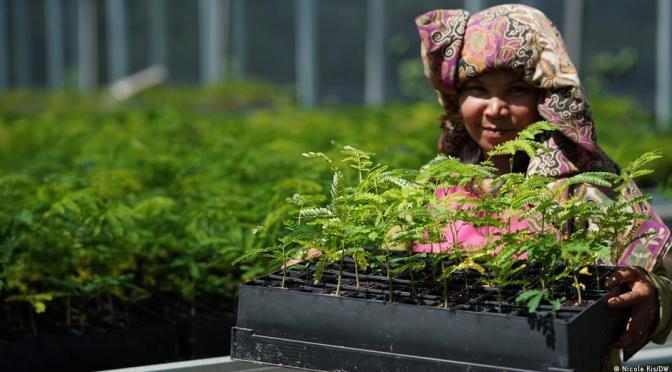
Khatuna Jakeli loves snowdrops. Not only because they’re pretty, but because they provide her with an income. Every year in April and May, she treks through the Caucasus mountains of Adjara and collects the wildflower bulbs. The bulbs are then sold to the Netherlands, from where they are shipped to flower stores throughout Europe.

The Caucasus delivers 22 million snowdrops to the Netherlands every year, including 15 million wild snowdrops. A lucrative business, from which little remains for Khatuna Jakeli. Yet it is her most important source of income. A report by Juri Rescheto.

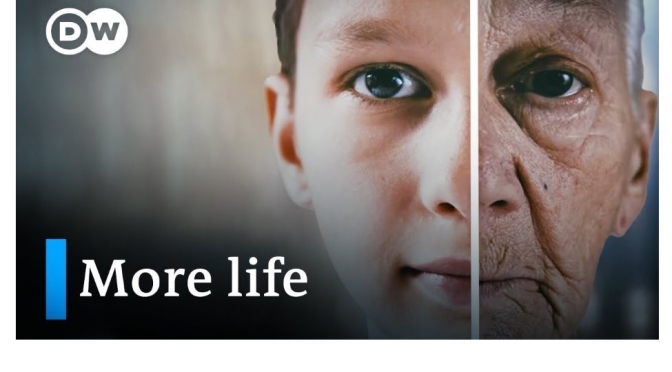
Healthy Living: Can The Aging Process Be Halted?

Can the aging process be reversed – or even halted, altogether? If we manage to decode this final mystery of our human biology, we might soon be able to eradicate age-related illnesses like cancer, dementia and heart problems. The race to invent the miracle pill is well underway.

Today, international researchers are getting astonishingly close to realizing humanity’s dream of immortality. The hunt for immortality gained traction with the discovery of Costa Rica’s so-called “Blue Zone,” by Luis Rosero-Bixby. In the “Blue Zone,” on the Nicoya Peninsular, he found a remarkable number of centenarians.

Here, male life expectancy is the highest in the world. Their healthy lifestyle is one factor, but the promise of longevity is probably also because their telomeres – sections of DNA found at the end of chromosomes – are longer than those of the average person. It’s a field of research currently being explored by Maria Blasco in Madrid.

But this is just one of many possible factors influencing the process of aging. Senescent cells may also play a key role. Also known as “zombie cells”, these attack our body in old age and flood it with alarm signals until, at some point, we collapse under their weight. That’s a theory proposed by another researcher in Spain, Manuel Serrano. A billion-dollar industry is already knocking impatiently at the lab doors.

The first to market the miracle pill is guaranteed incredible wealth. That’s why investors are sponsoring young bio-startups in Hong Kong. Keen not be left out, US Big Tech is vying for the world’s best scientists. Alex Zhavoronkov has secured a slice of that pie, with a cash injection of more than 250 million dollars for his company’s work on aging research. Whereas some pioneers’ visions burst like bubbles, others rush to get other, rather more dubious products onto the market. But their efficacy is now measurable.

The epigenetic clock devised by Steve Horvath can measure our biological age, regardless of our actual age in years. With his research on the thymus gland, California’s Greg Fahy managed to not only decelerate the aging process, but reverse it. His initial study on humans showed that a particular drug cocktail took an average two-and-a-half years off their age.

Young biohackers like Nina Khera from Boston want everyone to benefit from this research. Together with friends, she’s working on the “epigenetic clock for all”. But while we’re busy trying to counter the aging process and all the illnesses it entails, fundamental questions arise: Should we be messing with nature like this? Are we about to overwhelm the planet with more and more people? Criminal biologist Mark Benecke in Cologne says that these questions are coming far too late.

Rainforests Of Africa: The Protectors Of Gabon

Gabon’s soul lies hidden beneath a thick green mantle, the source of most of the Gabonese traditions, medicines, spirituality, and resources. A precious heritage that a small number of men and women protect.

We meet Kombo, a Babongo hunter, and Juste, who is in touch with the forest spirits. In human cultures in general, and perhaps particularly in Africa, the landscape is the first shrine of tradition.

From the sand dunes of Mauritania to the currents of River Senegal, to the Lions of the Beninese savannah to the spirits of the forests of Gabon, this series explores the origin, the nature and the survival of deep links between several populations in West Africa and their habitat.

Travels: History Of The Orient Express & Istanbul

Gavin Stamp retraces the route of the old Orient Express, from London, via Paris, Vienna, Budapest, Belgrade, Bucharest, to Istanbul, in search of the treasures of ‘Old Europe’. Stamp’s adventures on and off the train are punctuated by his candid, entertaining reflections on life, the world, and the strange and wonderful people he meets.