

Anyone who has ever been to Portugal will probably know them: the small, mostly blue square ceramic tiles, the so-called ‘azulejos’. Especially in the capital of Lisbon they decorate many houses. Even today, the decorative tiles are still made by hand. The word azulejos does not come from the Portuguese word “azul” for blue – as one might think. It comes from Arabic and means something like “polished little stone”.
Category Archives: Documentaries
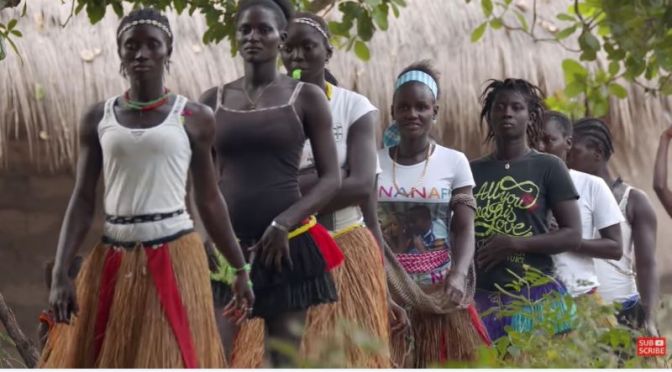
Culture: ‘Guinea-Bissau – A Matriarchy Rules’ (Video)
A matriarchy rules on one of the Bijagos Islands off the coast of Guinea-Bissau. The tribe of the same name lives on Orango, one of the most populated islands in the archipelago. Women dominate public and private life there. This documentary focuses on the women of the Bijagos tribe of Guinea-Bissau. Unlike many women in traditional and modern societies elsewhere, they pick their husbands, propose marriage and own their homes.
In addition to being responsible for raising children, they also act as high-priestesses in animist ceremonies, organize work, guard the keys to the rice stores, lead their families and ensure there are descendants to continue the line. The Bijagos revere women, who are believed to be in charge of the balance between the worlds of the living and the dead. A matriarchy of this kind is unusual, not only for Africa but around the world. Even though this culture has persisted for centuries, aspects of Western lifestyles are starting to gain a foothold. Rising rates of school attendance could contribute to the demise of the community’s traditions. Future generations will determine whether the Bijagos can retain their culture.
Guinea-Bissau is a tropical country on West Africa’s Atlantic coast that’s known for national parks and wildlife. The forested, sparsely populated Bijagós archipelago is a protected biosphere reserve. Its main island, Bubaque, forms part of the Orango Islands National Park, a habitat for saltwater hippos. On the mainland, the capital, Bissau, is a port with Portuguese colonial buildings in its old city center.

Documentaries: Behind The Scenes Of ‘Hemingway’
Ken Burns, Lynn Novick and Sarah Botstein give us a behind-the-scenes look at the production of Hemingway. We explore where Ernest Hemingway lived and traveled as the team visits his home in Cuba, learn about his writing process through manuscripts housed at the JFK Library, and the impact of fame on his art. Hemingway from Ken Burns and Lynn Novick premieres April 5, 2021 on PBS.
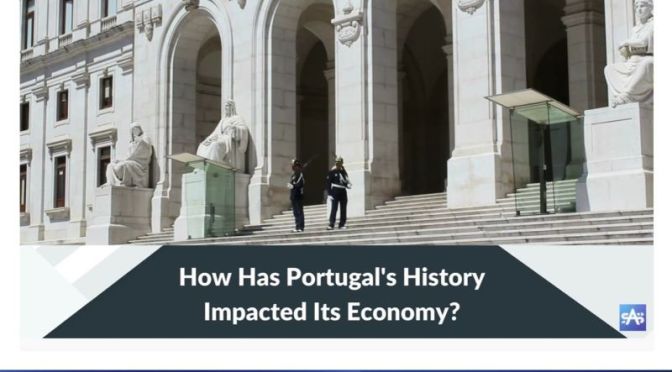
Europe: An Economic History Of Portugal
In the lead up to the Eurozone Crisis, Portugal’s Economy was an outlier. Whilst many economies went on an incredible run, the Portuguese Economy did not have such a good time. Not only underperforming the average eurozone growth rate, but unemployment actually rose from 3.8% to 7.5% between the millennium and 2008. Compare this against the likes of Greece, Spain and Italy, all of which had seen significant declines in unemployment. Raising the question of why? Why had Portugal’s Economy stagnated in what were supposed to be the good times? What was the impact of its long history as a colonial power? And to what extent did a 19th Century letter from Pope Leo the 13th influence its wider economic approach?
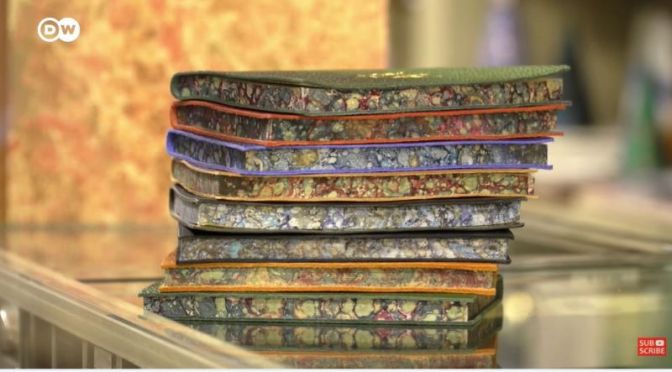
Profiles: ‘Marbled Paper’ Makers Of Florence, Italy
In the Italian city of Florence, high-quality colored paper and gift wrap have a long tradition. In fact, some of it is still made by hand. These papers are famous for their delightful patterns, shiny colors, and their Italian Renaissance-era motifs. We went to visit paper manufacturers in Florence to find out more about this age-old tradition!

Tributes: Documentary Profiles Audrey Hepburn
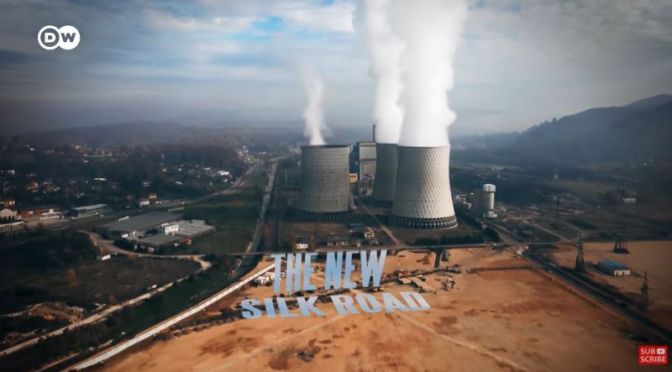
World Economy: ‘China’s New Silk Road’ (Video)
The “New Silk Road” is an enormous Chinese international development project. It’s a trade network that involves Asia, Africa, and Europe — and more than 70 countries are already involved. It may turn the old world order upside down. China is investing in bridges, port facilities, railroads, and roads around the world. Beijing is spending several hundred billion euros on what it calls the “Silk Road Economic Belt.” Eastern European and the Balkan countries in particular are interested in Chinese loans and investments, as they look beyond the EU for sources of capital. In turn, the region is attractive to China because of its strategic position as a gateway to the West. A new coal-fired power plant is being built in Tuzla, Bosnia, with the help from China. But not everyone is in favor of the project. While the new plant will emit fewer emissions which will have a positive effect on air-quality, some question the country’s decision to commit to using coal for decades to come.

Artistry: ‘How A Diamond Ring Is Made’ (V&A Video)
See the step-by-step process of making a gold diamond ring – from the sketching of the design and cutting of the diamond, all the way to the final polishing.
Find out more about our Jewellery Collection: https://www.vam.ac.uk/collections/jew…
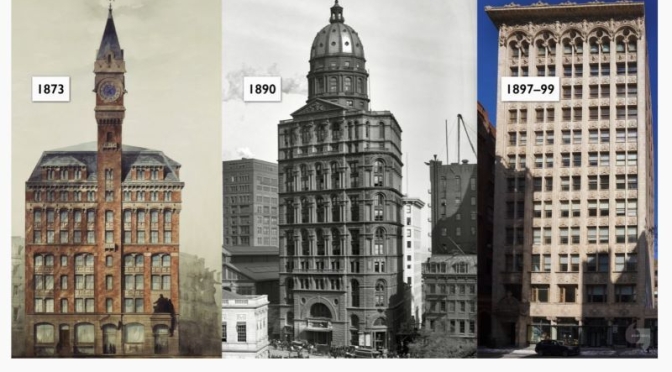
Architecture: ‘Louis Sullivan – Invention Of The Skyscraper’ In 1897
Louis Sullivan, Bayard-Condict Building, 1897–99 (65 Bleecker Street, NYC), a Seeing America video speakers: Dr. Matthew A. Postal and Dr. Steven Zucker.
Louis Henry Sullivan was an Irish-American architect, and has been called a “father of skyscrapers” and “father of modernism”. He was an influential architect of the Chicago School, a mentor to Frank Lloyd Wright, and an inspiration to the Chicago group of architects who have come to be known as the Prairie School.
The Bayard–Condict Building at 65 Bleecker Street between Broadway and Lafayette Street, at the head of Crosby Street in the NoHo neighborhood of Manhattan, New York City is the only work of architect Louis Sullivan in New York City.
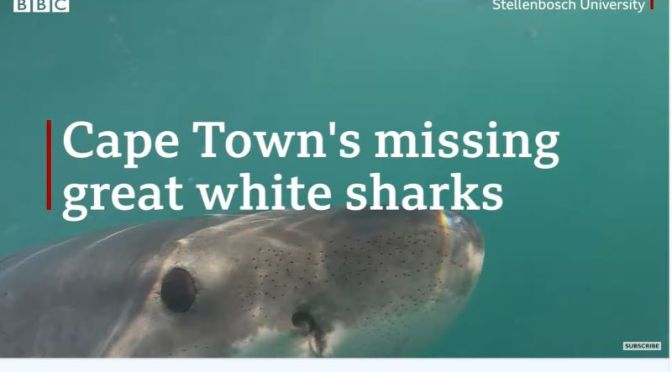
Oceans: The Great White Shark Decline Off Cape Town, South Africa (BBC)
For years, one of South Africa’s great tourist attractions has been the opportunity to see great white sharks up close. But barely any great white sharks have been spotted off the coast of Cape Town, South Africa for two years now – where there used to be hundreds.
 Boomers Daily