Category Archives: Diet

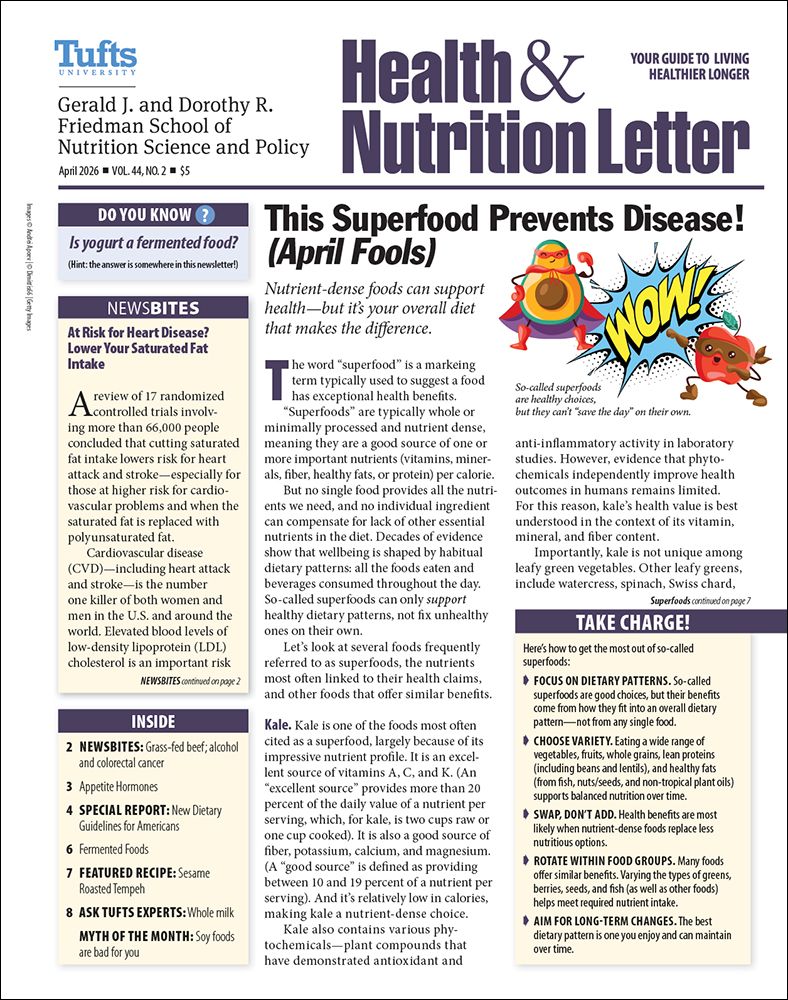
Tufts Health & Nutrition Letter – November 2025

Cover Image

TUFTS HEALTH AND NUTRITION LETTER: The latest issue features….

Seed Oils: The Facts

NewsBites: Diverticulitis and diet; physical activity lowers death risk with diabetes.

Expiration Dates, Explained

Special Report: Added Sugar is Added Sugar

Pumpkin: Beyond Pie

Featured Recipe: Hearty Pumpkin Soup

Ask Tufts Experts: Raw milk

Myth of the Month: Pink salt is healthier than white

Tufts Health & Nutrition Letter – October 2025

Cover Image

TUFTS HEALTH AND NUTRITION LETTER (May 28, 2025): The latest issue features….

Lifestyle Interventions Improve Cognitive Function

Want to Eat Less? Try Spicy Food.

10 Choices that are Better for You…and the Planet

The breakfast food that lowers your heart failure risk!

Why sugar-sweetened drinks are so harmful for women’s hearts.

The easy way to drop your blood pressure significantly – no medication needed!

Critical cholesterol update! Why high levels of HDL (good cholesterol) may not do anything to lower your risk of heart disease!

Monitoring Blood Pressure

Tufts Health & Nutrition Letter – June 2025 Preview

TUFTS HEALTH AND NUTRITION LETTER (May 28, 2025): The latest issue features….

“Keto” Diet for Weight Loss?

NewsBites: Diet and brain health

Strengthening Bone Health

Special Report: What About Milk(s)?

Cool as a Cucumber!

Featured Recipe: Cucumber Salad

Ask Tufts Experts: Defining “Healthy Dietary Patten”

Myth of the Month: Eggs are Bad for You

Tufts Health & Nutrition Letter – May 2025 Preview

Cover Image

TUFTS ‘HEALTH & NUTRITION LETTER’ (April 24, 2025):

Protein, Protein, Everywhere

NewsBites: Fit at any size; food shapes the microbiome.

The Humble Hamburger

Special Report: Easy, Healthy Breakfast Ideas

Four Fun Food Facts!

Featured Recipe: Bulgur-Black Bean Veggie Burger

Ask Tufts Experts: “Take Charge!” Boxes

Myth of the Month: Raw Potatoes

Health: American Heart Association Updates Its ‘Optimal Checklist’ (2022)

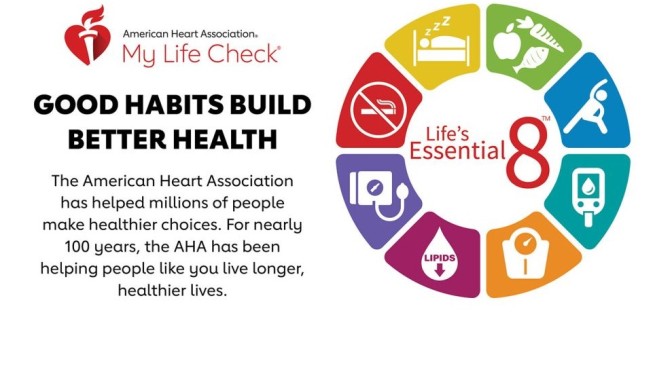
October 2022 – The American Heart Association (AHA) recently revised its checklist for achieving optimal heart health, introducing its new Life’s Essential 8. The list replaces the AHA’s decade-old Life’s Simple 7.

Sleep health is the new addition to the cardiovascular health scoring tool, which now advises that adults get seven to nine hours per night. The organization updated four of the categories:

  • Diet: More emphasis was given to following heart-healthy diets like the DASH and Mediterranean.
  • Nicotine exposure: Secondhand smoke and vaping were added as risk factors.
  • Blood lipids: People now can get a non-fasting blood sample that measures total, HDL, and non-HDL cholesterol. Non-HDL cholesterol can provide similar risk information as LDL cholesterol.
  • Blood sugar: Measurements now include hemoglobin A1c, a key component to assessing type 2 diabetes risk.
  • Three categories were unchanged:
  • Physical activity: The optimal weekly level is at least 150 minutes of moderate activity or 75 minutes of vigorous activity.
  • Body mass index (BMI): A BMI of 18.5 to 24.9 is ideal for heart health.
  • Blood pressure: Levels less than 120/80 millimeters of mercury (mm Hg) remain optimal. Stage 1 hypertension is 130 to 139 mm Hg for systolic pressure (the first number) or 80 to 89 mm Hg for diastolic pressure (the second number).
  • You can calculate your heart health score at mlc.heart.org. The guidelines were published online June 29, 2022, by Circulation.

Read more

Reports: Tufts Health & Nutrition – October 2022

Cover Image

For Brain Health, Protect Your Heart

Are Your Sleep Habits Affecting Your Weight?

Eight Essentials for Heart Health

Food Processing and Your Health: Balancing Benefits and Risks

News Bites October 2022

Newsletters: Tufts Health & Nutrition – Sept 2022

Cover Image

Is That Popular Diet Plan a Healthy Choice?

Some attention and planning may be necessary to ensure popular diet plans provide enough of all the nutrients you need.

  • SPECIAL REPORT: Small Amounts of Physical Activity Can Have Big Benefits
  • Grab-n-Go Lunch
  • FEATURED RECIPE: Hummus and Veggie Wraps
  • ASK TUFTS EXPERTS: Activated charcoal; oatmeal vs. oat bran

Previews: Tufts Health & Nutrition Letter – Aug ’22

Easy, Flavorful, Exciting Veggies

Knowing how to build flavor in vegetable dishes can help you enjoy more of these healthful foods.

The research is clear: eating more whole or minimally processed plants is better for our health. Knowing how to easily make foods like vegetables taste great can help you consume more of these health-promoting options in place of less healthful choices. Building Flavor. Most U.S. adults don’t meet the recommended intake of vegetables.

Brain Health: The Benefits Of Intermittent Fasting

Although intermittent fasting is most widely known as a weight-loss strategy, emerging research suggests that it could have benefits for brain health and cognition. But does it actually work, are there any drawbacks and how long would you have to fast to see benefits? WSJ’s Daniela Hernandez breaks down what’s known and what’s not about the neuroscience of intermittent fasting.

Timeline: 0:00 Could intermittent fasting help our brains work better and longer? 0:31 How long would you have to fast to see any potential cognitive benefits? 1:04 How intermittent fasting could affect your ability to focus 2:27 Potential mood-related benefits of intermittent fasting 2:48 How intermittent fasting can affect brain health 4:03 Potential drawbacks of intermittent fasting

Studies: Salt Substitutes Lower Stroke, Death Risks