Category Archives: Culture

Cover Previews: World Archaeology – Sept 2022

Image

The World Archaeology October 2022 issue explores the secrets of Japan’s stone circles, the lost prehistoric cities of Bolivia, women’s everyday lives in the Ice Age, an idyllic alpine region that saw fierce fighting during the First World War, and much more.

The stone circles of Japan are enigmatic monuments. These structures were created by Jomon hunter-gatherers, mostly from roughly 2500-300 BC, and can be associated with burials, seasonal ceremonies, and solar alignments. Such preoccupations are far from being restricted to Jomon Japan, with study of these circles proving influential when it came to early 20th-century attempts to understand Stonehenge. In our cover feature, we take a detailed look at some of the Jomon stone circles, examining both the monuments themselves, and wider activity in the period.

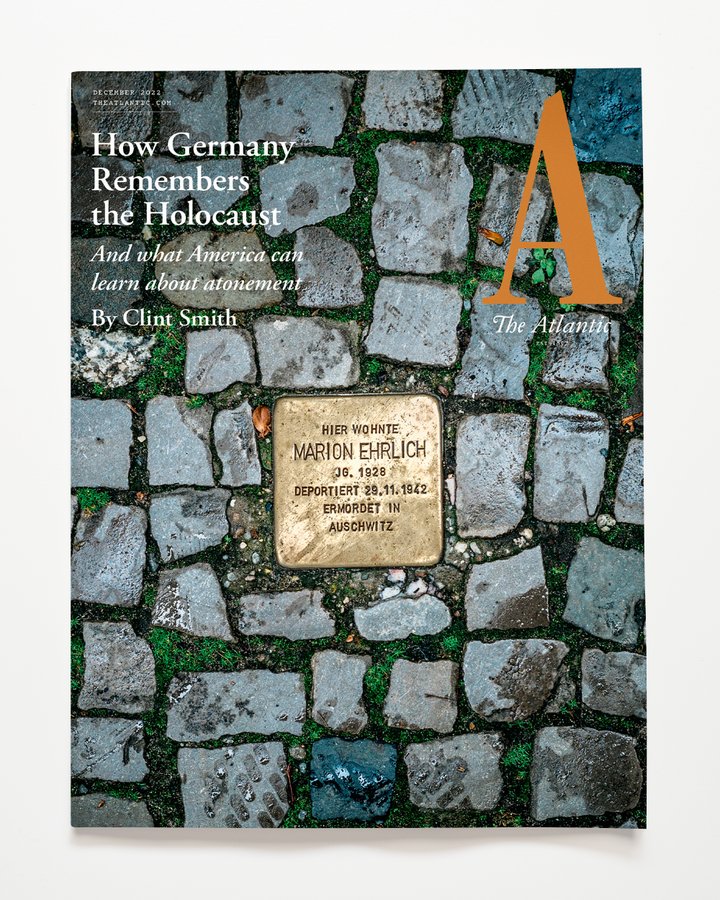
Preview: The Atlantic Magazine – October 2022

The Atlantic October 2022 Issue:

Ukraine defiant: George Packer, Anne Applebaum, and Franklin Foer on democracy’s front lines. Plus the myopia generation, the Benin bronzes’ contested return, Ian McEwan’s anti-memoir, cursive’s demise, redshirting boys, John Roberts v. the Voting Rights Act, the GOP’s extremist history, and more.

Six months into Ukraine’s defiant stand against Russia’s invasion, The Atlantic is publishing a special cover package devoted to life in the country and the state of the war, with new, on-the-ground reporting by staff writers George Packer, Anne Applebaum, and Franklin Foer. Packer, Applebaum, and Foer are three of the most influential and established voices on the perils of war, authoritarian threats to democracy, and Ukrainian and Russian politics.

Preview: Country Life Magazine – Sept 21, 2022

Country Life’s 21 September 2022 issue is a Cotswolds special, looking at gardens, homes and Oxford’s brief stint as the British capital.

Our great good fortune

Long live the Kings and Queens, says Carla Carlisle as she marvels at the balancing act of our enduring monarchy

A Cotswold capital

Simon Thurley explains how Oxford was fortified during its brief spell as Charles I’s capital city during the Civil War

A concentrated Arcadia

Tilly Ware lauds the dedicated restoration of the many buildings and features of a historic Cotswolds landscape garden

Stella Ioannou’s favourite painting

The artistic director of Sculpture in the City chooses a vivid and compelling British work

Travel & Culture: Visiting Munich’s Oktoberfest

Following a two-year break, Munich’s Oktoberfest is back! Dhruv Rathee and partner Juli visit the world’s largest Volksfest. The 17-day event kicks off with the traditional ‘parade of Wiesn landlords and breweries”.

Video timeline: 0:00 Intro 0:47 What is the Oktoberfest? 1:48 Parade of Wiesn landlords and breweries 2:58 A brief history of the Oktoberfest 3:39 Getting there 4:50 Dirndl and lederhosen 5:52 O’zaft is! – the opening tradition 7:10 Beer tents 8:28 Food 10:17 Rides and attractions 11:29 Tips for families

Dressed in their dirndls and lederhosen, they explore the many rides and attractions on the Wiesn – the field where it all takes place. Along with sampling some culinary delights, they of course have to drop in to one of the famous beer tents.

Views: The Great Roman Games Of Nimes, France

In the southern French city of #Nîmes, the passion for #AncientRome is more alive than ever. For the past decade, the city has been holding the Great Roman Games show every spring. Legionaries, centurions and gladiators invade the city and bring its incredible Roman monuments back to life: in particular the arena, where the Great Games are organised. Thousands of people, young and old alike, turn out to be transported back to the Rome of #JuliusCaesar.

Nîmes, a city in the Occitanie region of southern France, was an important outpost of the Roman Empire. It’s known for well-preserved Roman monuments such as the Arena of Nîmes, a double-tiered circa-70 A.D. amphitheater still in use for concerts and bullfights. Both the Pont du Gard tri-level aqueduct and the Maison Carrée white limestone Roman temple are around 2,000 years old.

Cultural Views: A Journey Into The Republic Of Malta

Jaafar Abdul Karim travels through one of the smallest countries in Europe: Malta. The Romans, the Arabs, the British and the French have all left their mark here. A sunny country with a multicultural heritage. Jaafar Abdul Karim starts his journey in the capital, Valetta.

A UNESCO World Heritage Site, the city has been extensively restored and renovated. Architect Konrad Buhagiar played a major role in this. He shows Jaafar Valetta’s most beautiful places, where old and new architecture come together. In Siggiewi, the presenter meets Marilu Vella and the two cook a very special local dish: pastizzi. The dumplings are a favorite snack of the Maltese.

The island nation has been a member of the EU since 2008. And here – in a tax haven – people like to show off what they’ve got. But Malta also has its dark sides: At the end of 2017, a murder shook Maltese politics and plunged the country into a crisis. Journalist Daphne Galizia uncovered one of Malta’s biggest corruption scandals. Shortly after, she was the victim of a car bomb.

Deeply shaken by this story, Jaafar takes the ferry to Gozo. The second largest island in the Maltese archipelago is only 14 kilometers long, but it has two large opera houses. Jaafar Abdul Karim finds out why from the artistic director John Galea. This Mediterranean island is one of the sad hotspots in the refugee crisis.

Tens of thousands of people have drowned in recent years trying to reach Europe. Time and again, ships that have rescued survivors from the Mediterranean dock there. Jaafar Abdul Karim talks to survivors and Maltese photographer Darrin Zammit Lupi, who has captured moments of the refugee drama in pictures.

Views: The Sunday Times Magazine – Sept 18, 2022

Scoff at ritual if you like, but nations cannot survive on rationality alone

By Matthew Syed


Brothers’ frosty truce as ‘ER’ stripped from Harry’s vigil uniform

Travel & Culture: North In The Mountains Of Iran

Iran’s mountainous terrain has always been an important part of people’s lives. Years ago, these mountains were populated by legendary horsemen. Today, they are the subject of scientific investigation. This film provides the viewer with stunning arial views of these mountains. It unfurls the rich tapestry of Iran’s history, from the legendary Order of the Assassins to the Mongol invasions. We also get to know Iran by meeting some of the fascinating people who live there. Take Ali, a world champion of mounted archery. Despite its waning popularity, the sport has endured in Iran due the importance of horses throughout Iranian history. We get to explore the historic Tabiz bazaar, which is still a bustling market and kaleidoscope of cultures today. There, we meet Dschebrael, a stall owner who speaks Azeri, the official language of Azerbaijan. In fact, Azeri can be heard throughout the market, which serves as a meeting place for Iran’s many ethnic groups, and thus as a microcosm of the country’s cultural diversity. The film introduces us to beekeepers and violinmakers, as well as young people living in Iran who want to travel and express themselves freely on social media — even though it is forbidden.