Category Archives: Classics

Classic Car Racing: ‘Inside The 2020 Mille Miglia’, Italy

Gentleman’s Journal

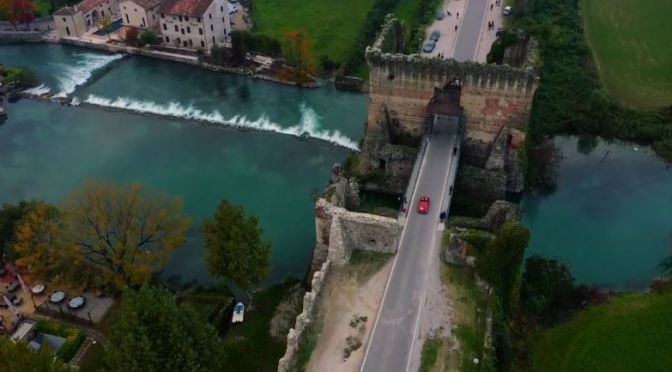
This year, the race had its own challenges, as the pandemic ripped across the world. The Mille Miglia usually takes place in May, but was postponed until October this time round — and many had feared it might be cancelled altogether. But the show must go on — and the sight of more than 400 stunning classic cars glinting in the autumn sun is one I will remember for a very long time.

The first Miglia Mille took place in 1927, founded by a group of car enthusiasts in the town of Brescia, Northern Italy — the race was their response to the region’s loss of the Italian Grand Prix to Monza, seven years earlier. A 1,000 mile loop around Northern Italy (hence the name), the race took place every year for three decades, save for a break during the Second World War. But the perilous, do-or-die nature of the contest led to many crashes and more than ten fatalities, and the final chequered flag fell in 1957. In the 1970s, the Mille Miglia was reborn as we know it today — more of a grand tour than a hotly-contested, breakneck race (although some drivers, even now, forget this from
time to time.)
Read more

Classic Cars: The ‘1929 Bentley Blower’ (Video)

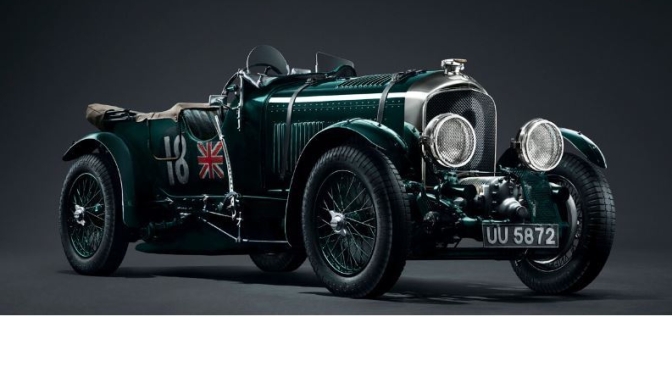
One of the most iconic cars from Bentley’s history – Sir Tim Birkin’s 1929 supercharged 4½-litre “Blower” – is to be reborn with a new build of 12 matching cars, each individually handcrafted by a team of specialists from Bentley’s bespoking and coachwork division, Mulliner. Together, the new cars will form the world’s first pre-war race car continuation series.

Only four original ‘Team Blowers’ were built for racing by Birkin, in the late 1920s. All were campaigned on the racetracks of Europe, with the most famous car – Birkin’s own Team Car No. 2, registration UU 5872 – racing at Le Mans and playing a pivotal role in the factory Bentley Speed Six victory in 1930.

Now, using a combination of generations of handcraftsmanship skills and the very latest digital technology, the 1929 Team Blower will be the master example for 12 continuations – one for each race that the original fleet of four Team Blowers competed in.

Website

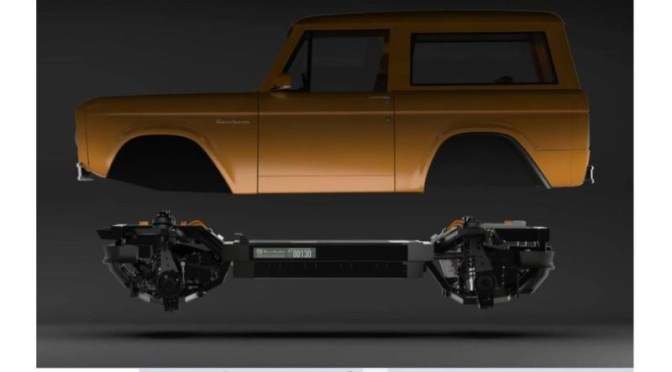
Automobile Tech: ‘Zero Labs’ Offers New Electric Platform For Classic Cars

After more than 5 years of engineering and testing and use in all 2020/2021 full vehicle rebuilds, we are now proud to offer electric platforms which are designed to transform four gasoline and diesel vehicle formats each with numerous makes, models and size configurations. Final specifications and full list of available model sizes will be available prior to manufacturing.

Read more

British Cars: ‘1959 Austin Healey 3000’ (Video)

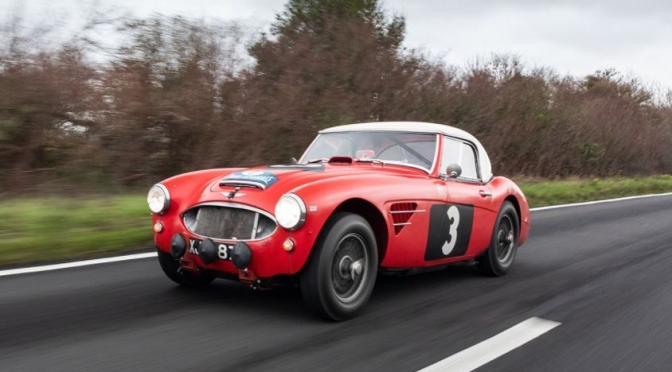
Perfectly patinated, period competition success, a legendary rally-driver owner and a super fan who kept the car for 51 years. This is probably the best-preserved example of a ‘works’ Big Healey.

The original 100 was named as a nod to its top speed, while the 3000 – released in 1959 – was named for its larger engine capacity. Straight away, the more powerful car was successful, with Pat Moss (Stirling’s sister) winning the challenging Liege-Rome-Liege rally in 1960.

This ‘Works’ Big Healey, now available with Henderson Fellowes, was prepared by the BMC Competition Department for the 1961 season and made its debut on the legendary and gruelling Acropolis Rally in Greece, where Peter Riley and Tony Ambrose steered the car to first in class and third overall.

Read article

Classic Car Restoration: ‘Eagle – Masters Of The Jaguar E-Type’ (Video)

Since its founding in 1984, the team behind Eagle has steadily worked their dedication into an obsession, with the outcome being the last word in the world of the Jaguar E-Type. Unlike many restoration specialists, Eagle keeps all the work in-house, and none of it is rushed.

Indeed Eagle CEO Henry Pearman says it takes the team nearly 4,000 hours to complete one of the company’s ground-up, full-on Eagle E-Types, and while they aren’t for those on a tight budget, there is clear evidence of the claim that the business is foremost driven by passion, not profits. A purely commercial endeavor would find ways to cut costs and hurry the process, but the completed cars—whether they be restorations or bespoke commissions—that leave Eagle’s countryside compound in Sussex are not just faultless E-Type specimens, they are examples of what can be achieved after decades of refinement and accumulated knowledge. Nobody knows these cars better, and in that same vein, nobody is building them better.

Classic Cars: 1957 Ford Fairlane 500 Skyliner Convertible (Video)

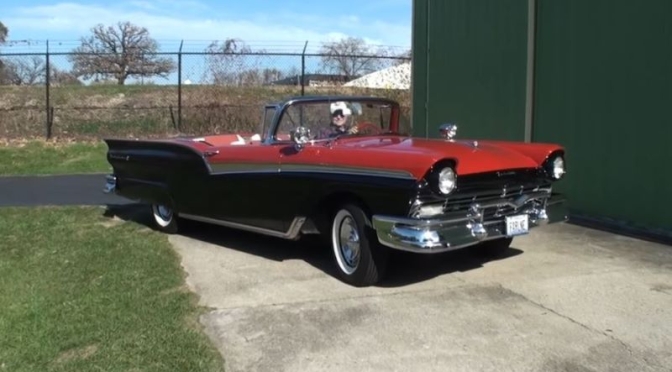
On “My Car Story” we’re in the West Suburbs of Chicago IL on 11-5-20. We’re looking at a 1957 Ford Fairlane 500 Skyliner Convertible in Flame Red & Raven Black Paint. The car comes with the factory 292 CI V8 “Y Block” engine. The car’s Owner is Don Walters. Don’s had this car since 2000. He shares he had one like this when he met his wife. The car features the “Retractable Top” and Don shares back in the 1950’s known as the “Hideaway Hard Top”. He found this one in a junk yard and did all the restoration work himself in four years. Don uses this car as his daily driver.

Classic Racing Cars: 1955 Porsche 550 Spyder (Video)

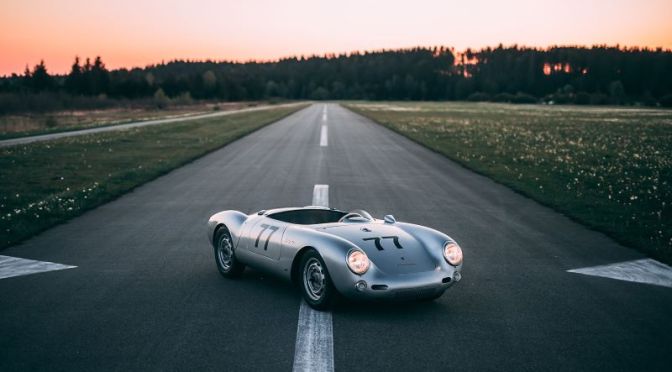
Christophe Schmidt, co-founder of A & S, and Anders Warming, Automotive designer, discuss the 1955 Porsche 550 Spyder, chassis 550-0050.

The 550 Spyder put Porsche firmly on the map as a serious competitor on the world’s racing tracks; indeed, the diminutive mid-engined roadster generated the nickname ‘Giant Killer’ for its ability to defeat much more powerful rivals. Introduced at the 1953 Paris Auto Show, the 550 and its second iteration, the 550A, remained in production through February of 1959, and a total of 130 chassis were constructed before the 718 RSK Spyders appeared. A large proportion of 550 production was destined for the United States.

Built on a frame of seamless mild steel tubing, the 550 utilised a front suspension of double trailing arms and transverse-leaf torsion bars. After the first few examples, the rear suspension was redesigned from leading control arms to trailing arms with swing axles and tubular transverse torsion bars. Porsche’s engineers had planned an all-new engine to power the Spyder at the gruelling Carrera Panamericana, but early testing determined that Dr Ernst Fuhrmann’s Type 547 advanced 1.5-litre air-cooled four- cylinder Boxer engine was not quite ready. Thus, the first few chassis were fitted with conventional pushrod Porsche engines. Soon, however, reliability was ensured and the new ‘Four-Cam’ would be installed in all the 550s, 550As, RSKs, 356 Carreras, and 904s that were to follow.

Website

Classic Car Restorations: ‘2021 Alpha Romeo Giulia GT Electric’ By Totem Automobili, Italy (Video)

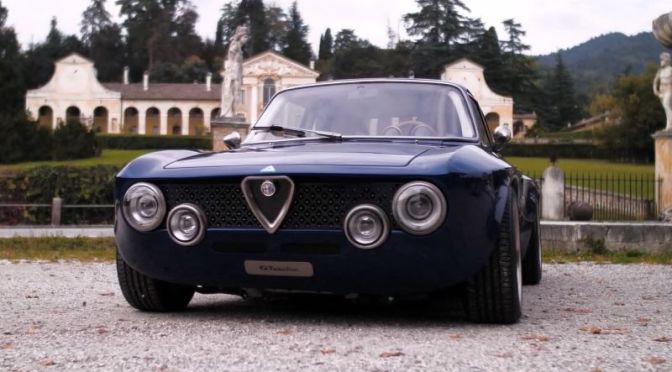
With the idea of revamping the car we elegantly redesigned the original lines giving the car a stunning shape whilst maintaining the authentic signature of the Giulia GTA.

Starting from one of the best iconic Italian cars of the 60’s & 70’s, the Alfa Romeo Giulia GTA, we have created one of the most advanced restomod in the business, producing the ever fastest and most fascinating Giulia GTA. The Giulia GTA was presented in 1965 and in the following seven years obtained a series of successes and prizes which led this car to be considered as a legend. Our goal was to rebuild a car which remembers in spirit and shape the victorious Alfa of the 60ies, emerging as a reference for sportsmanship and craftsmanship.

Website

Classic Cars: The ‘Heart Of Route 66 Auto Museum’ In Sapulpa, Oklahoma (Video)

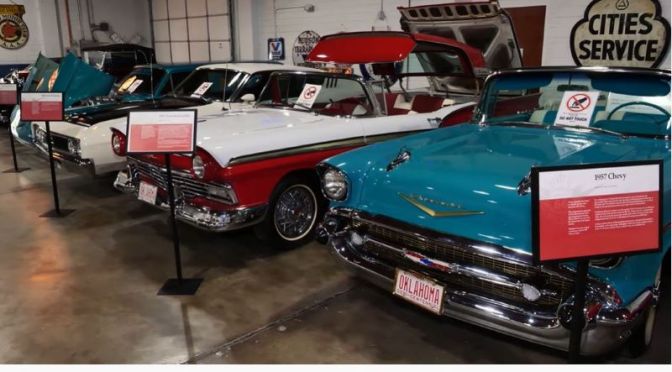
If you are a car lover, you have to visit the Heart of Route 66 Auto Museum in Sapulpa. From a Chip Foose Car called The Imposter, to a 1922 Packard, a couple of Jaguars, all the way to a Model A Ford pick-up, this museum honors anyone who appreciates cars! And since it along Route 66, people from 94 different countries and all fifty states have been through here!

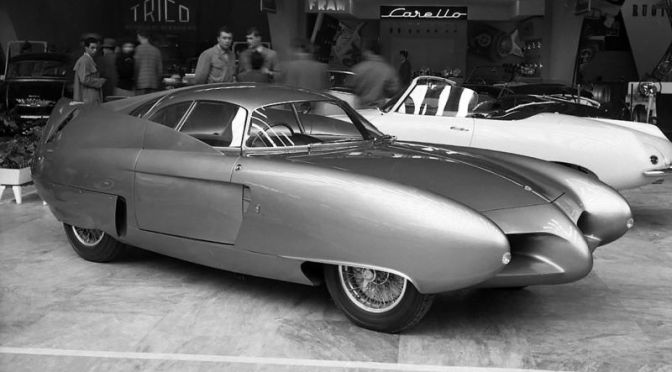
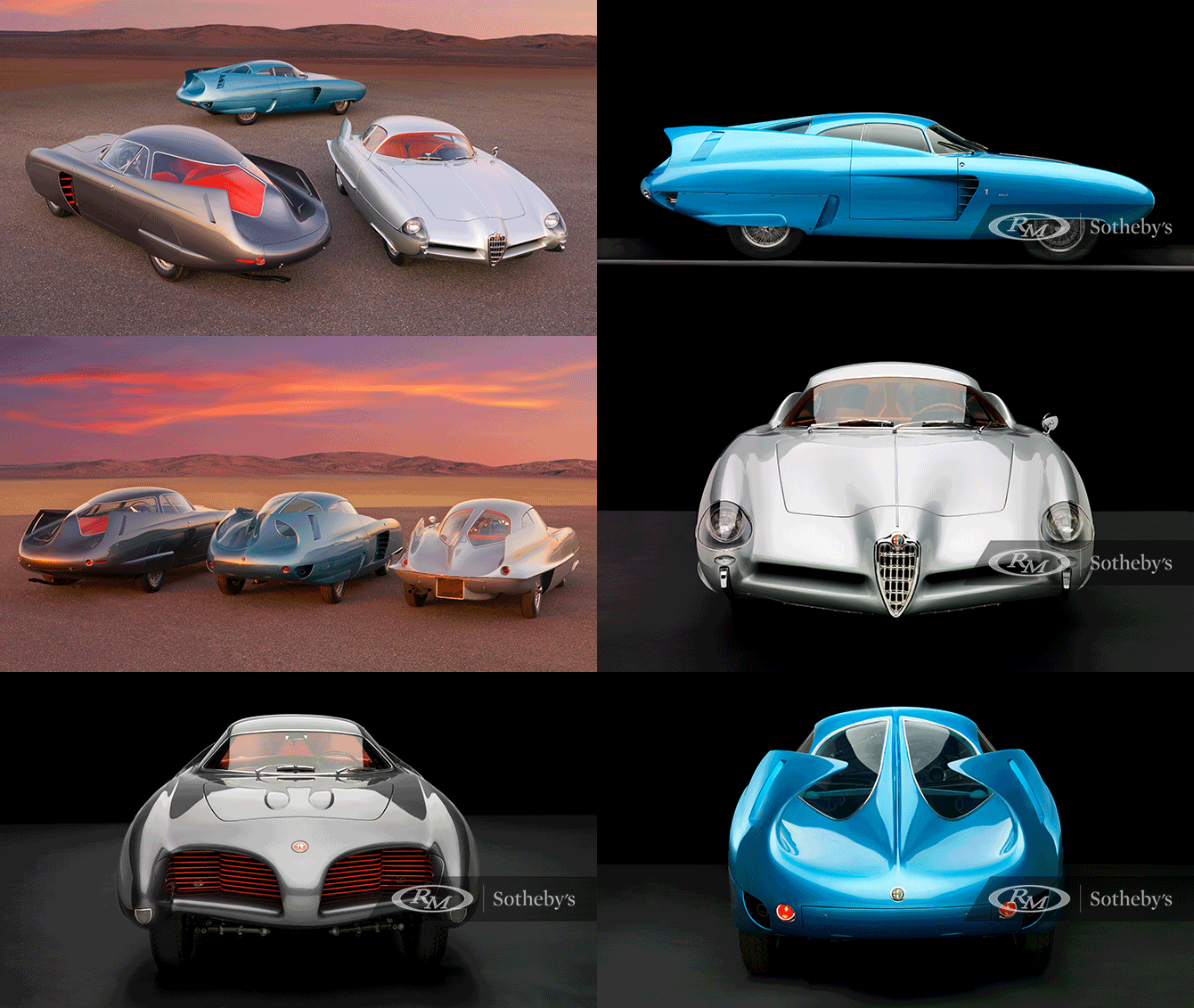
Legendary Automobiles: The ‘Alpha Romeo B.A.T. Concept Cars’ Of 1953-55

Perhaps the most incredible thing that could be said about the B.A.T. series is that the fantastical design is actually functional, with all three examples exhibiting drag coefficient figures that would still land them in the top ten most aerodynamic cars on sale today. Their extreme forms are, in fact, functional.

Predictably, the B.A.T. concepts made a huge splash on the international motor show circuit, leading to Scaglione’s two greatest hits in terms of production figures – the NSU Sport Prinz and Alfa Romeo Giulietta Sprint. Unfortunately, the B.A.T. concepts would also mark an inflection point for Bertone and Scaglione’s working relationship.

Scaglione’s daughter Giovanna describes it, “Bertone was a little bothered when it happened that in a magazine article they wrote about Franco Scaglione and not Bertone… For example, in an article speaking of one of his works [Scaglione’s] name was mentioned three times and the name of Bertone was mentioned only once…” Though Giovanna does not attribute her father’s sudden departure from the firm to this incident alone, it was clear that Scaglione wanted to strike out on his own, so that year, he handed over the title of chief stylist to Giorgetto Giugiaro and left Bertone for good.

Read more