

Category Archives: Arts & Literature

Arts & Literature: Kenyon Review – Winter 2024

Image

Kenyon Review – Winter 2024: The Winter 2024 issue of The Kenyon Review includes an essay by Carrie Cogan, the winner of the 2023 Kenyon Review Nonfiction Contest, selected by Leslie Jamison; work by the 2021 Kenyon Review Developmental Editing Fellows, Allison AlbinoEmily Stoddard, and Jane Walton; poetry by Sara Abou Rashed, Sarah Ghazal Ali, David Joez Villaverde, and Kim Garcia; fiction by K-Ming ChangMelissa Yancy, and Brian Ma; nonfiction by Oz Johnson and Sarah Minor; and much more. The cover art is by DARNstudio, which consists of Ron Norsworthy and David Anthone.

Lowest of the Low on a High Red Hill

By Carrie Cogan

I rode west with a childhood friend who was driving to a job in California. We passed through Tennessee, Arkansas, Oklahoma, and still there was no sign of the Commander. My friend placed a bag of chocolate-covered espresso beans on the console between us, jumble of rich dark gems, glittering like they were wet. I crunched them in my teeth without thinking. Sometimes I drove and let her sleep. When clouds clotted the sun her hair still glowed, some mix of orange and yellow and pink. Toast, or the honey for it, or the cinnamon.  

After we spent a day and a night in a certain desert town, I told my friend to go on without me. I’d stay. The town was bordered by empty hills and endless sky: room to disappear. I found an unopened pack of Juicy Fruit gum on the sidewalk, which I took for a sign. 

Previews: The New Yorker Magazine – Jan 15, 2024

Former President Donald Trump marching on pavement blocks that read “2023” and “2024.”

The New Yorker – January 15, 2024 issue: The new issue‘s cover features Barry Blitt’s “Back to the Future” – The artist depicts a goose-stepping Donald Trump, determined to march back into political relevance.

Has School Become Optional?

A silhouette of a kid sitting on a desk revealing two people walking.

In the past few years, chronic absenteeism has nearly doubled. The fight to get students back in classrooms has only just begun.

By Alec MacGillis

Absenteeism underlies much of what has beset young people, including falling school achievement, deteriorating mental health, and elevated youth violence.

What Frantz Fanon and Ian Fleming Agreed On

Portraits of men divided by photos of protest.

From opposite directions, the revolutionary intellectual and the creator of James Bond saw violence as essential—psychologically and strategically—to solving the crisis of colonialism.

By Daniel Immerwahr

More than fifty years later, Zohra Drif could still picture the Milk Bar in Algiers on September 30, 1956. It was white and shining, she recalled, awash in laughter, young voices, “summer colors, the smell of pastries, and even the distant twittering of birds.” Drif, a well-coiffed law student in a stylish lavender dress, ordered a peach-Melba ice cream and wedged her beach bag against the counter. She paid, tipped, and left without her bag. The bomb inside it exploded soon afterward.

Classical: Pianist Tiffany Poon Plays Schumann

DW Classical Music (January 7, 2024) – A furious piano piece of the Romantic period. Tiffany Poon plays Robert Schumann’s Davidsbündlertänze, Op. 6 at the Dresden Music Festival 2023. The concert took place in the Palais im Grossen Garten.

Video timeline: (00:00) Coming on stage (00:27) 1. Lebhaft (02:03) 2. Innig (03:36) 3. Etwas hahnbüchen (05:10) 4. Ungeduldig (06:30) 5. Einfach (08:21) 6. Sehr rasch und in sich hinein (10:05) 7. Nicht schnell mit äußerst starker Empfindung (14:07) 8. Frisch (15:14) 9. No tempo indication (16:46) 10. Balladenmäßig sehr rasch (18:15) 11. Einfach (19:51) 12. Mit Humor (20:36) 13. Wild und lustig (23:44) 14. Zart und singend (25:50) 15. Frisch (27:58) 16. Mit gutem Humor (29:22) 17. Wie aus der Ferne (32:56) 18. Nicht schnell

The Davidsbündlertänze, Op. 6, are a two-part piano cycle by Robert Schumann, each consisting of nine character pieces. Schumann wrote 19 pieces, the last of which remains incomplete. The work was composed in the two months following his engagement to Clara Wieck on August 14, 1837. In the first piece, he quotes a motif from the Mazurka No. 5 from her Soirées musicales Op. 6 in the Motto of C. W. He speaks to her of wedding thoughts, which he has incorporated into the pieces. To his friend Carl Montag, however, he spoke of “death dances, St. Vitus’ dances, dances of graces and goblins”.

Schumann’s pseudonyms Florestan and Eusebius also play an important role here. The two characters symbolize his dual role in the fictitious Davidsbund, which also gives this cycle its name. Florestan is the “roaring, exuberant stormtrooper”. Eusebius represents the opposite pole as “the gentle youth who always remains modestly in the background”. In the first edition, the plays are either titled “Florestan and Eusebius” or just one of the two names.

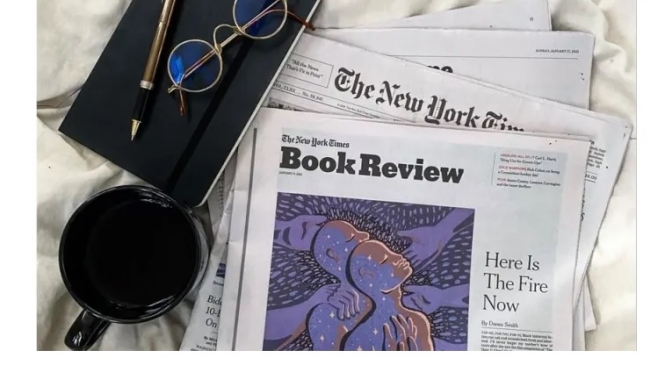
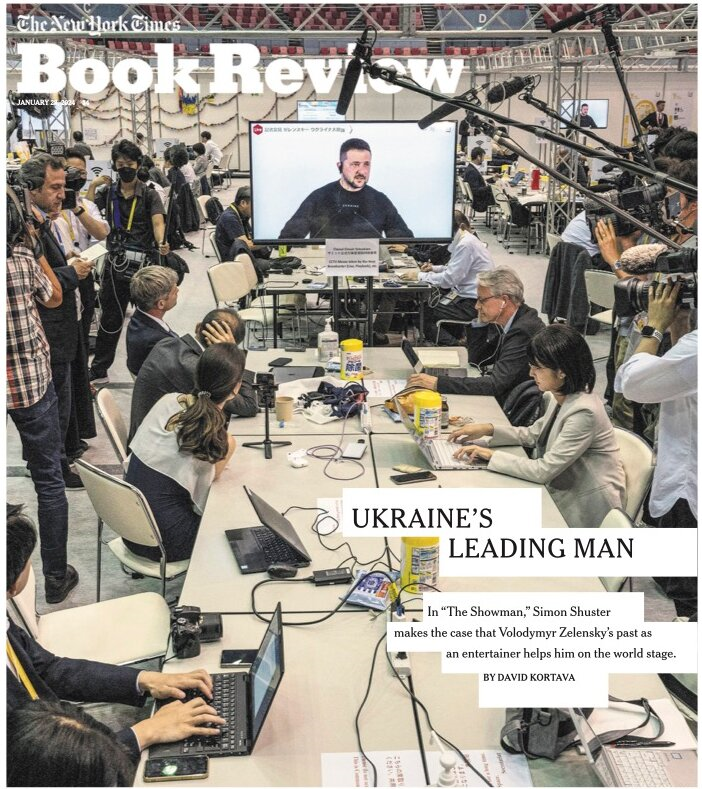
The New York Times Book Review – January 7, 2024

Image

THE NEW YORK TIMES BOOK REVIEW (January 5): The latest issue features ‘Read This And Learn’ – For decades, Juan Rulfo’s novel, “Pedro Páramo,” has cast an uncanny spell on writers. A new translation may bring it broader appeal.

A Masterpiece That Inspired Gabriel García Márquez to Write His Own

A black-and-white photograph of a man resting his chin on his hand over a small wooden table. An Aztec skull sits next to his face.

For decades, Juan Rulfo’s novel, “Pedro Páramo,” has cast an uncanny spell on writers. A new translation may bring it broader appeal.

By Valeria Luiselli

Readers of Latin American literature may have heard one of the many versions of this story:

It is 1961 and Gabriel García Márquez has just arrived in Mexico City, penniless but full of literary ambition, trying desperately to work on a new novel. One day, he is sitting in the legendary Café La Habana, where Fidel Castro and Che Guevara were said to have plotted the Cuban Revolution. Julio Cortázar walks in, carrying a copy of Juan Rulfo’s novel “Pedro Páramo.” With a swift gesture, as if he’s dealing cards, Cortázar throws the book on García Márquez’s table. “Tenga, pa que aprenda,” he says. “Read this and learn.”

Willa Cather and Yehudi Menuhin: An Unlikely, Unwavering Friendship

A pair of black-and-white historical photographs show Willa Cather and Yehudi Menuhin, holding a violin.

These two titans of 20th-century literature and music formed a profound, yearslong relationship across generations and backgrounds.

By Joshua Barone

Early in 1935, a blizzard blew through New York City. The storm was so fierce, it virtually emptied Central Park. But Willa Cather spent her morning there, sledding with the violin prodigy Yehudi Menuhin and his sisters.

Interviews: Novelist Joyce Carol Oates ‘Storytelling’

Louisiana Channel (January 4, 2024) – When writing, Joyce Carol Oates writes about people, often about a family, because “the family unit to me is like the nexus of all emotion, and people derive their meaning from the position in families,” she says.

Video timeline: 0:00 On preferred subjects for writing 3:20 On Karen Blixen /Isak Dinesen 4:24 On families 6:54 On the mother figure 9:00 On the novel ‘Babysitter’ 17:27 On the novel ‘Night. Sleep. Death. And the Stars’ 22:48 How traveling resembles writing 28:47 On Donald Trump

“What is so exciting about the novel is that it mimics life and that you end up doing something you never thought you would do,” says Joyce Carol Oates, one of America’s greatest living novelists, when looking back on a life of writing.

It might be a violent event or something politically relevant, or it could be a racist experience that sets off a novel. In her storytelling, Oates finds it interesting to focus on girls at the beginning of puberty: “There’s a kind of wonderful neutrality of childhood that gets conditioned out when girls get to be 12 – 14 years old. And then, from that point on, when they’re so shaped by what we call the male gaze and the expectations of others that they grow into being someone who is this female image.”

But today, the family is very different and there are all kinds of families: “There are families of same-sex couples who got married and they may adopt a child or they may have a child of their own, but then there may be families that are like communes where people are living, sharing a house, but they are a family and they may have dogs and cats who know who they are. […] The so-called nuclear family – which is just a father, mother, and children – still exists, of course, but it’s not the only example of any longer, which is wonderful. It all begins with the emancipation of women”, Joyce Carol Oates concludes.

Oates feels attracted to writing because writing is storytelling and “what’s interesting about storytelling is that you have to have revelations. That you start off with a situation, and a little bit of a mystery evolves, and then you have to follow the tendrils and the roots of that mystery, like an investigator. And then there has to be a revelation.” This means that Oates focuses a lot in her writing on the pacing and the suspense and the movement, like “how long is a paragraph, how short is the dialogue, and how much dialogue is there in proportion to the exposition, and the craftsman side of writing is actually where many people write.“

Fine Art: The Burlington Magazine – January 2024

Image

The Burlington Magazine – January 3, 2024: The new issue features ‘The Golden Age of Avignon’ – Avignon as ‘New Rome’; Rubens and women; Tiepolo in New York; Gertrude Stein and Picasso, and more….

China’s Southern Paradise: Treasures from the Lower Yangzi Delta

A vivid photograph of a lotus pond ushers visitors into this ambitious exhibition on the arts and culture of Jiangnan. Lying to the south of the Yangtze – its name literally means ‘south of the river’ – this part of China includes such major cities as Shanghai, Hangzhou and Suzhou. Curated by Clarissa von Spee, Chair of Asian Art and the James and Donna Reid Curator of Chinese Art at the Cleveland Museum of Art (CMA), this is the first exhibition outside China to present an encyclopaedic view of the cultural history of this historically affluent region. 

The Walpole Society

Ever since the Walpole Society was founded in London in 1911 ‘with the object of promoting the study of the history of British art’, The Burlington Magazine has taken a close interest in an organisation with aims and principles so close to our own: this is the sixth Editorial we have devoted to the subject. The first, written by the art historian August F. Jaccaci, who edited the Magazine’s ‘Art in America’ section, appeared in 1913 on the occasion of the publication of the first of the annual volumes that are the society’s raison d’être.

Arts/Books: Times Literary Supplement – Jan 5, 2024

Image

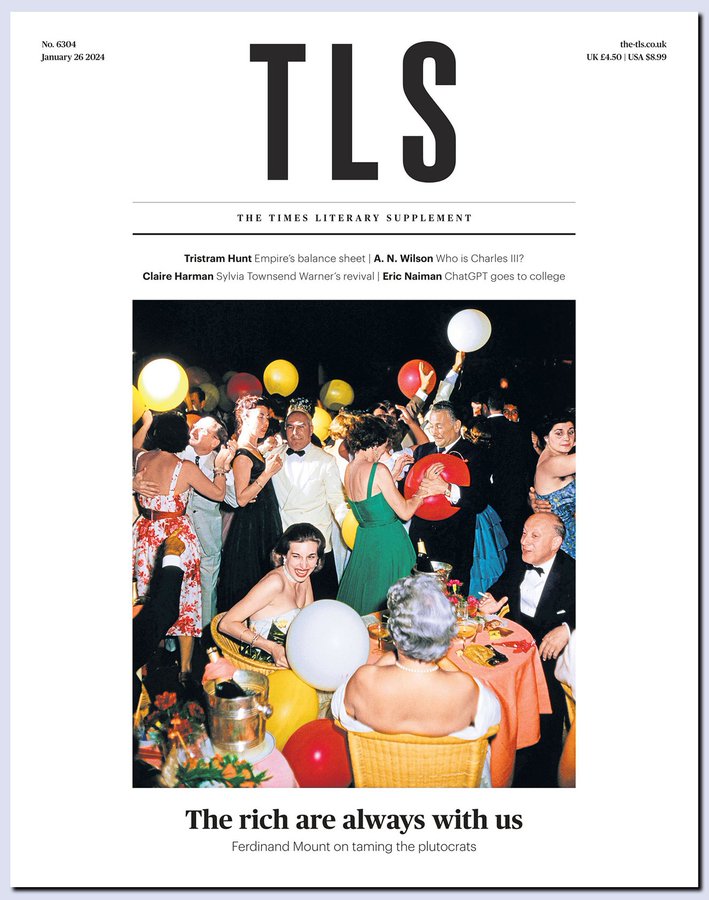
Times Literary Supplement (January 3, 2024): The latest issue features ‘The Lady Vanishes’ – Muireann Maguire on a revival of classic crime fiction; What next for Julian Assange; David Hockney’s drawings; Dreaming up 007; The science of belonging and more…

Previews: Country Life Magazine – January 3, 2024

Image

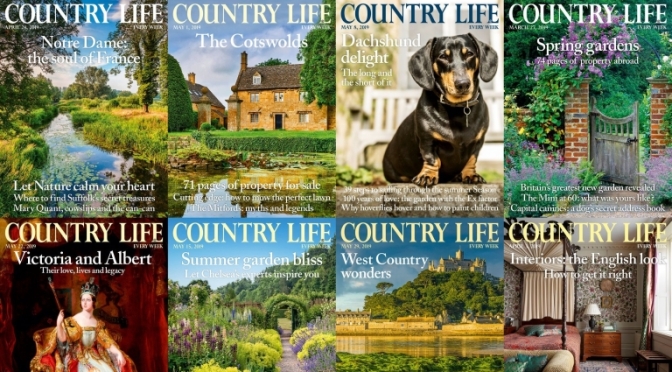
Country Life Magazine – January 2, 2024: The latest issue features ‘The Very Best Of Britain’; Marylands, a Surrey country house with a Spanish influence; artist Anne Wright’s miniature Daffodils and snowdrops at her small nursery in North Yorkshire; and how January weather can set the tone for the year to come…

The foul-mouthed Miller and the prim Princess

Geoffrey Chaucer created his Canterbury pilgrims more than 600 years ago, yet his band of travellers speaks across the ages, finds Matthew Dennison

Let’s hear it for Britain

Carla Passino bangs the drum for the British Isles with 50 things to make the nation proud, from code-cracking to clever dogs — and everything in between

Snow magic

Mary Keen is mesmerised by the array of rare and highly collectable snowdrops that artist Anne Wright is breeding at her small nursery in North Yorkshire

Keith Halstead’s favourite painting

The chief executive of the Royal Countryside Fund chooses a work that sparks memories of his childhood in rural Norfolk

Thought for the year 2024

Carla Carlisle enters the new year with a determination to remain positive, fortified by the sentiments of W. H. Auden

A fairy house

The glamour and glitz of 1920s stage and screen is rekindled as Clive Aslet puts the spotlight on Marylands, a Surrey country house with a Spanish influence

Baby, it’s cold outside

In the first of a new series on weather lore, Lia Leendertz reveals how January can set the tone for the year to come

Interiors

The bathroom of a Somerset house is restored with a nod to its historic roots, finds Arabella Youens, and Amelia Thorpe shares ideas for creating your own luxury bathing sanctuary

London Life

Start the year with an exhibition, says Charlotte Mullins, while Carla Passino assesses architect Richard Rogers’s contribution to the London skyline and Gilly Hopper looks ahead to the year’s big events in the capital

Kitchen garden cook

Melanie Johnson on sweet and nutty Jerusalem artichokes

Travel

Mary Lussiana stays at a land-mark luxury hotel in Marrakech while Luke Abrahams explores Athens in the snow and James Fisher dons his skis and discovers the Dolomites

New series: Arts & Antiques

Carla Passino investigates the centuries-long British passion for collecting antiquities and finds that all roads lead to Rome

The New York Times Book Review – December 31, 2023

Image

THE NEW YORK TIMES BOOK REVIEW (December 31, 2023): The latest issue features Francis Ford Coppola Is Ready For His Close-Up – Sam Wasson’s supremely entertaining new book, “The Path to Paradise”, tracks the ups and downs, ins and outs, of a remarkable career.

The Problem of Misinformation in an Era Without Trust

This image shows the face of a wooden Pinocchio figure reflected in the screen of an iPhone on a bright red background. Pinocchio’s long nose protrudes a couple inches from the screen.

Elon Musk thinks a free market of ideas will self-correct. Liberals want to regulate it. Both are missing a deeper predicament.

By Jennifer Szalai

When the billionaire entrepreneur Elon Musk sat down for his profanity-laced interview at The New York Times’s DealBook Summit in late November, his petulant dropping of F-bombs received a lot of attention. Less noticed but far more revealing was his evident disdain for a humble word beginning with the letter T. “You could not trust me,” Musk said, affecting an air of tough-guy indifference in his shearling-collared flight jacket and shiny black boots. “It is irrelevant. The rocket track record speaks for itself.”

Previews: Country Life Magazine – Dec 27, 2023

Image

Country Life Magazine – December 27, 2023: The latest issue features ‘This Splendid Land’ – Landscapes, Landmarks, Houses and Gardens; The Art of Knot Tying; Winston Churchill’s interior-design tips; A unicorn in the garden – fantastic beasts tamed…

Figs, wisteria, and the roses that ‘are ridiculously easy to grow’

Country Life’s 10 best gardens stories of 2023

By Toby Keel

The rose variety that’s ridiculously easy to grow: ‘Stuff some cuttings into the soil and two years later, they’ll be flourishing’

Long-standing Country Life contributor Charles Quest-Ritson is literally the man who wrote the book on roses — specifically The RHS encyclopedia of Roses — and back in June, he shared some tips on sharing and planting cuttings which proved enormously popular.