
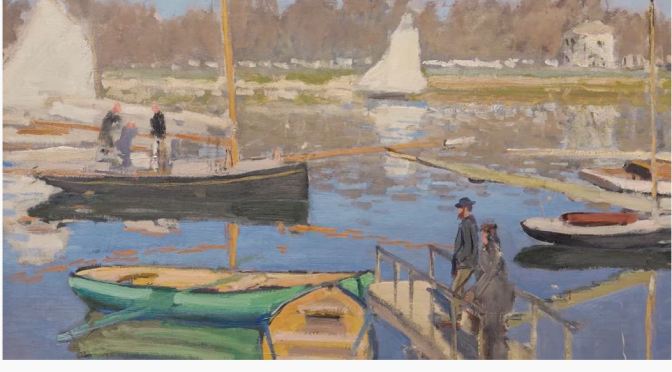
Painted along the banks of the Seine, Le bassin d’Argenteuil captures the rise of the middle class and the founding tenants of Impressionism Painted in 1874, Le bassin d’Argenteuil provides a glimpse into the ‘golden’ era of Impressionism. During this time, Claude Monet and his fellow Impressionists, including Pierre-Auguste Renoir, Edouard Manet and Alfred Sisley, codified their ideas while painting along the banks of the Seine. Expressing the dynamism of nature and the modernity of the Third Republic, Le bassin d’Argenteuil combines light and leisure to evoke the excitement of a new visual language. The painting, which brings together the artist most synonymous with Impressionism and the town identified with its origins, will be sold at Christie’s on 11 November as part of The Cox Collection: The Story of Impressionism. Learn More: https://www.christies.com/features/cl…
Category Archives: Arts & Literature
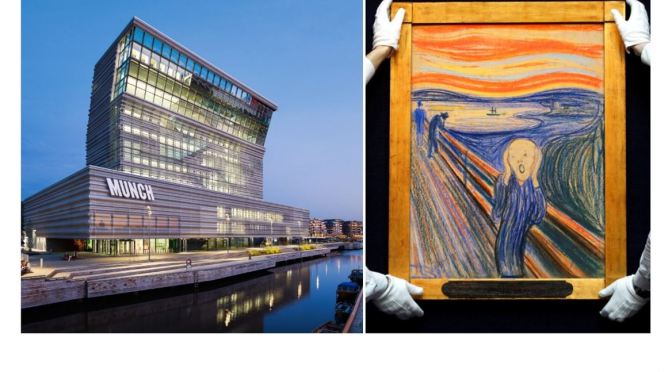
Views: Munch Museum Opens In Oslo, Norway
‘The Scream,’ arguably the most iconic image in art, is the centerpiece of a new museum dedicated to its creator Edvard Munch in Oslo.
Munch Museum is an art museum in Oslo, Norway dedicated to the life and works of the Norwegian artist Edvard Munch. As of the summer of 2021, 28000 pieces of art are being moved from the museum at Tøyen, to the museum at Bjørvika, Oslo.
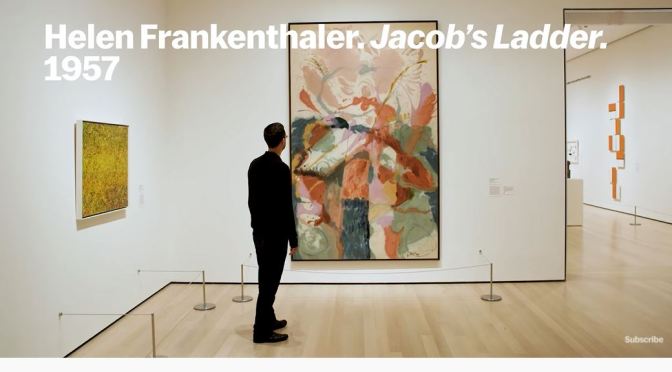
Art: ‘Jacob’s Ladder’ By Abstract Expressionist Helen Frankenthaler
Alex Roediger, MoMA’s senior information coordinator, looks at Helen Frankenthaler’s “Jacob’s Ladder” (1957) with a painter’s eye, and finds that “more paint” isn’t always the key to making a dramatic statement—even in Abstract Expressionism.
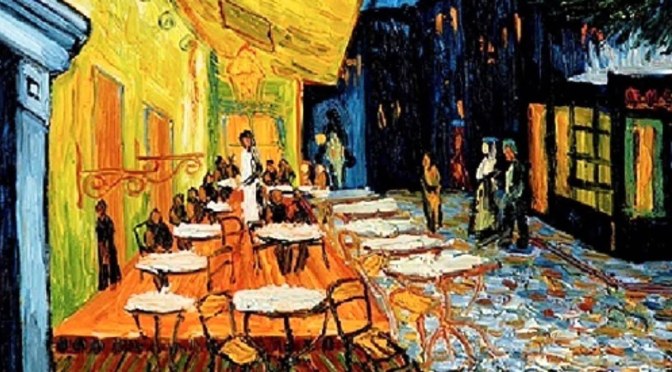
Van Gogh Views: ‘Terrace of a Café at Night’ (1888)
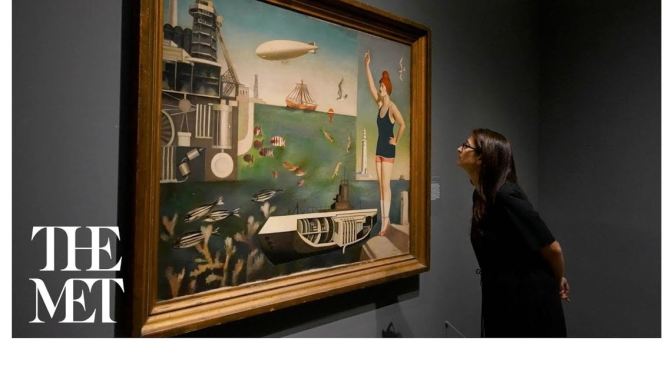
Exhibit Tours: ‘Surrealism Beyond Borders’ – The Met
Nearly from its inception, Surrealism has had an international scope, but knowledge of the movement has been formed primarily through a Western European focus. Join Stephanie D’Alessandro, the Leonard A. Lauder Curator of Modern Art and Senior Research Coordinator in the Department of Modern and Contemporary Art at The Met, and explore this exhibition, which reconsiders the true “movement” of Surrealism beyond boundaries of geography and chronology—and within networks that span Eastern Europe to the Caribbean, Asia to North Africa, and Australia to Latin America. Including examples from almost eight decades and produced across at least 45 countries, Surrealism Beyond Borders offers a fresh appraisal of some of the collective concerns and exchanges—as well as historical, national, and local distinctions—that will recast appreciation of this most revolutionary and globe-spanning movement. Learn more about the exhibition at https://www.metmuseum.org/surrealism
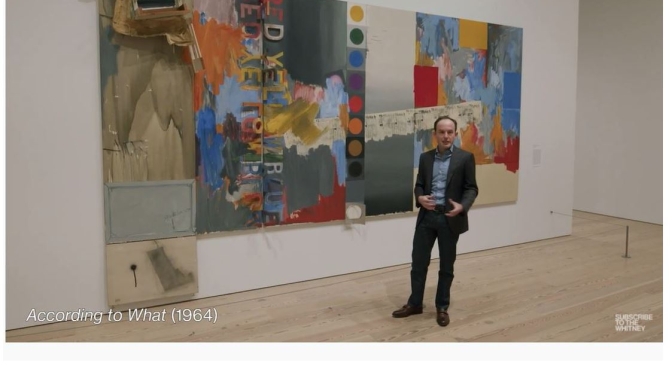
Curator Tour: ‘Jasper Johns – Mind/Mirror’ At The Whitney Museum
Join Chief Curator Scott Rothkopf as he shares some of his favorite works from Jasper Johns: Mind/Mirror, the most comprehensive retrospective ever devoted to Johns’s art. Jasper Johns: Mind/Mirror is organized by the Whitney Museum of American Art and the Philadelphia Museum of Art. The exhibition runs through February 13, 2022.
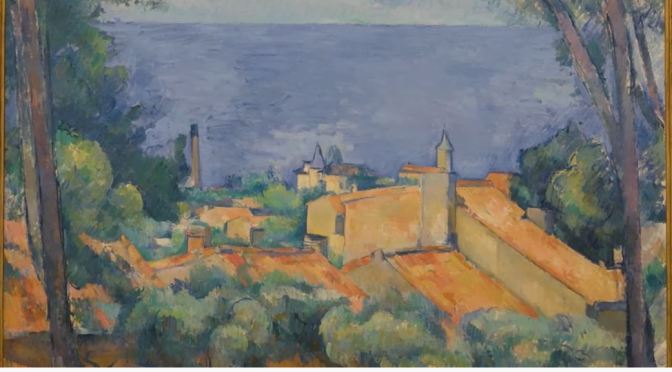
Views: “L’Estaque Aux Toits Rouges” by Paul Cézanne
L’Estaque aux toits rouges by Paul Cézanne is one of the finest views of L’Estaque, the Provençal fishing village where the artist forged a radical new way of depicting the world around him.
Exhibited in 1936 and hidden away ever since, this remarkable piece will finally come back on view as part of The Cox Collection: The Story of Impressionism, taking place at Christie’s New York on 11 November.
While Cézanne is primarily associated with Aix-en-Provence, the village of L’Estaque near Marseille was a place that he returned to again and again when he sought sanctuary. His relationship with the village began when he holidayed there as a child with his mother. Then, in 1870, when Cézanne left Paris to avoid conscription into the army following the start of the Franco-Prussian War, he escaped to L’Estaque.
Learn More: https://www.christies.com/features/ce…
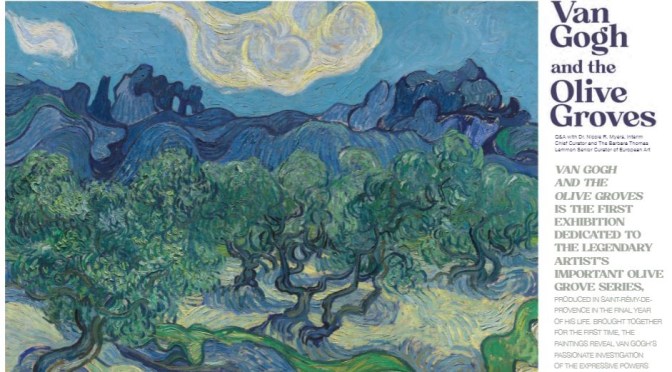
Front Covers: Artifacts Magazine – Fall 2021

Read Issue
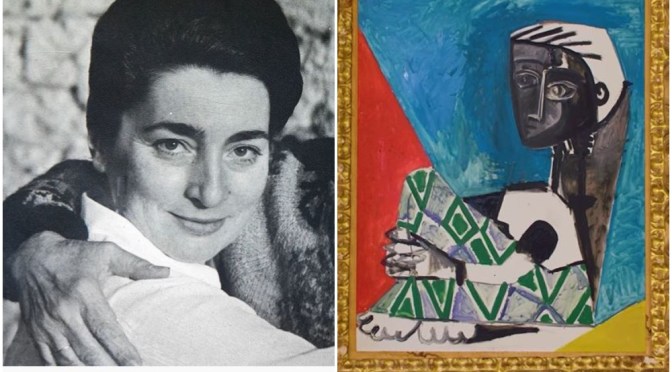
Art: Jacqueline Roque – Picasso’s Ultimate Muse
Picasso’s stunning painting ‘Femme Accroupie’, offered in Sotheby’s upcoming Modern Art Evening Sale (9 October | Hong Kong), is a portrait of his ultimate muse and wife, Jacqueline Roque. In this latest Expert Voices, Sotheby’s Chairman Brooke Lampley tells us of the huge artistic inspiration Jacqueline had on Picasso. Discover how this work was the final summation of an entire series of portraits of her, and how it was inspired by master artists of previous centuries.

Exhibitions: ‘Jeff Koons. Shine’ At Palazzo Strozzi In Florence, Italy (Video)
American contemporary artist Jeff Koons brings some of his most celebrated works of art to Palazzo Strozzi in Florence for a major exhibition entitled Jeff Koons.Shine. His work will be exhibited alongside loan objects from galleries and museums around the world, exploring the concept of “shine” in his work–an ambiguous idea that oscillates between the dualities of being and seeming, or truth and sensation… Continue reading on https://www.nowness.com/series/meet-t…
 Boomers Daily