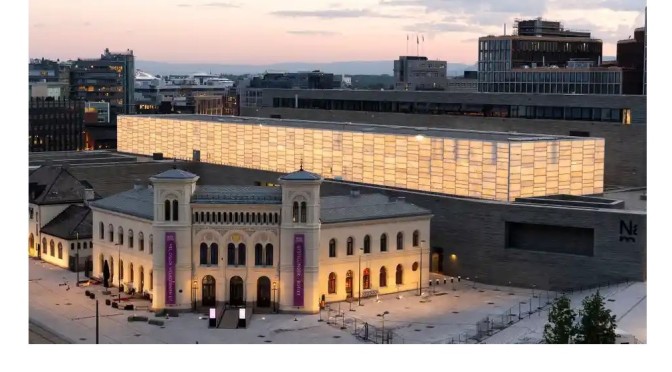
The Norwegian capital Oslo is getting a new national museum for classical and modern art, architecture and design. The museum’s collection includes around 100,000 objects, ranging from medieval tapestries to modern design classics and contemporary artworks.
There will be rooms dedicated to, among others, the works of Edvard Munch , including “The Scream,” 19th-century landscape painting, royal robes worn by the Norwegian queens, as well as works by prominent artists, such as Gustav Vigeland, Hannah Ryggen, Claude Monet, Vincent Van Gogh and Ida Ekblad.
This week: why is Tate rejecting an archive of material relating to Francis Bacon, 18 years after acquiring it?
Our London correspondent Martin Bailey tells us about his recent scoop that Tate is returning a thousand documents and sketches said to have come from the studio of Francis Bacon to Barry Joule, a close friend of the artist, who donated them to Tate in 2004. We then discuss the material with Martin Harrison, the pre-eminent Bacon scholar and editor of the catalogue raisonné of Francis Bacon’s work published in 2016, and to Sophie Pretorius, the archivist at the Estate of Francis Bacon, who went through the Barry Joule archive item by item. Victoria Munro, the director of the Alice Austen House Museum in New York, discusses this still too-little-known photographer, and her documentation of immigration to the United States and the lives of queer women in the 19th and early 20th centuries. And this episode’s Work of the Week is Weißes Bild (1994), a painting by the late Luxembourg-born artist Michel Majerus, now on view at Art Basel—Aimee Dawson, acting digital editor, is at the fair and talks to Giovanni Carmine, curator of the Unlimited section, in which the painting appears.
Sophie Pretorius’s essay Work on the Barry Joule Archive is in the book Francis Bacon: Shadows published by the Estate of Francis Bacon and Thames and Hudson.
For more on the Alice Austen House Museum, visit aliceausten.org. The podcast My Dear Alice is out in the autumn.
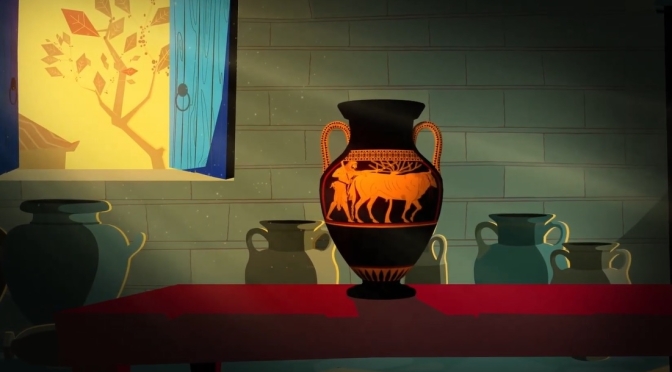
In this five-minute animated video, journey back to the 6th-century BCE workshop of the Athenian master Andokides and witness an ancient artist’s moment of creative ingenuity. For generations Athenian vase painters had employed black-figure technique, in which the figure is painted in a mixture of clay and water called slip and details are incised with a sharp tool.
At some point—we don’t know precisely when or why—a vase painter had the idea to reverse the scheme, leaving the figures the color of the clay and painting details with a brush. We now call this red-figure technique. Learn how ancient vase painters created vases in both styles and marvel at the technical virtuosity of the multi-step firing process that contributed to their distinctive, high-contrast look.
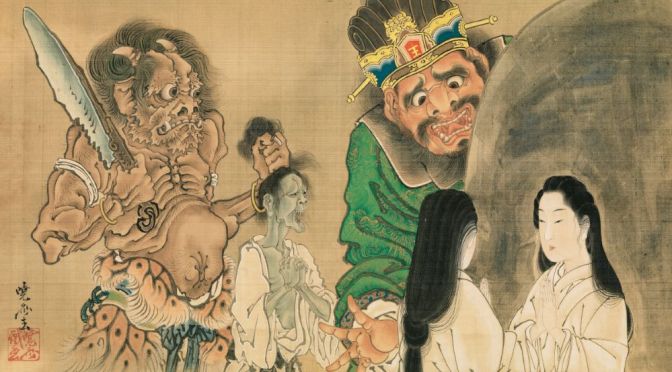
The Japanese painter Kawanabe Kyōsai (1831–1889) was one of the most innovative artists of his day. He lived during a turbulent time, experiencing the downfall of the Tokugawa shogunate (the hereditary military government) and the new imperial regime’s reforms to modernise and Westernise the country. Kyōsai’s drive to capture the world with his brush earned him the nickname ‘demon of painting’ – which he lived by.
Kyōsai, as a highly trained painter, was proficient in traditional methods and subjects. He broke with convention by blurring the established boundary between ‘serious’ and comic pictures. Traditionally, complex painting techniques were reserved for literary classics, historical and legendary figures, auspicious themes and religious images. Comic pictures were typically produced in a lighter, more fluid style.
Kyōsai often saw humour in ‘serious’ subjects and introduced comic and everyday content in highly finished, detailed paintings. The selection in this room demonstrates Kyōsai’s range and skill across diverse genres. Subjects include animals, monsters, ghosts, protective deities and Buddhist icons. Some paintings display powerful Kano-style ink techniques, others depict humorous creatures – recalling works by his first teacher, Utagawa Kuniyoshi, and referencing medieval picture scrolls. He can be seen exploring Western techniques such as perspective, shading and the study of anatomy, which attests to his insatiable curiosity and desire to push beyond tradition.
Kyōsai had a keen interest in society, and captured contemporary events in his pictures with humour and piquancy. His satirical prints from the 1860s, the period leading up to the collapse of the shogunate regime, reflect widespread anxiety about the political turmoil, economic instability and foreign presence. He channelled the febrile atmosphere into dynamic images of frog battles, monster parties and wildly dancing tengu (mischievous, semi-human creatures). Under the new Meiji government, the sudden influx of Western-style culture greatly shocked many Japanese, after over 260 years of relative isolation.
Kyōsai’s comic pictures express both the excitement of the new era, with modern technologies such as the telegraph and trains, and a certain scepticism towards those who blindly followed the new trends. The government’s policy of hiring European and American specialists to teach at new institutions in Japan brought the painter a personal benefit. The British architect Josiah Conder (1852–1920) became his pupil around 1881, and remained a student, patron and friend until Kyōsai’s death in 1889.
In nineteenth-century Japan, artists often produced works impromptu in front of an audience. The creative process was appreciated as a performance. At commercially organised calligraphy and painting parties called shogakai, attendees would pay for admission, and once inside, could ask the artists to create works for them at no extra charge. These gatherings were frequently a platform for collaboration. Multiple painters would complete a picture together or a calligrapher would inscribe a poem by the painter’s work. Kyōsai often depicted a scene of art viewing, and the artworks within the image would be painted by other artists.
Collaboration has always been an important part of the creative process in Japan, among artist friends or between teacher and pupils, sharing and marking the occasion. Event flyers, newspaper articles and anecdotes attest that Kyōsai was famous for his speedy, skilful and witty performances. The parties involved copious alcohol. Kyōsai loved saké and his brush became even more playful and expressive when intoxicated. Josiah Conder wrote in his master’s obituary: ‘under the influence of BACCHUS some of his strangest fancies, freshest conceptions and boldest touches were inspired.’
This remarkable painting by Michel Corneille the Elder has been hidden away from view for at least the past 110 years and is a truly exceptional rediscovery for French painting of the 17th century. After a recent restoration, the artist’s signature has been re-exposed so that now this impressive work can be confidently attributed to the early French Classicist.
This episode of Anatomy of a work of art, discover The Death of Virginia, taken from Roman historian Livy and recounts the death of Virginia, daughter of a centurion in the Roman army. This rediscovery will be one of the highlights of our sale Tableaux Dessins Sculptures 1300-1900, Session I, Including Treasures from the Antony Embden Collection.
This week, Picasso and the Old Masters: as shows pairing the Spaniard with Ingres and El Greco open in London and Basel respectively.
Ben Luke talks to Christopher Riopelle (curator of Picasso Ingres: Face to Face at the National Gallery) and Carmen Giménez (curator of Picasso-El Greco at the Kunstmuseum in Basel) about the profound influence of historic artists on Picasso’s rupturing of tradition. In this episode’s Work of the Week, The Art Newspaper’s contemporary art correspondent, Louisa Buck, talks to Chris Levine, the creator of Lightness of Being, one of the best known recent portraits of Queen Elizabeth II, as the British monarch celebrates 70 years on the throne. And as the Polish government replaces yet another museum director, what can be done about political interference in museum governance? Ben talks to Goranka Horjan, director of Intercom, the International Committee for Museum Management, and Bart De Baere, chair of the Museum Watch programme at the International Committee for Museums and Collections of Modern Art (Cimam).
Picasso Ingres: Face to Face, National Gallery, London, until 9 October. Picasso-El Greco, Kunstmuseum, Basel, 11 June-25 September.
This video offers a look at Cezanne’s unique approach to color, form, and space through specialized imaging of a few of the artist’s most influential works in the Art Institute’s collection: The Basket of Apples, The Three Skulls, and The Vase of Tulips.
Plus: William Kent’s heavenly ceilings, New York’s terrible new skyscrapers, the market’s obsession with young painters, the artists who channel their inner child, and reviews of Walter Sickert, Raphael and Winslow Homer
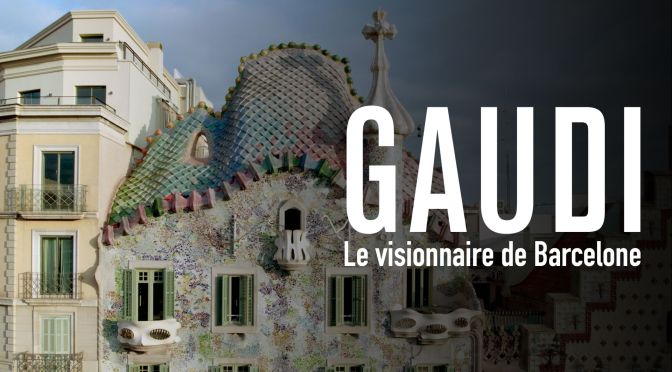
The Musée d’Orsay is hosting the first major exhibition devoted to Antoni Gaudí organized in France in Paris in fifty years. In an immersive museographic experience, it will show the spectacular creations of this unique artist, in particular, presenting sets of furniture never before exhibited in France. It will offer a new vision of the artist as a unique and singular figure, a non-isolated genius who practiced in a Catalonia in the midst of social, political and urbanistic upheaval.
The exhibition will focus on showing the architect’s creative process at a time of an exceptional local artistic profusion linked to “Modernism” or the Art Nouveau movement in Spain, supported by distinguished patrons, anxious to distinguish Catalonia, a land of Mediterranean identity. Gaudí’s workshop, his many collaborators, and his sophisticated working techniques will be the guiding line of the exhibition to make the public understand the extraordinary inventive capacity of the architect who defied all the creation of the moment.
Friday May 27, 2022: Are stolen Cambodian statues hidden in the world’s great public collections?
We discuss Cambodia’s looted heritage with Celia Hatton, Asia Pacific editor and presenter at the BBC World Service, whose documentary for BBC TV and radio Cambodia: Returning the Gods exposes the connections between looters, smugglers and, allegedly, some of the world’s most famous encyclopaedic museums. Plus, the dark truth behind the art and antiques assembled by the Marcos family in the Philippines as they return to power.
We talk to the Filipino artist Pio Abad—who’s made art about Ferdinand and Imelda Marcos and their collections for more than a decade—about Bongbong Marcos’s presidential election victory in the Philippines and what that means for the country and the art and antiquities seized by its government after the Marcoses were deposed in the 1980s. And in this episode’s Work of the Week, we discuss a sculpture by Ruth Asawa—Untitled (S.266, Hanging Seven-Lobed, Multi-Layered Interlocking Continuous Form within a Form) (1961)—a highlight of a new exhibition at Modern Art Oxford in the UK, with Emma Ridgway, the show’s co-curator. Remarkably, the solo exhibition is the first in a European institution dedicated to the Japanese-American artist.
You can read Celia’s report on Cambodian antiquities online at bbc.co.uk. Cambodia: Returning the Gods (radio version) is on the BBC website and the BBC Sounds app—under The Documentary Podcast stream for the World Service and the Crossing Continents podcast stream in the UK—and on other podcast platforms.
Cambodia: Returning the Gods (television version) is on iPlayer in the UK and will be shown again on the BBC World news channel, broadcast date tbc—check listings.Pio Abad: Fear of Freedom Makes Us See Ghosts, Ateneo Art Gallery, Ateneo de Manila University, until 30 July, pioabad.com.
Ruth Asawa: Citizen of the Universe, Modern Art Oxford, UK, 28 May-21 August; Stavanger Art Museum, Norway, 1 October-22 January 2023.
News, Views and Reviews For The Intellectually Curious




 Boomers Daily