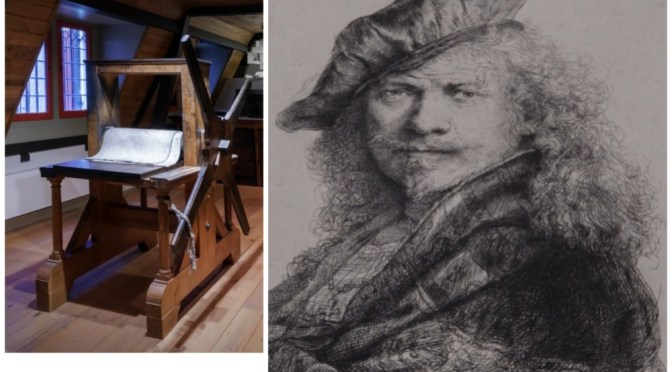
Christie’s (November 26, 2023) – Rembrandt House Museum Specialist Tim Schmelcher and Head of Collections, Epco Runia, discover more about Rembrandt’s life in Amsterdam, in particular his printmaking.
Then a more detailed look at the Sam Josefowitz Collection of Rembrandt prints – the most comprehensive and impressive in private hands – as we examine some of the highlights of these graphic masterpieces.
On 7 December 2023, Christie’s will be offering a selection of these prints across two sales in London: Old Masters Part I and The Sam Josefowitz Collection: Graphic Masterpieces by Rembrandt van Rijn.
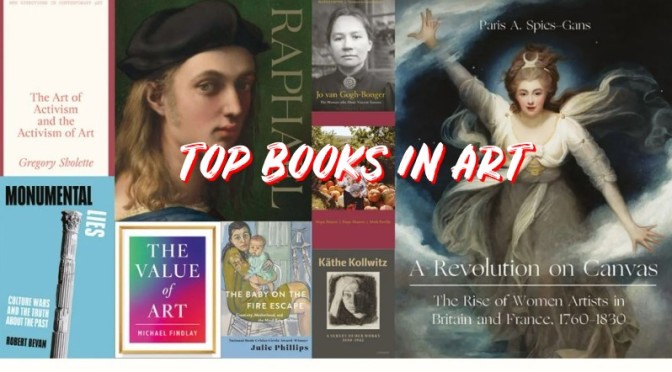
The Times and The Sunday Times (November 24, 2023): Lose yourself among lily pads, potbellied Dutch merchants and Venetian canals. Laura Freeman and Waldemar Januszczak curate the finest of this year’s art books, taking in Monet, Picasso, Gwen John and more
In his eighties, Claude Monet was spotted by a younger artist, “old but still very handsome”, wrapped in a sumptuous fur, sitting on top of a dyke “in a bitter west wind which ruffled his long white beard, mingling it with the foam of the waves”. This transporting biography by the Financial Times’s art critic Jackie Wullschläger paints the impressionist as a man for all seasons, out in the dawn and the dusk and the snow, obsessed, possessed, with capturing the fleeting effects of light, shade and water, calm as millpond or whipped up by a storm. Chocolate box? Jamais! Monet mounted the barricades of modern art, revolutionising the way the world could be seen and painted. A book for art-lovers — and for gardeners too. Art and literature, Monet proclaimed, were all humbug. “There’s nothing but the earth.” Laura Freeman
All the Beauty in the World: A Museum Guard’s Adventures in Life, Loss and Art by Patrick Bringley
Who would have thought that the outstanding art book of the year would be written not by a curator or an art historian or even an artist — but by a museum guard? For ten years Patrick Bringley worked at the Metropolitan Museum in New York, directing visitors to the Islamic collections and watching out for angry protestors. It turned out to be a remarkably fruitful experience. Bringley weaves the story of a personal tragedy involving his sick brother with startling insights into museum life and — most impressively — into the great art in the Met’s collection. Waldemar Januszczak
Looking at Picasso by Pepe Karmel
If you have been living under a rock in 2023, you will not have noticed that this year was the 50th anniversary of the death of Picasso. The rest of us couldn’t avoid it. Countless exhibitions, events and books commemorated the occasion, but this was the most useful. Focusing on the art rather than the biography of the man, it’s a generous and sensitive text with brilliant illustrations. WJ
Pauline Boty: British Pop Art’s Sole Sister by Marc Kristal
Pauline Boty was “the Wimbledon Bardot”, “an ice-cream of a girl” and by her own mocking, ironic reckoning, “a happy, dumb blonde”. She was so much more than that, as this fizzing biography shows. Meet Boty the Sixties It girl, pop artist, voice-of-a-generation broadcaster and “anti-ugly” campaigner against hideous postwar development. Marc Kristal gives you the crumbling studios of the Royal College of Art, the creative squalor of Notting Hill bedsitters and the thrill of finding your feet (in knee-high boots) in swinging London. Boty died appallingly young, but her life was no tragedy. It was full of mischief, provocation and promise. This book brings Boty to life, painting, protesting and dancing the miniskirted twist. LF
Venice: City of Pictures by Martin Gayford
Venice isn’t just the most painted city in the world, it is probably the most written about too. Finding a fresh angle from which to view it is a challenge. Gayford’s answer is to understand the city and its history through the splendid and varied art it has inspired. Packed with potted histories and informed anecdotes, this is a tome to pack on a visit to La Serenissima. WJ
Giacometti in Paris by Michael Peppiatt
Alberto Giacometti used to claim that really he would have liked to carve and cast voluptuous women such as Marilyn Monroe. “The more I tried to make them broader, the narrower they got.” Giacometti’s beanpole people became icons of 20th-century art and Michael Peppiatt’s compelling portrait cuts to the core of the sculptor’s “strange life and his stranger fame”. Giacometti’s Paris studio is a character in its own right: a filthy lair filled with the most extraordinary figures and fragments, with a leaking roof, a tree growing up through the floor and a local fox given the run of the place. Appalling and fascinating. You’ll never look at a Giacometti the same way. LF
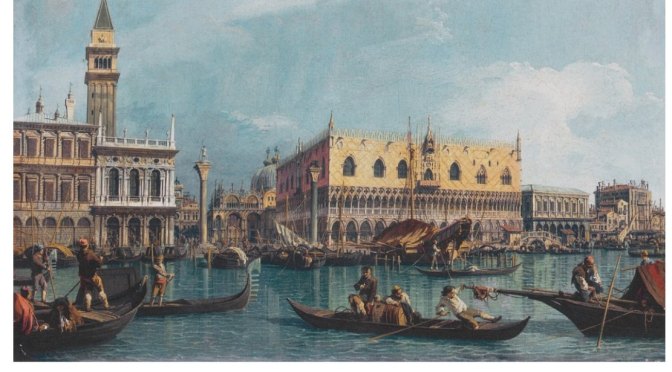
Christie’s (November 23, 2023) – Immerse yourself in a dreamlike vision of Canaletto’s Venice where the floating city of the 1700s appears strikingly unchanged centuries later. Giovanni Antonio Canal, better known as Canaletto (1697-1768), was born and died in Venice.
Did Canaletto paint these paired views of Venice for the Countess of Essex?
Home for most of his life, the city was also the artistic subject that dominated his career. Canaletto helped establish the veduta — or topographical view — as one of the chief genres of Venetian painting in the 18th century, as well as a prime export. A pair of vedute by Canaletto, unknown to scholars until now, will lead the Old Masters Part I sale at Christie’s in London on 7 December 2023, as part of Classic Week.
Coming from a private collection, these masterpieces were painted around 1734, when Canaletto was at the peak of his powers, almost certainly for an English patron.
Apollo Magazine (November 23, 2023) – Political satire is by its nature ephemeral: it reacts to events and personalities and moves quickly on. Yet James Gillray’s (1756–1815) excoriating attacks on William Pitt, Charles James Fox, George III, the Prince Regent and a whole cavalcade of Georgian public figures retain their sting more than two centuries after he dreamed them up. In his sumptuously illustrated study of Gillray, Tim Clayton explains why.
Gillray was, shows Clayton, as much an artist as a caricaturist – his fertile wit and invention were equalled by his facility with an etching needle. His images reveal a man of learning, liberal with allusions in his prints to Shakespeare, Milton and the classics, who developed a style that combined the literary and the visual. His seven years at the Royal Academy, meanwhile, helped shape him into one of the most accomplished draughtsmen of the early 19th century.
Although Clayton takes Gillray from his early training as a letter engraver through his time as a travelling player and into his pomp and then the madness that blighted his later years, this is not a biography in the traditional sense. There are few documentary sources relating directly to Gillray, so Clayton skilfully reveals his man through examining the ‘business of satire’. He looks at Gillray’s often overlapping professional and personal relationships, at the intricacies of Georgian print culture, and the ebbs and flows of politics.
ART VISION TV / C&B JOURNAL (November 22, 2023) – Artcurial’s Old Master & 19th Century Art department will be holding its prestige sale on 22nd November, featuring The Sacrifice to the Minotaur, a masterpiece by the 18th century painter Jean-Honoré Fragonard.
Fine Arts Museums of San Francisco (November 17, 2023) – Bringing a new perspective on the beloved Renaissance artist, “Botticelli: Rhythm of the Line” reveals the central role that drawing played in Sandro Botticelli’s art and practice. This short documentary takes viewers through the streets of Florence, where the artist lived and worked, to the Uffizi galleries, home of Botticelli’s most striking masterpieces.
The story is told by Furio Rinaldi, curator of drawings and prints at the Fine Arts Museums of San Francisco, Jonathan K. Nelson, art historian at Syracuse University in Florence, and Cecilia Frosinini, art historian at the Opificio delle Pietre Dure in Florence. These voices speak in chorus to give us an original narrative that illuminates Botticelli’s life, process, and legacy.
Botticelli Drawings is the first exhibition ever dedicated to the drawings of Renaissance artist Sandro Botticelli (ca. 1445 – 1510). Exploring the foundational role drawing played in Botticelli’s work, the exhibition traces his artistic journey, from studying under maestro Fra Filippo Lippi (c. 1406 – 1469) to leading his own workshop in Florence. Featuring rarely seen and newly attributed works, the exhibition provides insight into the design practice of an artist whose name is synonymous with the Italian Renaissance.
Botticelli’s drawings offer an intimate look into the making of some of his most memorable masterpieces, including Adoration of the Magi (c. 1500), which will be reunited with its preparatory drawing, surviving only in fragments. From Botticelli’s earliest recorded drawings through expressive designs for his final painting, the works on display reveal the artist’s experimental drawing techniques, quest for ideal beauty, and command of the line.
Botticelli Drawings is on view from November 19, 2023 – February 11, 2024.
Sotheby’s (November 13, 2023) – This month, we’re taking a tour of the world’s most exciting and innovative museum exhibitions with Tim Marlow, CEO and Director of the Design Museum, London.
Africa & Byzantium Metropolitan Museum of Art, New York 19 November 2023 – 3 March 2024 Bringing together the art and culture of Byzantium and Africa, this ambitious New York exhibition looks in a new way at their importance to the development of the premodern world.
Africa & Byzantium comprises over 200 objects, from frescoes and mosaics to jewelry and manuscripts borrowed from many of the great collections, spanning over ten centuries of complex cultural exchange and influence.
Modigliani: Modern Gazes Staatsgalerie Stuttgart 24 November 2023 – 17 March 2024 Modigliani: Modern Gazes focuses on the 20th-century Italian artist’s portraits of modern women From bohemian Paris who stare unapologetically at the viewer, defiant and – as the director of the Staatsgalerie, Christiane Lange puts it – “emancipated”.
Works by German-speaking contemporaries Paula Modersohn-Becker, Jeanne Mammen, Egon Schiele, Gustav Klimt and Wilhelm Lehmbruck also feature, in a show that places Modigliani in the wider cultural context of the young European avant-garde.
Mark Rothko: Paintings on Paper. National Gallery of Art, Washington DC 19 November 2023 – 31 March 2024 Rothko exhibitions have always focused on his canvases but the artist drew no distinction between them and his paintings on paper – some of which were up to seven feet tall.
Forming the basis of Mark Rothko: Paintings on Paper, a ground-breaking show at the National Gallery of Art in Washington, many of the watercolors, acrylics and oil paintings on paper have never been seen before.
Botticelli Drawings 19 November 2023 – 11 February 2024 Legion of Honor, San Francisco Although his reputation dwindled until the Pre-Raphaelites rediscovered his work in the 19th century, Sandro Botticelli is now one of the most revered of the Renaissance masters.
There has, however, never been a significant exhibition of his drawings so Botticelli Drawings – an admirable and important project – will give us the chance to trace his artistic journey in a more intimate way than ever before.
An Atlas of Es Devlin Cooper Hewitt, New York 18 November 2023 – 11 August 2024 Devlin is a polymath and then some, with a wide ranging practice that incorporates stage design from La Scala in Milan to the Super Bowl. She is utterly compelling but hard to classify, which is why it is appropriate that Devlin herself will install her 30 year archive.
An Atlas of Es Devlin – featuring over 300 sketches, paintings, cutouts, and maquettes – will also stage a replica of her London studio along with giant film installations, a library programme including collective readings and the chance to participate in a cumulative artwork.
CBS Sunday Morning (November 12, 2023) – The largest exhibition ever of works by Ed Ruscha, one of the most celebrated American artists of the postwar era, is now on display at the Museum of Modern Art in New York City.
Ruscha, now 85, talks with correspondent David Pogue about collecting much of his life’s work into one retrospective; the cryptic nature of many of his paintings; and his use of unusual materials (like chocolate and axle grease).
“I don’t have any Seine River like Monet,” Ed Ruscha once said. “I’ve just got US 66 between Oklahoma and Los Angeles.” ED RUSCHA / NOW THEN will feature over 200 works—in mediums including painting, drawing, prints, photography, artist’s books, film, and installation—that make use of everything from gunpowder to chocolate. Exploring Ruscha’s landmark contributions to postwar American art as well as lesser-known aspects of his more than six-decade career, the exhibition will offer new perspectives on a body of work that has influenced generations of artists, architects, designers, and writers.
In 1956, Ruscha left his hometown of Oklahoma City and drove along interstate highway 66 to study commercial art in Los Angeles, where he drew inspiration from the city’s architecture, colloquial speech, and popular culture. Ruscha has recorded and transformed familiar subjects—whether roadside gasoline stations or the 20th Century Fox logo—often revisiting motifs, sites, or words years later. Tracing shifts in the artist’s means and methods over time, ED RUSCHA / NOW THEN underscores the continuous reinvention that has defined his work.
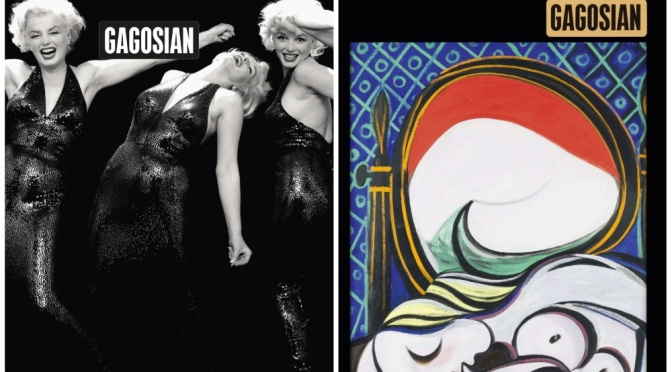
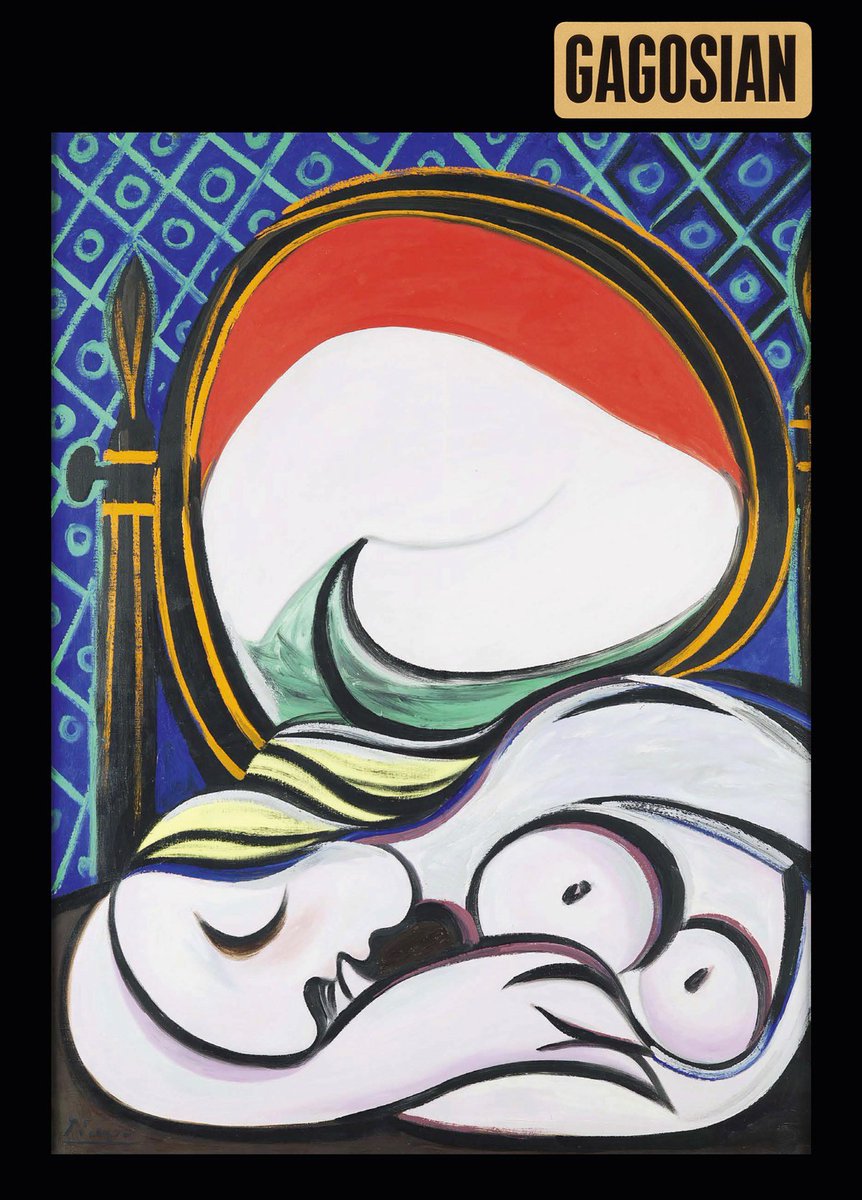
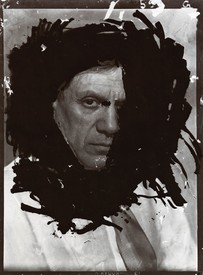
Gagosian Quarterly (Winter 2023) – The new issue features Annie Cohen-Solal who writes about the exhibition A Foreigner Called Picasso, at Gagosian, New York, detailing the genesis of the project, her commitment to the figure of the outsider, and Picasso’s enduring relevance to matters geopolitical and sociological. Connecting the dots among the Surrealist milieu, including Picasso, a conversation on the underrecognized photographer Lee Miller sets the stage for a New York show about her work, friendships, and collaborations with fellow artists.
Cocurator of the exhibition A Foreigner Called Picasso, at Gagosian, New York, Annie Cohen-Solal writes about the genesis of the project, her commitment to the figure of the outsider, and Picasso’s enduring relevance to matters geopolitical and sociological.
By Annie Cohen-Solal
I have been interested in the issue of immigration ever since I entered the art world. I began my career as an intellectual historian: I was a scholar of Jean-Paul Sartre and wrote his first biography. It was quite unexpected that I would fall into the orbit of the art world, let alone so fast, but two days after I arrived in New York City, in 1989—I had just been nominated cultural counselor to the French Embassy in the United States—I met Leo Castelli at a dinner. Out of the blue, Leo told me, “You don’t look like your predecessors.” (I was the first woman in the position.) “You’ll take New York city by storm and I’ll teach you American art. Come to the gallery tomorrow, I have a show with Roy [Lichtenstein]. Come for the opening and stay for the dinner.”
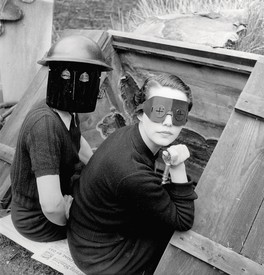
The American Surrealist photographer Lee Miller is the subject of the exhibition Seeing Is Believing at Gagosian, New York. Here we present a conversation on the stewardship of Miller’s legacy, her photography and writing from the frontlines of war to the pages of Vogue, and the intertwined lives of her friends, lovers, and the many artists she knew.
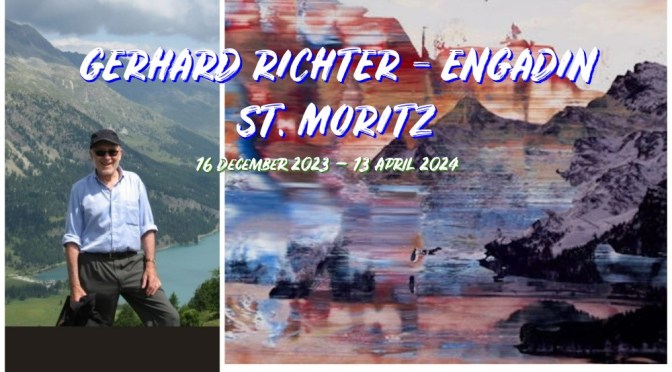
Hauser & Wirth – Art Gallery (November 11, 2023) = Gerhard Richter, born in 1932, is one of the most important and celebrated artists of our time. His works can be found in international collections and have been exhibited in numerous museums and galleries in Europe and the United States. Richter first vacationed in the Swiss Alpine village Sils, located in the Upper Engadin region, in 1989, a location he has regularly visited during both summer and winter holidays for over 25 years.
Curated by Dieter Schwarz and presented across three venues in the Upper Engadin—Nietzsche-Haus, the Segantini Museum and Hauser & Wirth St. Moritz—this momentous exhibition is the first to explore Gerhard Richter’s deep connection with the Engadin’s alpine landscape. More than seventy works from museums and private collections—including paintings, overpainted photographs, drawings and objects—are testament to the artist’s fascination with the Upper Engadin. Opening 16 December 2023, ‘Engadin’ will be on view through 13 April 2024.
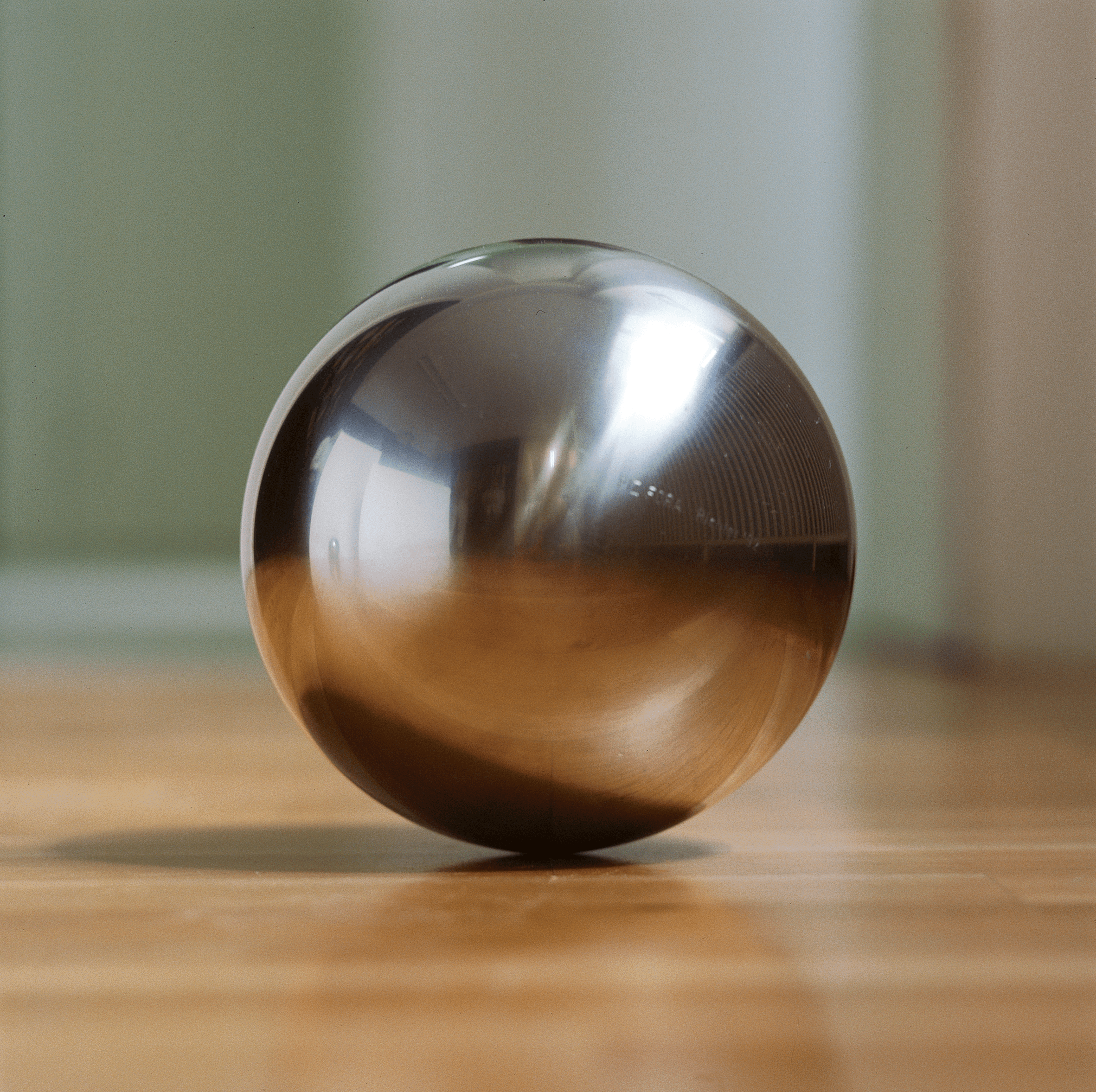
The work connecting the three exhibition venues is a steel sphere that Richter had produced as an edition, on view at each site. He first presented it at Nietzsche-Haus in 1992, in an exhibition curated by Hans Ulrich Obrist. Each unique sphere bears the name of a mountain in the Upper Engadin. The matte, subtly reflective, almost surreal sphere delicately reflects all that surrounds it. It symbolizes the sublime yet inhospitable manifestations of nature, which are especially conspicuous in the mountains.
On view at the Segantini Museum and Hauser & Wirth are paintings that Richter created from photographs taken during his hikes in the Upper Engadin. These works mark a new chapter in his landscape painting—a genre that had always appealed to him for its supposed untimeliness. Richter’s Engadin landscapes are exemplary of the ambiguity in his painting, oscillating between a seductive transfiguration of nature and a reflection of its alienness. Particularly noteworthy is the painting ‘Wasserfall (Waterfall)’ (1997) from Kunst Museum Winterthur, a work that clearly traces Richter’s engagement with 19th-century painting, from romanticism to realism. The artist later overpainted some of the Engadin motifs, including depictions of Piz Materdell and Lake Sils, transforming them into abstract paintings with a melancholic atmosphere that responds to impressions of the landscape.
News, Views and Reviews For The Intellectually Curious







 Apollo Magazine (November 23, 2023) – Political satire is by its nature ephemeral: it reacts to events and personalities and moves quickly on. Yet James Gillray’s (1756–1815) excoriating attacks on William Pitt, Charles James Fox, George III, the Prince Regent and a whole cavalcade of Georgian public figures retain their sting more than two centuries after he dreamed them up. In his sumptuously illustrated study of Gillray, Tim Clayton explains why.

 Fine Arts Museums of San Franc
 Sotheby’s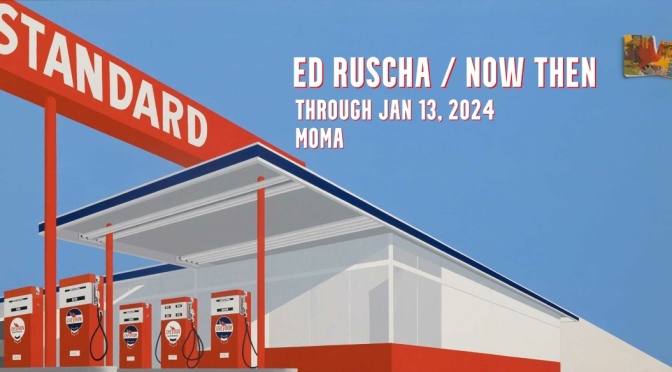
 Hauser & Wirth – Art Gallery


 Boomers Daily