Can you imagine a world full of art, instead of adverts? It’s been nearly a month since we took over Piccadilly Circus with nothing but Picasso for a whole half hour, to celebrate our current exhibition ‘Picasso and Paper’. Our friends at Chocolate Films captured it all in this amazing film. Picasso and Paper will be on view at the RA until April 13th, 2020.
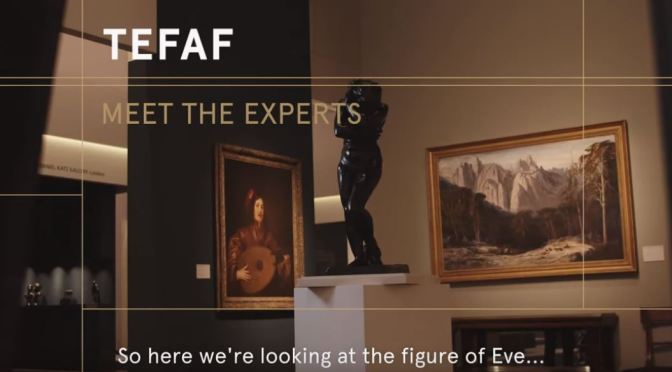
John Swarbrooke from Dickinson Gallery explains the beauty and play of light behind the cast of Auguste Rodin’s Eve.
François Auguste René Rodin (12 November 1840 – 17 November 1917) was a French sculptor. Although Rodin is generally considered the progenitor of modern sculpture, he did not set out to rebel against the past. He was schooled traditionally, took a craftsman-like approach to his work, and desired academic recognition, although he was never accepted into Paris’s foremost school of art.
Eve is a nude sculpture by the French artist Auguste Rodin. It shows Eve despairing after the Fall.
n 1880 Rodin was commissioned to produce The Gates of Hell, for which he exhibited Adam at the 1881 Paris Salon. In a sketch for Gates Rodin showed a central silhouette possibly intended as Eve (both the sketch and Gates are now in the Musée Rodin), but in October 1881 he decided to produce Eve as a pair for Adam, with the two sculptures flanking a huge high-relief bas-relief. This would be the first free-standing female sculpture he had produced since the destruction of his Bacchante in an accident between 1864 and 1870. He began Eve in 1881, later abandoning his intended colossal version of it when he realised his model, probably Adèle Abruzzesi, was pregnant. It was first exhibited to the public at the 1899 Paris Salon. It shows a strong influence from Michelangelo, picked up by Rodin in Italy in 1876.
He also produced an autograph white marble version in 1884 (now in the Museo Soumaya in Mexico City), a version in patinated plaster and a much-reproduced 71 cm high bronze version in 1883 (known as the Petite Ève or Little Eve, whose original is also in the Musée Rodin in Paris). He also reused the same figure of Eve in his marble Eve and the Serpent (1901) and his plaster Adam and Eve (1884).
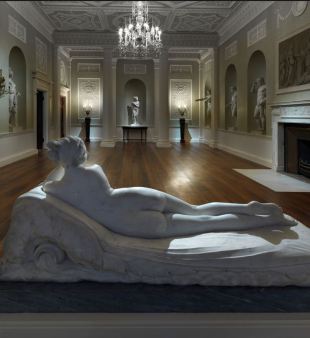
The British Galleries are reopening with almost 700 works of art on view, including a large number of new acquisitions, particularly works from the 19th century that were purchased with this project in mind. This is the first complete renovation of the galleries since they were established (Josephine Mercy Heathcote Gallery in 1986, Annie Laurie Aitken Galleries in 1989). A prominent new entrance provides direct access from the galleries for medieval European art, creating a seamless transition from the Middle Ages to the Renaissance.
A highlight of The Metropolitan Museum of Art’s 150th anniversary in 2020 is the opening, on March 2, of the Museum’s newly installed Annie Laurie Aitken Galleries and Josephine Mercy Heathcote Gallery—11,000 square feet devoted to British decorative arts, design, and sculpture created between 1500 and 1900. The reimagined suite of 10 galleries (including three superb 18th-century interiors) provides a fresh perspective on the period, focusing on its bold, entrepreneurial spirit and complex history. The new narrative offers a chronological exploration of the intense commercial drive among artists, manufacturers, and retailers that shaped British design over the course of 400 years. During this period, global trade and the growth of the British Empire fueled innovation, industry, and exploitation. Works on view illuminate the emergence of a new middle class—ready consumers for luxury goods—which inspired an age of exceptional creativity and invention during a time of harsh colonialism.
From a Wall Street Journal online profile (March 3, 2020):
I had a handful of school friends, including Francis Ford Coppola, who was in the grade behind me. He was known then as Frank. He directed school plays, such as “Finian’s Rainbow.” That’s where I fell in love with the girl. She was a dancer in the cast.
Painting, music and poetry all spoke to me, especially music. I applied to the New England Conservatory of Music in Boston.
Larry Poons, 82, is an abstract painter best known for his “dot” and “throw” paintings. “Larry Poons” (Abbeville), a book-length monograph of his work from the 1950s to the present, will be published in September. He spoke with Marc Myers.
The first time I painted on canvas board, I was lovesick. I had a crush on a girl in high school and had just finished reading Irving Stone’s Van Gogh biographical novel, “Lust for Life.”
I took my easel to a nearby park and painted trees. As I worked the paint with a small brush, it helped get my feelings out.
George Wesley Bellows (August 12 or August 19, 1882 – January 8, 1925) was an American realist painter, known for his bold depictions of urban life in New York City. He became, according to the Columbus Museum of Art, “the most acclaimed American artist of his generation”.
Bellows first achieved widespread notice in 1908, when he and other pupils of Henri organized an exhibition of mostly urban studies. While many critics considered these to be crudely painted, others found them welcomely audacious, a step beyond the work of his teacher. Bellows taught at the Art Students League of New York in 1909, although he was more interested in pursuing a career as a painter. His fame grew as he contributed to other nationally recognized juried shows.
Bellows’ urban New York scenes depicted the crudity and chaos of working-class people and neighborhoods, and satirized the upper classes. From 1907 through 1915, he executed a series of paintings depicting New York City under snowfall. In these paintings Bellows developed his strong sense of light and visual texture,[14] exhibiting a stark contrast between the blue and white expanses of snow and the rough and grimy surfaces of city structures, and creating an aesthetically ironic image of the equally rough and grimy men struggling to clear away the nuisance of the pure snow. However, Bellows’ series of paintings portraying amateur boxing matches were arguably his signature contribution to art history.[11] They are characterized by dark atmospheres, through which the bright, roughly lain brushstrokes of the human figures vividly strike with a strong sense of motion and direction.
Pennsylvania Station New York City
Pennsylvania Station, also known as New York Penn Station or Penn Station, is the main intercity railroad station in New York City and the busiest in the Western Hemisphere, serving more than 600,000 passengers per weekday as of 2019.mPenn Station is in Midtown Manhattan, close to Herald Square, the Empire State Building, Koreatown, and Macy’s Herald Square. Entirely underground, the station is located in Midtown South beneath Madison Square Garden, between Seventh and Eighth Avenues, and between 31st and 33rd Streets, with additional exits to nearby streets.
Penn Station has 21 tracks fed by seven tunnels (the two North River Tunnels, the four East River Tunnels, and the single Empire Connection tunnel). It is at the center of the Northeast Corridor, a passenger rail line that connects New York City with Boston, Philadelphia, Washington, D.C., and intermediate points. Intercity trains are operated by Amtrak, which owns the station, while commuter rail services are operated by the Long Island Rail Road (LIRR) and NJ Transit (NJT). Connections are available within the complex to the New York City Subway, and buses. An underground passageway formerly provided an indoor connection with the 34th Street–Herald Square subway station and 33rd Street PATH station.[7]
Penn Station is named for the Pennsylvania Railroad (PRR), its builder and original tenant, and shares its name with several stations in other cities. The current facility is the remodeled underground remnant of the original Pennsylvania Station, a more ornate station building designed by McKim, Mead, and White and considered a masterpiece of the Beaux-Arts style. Completed in 1910, it enabled direct rail access to New York City from the south for the first time. Its head house was torn down in 1963, galvanizing the modern historic preservation movement.[8] The rest of the station was rebuilt in the following six years, while retaining most of the rail infrastructure from the original station.
Cézanne: The Rock and Quarry Paintings is the first major exhibition to examine an essential but understudied aspect of the revolutionary French painter’s work: his profound interest in rock and geological formations.
Throughout his career, Cézanne made canvases that take rock formations as their principal subjects. Although they are among the artist’s most extraordinary landscapes, such paintings of geological forms have never before been the focus of significant scholarship.
Cézanne: The Rock and Quarry Paintingswill feature approximately 15 of the most important of these paintings, as well as selected watercolors and related documentary material. Together, they reveal the artist’s fascination with geology, which helped shape the radical innovations of his artistic practice
Peer through the lens of flourishing 17th-century Dutch technological innovation to witness wondrous advancements in science, including astronomy and medicine.
Harold J. Cook, John F. Nickoll Professor of History, Brown University
Excerpts from a Christie’s online article (Feb 28, 2020):
Joan Miró
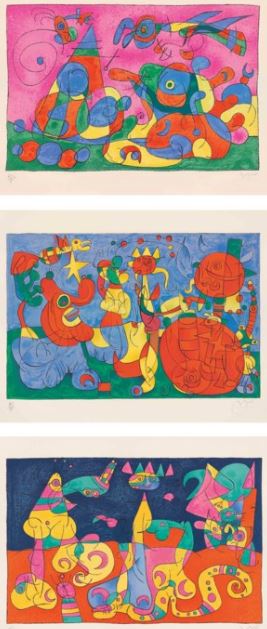
Like Pablo Picasso, his compatriot and peer, Miró had an unwavering commitment to printmaking. Also like Picasso, he created more than 2,000 works in the medium. It’s often said that Miró’s fondness for calligraphic lines — such a distinctive feature of his paintings — lent itself naturally to graphic work.
‘In terms of both the quality and quantity of his output, Joan Miró was one of the most important printmakers of the 20th century,’ says Murray Macaulay, Head of Prints at Christie’s in London.
The son of a watchmaker, Joan Miró was born in Barcelona in 1893. He moved to Paris in the early 1920s and soon joined the Surrealist movement. He also befriended a host of avant-garde writers, such as Max Jacob, Tristan Tzara, Antonin Artaud, André Breton and Paul Eluard.
The first prints Miró ever made were illustrations for Tzara’s 1930 book of poems, L’arbre des Voyageurs. Literary sources would prove to be a constant inspiration for him, with notable examples including Alfred Jarry’s play, Ubu Roi; Stephen Spender’s poem, Fraternity; and the mystic, medieval text, Canticle of the Sun, by St Francis of Assisi.
Michelangelo was one of the most creative and influential artists in the history of Western art. This exhibition explores the full range of his work as a painter, sculptor, and architect through more than two dozen of his extraordinary drawings, including designs for celebrated projects such as the Sistine Chapel ceiling, the Medici Chapel tombs, and The Last Judgment. These studies and sketches enable us to witness Michelangelo at work, and to experience firsthand his boundless creativity and his pioneering representation of the human form.
This exhibition has been organized by the Teylers Museum, Haarlem in collaboration with the J. Paul Getty Museum and The Cleveland Museum of Art. It is supported by an indemnity from the Federal Council on the Arts and the Humanities.
Excerpts from a Wall Street Journal online review (Feb 25, 2020):
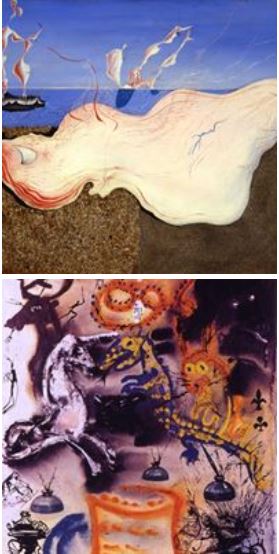
Masson, a founding Surrealist, saw the movement as an immersion “into what the German romantics call the night side of things.” However, “towards 1930,” Masson wrote, “a formidable disaster appeared in its midst: the demagogy of the irrational.” “Midnight in Paris” touches on Surrealism’s highs and lows, its darkness, poetry, beauty and banalities, reminding viewers—at the heart of the Dalí Museum, no less—that the movement is much, much more than melting watches.
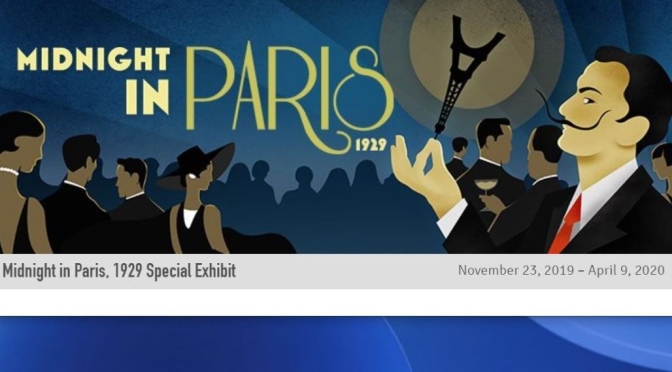
In 1920s Paris, Surrealist revolution and transgression were in the air, but not everyone agreed on how to make Surrealist works or what they should look like. “Midnight in Paris: Surrealism at the Crossroads, 1929,” an exhibition of 80 paintings, prints, sculptures, drawings, collages, photographs, films and documents at St. Petersburg’s Dalí Museum, proposes to examine Surrealism’s rich visual fabric, conflicts and rivalries during the movement’s heyday in the City of Light. Organized by Didier Ottinger, deputy director of the Musée national d’art moderne at the Centre Pompidou, and William Jeffett, chief curator of special exhibitions at the Dalí, it focuses on the moment just before Surrealism burst onto and began to dominate the world stage.



 The British Galleries are reopening with almost 700 works of art on view, including a large number of new acquisitions, particularly works from the 19th century that were purchased with this project in mind. This is the first complete renovation of the galleries since they were established (Josephine Mercy Heathcote Gallery in 1986, Annie Laurie Aitken Galleries in 1989). A prominent new entrance provides direct access from the galleries for medieval European art, creating a seamless transition from the Middle Ages to the Renaissance.
 A highlight of The Metropolitan Museum of Art’s 150th anniversary in 2020 is the opening, on March 2, of the Museum’s newly installed Annie Laurie Aitken Galleries and Josephine Mercy Heathcote Gallery—11,000 square feet devoted to British decorative arts, design, and sculpture created between 1500 and 1900. The reimagined suite of 10 galleries (including three superb 18th-century interiors) provides a fresh perspective on the period, focusing on its bold, entrepreneurial spirit and complex history. The new narrative offers a chronological exploration of the intense commercial drive among artists, manufacturers, and retailers that shaped British design over the course of 400 years. During this period, global trade and the growth of the British Empire fueled innovation, industry, and exploitation. Works on view illuminate the emergence of a new middle class—ready consumers for luxury goods—which inspired an age of exceptional creativity and invention during a time of harsh colonialism.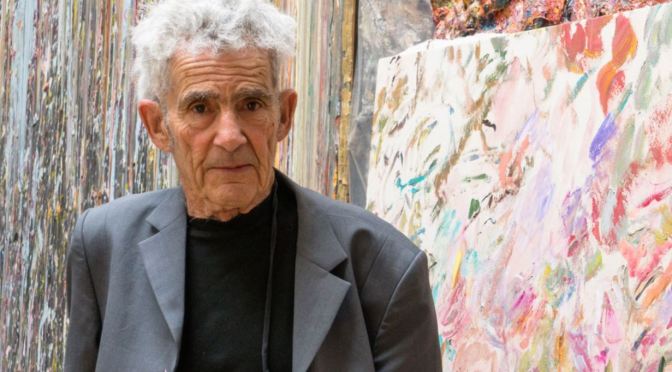

 Speakers: Dr. Margarita Karasoulas, Assistant Curator, American Art, Brooklyn Museum and Dr. Steven Zucker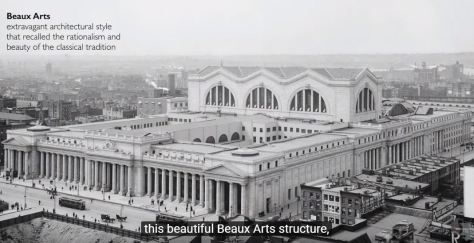
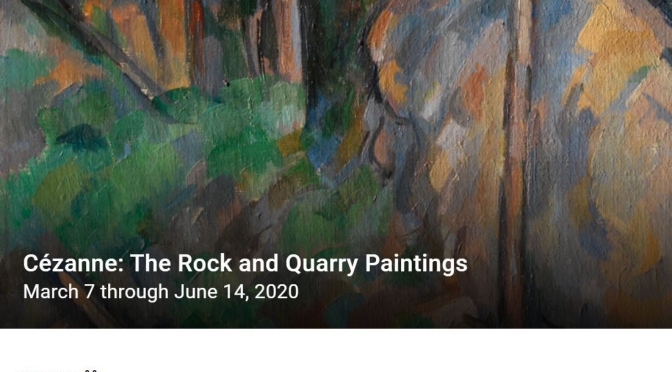
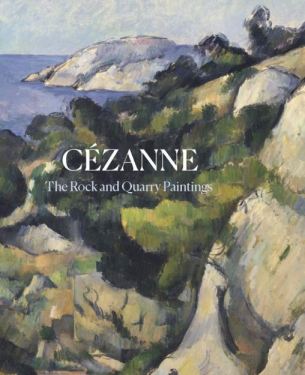 Cézanne: The Rock and Quarry Paintings is the first major exhibition to examine an essential but understudied aspect of the revolutionary French painter’s work: his profound interest in rock and geological formations.
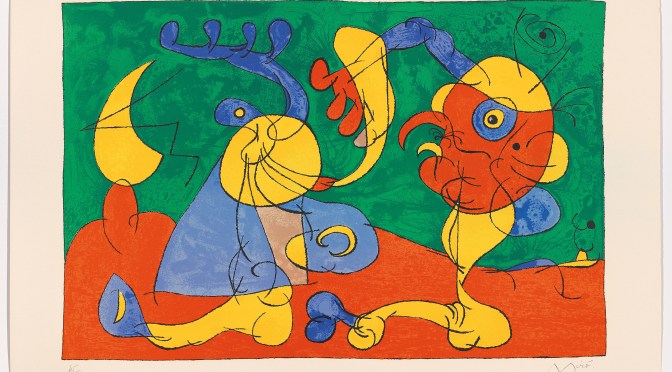
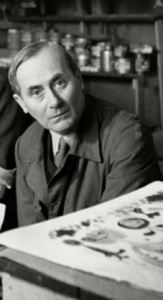
 The son of a watchmaker, Joan Miró was born in Barcelona in 1893. He moved to Paris in the early 1920s and soon joined the Surrealist movement. He also befriended a host of avant-garde writers, such as Max Jacob, Tristan Tzara, Antonin Artaud, André Breton and Paul Eluard.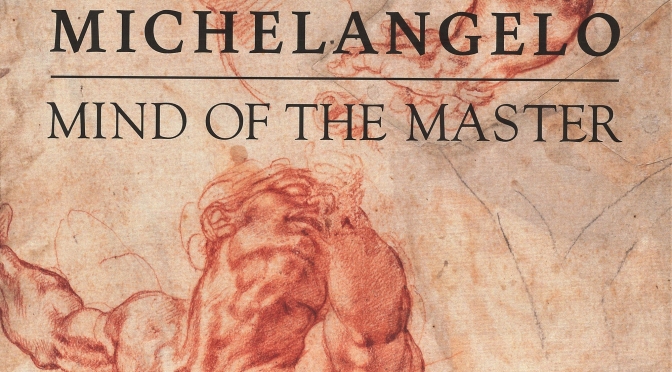
 Masson, a founding Surrealist, saw the movement as an immersion “into what the German romantics call the night side of things.” However, “towards 1930,” Masson wrote, “a formidable disaster appeared in its midst: the demagogy of the irrational.” “Midnight in Paris” touches on Surrealism’s highs and lows, its darkness, poetry, beauty and banalities, reminding viewers—at the heart of the Dalí Museum, no less—that the movement is much, much more than melting watches.
 Boomers Daily