Category Archives: Art

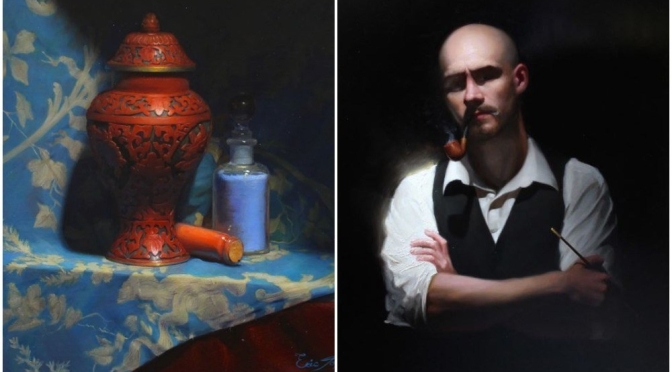
The World’s Top Artists: American Painter Eric Johnson – “Masters Style”

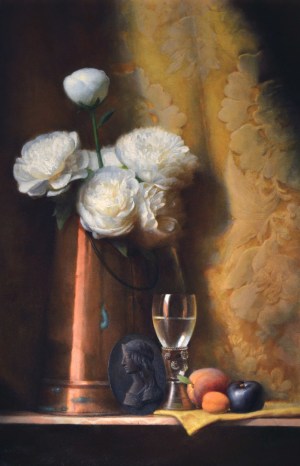
Eric Johnson is a Boston based Painter and instructor at The Academy of Realist Art Boston who is devoted to the preservation and growth of traditional painting. He aspires towards adding his own link into the chain of tradition by mastering the working methods of the old masters who he admires and employing those methods into his own working process. 

Eric Johnson - The Story of We -As a complete painter he aspires to reach a high level of verisimilitude and truth in his works on a variety of subject matters from portrait, still life and landscape. Eric primarily makes all of the pigments and paints to create each prepossessing painting. Eric yearns that every new presentation to beauty and truth can show us the old beauty and the old truth only seen from a different angle and  colored by a different medium. 
Website

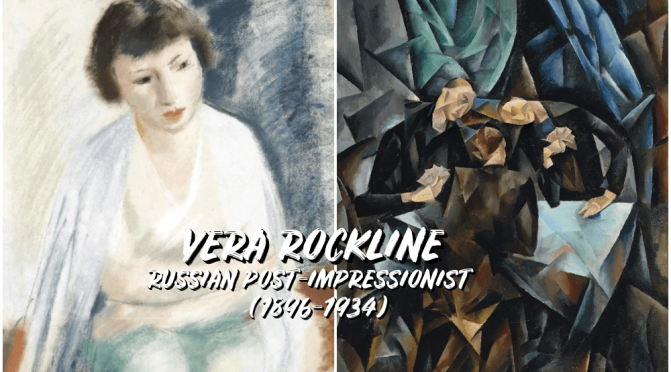
Artist Profile: Russian Post-Impressionist Vera Rockline (1896-1934)

From Christie’s (July 9, 2020):

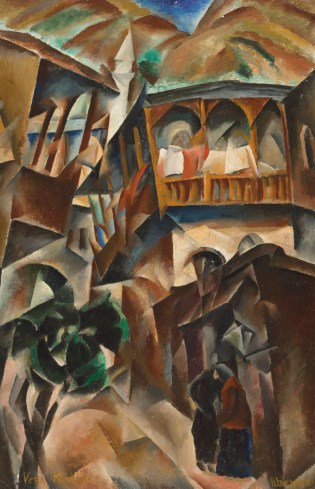
Vera Rockline (1896-1934), Vue de Tiflis, 1919.

Vue de Tiflis  is a stunning vision of that city, painted in a manner inspired by Exter’s Cubo-Futurism. Tiflis was renowned then, as it still is now, for a combination of narrow medieval streets and Art Nouveau architecture. In this work, Rockline warps and fragments such features to the point of semi-abstraction: planes intersect and overlap, suggesting the restless energy and bohemian buzz of the Georgian capital.

Christie's LogoWhen she died in April 1934, aged just 37, Vera Rockline was at the peak of her fame. The Russian-born emigrée had made quite a name for herself after moving to Paris in 1921. Obituaries spoke of an ‘incomparable loss’ and a ‘prodigious talent’.

Born in Moscow in 1897 to a Russian father and French mother, Rockline moved to Kiev to apprentice for Aleksandra (or Alexandra) Exter. The latter was a cutting-edge figure whose art fused Cubist and Futurist elements. As civil war racked the former Russian Empire in the wake of 1917’s Bolshevik revolution, however, Vera and her husband fled to Tiflis (modern-day Tbilisi) in Georgia.

Website

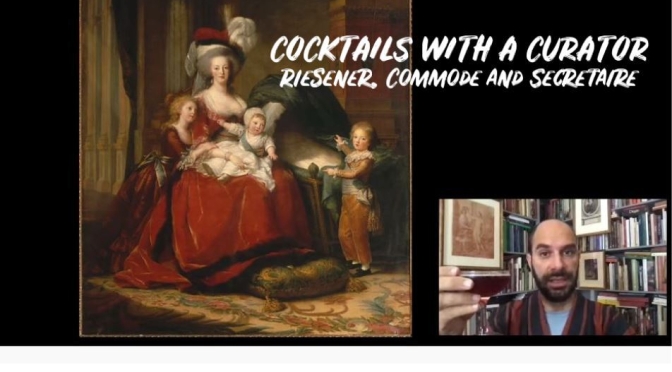
Cocktails With A Curator: “Riesener, Commode and Secrétaire” (The Frick)

In this week’s episode of “Cocktails with a Curator,” join Deputy Director and Peter Jay Sharp Chief Curator Xavier F. Salomon as he explores the royal provenance of two pieces of furniture at the Frick made by Jean-Henri Riesener. Sometimes overlooked by visitors, Xavier encourages us to take a closer look at this exquisite commode and secrétaire set. In celebration of these works of art and the upcoming Bastille Day, this week’s complementary cocktail is the Kir Royale.

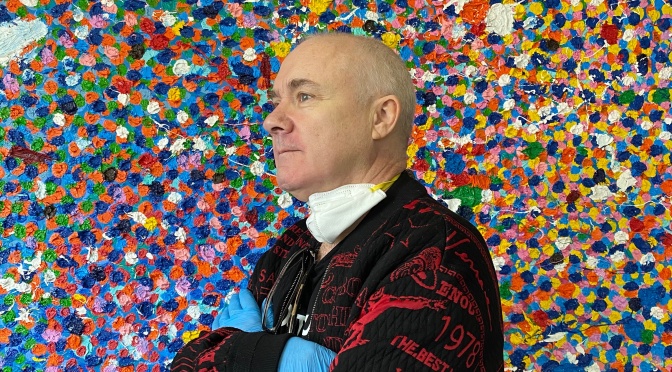
Art Profile: 55-Year Old British Painter Damien Hirst – “Veil Paintings”

https://www.youtube.com/watch?v=xElPQdmmon0

“I wanted to make paintings that were a celebration, and that revealed something and obscured something at the same time.”Damien Hirst

Gagosian logoDamien Steven Hirst (born 1965) is an English artist, entrepreneur, and art collector. He is one of the Young British Artists, who dominated the art scene in the UK during the 1990s. He is reportedly the United Kingdom’s richest living artist, with his wealth valued at £215m in the 2010 Sunday Times Rich List.
Website

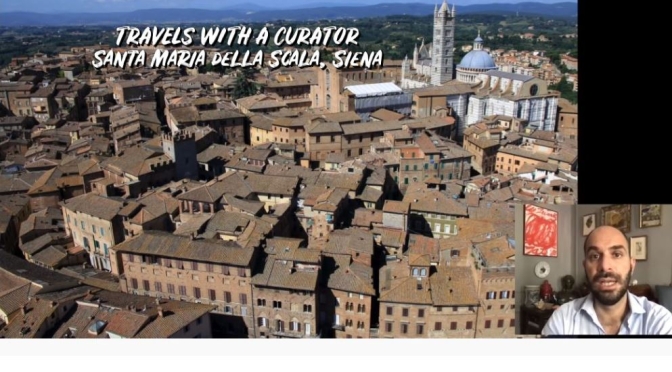
Travels With A Curator: Santa Maria Della Scala In Siena (The Frick Video)

In this week’s episode of “Travels with a Curator,” Xavier F. Salomon, Deputy Director and Peter Jay Sharp Chief Curator, journeys to Siena to explore Santa Maria della Scala, an eleventh-century complex across from the steps of the cathedral. Behind the modest exterior of this hospital turned museum are a variety of magnificent frescoes and sculptures by Lorenzo di Pietro, better known as Vecchietta. The Frick’s “Resurrection” is the only signed and dated work by the artist in the United States.

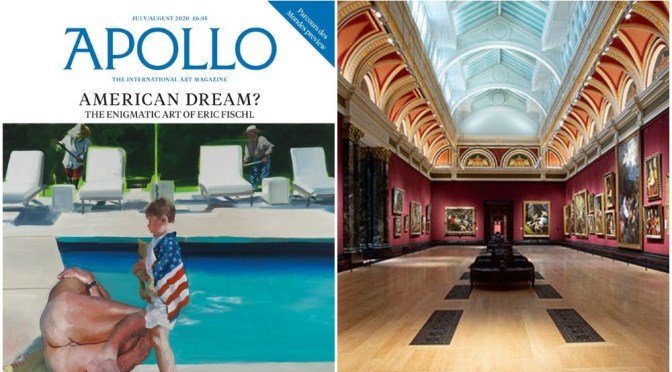
Arts & Literature: “Apollo Magazine – July 2020”

Apollo Magazine logo

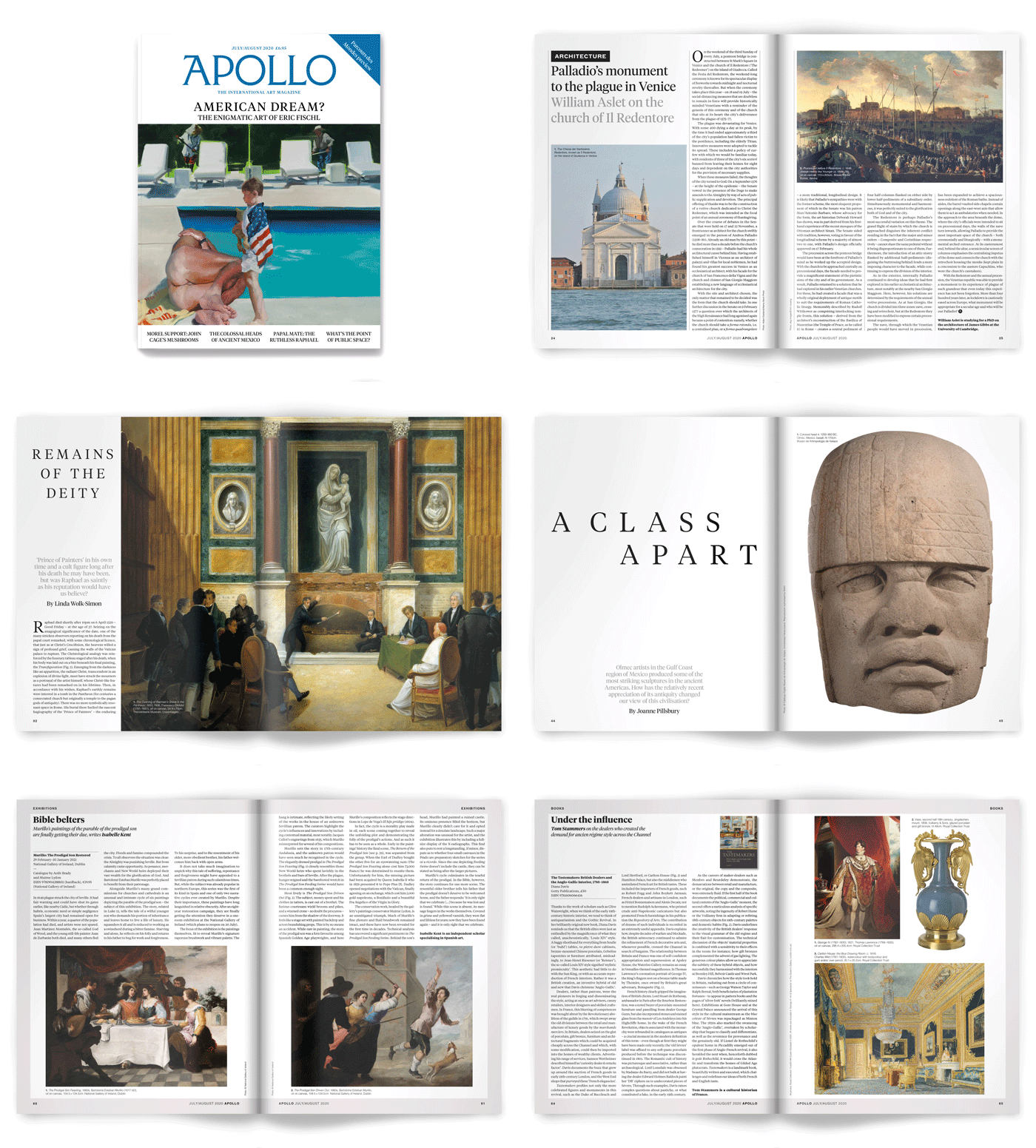
INSIDE THE ISSUE
FEATURES | Eric Fischl interviewed by Thomas MarksLinda Wolk-Simon on the life and legacy of Raphael; Joanne Pillsbury on the art of the Olmecs; Samuel Reilly on private restitution of colonial-era artefacts; Christopher Turner on shopfronts and gallery facadesJosie Thaddeus-Johns on John Cage’s mushrooms
REVIEWS | Isabelle Kent on Murillo at the National Gallery of Ireland; Tom Stammers on the British fashion for French interiors; James Lingwood on Stephen Shore’s photographs; Robert O’Byrne on The Buildings of Ireland
MARKET | Melanie Gerlis on art businesses after lockdown; a preview of Parcours des Mondes; and the latest art market columns from Susan Moore and Emma Crichton-Miller
PLUS | Rowan Moore and Tamsin Dillon on the future of public spacesSusan Moore on the mysterious ‘Barbus Müller’ sculptures; William Aslet on Palladio’s monument to the plague in Venice; Robert O’Byrne on Apollo and the Second World War

Art History: How The Impressionists Elevated The “French Riviera”

From Christie’s (July 3, 2020):

Christie's Matisse to NiceIt was the Impressionists, Claude Monet and Pierre-Auguste Renoir, who first discovered the artistic potential of the south coast, finding an unspoilt landscape that perfectly matched their aims. ‘It is so beautiful,’ Monet wrote, ‘so bright, so luminous. One swims in blue air and it is frightening.’

Vincent van Gogh captured the landscape in and around Arles and Saint-Rémy in the final years of his life, while the Master of Aix, Paul Cézanne, used the rugged landscape of his native Provence to radically reconceive the very nature of art-making.

Long before the South of France became synonymous with glamour and sun-drenched seduction — think of Cary Grant and Grace Kelly in the 1955 film To Catch a Thief, or Brigitte Bardot and Alain Delon on the beaches of Saint-Tropez — this corner of Europe attracted a very different kind of tourist.

Christie's LogoSince the turn of the century, the sleepy fishing villages and remote towns of the Provençal hills had lured artists from Paris and beyond — the bright light, dazzling colours and palpable presence of the classical past all serving to inspire and revive jaded spirits.

Read more

Cocktails with a Curator: Hans Holbein’s ‘Sir Thomas More’ Of 1527 (Video)

In this week’s episode of “Cocktails with a Curator,” Xavier F. Salomon, Deputy Director and Peter Jay Sharp Chief Curator, examines one of the Frick’s most beloved paintings, Hans Holbein’s “Sir Thomas More.” Xavier considers More’s relationship to humanist circles and the role of “friendship portraits” in making the absent present. In the words of More’s devoted friend, Desiderius Erasmus, “life without a friend is no life.” As a nod to the turbulent times of Tudor England, Xavier pairs this episode with a Bloody Mary cocktail.

Art Video: “Stone Cut” – A Japanese Sculptor’s Quest With “La Sagrada Familia”

An architectural marvel has sat incomplete in a residential corner of Barcelona since its architect, Antoni Gaudí, died during construction in 1926. For decades, La Sagrada Familia has been an example of Christian fealty and Catalan ingenuity wrought in granite and sandstone; but little could anyone have guessed that ninety-four years after Gaudí’s death a Japanese sculptor would dedicate his life to completing the architect’s colossal work…

Read more

Top New Art Magazines: “ARTFORUM – July/August”

ARTFORUM - JULY AUGUST 2020

I WAS A COMPETITIVE BIRDER in high school. My family drove all around the countryside, so I spent a lot of time in the car, and I had to keep myself busy and project my brain somewhere. I would bring sketchbooks and field guides that I got from the library. I had started an Envirothon team at my school, to compete in the national decathlon pitting nerdy teens against each other in their knowledge of soil surveys, forestry, wildlife, and aquatic ecology.

Artist Cy Gavin
Artist Cy Gavin

I was the birding specialist. I learned more than two hundred birdsongs and birdcalls from CDs and from the field. I participated in other competitions where I would win binoculars and forty-pound bags of birdseed. I didn’t even have a bird feeder—I’d just become obsessed.

Unlike bird-watchers, birders often rely first on auditory cues to identify a species. You immediately know so much about the bird—its seasonal plumage, age, sex, if it’s making a courtship call or a warning call—from listening. The second thing you cultivate is an idea of where the call is coming from, so you can zero in on it. You develop a spatial awareness, so even with your eyes closed the woods become a vivid visual experience.

A steward of the Susquehanna River in Pennsylvania once took me out in a canoe to this extremely remote location to see a bald eagle’s ten-foot nest. Eagle populations had been devastated by the use of DDT. At the time, all nest sites had to be reported to the government and kept secret. In 2007, the bald eagle was removed from the list of threatened and endangered species, and ever since, I would catch myself looking out for them whenever I’d pass a lake or river. Where I work, in upstate New York, I see bald eagles all the time. Two years ago, I found a nesting pair in Poughkeepsie near a waste-treatment plant on the Hudson River. I just spent time watching and drawing them. It was very unglamorous. They eat garbage. They’re like pigeons. The river freezes in the winter, and I have a vivid memory of watching this wet, bedraggled eagle on a chunk of ice.

Read more

Cy Gavin is an American artist that lives and works in New York. Gavin often incorporates unusual materials in his paintings such as tattoo ink, pink sand, diamonds, staples, Bermudiana seeds, and cremains. Gavin also works in sculpture, performance and video.