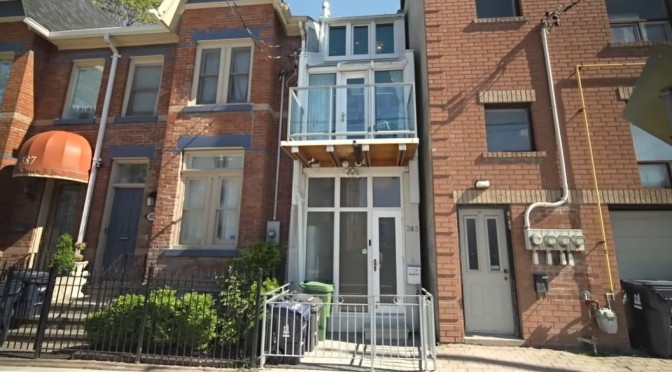
This ultra-narrow house looks modern on the outside, but inside it’s a cozy and welcoming home with multiple levels designed around a meandering set of stairs that run up the center of the home. With lots of wood, exposed copper pipes, and small dimensions, the owner often describes the house as feeling like a boat or a treehouse.
While it might seem like the house was recently built as an in-fill house or accessory dwelling unit, there has actually been a narrow single-story structure on the property since at least 1880. It wasn’t until 1980 – a full century later – that the then-owner, an architect, applied to the committee of adjustments to build the house as it is today.
With such a long and narrow floorplan, an important feature of the house is the full glass walls and skylights at both ends of the house, which lets natural light flow into each room and prevents the house from feeling dark and confined.
Dezeen – In the first instalment of Dezeen’s new Concrete Icons series produced in collaboration with Holcim, MAD Architects founder Ma Yansong explains how his firm’s sinuous concrete library in Haikou, China encourages visitors to use their imagination.
Yansong is the first participant in Concrete Icons, a new video series profiling the most iconic contemporary concrete buildings by the world’s leading architects. The video focusses on MAD’s Cloudscape of Haikou, a library with a flowing form cast in white concrete located in a waterside park in Haikou on the island of Hainan.
Completed in 2021, the 1,000-square-metre structure houses a library, cafe, restrooms, showers, a nursery room, and bike storage, and acts as a waystation for visitors to the park. Speaking to Dezeen in an exclusive video interview filmed at MAD’s offices in Beining, Yansong explained how the building is designed to put visitors in a contemplative or imaginative state of mind.
MAD Architects, led by Ma Yansong, has announced the opening of the Cloudscape of Haikou is located on the southern tip of China. A unique urban public and cultural space for citizens and visitors to Haikou, this flowing, sculptural concrete form was named as one of the “most anticipated architecture projects of 2021” by The Times of London.
A prominent port city on the southern tip of China, Haikou was once an important stop on the Maritime Silk Road. With the establishment of the Hainan International Tourism Island and Hainan Free Trade Zone, Haikou’s influence has seen a gradual resurgence in modern times. Meanwhile, Haikou’s government is also enriching the city’s cultural importance, through enhancing the social attributes of the city’s public spaces, and strengthening the connection between the city, humanities, and architecture. The Cloudscape of Haikou is one such culmination of this effort.
The Cloudscape of Haikou is the first of sixteen coastal pavilions commissioned by the Haikou Tourism and Culture Investment Holding Group to rejuvenate the historic port city, with the aim of improving public space along the coastline. Known as “Haikou, Pavilions by the Seaside,” the initiative invited teams of internationally recognized architects, artists, and interdisciplinary professionals to create sixteen landmark public stations.
Geechee basketmakers, Gee’s Bend quilters, and Native American artisans are developing ways of navigating markets that have not always had their best interests at heart.
The two-level ADU is decked out with a light-filled recording studio for him, and for her, a luminous design space with soaring ceilings and sliding glass doors.
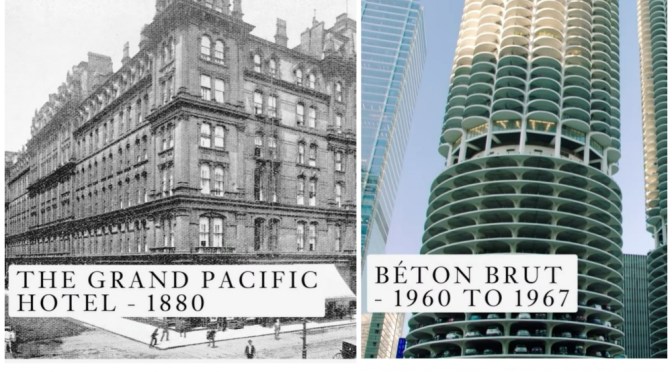
Architectural Digest – Today on AD Architect Lynda Dossey leads us on a walking tour of Chicago, highlighting the captivating details found in its storied architecture.
From exploring The Loop and Marina City to detailing the history of The Thompson Center and iconic Willis Tower, discover the history behind Chicago’s most famous buildings and neighborhoods through Lynda Dossey’s expert eye.
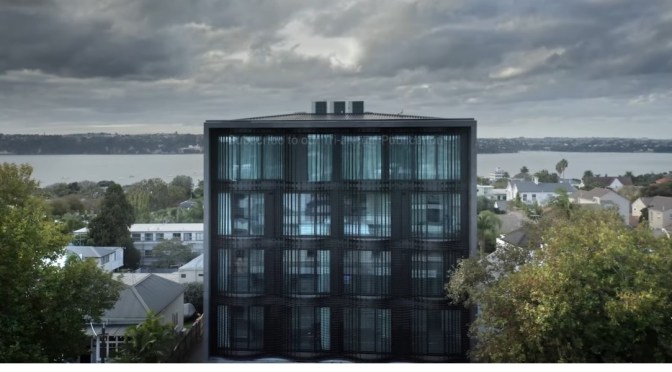
The Local Project – With breathtaking views across Herne Bay, the architect designs a modern apartment that takes elements of suburban life and introduces them into apartment living. Allowing for an evolving brief, Artifact Property approached Monk Mackenzie to collaborate on a mixed-use development that positively contributed to Auckland’s built environment.
Video timeline:00:00 – Introduction to the Modern Apartment 01:05 – The Brief 01:28 – Similarities of a Jigsaw Puzzle 01:44 – Contributing in a Positive Way Through Architecture 01:58 – The 8 Apartments 02:20 – The Layout of the Building 02:45 – Separation of Functions 03:45 – The Site Itself 04:16 – The Material Palette 05:06 – The Kitchen Design and Appliances 05:28 – Minimalistic Features of Fisher & Paykel 06:01 – Proud Moments
Encompassing eight units in total – one commercial space, six apartments and a penthouse – Jervois Apartments is simple, elegant and timeless. Due to the location of the site, the architect designs a modern apartment to fit a 33-metre length block that rises 15 metres above. Taking advantage of as much space as possible, the project uses the length of the site to its benefit and, in turn, offers occupants the opportunity to live spaciously.
Sitting high on the ridgeline and facing north, each apartment has been cleverly planned out. From the façade, a winter garden deck with views of nature greets those who enter and sets the scene for what is to come. From this, a long view of the apartment imbues a similarity to the openness that suburban homes offer. Positioned at the southern end of the apartment, the street-facing bedrooms and private spaces offer a unique placement that defers from other apartment designs.
Monk Mackenzie and Artifact Property employed an interface between private and public domains with metalwork screens. By employing the screening on the façade, the exterior design offers varying degrees of transparency and opacity. Through this unique use of materials, the architect designs a modern apartment that offers a different experience from opposite sides of the building. From the bedroom, a direct sightline of the surrounding landscape is offered to the occupants through the screens, whilst from the street below, the façade strikes a wave-like form that seamlessly blends into the built environment.
At the north end of the apartments are the living and dining spaces, kitchen and enclosed deck where the occupants can sit outside during winter whilst being sheltered from the elements. Though Jervois Apartments sits on a narrow site, the architect designs a modern apartment that optimises space to create a spacious interior environment. In the kitchens, the incorporation of natural stone, oak and metal work into the material palette has been seamlessly styled together with Fisher & Paykel appliances – such as the vertical column fridge-freezer, wine fridge and ovens.
With the insertion of minimal and clean appliances, Fisher & Paykel products blend into the kitchen without taking away from other elements of the apartments. Contributing to Auckland’s built environment, an architect designs a modern apartment that allows the occupants to live a city life whilst being surrounded by suburban comfort.
The challenges of redesigning the Dali museum in Florida were two-fold: deliver an iconic design befitting of its subject, and defy conventional building methods to make it strong enough to withstand a hurricane. The result: a landmark structure, as enduring as the work of the great artist himself.
The original Dalí Museum opened in St. Petersburg in 1982, after community leaders rallied to bring the Morses’ superlative collection of Dalí works to the area. The Dalí’s stunning new building opened on January 11, 2011. Designed by architect Yann Weymouth of HOK, it combines the rational with the fantastical: a simple rectangle with 18-inch thick hurricane-proof walls out of which erupts a large free-form geodesic glass bubble known as the “enigma”.
The Enigma, which is made up of 1,062 triangular pieces of glass, stands 75 feet at its tallest point, a twenty-first century homage to the dome that adorns Dalí’s museum in Spain. Inside, the Museum houses another unique architectural feature – a helical staircase – recalling Dalí’s obsession with spirals and the double helical shape of the DNA molecule.
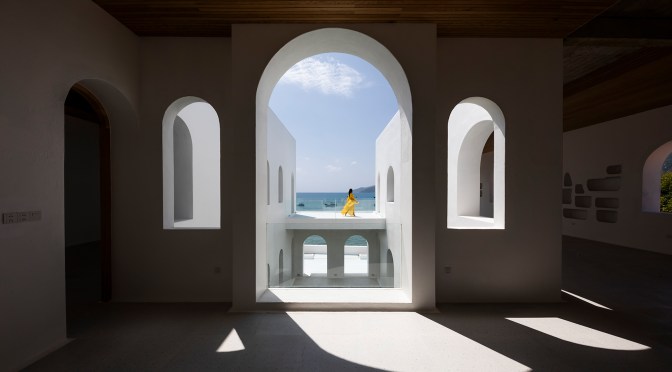
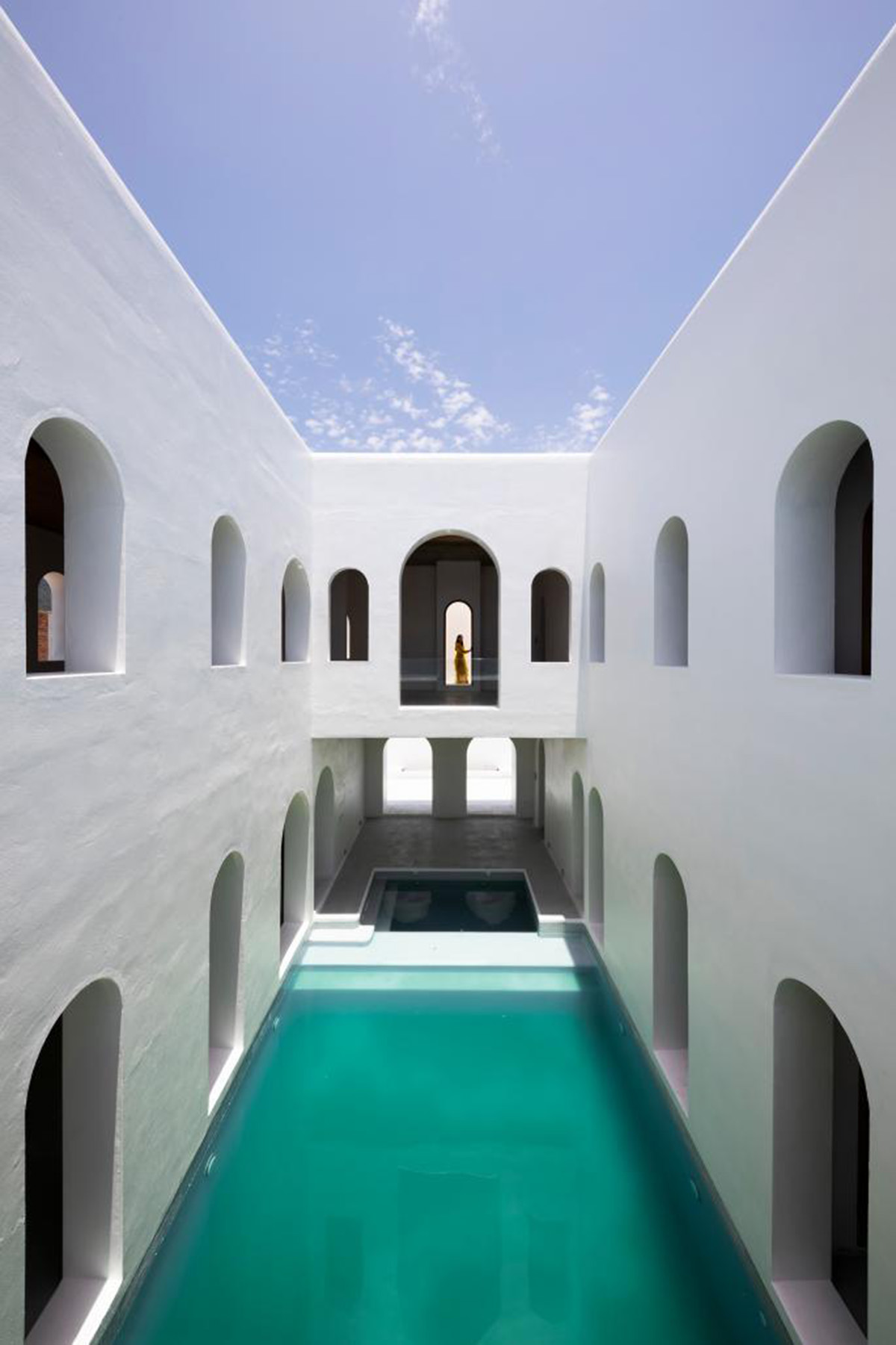
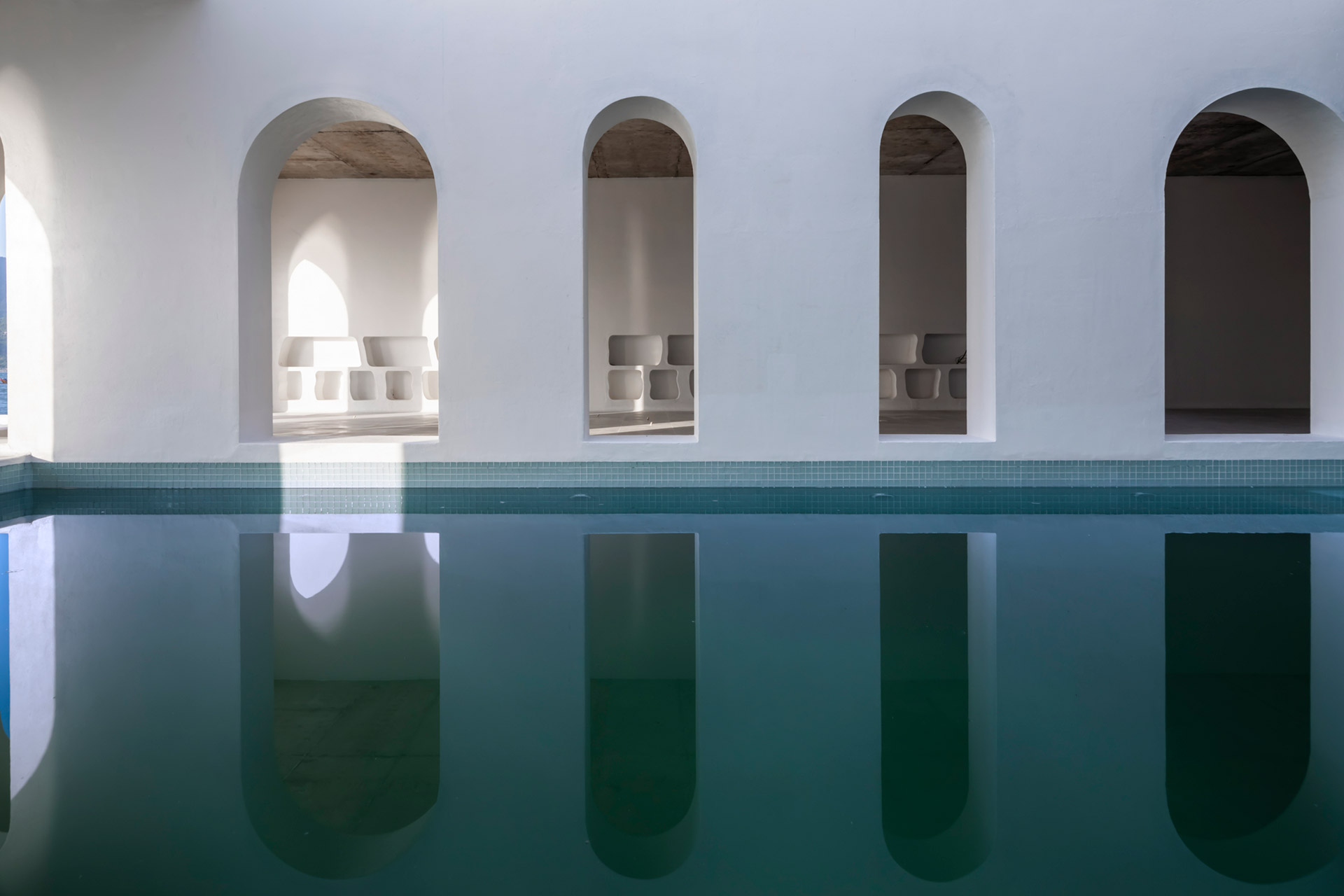
“Santo by the Sea”was developed based on the idea of the owner’s desire to have a Mediterranean Revival – Santorini architecture.
However, the difficulty when developing this style is that the doorways are very small and narrow as well as how to bring new modernity to the house. From that concept,
Santo by the Sea is designed with large arched doorways to make the most of the beauty of the surrounding nature and bring natural light to the interior spaces.
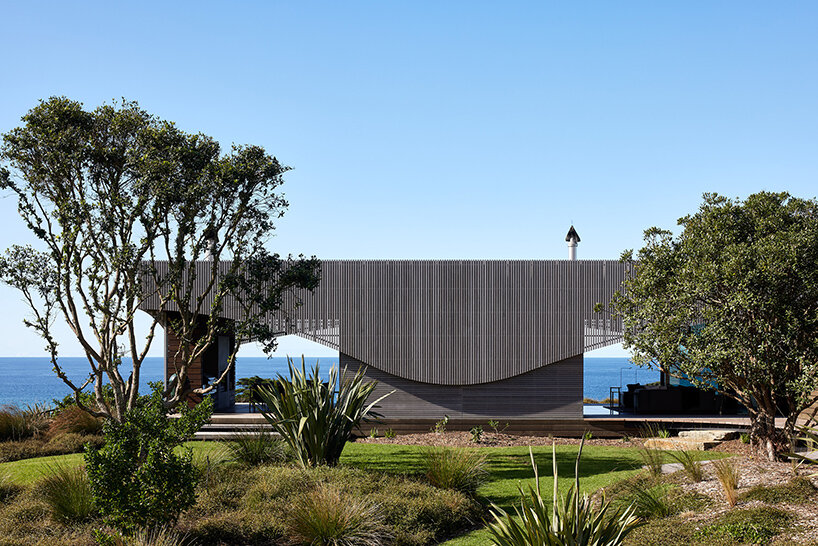
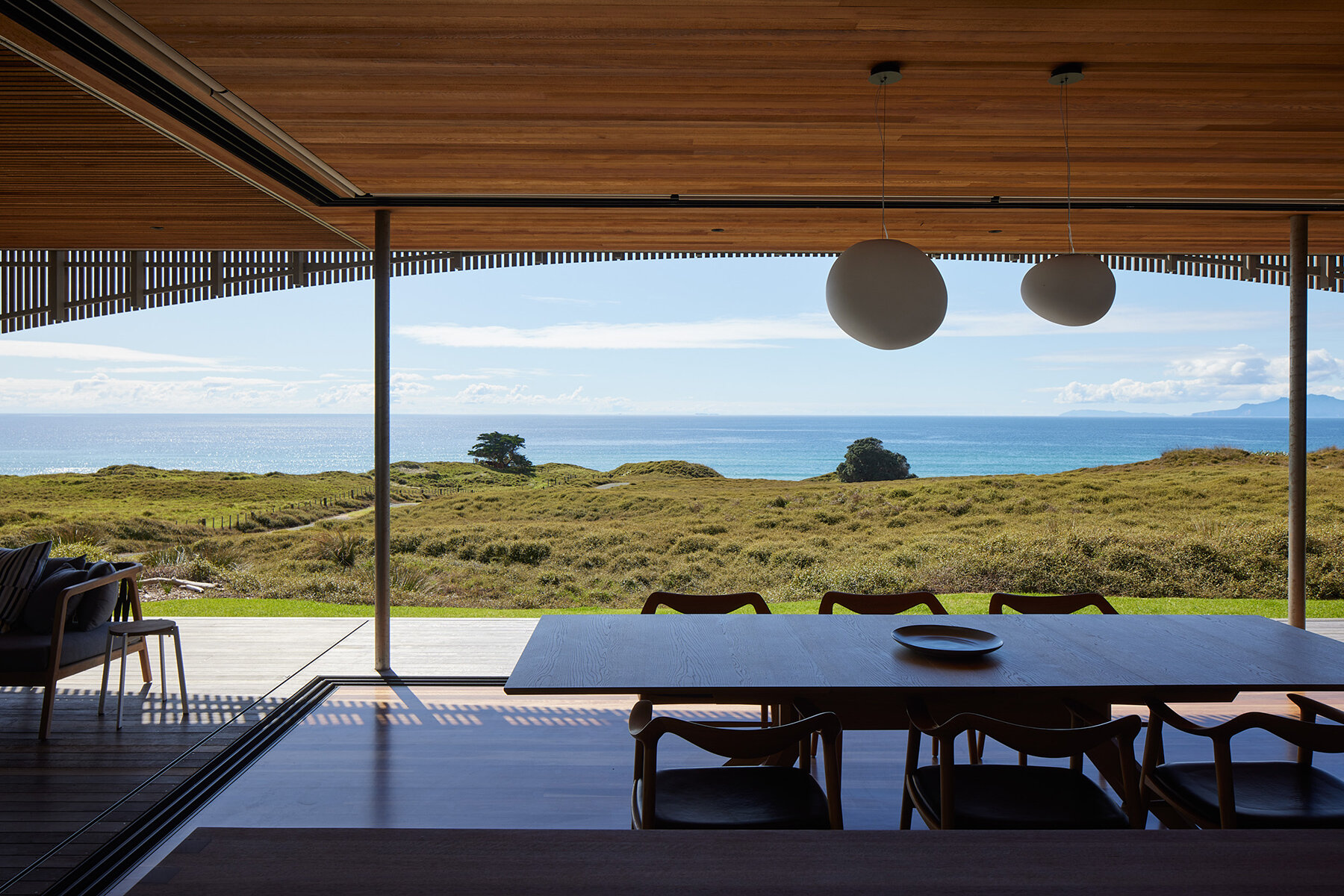
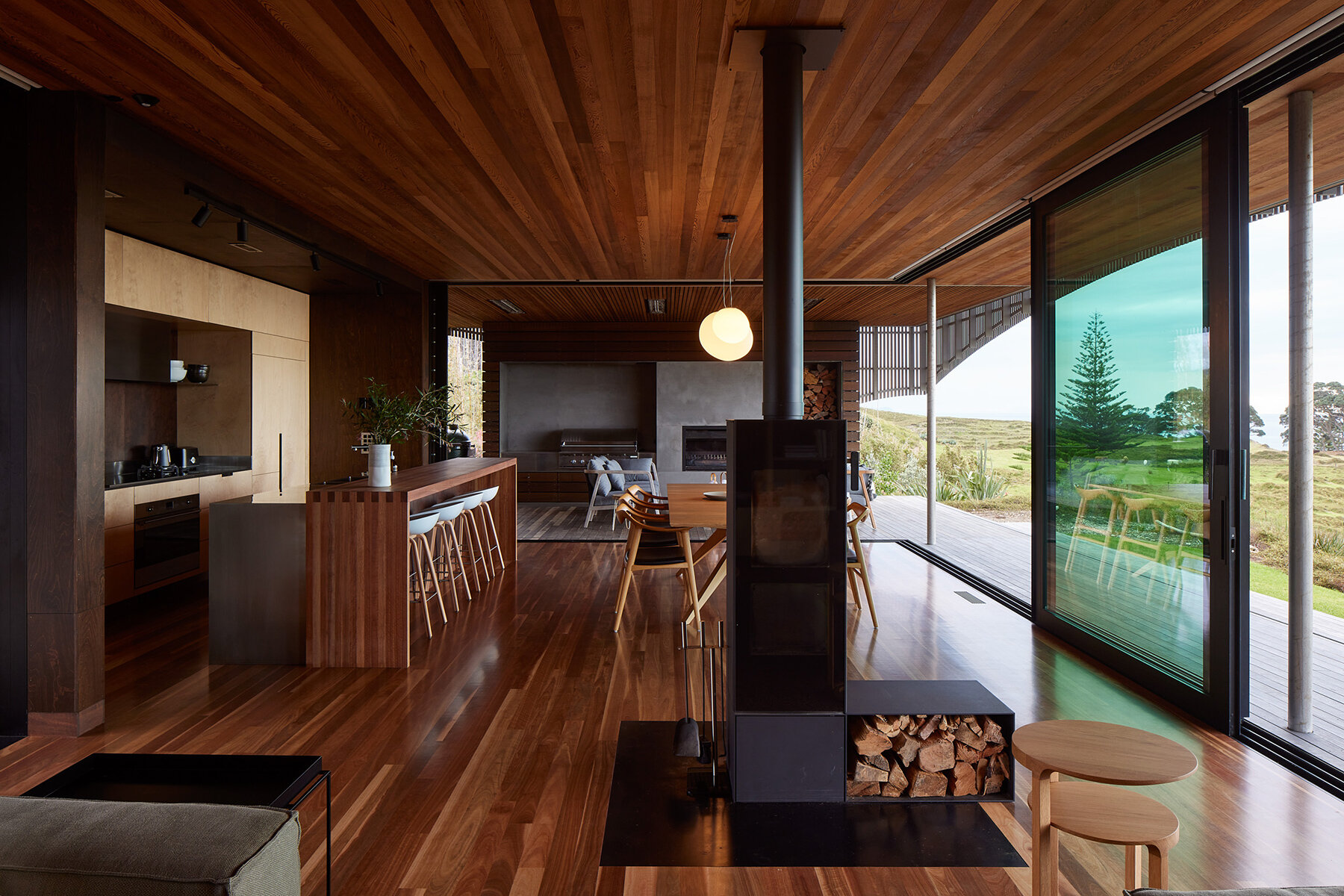
Auckland-based studio Herbst Architects takes to an expansive dunescape along the eastern coast of New Zealand to construct its Dune House.
The dwelling is designed in celebration of its undulating site, which is covered with a native flowering plant known as Muehlenbeckia to create a lush, green landscape rolling downward to the beach.
The project comprises a main house with two bedrooms and two smaller ‘sleepout’ structures, following the needs of the client, while it is perched two hundred meters from the high-water mark — following local regulations. Thus, the home is safe from flooding and enjoys sweeping views of the sparkling horizon.
The Local Project – Through warm and inviting additions, Northside House becomes a dream house for the clients of Wellard Architects. In partnership with Artedomus, Wellard Architects have carefully considered the owners’ personalities with the selection of colours, tones and materials.
Video timeline:00:00 – Introduction to Dream House 00:39 – An Alterations and Additions Project 00:51 – The History Behind Northside House 01:10 – Layout of the Dream House 02:01 – The Overarching Theme of Compression and Release 02:50 – Joining Forces with Artedomus 03:17 – The Main Materials Utilised Throughout The Home 05:02 – Artedomus’ Involvement 05:37 – The Architect’s and Artedomus’ Favourite Aspects 06:13 – Proud Moments from the Architect’s
Located on a corner site of Clifton Hill, Northside House is an existing heritage home that once housed an Italian plasterer and showrooms. However, with carefully considered alterations and additions, the dream house becomes a space for private family dwelling that also opens to the surrounding community. From the front of the Federation-era home, the house tour leads guests past the principal bedrooms and bathrooms of the original home.
Wellard Architect’s alterations and additions become evident with the double-height hallway that marks the transition between the old and new. Located upstairs is a lounge and study, which offer a warm and light-filled retreat where one can find some privacy in a busy household. On the ground floor, the living and dining spaces have been subtly zoned so no space feels too cavernous. From the blonde timber walls and ceiling to the terrazzo flooring, the dream house encompasses a natural form of living.
Desiring a cosy interior, the clients and Wellard Architects worked closely in the selection of decor, furniture, finishes and fixtures for the interior space. During these project development stages, Artedomus was approached for its robust materials that would fit the brief of a busy family’s dream house. In the ensuite bathroom, porcelain tiles from Portugal infuse warm tones, while the vanity and basins use Travertine Zena and INAX tiles to establish calmness throughout.
Additionally, the main bathroom uses Verde Bardini granite and Fiandre Maximum porcelain tiles which meld with the selected Agape Vieques steel bath that sits sculpturally in the centre of the bathroom. Flowing throughout the rest of the dream house, Artedomus products can also be appreciated in the generously-sized kitchen, where Nerofino Brushed Quartz has been employed for the splashback.
Alongside the creation of a cosy atmosphere, the kitchen further instils the clients desire to have a home that can be used for entertaining – with space for intimate family cooking or a gathering of friends and neighbours. Opening up to the back garden courtyard, the orange-bricked façade of the garage seamlessly balances the terracotta shingles of the dream home and merges the heritage home with the modern additions.
House 101 by Atelier tho.A. Photograph: Anh Chuong
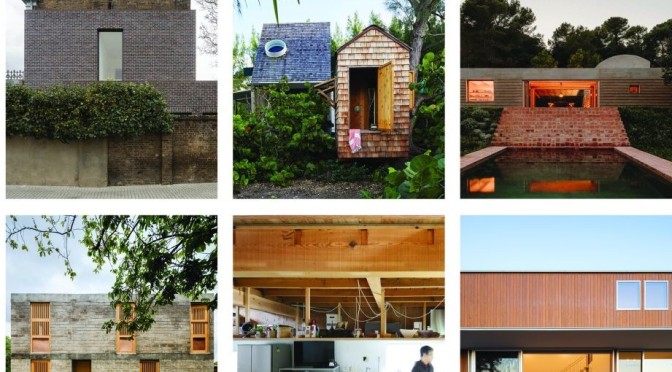
The Architectural Review – The 15 shortlisted projects include houses from all over the world, from the UK, Ireland and Spain, to Mexico, Vietnam, New Zealand and The Bahamas.
Casa Ter by Mesura. Photograph: Salva-López
The private house occupies a unique position in both the history of architecture and human imagination. Beyond its core function of shelter, it is an object of fantasy, a source of delight, a talisman and a testing ground.
Bass Coast Farmhouse by John Wardle Architects. Photograph: Trevor Mein
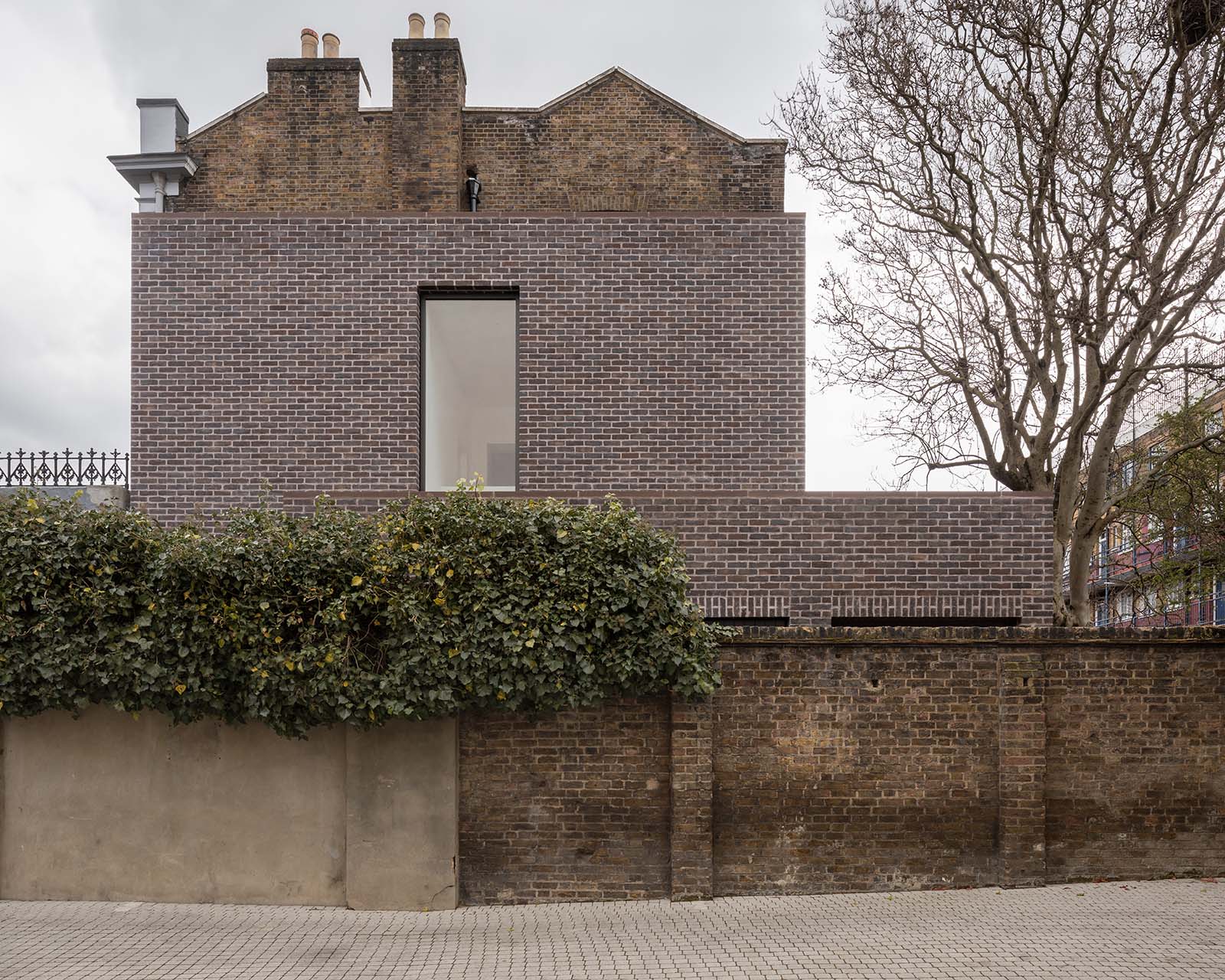
Blockmakers Arms by Erbar Mattes. Photograph: Ståle Eriksen
Brillhut by Brillhart Architecture. Photograph: Bill Abranowicz
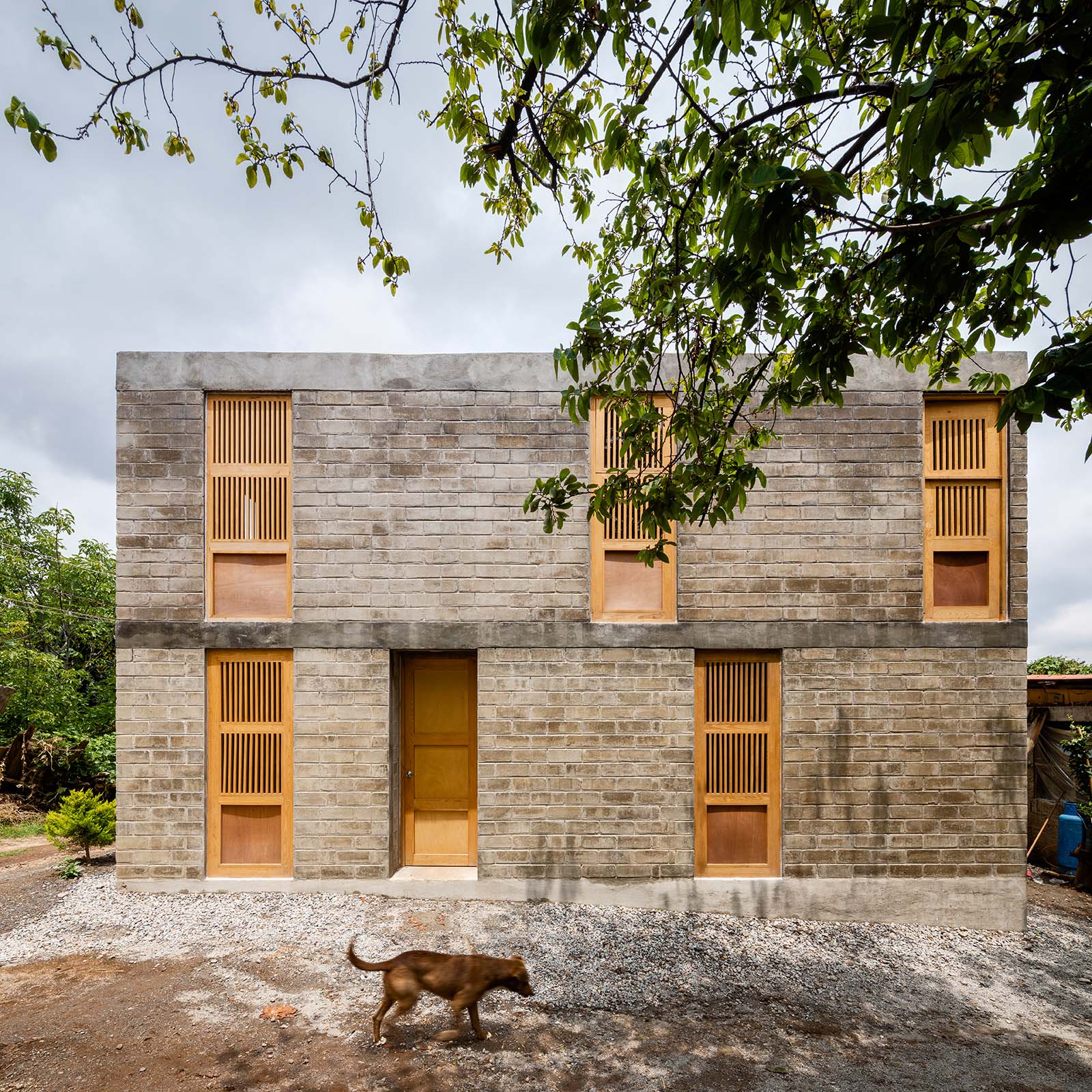
Casa Eva by Fernanda Canales Arquitectura. Photograph: Rafael Gamo



















 Boomers Daily