Category Archives: Architecture

The Peril Of Perfection: Why Utopian Cities Fail

By Michael Cummins, Editor, August 7, 2025
Throughout human history, the idea of a perfect city—a harmonious, orderly, and just society—has been a powerful and enduring dream. From the philosophical blueprints of antiquity to the grand, state-sponsored projects of the modern era, the desire to create a flawless urban space has driven thinkers and leaders alike. This millennia-long aspiration, rooted in a fundamental human longing for order and a rejection of present-day flaws, finds its most recent and monumental expression in China’s Xiongan New Area, a project highlighted in an August 7, 2025, Economist article titled “Xi Jinping’s city of the future is coming to life.” Xiongan is both a marvel of technological and urban design and a testament to the persistent—and potentially perilous—quest for an idealized city.

By examining the historical precedents of utopian thought, we can understand Xiongan not merely as a contemporary infrastructure project but as the latest chapter in a timeless and often fraught human ambition to build paradise on earth. This essay will trace the evolution of the utopian ideal from ancient philosophy to modern practice, arguing that while Xiongan embodies the most technologically advanced and politically ambitious vision to date, its top-down, state-driven nature and astronomical costs raise critical questions about its long-term viability and ability to succeed where countless others have failed.

The Philosophical and Historical Roots

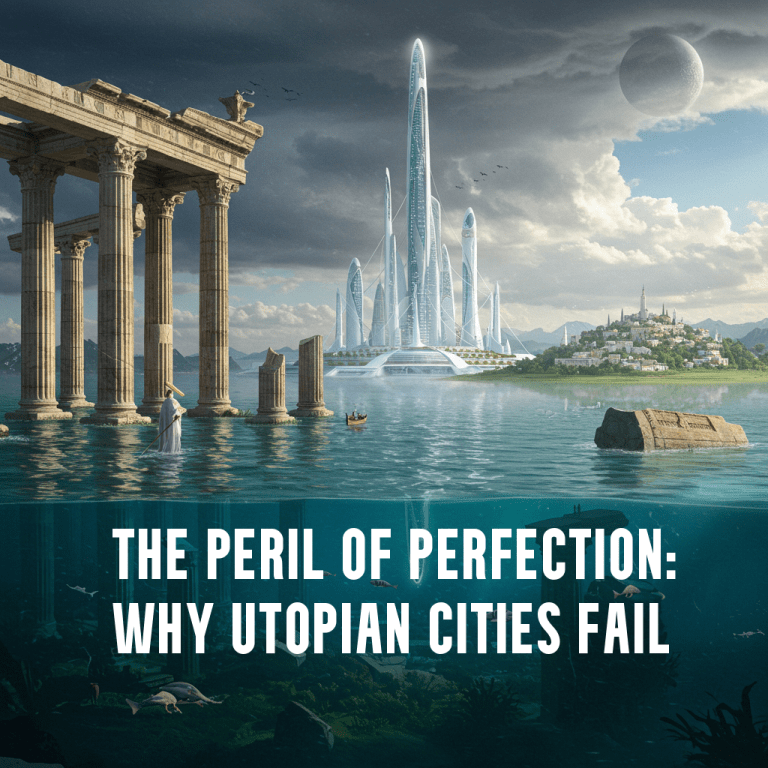
The earliest and most iconic examples of this utopian desire were theoretical and philosophical, serving as intellectual critiques rather than practical blueprints. Plato’s mythological city of Atlantis, described in his dialogues Timaeus and Critias, was not just a lost city but a complex philosophical thought experiment. Plato detailed a powerful, technologically advanced, and ethically pure island society, governed by a wise and noble lineage. The city itself was a masterpiece of urban planning, with concentric circles of land and water, advanced canals, and stunning architecture.

However, its perfection was ultimately undone by human greed and moral decay. As the Atlanteans became corrupted by hubris and ambition, their city was swallowed by the sea. This myth is foundational to all subsequent utopian thought, serving as a powerful and enduring cautionary tale that even the most perfect physical and social structure is fragile and susceptible to corruption from within. It suggests that a utopian society cannot simply be built; its sustainability is dependent on the moral fortitude of its citizens.

Centuries later, in 1516, Thomas More gave the concept its very name with his book Utopia. More’s work was a masterful social and political satire, a searing critique of the harsh realities of 16th-century England. He described a fictional island society where there was no private property, and all goods were shared. The citizens worked only six hours a day, with the rest of their time dedicated to education and leisure.

“For where pride is predominant, there all these good laws and policies that are designed to establish equity are wholly ineffectual, because this monster is a greater enemy to justice than avarice, anger, envy, or any other of that kind; and it is a very great one in every man, though he have never so much of a saint about him.” – Utopia by Thomas More

The society was governed by reason and justice, and there were no social classes, greed, or poverty. More’s Utopia was not about a perfect physical city, but a perfect social structure. It was an intellectual framework for political philosophy, designed to expose the flaws of a European society plagued by poverty, inequality, and the injustices of land enclosure. Like Atlantis, it existed as an ideal, a counterpoint to the flawed present, but it established a powerful cultural archetype.

The city as a reflection of societal ideals. — Intellicurean

Following this, Francis Bacon’s unfinished novel New Atlantis (1627) offered a different, more prophetic vision of perfection. His mythical island, Bensalem, was home to a society dedicated not to social or political equality, but to the pursuit of knowledge. The core of their society was “Salomon’s House,” a research institution where scientists worked together to discover and apply knowledge for the benefit of humanity. Bacon’s vision was a direct reflection of his advocacy for the scientific method and empirical reasoning.

In his view, a perfect society was one that systematically harnessed technological innovation to improve human life. Bacon’s utopia was a testament to the power of collective knowledge, a vision that, unlike More’s, would resonate profoundly with the coming age of scientific and industrial revolution. These intellectual exercises established a powerful cultural archetype: the city as a reflection of societal ideals.

From Theory to Practice: Real-World Experiments

As these ideas took root, the dream of a perfect society moved from the page to the physical world, often with mixed results. The Georgia Colony, founded in 1732 by James Oglethorpe, was conceived with powerful utopian ideals, aiming to be a fresh start for England’s “worthy poor” and debtors. Oglethorpe envisioned a society without the class divisions that plagued England, and to that end, his trustees prohibited slavery and large landholdings. The colony was meant to be a place of virtue, hard work, and abundance. Yet, the ideals were not fully realized. The prohibition on slavery hampered economic growth compared to neighboring colonies, and the trustees’ rules were eventually overturned. The colony ultimately evolved into a more typical slave-holding, plantation-based society, demonstrating how external pressures and economic realities can erode even the most virtuous of founding principles.

In the 19th century, with the rise of industrialization, several communities were established to combat the ills of the new urban landscape. The Shakers, a religious community founded in the 18th century, are one of America’s most enduring utopian experiments. They built successful communities based on communal living, pacifism, gender equality, and celibacy. Their belief in simplicity and hard work led to a reputation for craftsmanship, particularly in furniture making. At their peak in the mid-19th century, there were over a dozen Shaker communities, and their economic success demonstrated the viability of communal living. However, their practice of celibacy meant they relied on converts and orphans to sustain their numbers, a demographic fragility that ultimately led to their decline. The Shaker experience proved that a society’s success depends not only on its economic and social structure but also on its ability to sustain itself demographically.

These real-world attempts demonstrate the immense difficulty of sustaining a perfect society against the realities of human nature and economic pressures. — Intellicurean

The Transcendentalist experiment at Brook Farm (1841-1847) attempted to blend intellectual and manual labor, blurring the lines between thinkers and workers. Its members, who included prominent figures like Nathaniel Hawthorne, believed that a more wholesome and simple life could be achieved in a cooperative community. However, the community struggled from the beginning with financial mismanagement and the impracticality of their ideals. The final blow was a disastrous fire that destroyed a major building, and the community was dissolved. Brook Farm’s failure illustrates a central truth of many utopian experiments: idealism can falter in the face of economic pressures and simple bad luck.

A more enduring but equally radical experiment, the Oneida Community (1848-1881), achieved economic success through manufacturing, particularly silverware, under the leadership of John Humphrey Noyes. Based on his concept of “Bible Communism,” they practiced communal living and a system of “complex marriage.” Despite its radical social structure, the community thrived economically, but internal disputes and external pressures ultimately led to its dissolution. These real-world attempts demonstrate the immense difficulty of sustaining a perfect society against the realities of human nature and economic pressures.

Xiongan: The Modern Utopia?

Xiongan is the natural, and perhaps ultimate, successor to these modern visions. It represents a confluence of historical utopian ideals with a uniquely contemporary, state-driven model of urban development. Touted as a “city of the future,” Xiongan promises short, park-filled commutes and a high-tech, digitally-integrated existence. It seeks to be a model of ecological civilization, where 70% of the city is dedicated to green space and water, an explicit rejection of the “urban maladies” of pollution and congestion that plague other major Chinese cities.

Its design principles are an homage to the urban planners of the past, with a “15-minute lifecycle” for residents, ensuring all essential amenities are within a short walk. The city’s digital infrastructure is also a modern marvel, with digital roads equipped with smart lampposts and a supercomputing center designed to manage the city’s traffic and services. In this sense, Xiongan is a direct heir to Francis Bacon’s vision of a society built on scientific and technological progress.

Unlike the organic, market-driven growth of a city like Shenzhen, Xiongan is an authoritarian experiment in building a perfect city from scratch. — The Economist

This vision, however, is a top-down creation. As a “personal initiative” of President Xi, its success is a matter of political will, with the central government pouring billions into its construction. The project is a key part of the “Jing-Jin-Ji” (Beijing-Tianjin-Hebei) coordinated development plan, meant to relieve the pressure on the capital. Unlike the organic, market-driven growth of a city like Shenzhen, Xiongan is an authoritarian experiment in building a perfect city from scratch. Shenzhen, for example, was an SEZ (Special Economic Zone) that grew from the bottom up, driven by market forces and a flexible policy environment. It was a chaotic, rapid, and often unplanned explosion of economic activity. Xiongan, in stark contrast, is a meticulously planned project from its very inception, with a precise ideological purpose to showcase a new kind of “socialist” urbanism.

This centralized approach, while capable of achieving rapid and impressive infrastructure development, runs the risk of failing to create the one thing a true city needs: a vibrant, organic, and self-sustaining culture. The criticisms of Xiongan echo the failures of past utopian ventures; despite the massive investment, the city’s streets remain “largely empty,” and it has struggled to attract the talent and businesses needed to become a bustling metropolis. The absence of a natural community and the reliance on forced relocations have created a city that is technically perfect but socially barren.

The Peril of Perfection

The juxtaposition of Xiongan with its utopian predecessors highlights the central tension of the modern planned city. The ancient dream of Atlantis was a philosophical ideal, a perfect society whose downfall served as a moral warning against hubris. The real-world communities of the 19th century demonstrated that idealism could falter in the face of economic and social pressures, proving that a perfect society is not a fixed state but a dynamic, and often fragile, process. The modern reality of Xiongan is a physical, political, and economic gamble—a concrete manifestation of a leader’s will to solve a nation’s problems through grand design. It is a bold attempt to correct the mistakes of the past and a testament to the immense power of a centralized state. Yet, the question remains whether it can escape the fate of its predecessors.

The ultimate verdict on Xiongan will not be about the beauty of its architecture or the efficiency of its smart infrastructure alone, but whether it can successfully transcend its origins as a state project. — The Economist

The ultimate verdict on Xiongan will not be about the beauty of its architecture or the efficiency of its smart infrastructure alone, but whether it can successfully transcend its origins as a state project to become a truly livable, desirable, and thriving city. Only then can it stand as a true heir to the timeless dream of a perfect urban space, rather than just another cautionary tale. Whether a perfect city can be engineered from the top down, or if it must be a messy, organic creation, is the fundamental question that Xiongan, and by extension, the modern world, is attempting to answer.

THIS ESSAY WAS WRITTEN AND EDITED UTILIZING AI
Tours: ‘Te Arai Beach House’ In New Zealand

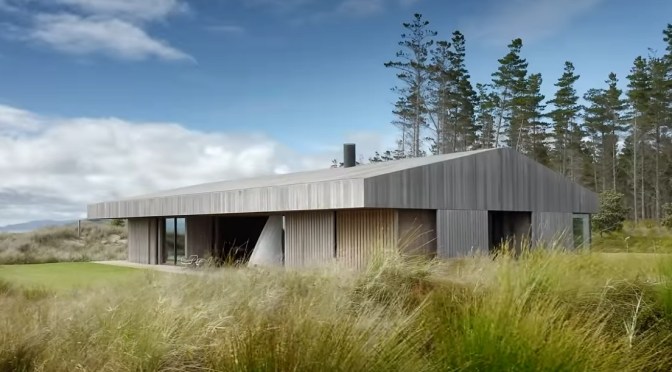
THE LOCAL PROJECT (January 31, 2025): Nestled between the forest and the ocean on the east coast of New Zealand’s North Island, Te Arai Beach House manifests as a contemporary cabin in the woods. “The power of the site when we first visited was in the ocean, the forest and the sand dunes.

Video timeline: 00:00 – Introduction to the cabin in the woods 01:27 – The early design discussions 02:12 – Interior designers own home 03:27 – The layout of the home 04:30 – A warm material palette 06:56 – Collaborating with artists 07:38 – Rewarding Aspects 08:08 – Proud Moments

So we wanted to provide a building that doesn’t challenge or reduce the sense of beauty that’s already there,” says Tim Hay, design director and co-founder at Fearon Hay. “We instantly looked, in terms of the architecture, to references that related to those different thresholds – the ability to emerge from the forest, discover the ocean, but still have a sense of protection,” notes Hay. “So this idea of the cabin in the woods was an idea that stuck from very early on.”

From afar, Te Arai Beach House appears to be a series of simple, unambiguous silhouettes. However, as one moves closer, complexity is revealed through blurred thresholds, operable screens and considered openings. The first building is a cabin that contains a garage and guest occupation. “This sits between an open space that frames a courtyard and the main building, which is set to the ocean, and is fundamentally a pair of open suites that capture an open plan living space between them,” explains Hay.

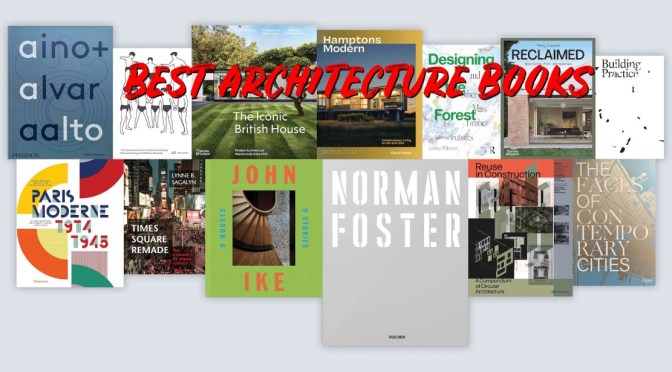
Design And Architecture: The Top Ten Books Of 2024

Best architecture and design books

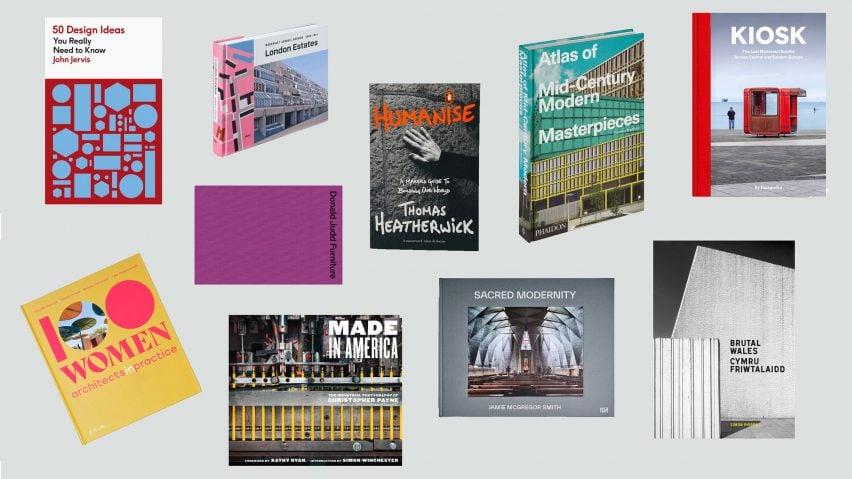
Dezeen (December 17, 2024): The top 10 architecture and design books of 2024 include:

2024 top architecture books: Kiosk by David Navarro and Martyna Sobecka

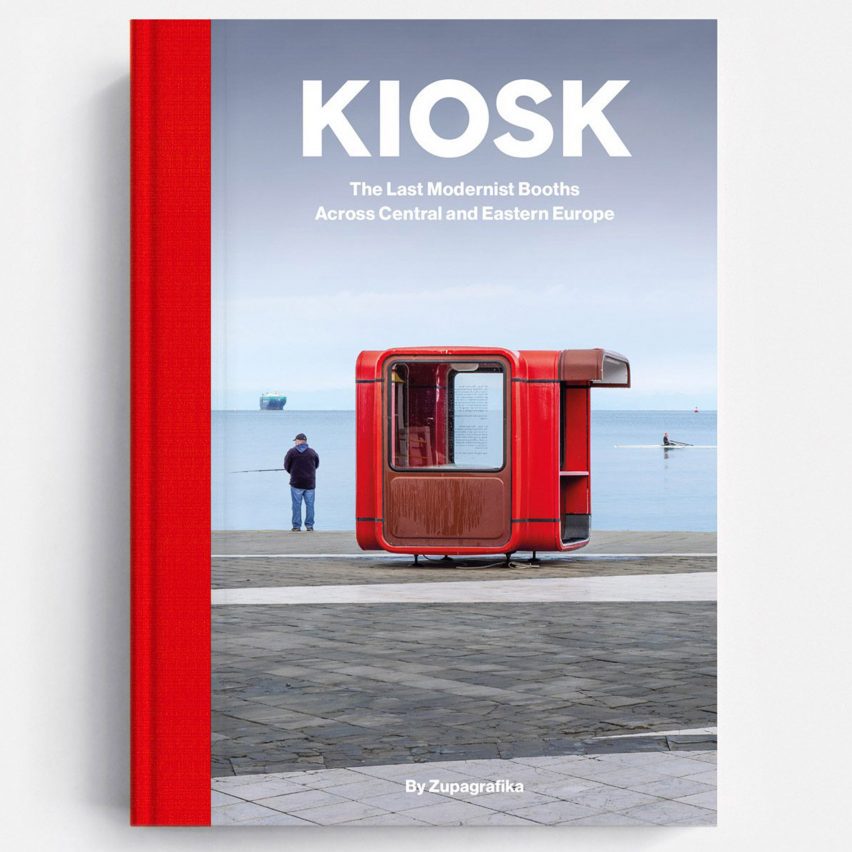
Kiosk by David Navarro and Martyna Sobecka

Simply named Kiosk, this book features photos of more than 150 modernist, modular kiosks that brighten streets across central and eastern Europe.

Authors David Navarro and Martyna Sobecka aimed to draw attention to the surviving, unusual structures that were constructed in factories in the Eastern Bloc from the 1970s to the 1990s.

Find out more about Kiosk ›


100 Women: Architects in Practice by Harriet Harriss, Naomi House, Monika Parrinder and Tom Ravenscroft

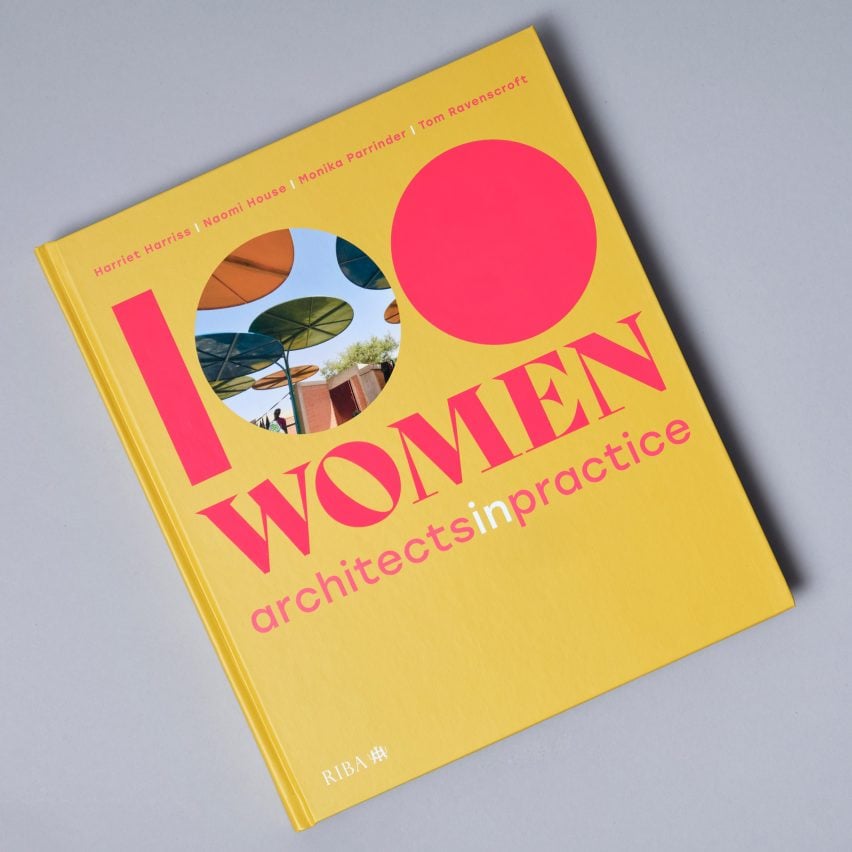
100 Women: Architects in Practice by Harriet Harriss, Naomi House, Monika Parrinder and Tom Ravenscroft

Written by academics Harriet Harriss, Naomi House, Monika Parrinder and Dezeen editor Tom Ravenscroft, 100 Women: Architects in Practice showcases the work of  architects from 78 different countries.

The book contains interviews with some of the world’s best-known architects including Liz Diller, Tatiana Bilbao, Mariam Issoufou Kamara and Lina Ghotmeh, along with numerous women who have not yet received extensive global attention.

Find out more about 100 Women: Architects in Practice ›


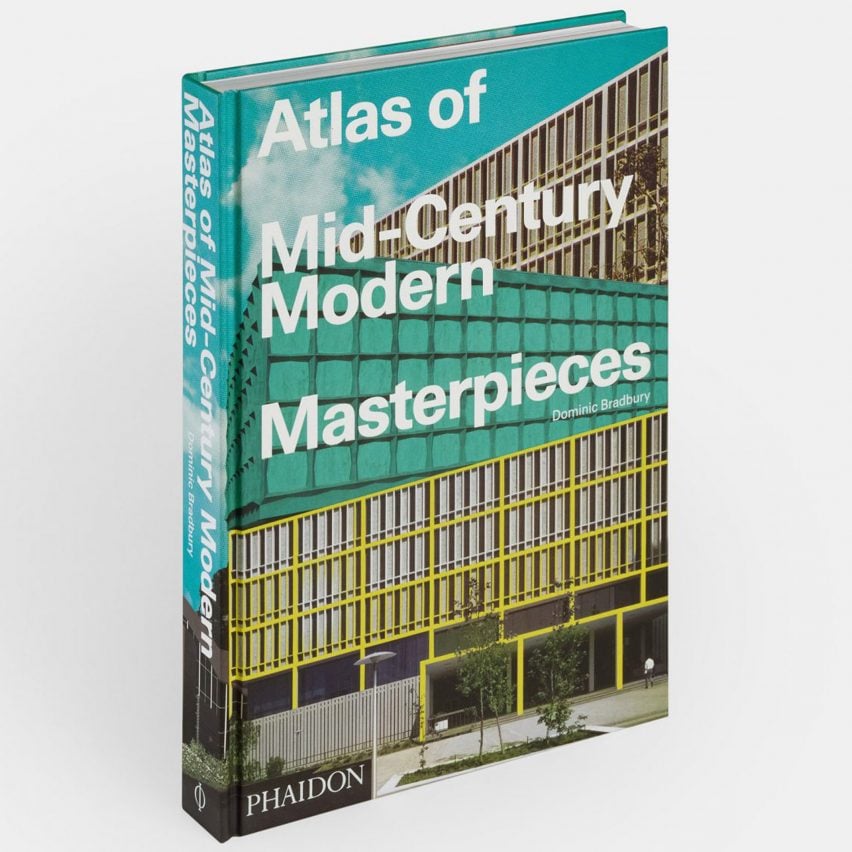
2024 top architecture books: Atlas of Mid-Century Modern Masterpieces by Dominic Bradbury

Atlas of Mid-Century Modern Masterpieces by Dominic Bradbury

Published by Phaidon, the Atlas of Mid-Century Modern Masterpieces is an encyclopedia featuring 450 mid-century-modern buildings from all across the world.

The book not only contains many of the key buildings created by the movement’s trailblazers but also those designed by more under-represented architects.

Find out more about Atlas of Mid-Century Modern Masterpieces ›


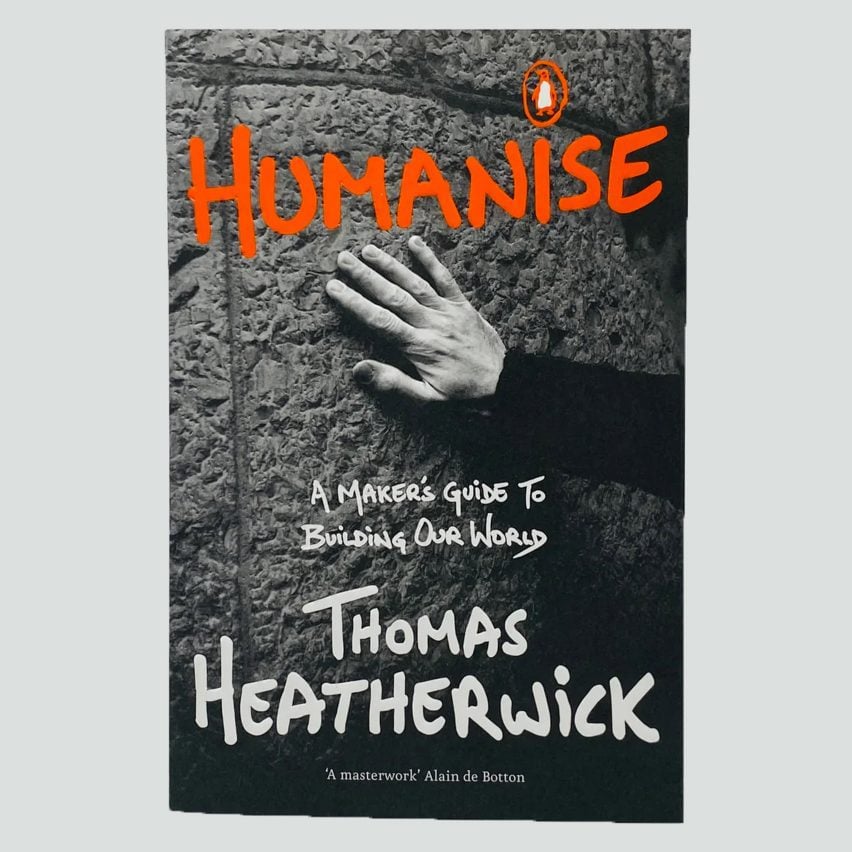
2024 top architecture books: Humanise by Thomas Heatherwick

Humanise by Thomas Heatherwick

The book that undoubtedly drew the most attention this year was Thomas Heatherwick’s Humanise.

In the book, along with a Radio 4 series and initiative of the same name, British designer Heatherwick takes aim at “boring” buildings.

Find out more about Humanise ›


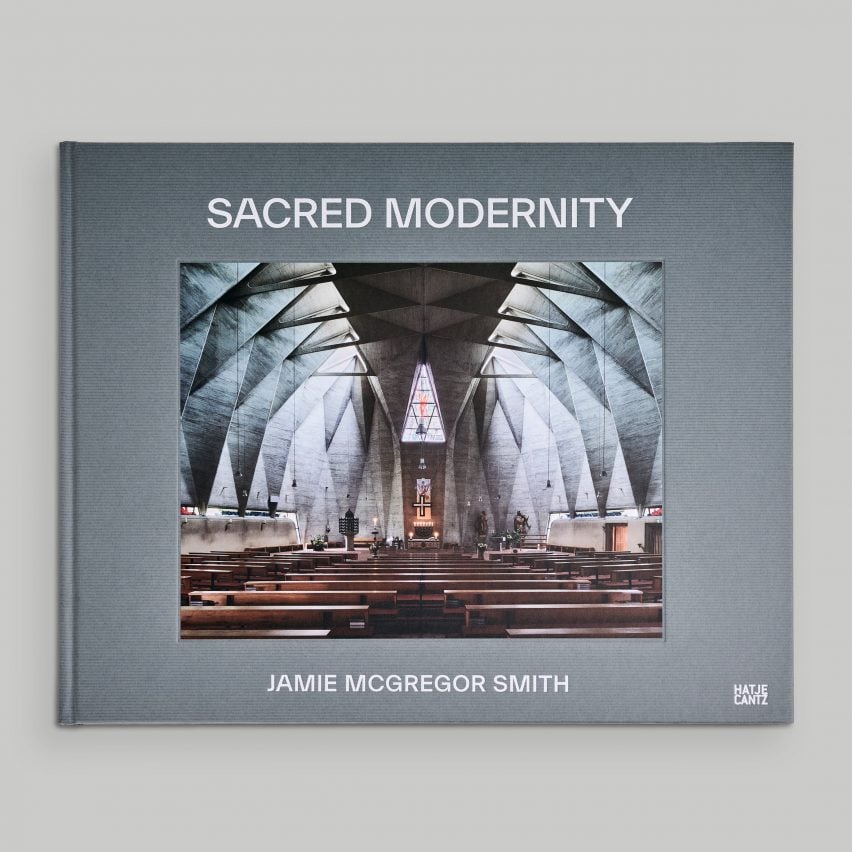
2024 top architecture books: Sacred Modernity by Jamie McGregor Smith

Sacred Modernity by Jamie McGregor Smith

Sacred Modernity aimed to showcase the “unique beauty and architectural innovation” of brutalist churches across Europe.

The book contains 139 photographs of 100 churches taken by photographer Jamie McGregor Smith over five years, along with essays by writers Jonathan Meades and Ivica Brnic.

Find out more about Sacred Modernity ›


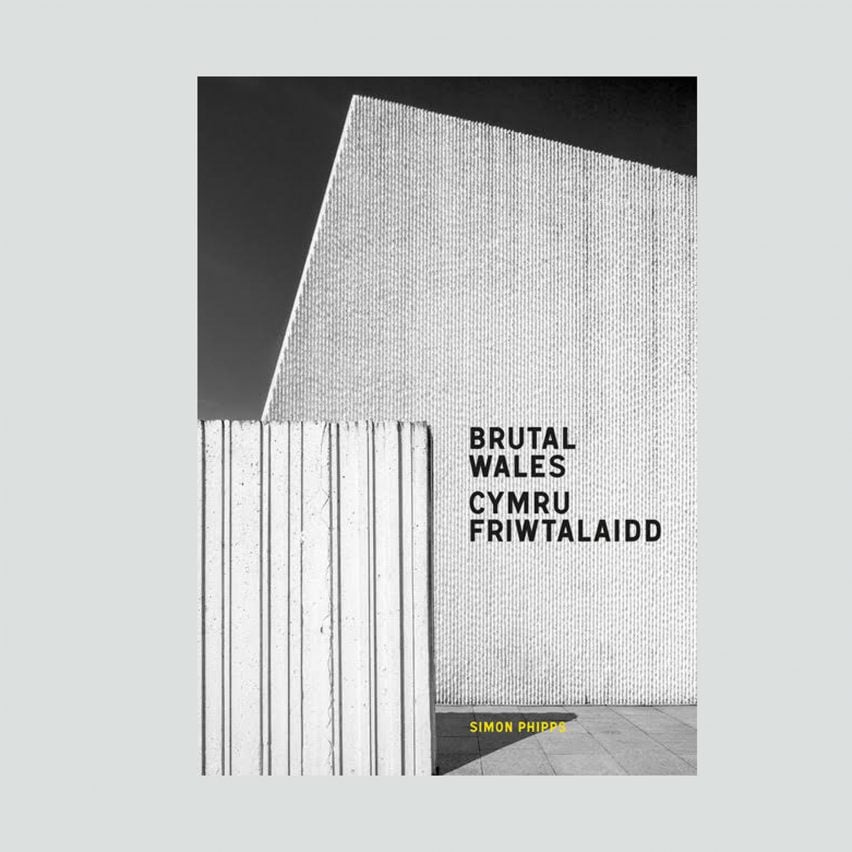
Brutal Wales by Simon Phipps

Brutal Wales by Simon Phipps

Simon Phipps’ follow up to his Brutal North and Brutal London books, Brutal Wales highlights architecture in the brutalist style across the country.

Alongside photography of 60 buildings, the book has explanatory texts in both Welsh and English, as well as an introduction by social historian John Grindrod.

Find out more about Brutal Wales ›


Donald Judd Furniture by Judd Foundation

Donald Judd Furniture by Judd Foundation

The Donald Judd Furniture book contains photos of all the furniture pieces created by the artist for his New York and Marfa, Texas, properties that remain in production.

Along with the photos, the book contains archival sketches by Judd, newly commissioned drawings of each piece and several essays by the artist.

Find out more about Donald Judd Furniture ›


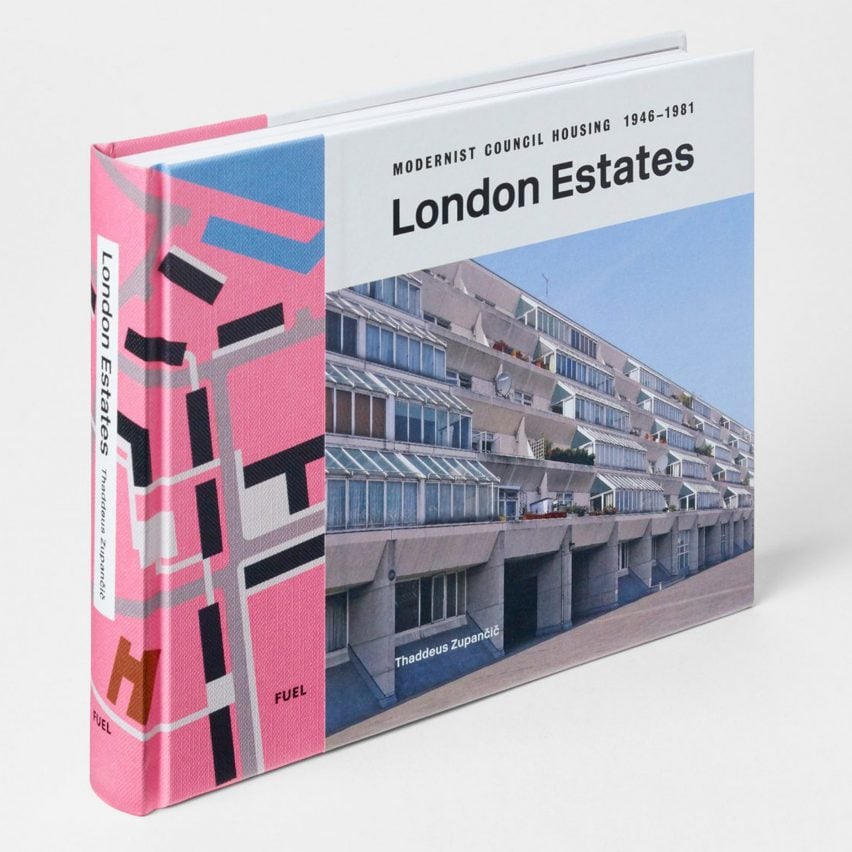
London Estates by Thaddeus Zupančič

London Estates by Thaddeus Zupančič

London Estates documents the modernist council housing built in the UK capital in the post-war period.

Described by publisher Fuel as “the most comprehensive photographic document of council housing schemes in the capital”, the book was photographed by Thaddeus Zupančič.

Find out more about London Estates ›


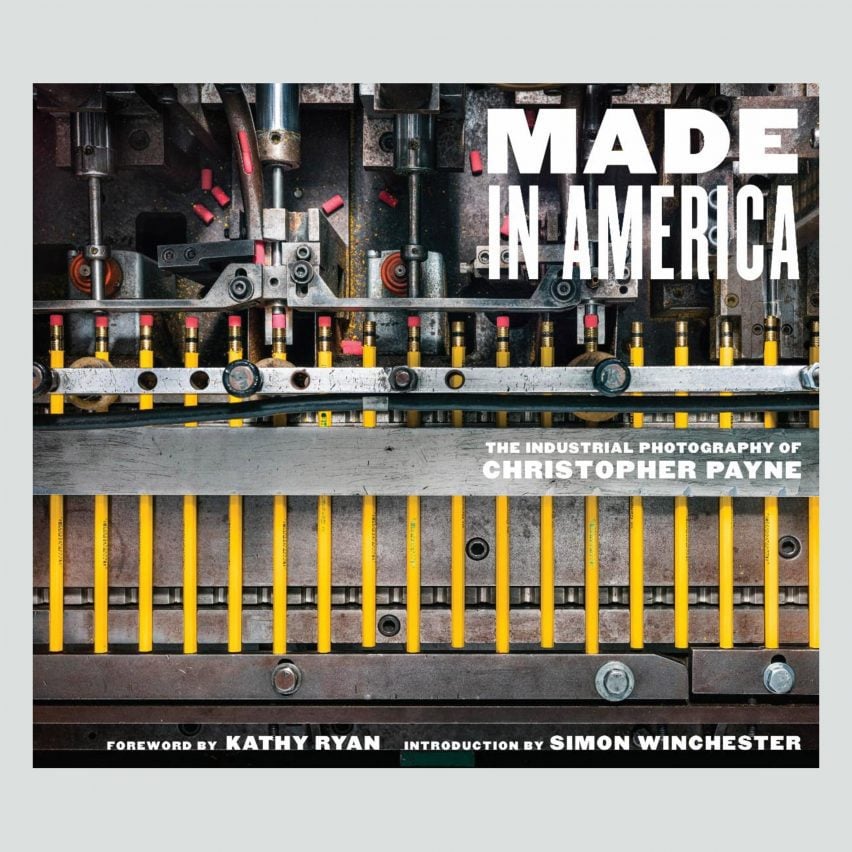
Made in America by Christopher Payne

Made in America by Christopher Payne

Photographer Christopher Payne’s Made in America book contains images taken over the past decade in the USA’s factories.

Payne created the book as a way of helping to preserve the legacy of industry in America, while documenting the skill of workers who are featured in the photography.

Find out more about Made in America ›


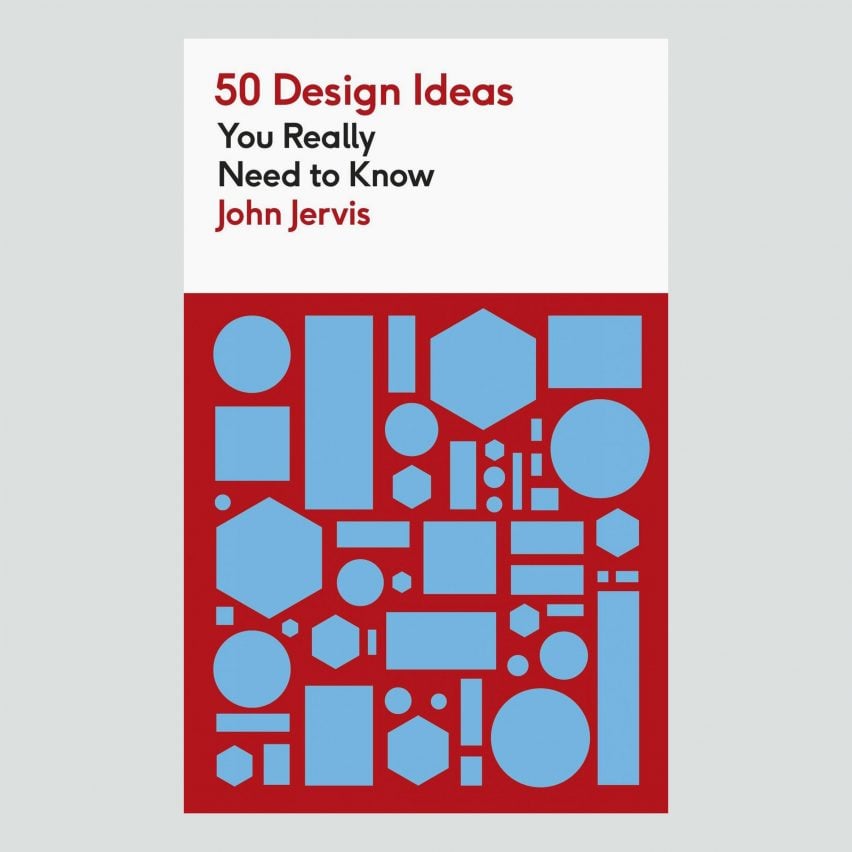
50 Design Ideas You Really Need to Know by John Jervis

50 Design Ideas You Really Need to Know by John Jervis

The latest book in the 50 ideas series, 50 Design Ideas You Really Need to Know contains essays tracking the evolution of design from the 19th century to today.

Written by John Jervis, the book aims to make a broad range of design concepts accessible to a wide audience.

Find out more about 50 Design Ideas You Really Need to Know ›

Architecture: Kārearea House In New Zealand

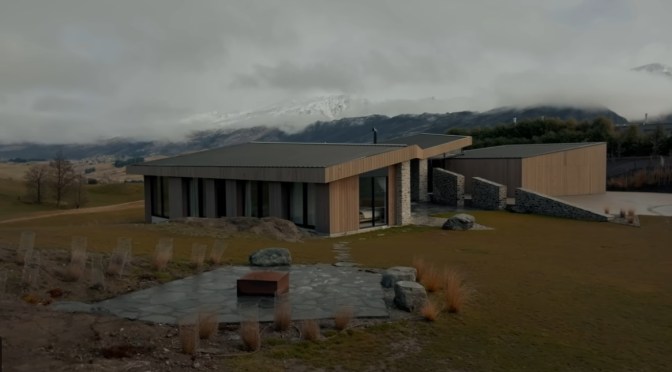
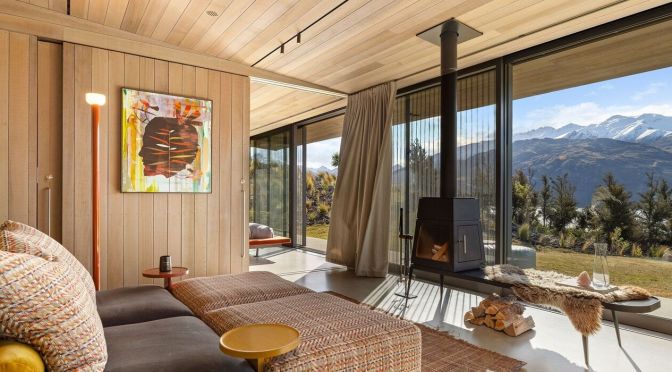
The Local Project (December 15, 2024): Located in the Wakatipu Basin on New Zealand’s South Island, Kārearea House by RTA Studio, which takes inspiration from the region’s majestic native falcons, is the most breathtaking home shaped by nature.

00:00 – Introduction to the Most Breathtaking Home 01:12 – The Location Centred Brief 02:36 – Approaching the Home 03:09 – Walkthrough of the House 04:11 – Restrained Interior Styling 05:44 – The Kitchen Design and Appliances 07:21 – A Balanced Material Palette 08:29 – Curating The Views 09:21 – Proud Moments

What defines it, however, is the site’s staggering 360-degree views to The Remarkables, Coronet Peak and the Crown Range, and the architects’ response to these multifaceted aspects. “We’ve done a few houses in this area and, over the years, we’ve developed an approach that’s firstly about identifying the significant views,” says Richard Naish, founder of RTA Studio.

Though Naish acknowledges that the perspectives are a gift, he believes good architecture is more about the control and release of views. This philosophy underscored RTA Studio’s approach to crafting the most breathtaking home shaped by nature. The roof lines played heavily into this idea; designed to follow the contours of the land and echo the surrounding topography, the roof dips in parts and soars in others, creating views both vast and precise.

#Nature #Home #NewZealand

Paris: Inside Notre Dame Cathedral’s Recovery

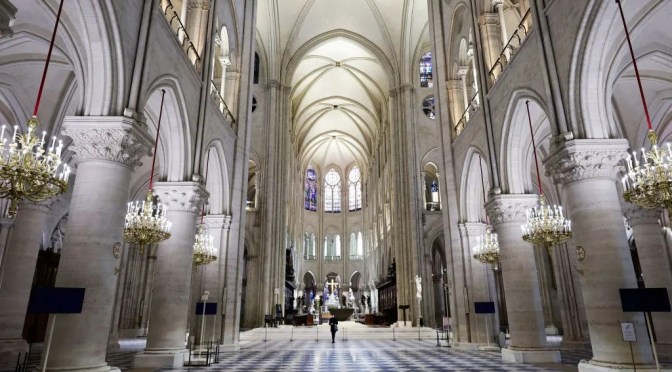
CBS Mornings (December 9, 2024): Saturday was a special day in Paris as Notre Dame Cathedral held its first mass in more than five years after a fire in April 2019 destroyed much of the cathedral’s roof. Senior foreign correspondent Seth Doane has been following the renovation over the years.

Australia Design: Burnt Earth Beach House Tour

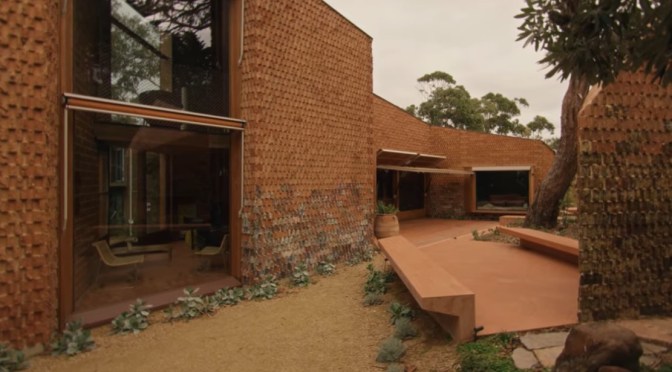
The Local Project (December 3, 2024): Located in Anglesea on Victoria’s surf coast, Burnt Earth Beach House is an architect’s own home inspired by nature. Architect John Wardle designs a holiday home deeply embedded in its landscape, grounded in an enduring love of terracotta, a fascination with ceramics and the unique beauty of bricks.

00:00 – Introduction to the Architect’s Own Home 01:48 – Walkthrough and Layout of the Home 03:18 – The Material Palette 04:48 – The Bathing Spaces 06:12 – Unique and Favourite Moments 07:16 – Creating A Special Place

As an architect’s own home inspired by nature, Burnt Earth Beach House reflects the hues and tonality of the ochre-coloured cliff edges of Anglesea just beyond. “It was very important that we do something here that would transcend time but do so in a way that is completely different from our homes in Melbourne,” says John Wardle, founding partner of Wardle. The home’s facade is expressed through an invented brick developed alongside brickmaker Klynton Krause.

The process involved extrusion and hand tearing the brick surface prior to cutting, which exposes a raw, uneven surface, making every brick unique. Approaching the architect’s own home inspired by nature, a courtyard acts as an informal living zone and is bordered by a kitchen that houses a vast square central terracotta island bench. The space then bends around into the dining area with a reading nook that looks into the courtyard. Upstairs, a study appears to float overhead, enveloped in a hand-knotted screening from Vietnam.

#Architect #Nature #Home

Tours: Iconic Mid-Century Modern In Palm Springs

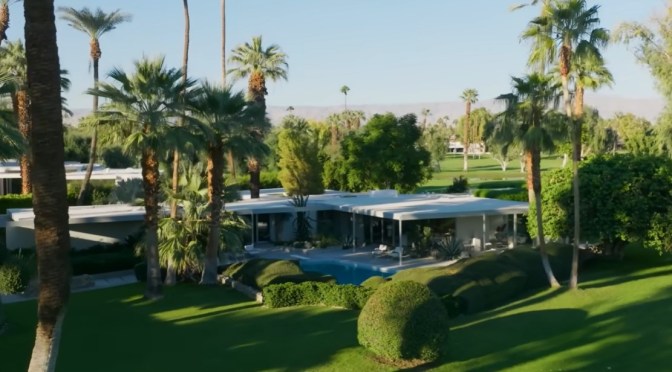
The Local Project (November 12, 2024): Inside an iconic mid-century home designed by Steven Harris Architects, Palm Springs Residence is a study in restraint, honouring both the existing structure and the work of those who came before. This sensitive renovation reimagines the original house, known as Charney House, designed by Donald Wexler in 1956.

Video timeline: 00:00 – Introduction to the Iconic Mid-century Home 00:52 – The Original Plan and Inspiration 02:18 – A Minimal Layout 02:48 – The Afternoon Light and Vibes 03:46 – A Very California House 04:05 – Proud Moments

“Wexler was brilliant, with an extraordinary sense of syntax and grammar; everything lines up with everything,” says Steven Harris, partner at Steven Harris Architects. Interestingly, Harris and his partner bought the house accidentally. “We were helping another friend with their house and fell in love with the place,” recalls Harris. After spending time inside an iconic mid-century home designed by Wexler, Harris’s vision was rooted in preserving as much of the original as possible. “Almost everything here is original to the house,” he notes. “For me, the greatest liability would be for someone to drive by on the street and immediately say, ‘oh! that’s a Steven Harris house.’”

Alterations inside the iconic mid-century home designed by Wexler were largely stylistic and inspired by a Wassily Kandinsky painting. “If you look at it from the air, you will see flashes and curves and various shapes, which on one hand is quite graphic, and on the other, almost every view is perspectival because the things you’re looking at are only oblique. Things shift off of each other in a very curious and interesting way.” Stepping inside an iconic mid-century home designed by Wexler, the front door is indicated by a covered passage, flanked by an oblique terrazzo sidewalk extending from the driveway.

Architecture & History: A Ventian Palazzo Restored

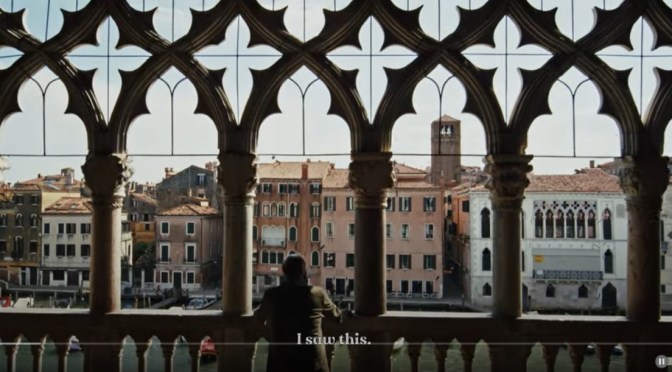
Cabana Magazine (November 8, 2024): “I believe in the future of Venice, otherwise I would not do this job,” says curator and restorer Toto Bergamo Rossi, speaking to Cabana from the spectacular surroundings of the X.

The director of Venetian Heritage is protecting and preserving his native Venice for future generations, always working within the architectural fabric of the historic water-locked city.

“I find that the ego of the architect who restores [these buildings] must disappear, never trying to compete with what’s over 300 years old, ever,” he tells Cabana. “Because we are temporary, but this remains.” Join Cabana Films and Toto Bergamo Rossi on a journey through Venetian heritage, as he paves the way for the city’s future.

For more design and decoration, subscribe to Cabana Magazine: https://cabanamagazine.com/products/c…

Architecture: ‘Shepherd’s Hut’ – A Secretive Design

The Local Project (July 26, 2024): Inspired by structures found near New Zealand’s Southern Alps, The Shepherd’s Hut is the worlds most secret home. The minimalist house – designed by Fearon Hay in collaboration with interior designer Paul Kennedy – sits comfortably in the landscape while offering a flexible set of interiors.

Video timeline: 00:00 – Introduction to the World’s Most Secret Home 01:07 – Behind the Design and Name 02:31 – The Arrival Sequence 02:58 – A Playful and Relaxed Brief 04:29 – The Floor Plan and Layout 06:25 – The Interior Material Palette 07:59 – The Exterior Material Palette 08:48 – Proud Moments

Settled on the Wānaka lakefront, the worlds most secret home is often in the path of cold wind crossing from Makarora. “When there are storms, you can feel very alone, but with the warmth of the fires, my two dogs rugged up with sheepskin, you essentially become a shepherd,” says Matt Chapman, custodian of the property. “When we created the home, I didn’t want too much space for an abundance of possessions. I’d reached a point in my life where minimalism and simplicity were the ways I wanted to exist.”

While maintaining a minimalist focus, the design brief for the project proposed a spatially flexible home that enables new experiences. “When we encountered the site, it was an opportunity to build a structure with length,” says Tim Hay, architect at Fearon Hay. “We liked the idea of a very simple silhouette … we wanted the building to have a sense of retreat and integration with the landscape.”

Architecture: RIBA House Of The Year 2024 Shortlist

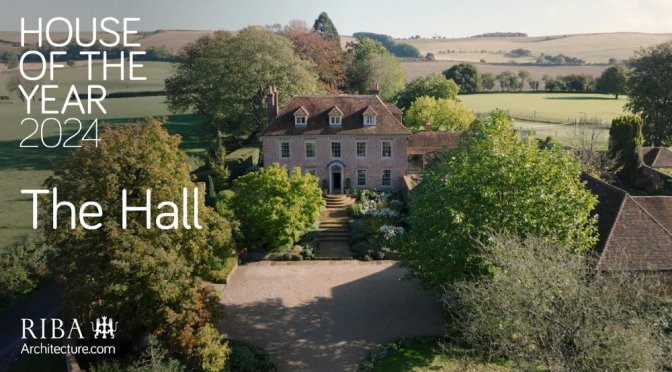
RIBA Architecture (November 1, 2024): The Hall by TaylorHare Architects is shortlisted for RIBA’s House of the Year 2024.

Situated in the Kent Downs, this Grade II listed 16th century residence has been extensively and sympathetically refurbished into a sustainable home. Interiors have been both restored and modernised, with finely crafted detailing and considered new interventions that work in harmony so that the historical compliments the contemporary.

The house is an exemplar of green living, while simultaneously restoring the surrounding listed outbuildings and adding a pool, pool house, tennis court, stable block, and a new lake. The end result is a demonstration of how to extend the life of a historic building, while creating elegant living spaces for the future. Presented by the Royal Institute of British Architects, the House of the Year is a prestigious annual award for the best example of a one-off house designed by an architect in the UK, celebrating excellence and innovation in home design.