
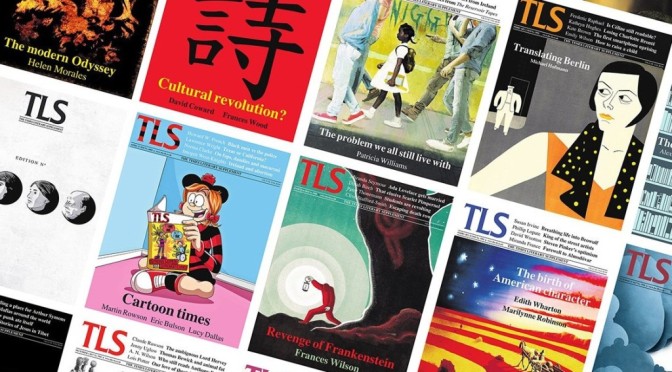
This week’s @TheTLS, featuring James Hall on Van Gogh’s self-portraits; @HDrochon on the dream of Europe; @BoydTonkin on Beatrix Potter; @calflyn on the North; @jntod on concrete poetry; @questingvole on book-making – and more pic.twitter.com/1z1AeTxi7A
— George Berridge (@George_Berridge) March 30, 2022
Monthly Archives: March 2022
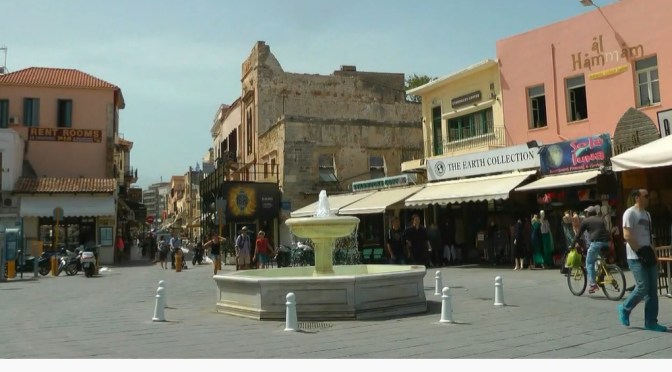
Views: Coastlines & Towns – Island Of Crete, Greece
Crete is the largest and most populous of the Greek islands, the fifth largest island in the Mediterranean Sea, after Sicily, Sardinia, Cyprus, and Corsica. Crete rests approximately 160 km south of the Greek mainland. It has an area of 8,336 km2 and a coastline of 1,046 km .
It bounds the southern border of the Aegean Sea, with the Sea of Crete (or North Cretan Sea) to the north and the Libyan Sea (or South Cretan Sea) to the south. Its capital and largest city is Heraklion, on the north shore of the island. As of 2020, the region had a population of 636,504.
Humans have inhabited the island since at least 130,000 years ago, during the Paleolithic age. Crete was the centre of Europe’s first advanced civilization, the Minoans, from 2700 to 1420 BC. The Minoan civilization was overrun by the Mycenaean civilization from mainland Greece.
Crete was later ruled by Rome, then successively by the Byzantine Empire, Andalusian Arabs, the Venetian Republic, and the Ottoman Empire. In 1898 Crete, whose people had for some time wanted to join the Greek state, achieved independence from the Ottomans, formally becoming the Cretan State. Crete became part of Greece in December 1913. The island is mostly mountainous, and its character is defined by a high mountain range crossing from west to east.
It includes Crete’s highest point, Mount Ida, and the range of the White Mountains (Lefka Ori) with 30 summits above 2000 metres in altitude and the Samaria Gorge, a World Biosphere Reserve. Crete forms a significant part of the economy and cultural heritage of Greece, while retaining its own local cultural traits (such as its own poetry and music). The Nikos Kazantzakis airport at Heraklion and the Daskalogiannis airport at Chania serve international travelers. The palace of Knossos, a Bronze Age settlement and ancient Minoan city, is also located in Heraklion.

Morning News: Russia-Ukraine Peace Talks, U.S.-Philippine Military Drills
The latest on Russia-Ukraine peace talks. Plus: Richard Heydarian on the significance of American-Philippine military drills, a flick through today’s papers and the latest business stories.

Front Page: Wall Street Journal – March 30, 2022

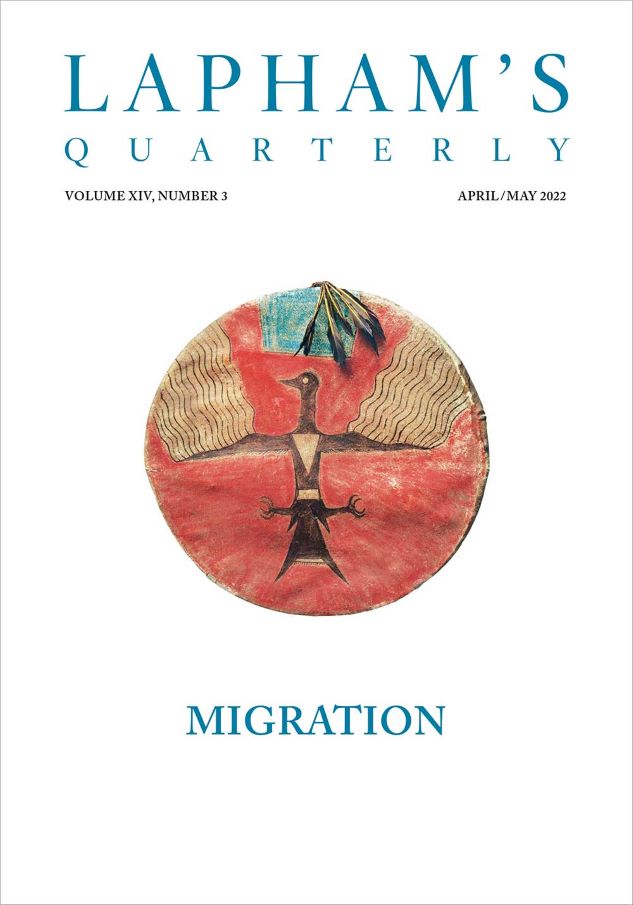
Cover Preview: Lapham’s Quarterly – April/May 2022
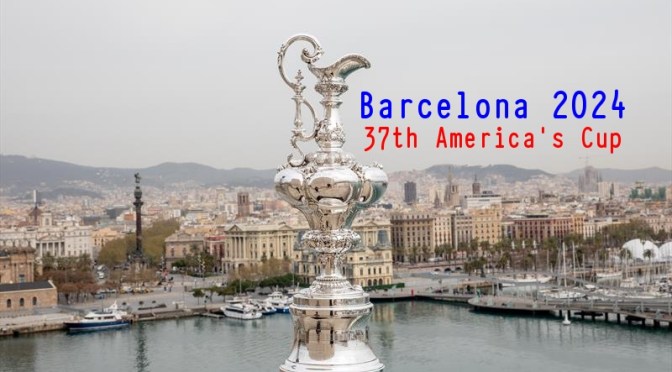
Sailing: The 37th America’s Cup – Barcelona 2024
Emirates Team New Zealand and the Royal New Zealand Yacht Squadron are pleased to announce Barcelona, in the region of Catalonia as the Host Venue for the 37th America’s Cup to be held in September and October of 2024. A mixture of history and modernity, Barcelona is one of the most iconic and attractive cities in the world and will become the first venue in the world to host both an Olympic Games and an America’s Cup event.

Zero Waste: Trash Turned Into Cash (The Economist)
The world is facing a growing waste problem, with 2bn tonnes produced last year alone. Is it possible to clean up this mess by turning trash into cash? 00:00 – The world has a huge waste problem.
Video timeline: 00:45 – Upcycling to reduce waste 02:46 – Building offices from recycled products 03:46 – The problem with traditional recycling 04:59 – Waste reduction relies on a circular economy 05:38 – Taiwan’s waste management success 08:20 – The problem with incineration 09:55 – Is the future zero waste? 10:43 – Consumption attitudes are changing Read our special report on waste here https://econ.st/3JrlD6y

Views: ‘Seeing The Samurai’ With Japanese Armour
This fascinating Japanese armour was part of the first diplomatic gift between Japan and Britain. It is over 400 years old and one of the first documented Japanese armours to have been seen on British soil.
Learn more about this amazing object in this short film. See the armour in our exhibition Japan: Courts and Culture at The Queen’s Gallery, London from 8 April 2022 – 26 February 2023.
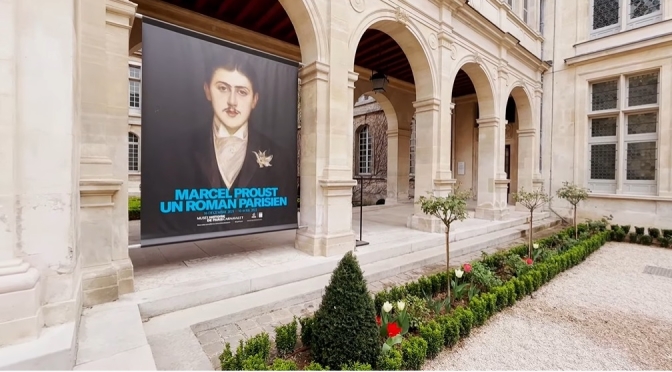
Tours: ‘Marcel Proust’ – Carnavalet Museum, Paris
The Carnavalet Museum – History of Paris is celebrating the 150th anniversary of the birth of Marcel Proust (1871–1922).
Dedicated to the relationship between Marcel Proust and Paris, where he spent most of his life, the exhibition Marcel Proust, a Parisian novel will investigate the city’s place in Proust’s novel.
The first section of the exhibition will explore the world Marcel Proust inhabited in Paris. Having been born and died in Paris, Proust’s life unfurled in the very restricted area encompassed by Parc Monceau, Place de la Concorde, Auteuil, Bois de Boulogne and l’Étoile. Paris was of immense importance in the development of Marcel Proust’s literary vocation, from the time of his earliest writings in the late 1890s with his fellow-pupils at the Lycée Condorcet, to his entry into the city’s high society and encounters with people who would be decisive to his life.
The second part of the exhibition opens on the fictional Paris created by Marcel Proust. Following the architecture of the novel In Search of Lost Time and evoking emblematic places in the city, it offers a journey through the novel and the history of the capital, focusing on the book’s central characters. The city of Paris, represented poetically in the novel, is the setting for the quest of the narrator, the author’s alter ego, until the revelation of his vocation as a writer.
Morning News: Russia-Ukraine Talks, Israel-Arab Summit, Solomon Islands
We give you the latest on the negotiations between Russia and Ukraine. Plus: Antony Blinken’s role in the Israel-Arab summit, China’s growing influence in the Solomon Islands and a wave of Taliban reforms in Afghanistan.
 Boomers Daily