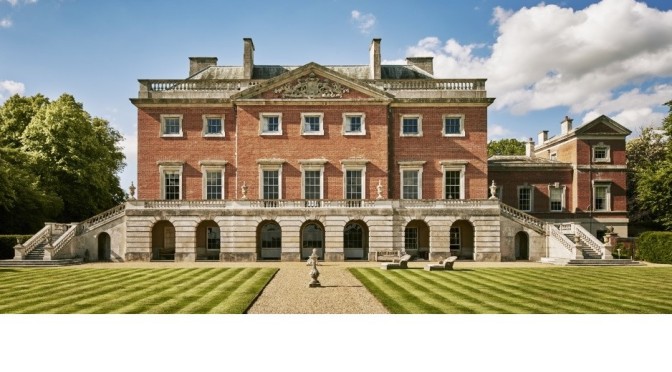
House & Garden (February 3, 2023) – Peter Sheppard and Keith Day welcome us into Wolterton Hall, an 18th-century English country house in Norfolk, England. Both Peter & Keith have been steadily restoring and redecorating Wolterton Park since they bought the estate in 2016 — bringing the state rooms back to their original glory and creating beautiful, practical living spaces.
Video timeline: 00:00 – Boudoir: “The walls were covered with a green hessian” 02:30 – Saloon: “This is where we have our best parties” 05:29 – State Bedroom: “It’s really funny to have a state bedroom when your friends come and stay…” 06:17 – State Bathroom: “It’s not conventional to have a bath of this size” 07:30 – Kitchen: “You shouldn’t hide away beautiful things” 08:49 – Living Room: “This was the Walpole’s library” 09:57 – Picture Room: “A 20th-century collection of paintings”
Watch the full episode of Design Notes as we tour Wolterton Hall and Peter & Keith explain how they live in the Palladian rooms of the piano nobile, from the State Bathroom with its alabaster-panelled bath to the Saloon that looks out on 500 acres of parkland. #HouseTour#ManorHouse#CountryHouse#England#HomeDesign
The Economist (February 2, 2023) – As carbon emissions change the chemistry of the seas, ocean acidification threatens marine life and human livelihoods. How worried should you be about climate change’s so-called “evil twin”?
Video timeline: 00:00 The other carbon problem 00:50 How does the ocean’s deepest point reveal its past? 02:55 Why are baby oysters dying? 04:08 Is the ocean acidic? 05:21 What is causing ocean acidification? 06:01 Why are corals dissolving? / Will deep sea ecosystems survive? 08:35 A threat to human livelihoods 10:42 What are the ‘potato chips of the sea’? 12:04 What is the solution?
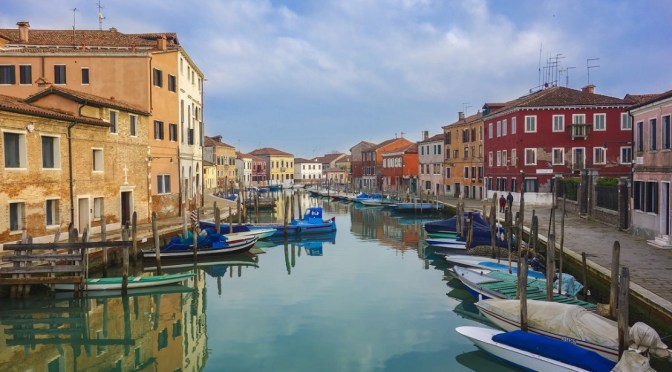
January 30, 2023: Murano Island – a Glassmaker’s Paradise since 1291, is a tiny Venetian island and home to Venice’s glassmaking industry. Murano glass production was moved to this Island from the main island of Venice because its production posed quite a fire hazard (Note: the buildings in Venice were constructed mostly of wood at that time and the extreme heat that is required to make glass liquid so as to mold and shape it obviously caused the Venetians some concern).
Video timeline:0:00:00 – Intro 0:01:06 – MURANO MUSEO 0:01:52 – RIVA LONGA 0:04:25 – PONTE LONGO LINO TOFFOLO 0:05:46 – FONDAMENTA DA MULA 0:07:04 – PONTE SAN PIETRO MARTIRE 0:07:58 – FONDAMENTA MANIN 0:09:40 – CALLE BRESSAGIO 0:10:09 – CALLE BRIATI 0:12:15 – FONDAMENTA PIAVE F. M. 0:13:15 – FARO DI MURANO 0:13:49 – CALLE BRESSAGIO 0:15:05 – FONDAMENTA MANIN 0:15:42 – PONTE DI MEZO 0:16:04 – FONDAMENTA DEI VETRAI 0:17:11 – PONTE S.CHIARA 0:18:03 – PIAZZALE CALLE COLONNA
Soon enough, Murano Island became quite a hot spot for Venetian glass production indeed. Glassmaking has quite an exalted tradition in Venice. It is an art form, after all. In the 14th century, the daughters of Murano’s biggest glassmaking families were allowed to marry Venetian noblemen.
The Local Project (January 31, 2023) – Inside a calm and minimal modern architectural home located in the seaside town of Eastbourne, Wellington, RK Residence by Seear-Budd Ross incorporates distilled detailing and minimal finishes.
Video timeline:00:00 – Introduction to the Calm, Minimal and Modern Home 00:21 – The Idea Behind the Home 00:46 – The Location of the Home 01:08 – Natural Characteristics 01:39 – A Light-Filled Connection 01:57 – The Plan and Topography 02:11 – Utilising Timber 03:35 – Refinement and Detail 03:51 – Fisher & Paykel Integrated Appliances 04:16 – Favourite Aspects of the Home 04:40 – Simplicity, Craftsmanship and Atmosphere
Completing interior design and architecture, Seear-Budd Ross has created a family home that offers a calming atmosphere, as well as an interior space filled with distinct characteristics. Designed as two singular volumes, the front of the house is made to incorporate public entertainment and living quarters, whilst the second singular volume holds the private rooms.
Placed between the two volumes, the courtyard provides a moment of transition between each volume and an abundance of natural light. Still and meditative, the design of RK Residence was planned to include sweeping views from the back of the home to the harbour beyond. Whilst following the house tour inside a calm and minimal modern architectural home, the architects have used high-quality materials throughout – including bandsawn flooring and cladding, tumbled paving in the courtyard and honed stone in the kitchen.
With locally-sourced timber helping connect the home to its surrounding landscape, the architects have used New Zealand pine on the exterior cladding, whilst the interior employs macrocarpa timber, bringing a unique scent and texture to the home. Inside a calm and minimal modern architectural home, the architects have worked with Fisher & Paykel to fit the kitchen with appliances that have been refined down to their essence.
As such, integrated appliances have been employed inside a calm and minimal modern architectural home to impart a seamless look throughout – including the Fisher & Paykel ovens, integrated fridge and freezer and dishwasher drawers. Furthermore, the stove top and rangehood provides a unified look and supports the open plan entertaining space. Creating moments of simplicity through refined architectural and design choices, the architects have used the typology of Eastbourne to establish a natural characterisation throughout. Finished with neutral tones, both the exterior and interior reference the coastal surrounds.
The architects have imparted a meditative atmosphere for the owners to enjoy for years to come. Acting as a counterpoint holiday home to the clients’ rural home, RK Residence by Seear-Budd Ross is a journey of refinement that begins from the exterior and continues inside a calm and minimal modern architectural home.
UNESCO – The Bandiagara site is an outstanding landscape of cliffs and sandy plateaux with some beautiful architecture (houses, granaries, altars, sanctuaries and Togu Na, or communal meeting-places).
Several age-old social traditions live on in the region (masks, feasts, rituals, and ceremonies involving ancestor worship). The geological, archaeological and ethnological interest, together with the landscape, make the Bandiagara plateau one of West Africa’s most impressive sites.
DW News – 75 years ago today, Mahatma Gandhi, who led the campaign for India’s independence, was assassinated in Delhi. The former lawyer is often called the “Father of the Nation” and credited with leading a non-violent struggle for independence from British rule.
Gandhi wanted an independent, peaceful India that protected religious freedom. But that was challenged by growing Muslim and Hindu nationalism. In 1947, India gained independence from the British, but at the cost of Partition – Muslim majority Pakistan and Hindu majority but secular India, came into being. Religous riots followed and Gandhi went on hunger strike to oppose the violence.
On January 30th, 1948, he was assassinated by a Hindu nationalist who believed Gandhi had been too accommodating to Muslims during the Partition. Around a million people turned out for his funeral. That was in 1948. But the India of 2023 is rather different. Hindu nationalism has been emboldened by Prime Minister Narendra Modi – leaving Gandhi’s legacy in tatters, as DW Correspondent Manira Chaudhary finds out.
January 29, 2023: We leave you this Sunday morning in a snowstorm, in the White Mountains of New Hampshire. Videographer: Scot Miller.
There are 733 named mountains in the White Mountains of New Hampshire. The highest and most prominent of these mountains is Mount Washington, which stands at a respectable 6,288 feet (1,917 meters), making it the tallest peak in the Northeastern United States.
While the peaks of the White Mountains don’t manage to break the 6,500 ft (1,981m) barrier, they are home to some of the most difficult hiking terrain and worst weather in the continental United States.
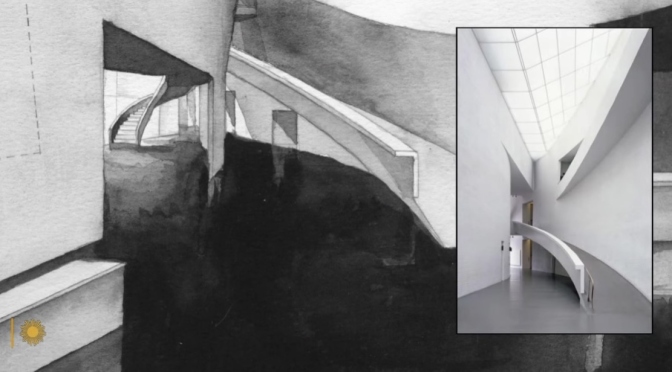
CBS Sunday Morning (January 29, 2023) – The works of architect Steven Holl have helped define the look of cities around the world, making remarkable use of light and space.
Correspondent Rita Braver talks with Holl, whose recent works include the REACH at the John F. Kennedy Center for the Performing Arts, in Washington, D.C., and the Kinder Building at The Museum of Fine Arts, Houston – buildings in which Holl hopes to express “the joy from the creative act.”
Steven Holl is a tenured Professor of Architecture who has taught at Columbia GSAPP since 1981. After completing architecture studies in Rome in 1970, the University of Washington in 1971, and graduate studies at London’s Architectural Association in 1976, Holl founded Steven Holl Architects in 1977. Based in New York City, the forty person firm also has an office in Beijing.
Steven Holl has realized cultural, civic, academic and residential projects both in the United States and internationally including the Kiasma Museum of Contemporary Art in Helsinki, Finland (1998); the Chapel of St. Ignatius, Seattle, Washington (1997); Simmons Hall at the Massachusetts Institute of Technology in Cambridge, Massachusetts (2002); the Nelson-Atkins Museum of Art in Kansas City, Missouri (2007); the Horizontal Skyscraper in Shenzhen, China (2009); the Linked Hybrid mixed-use complex in Beijing, China (2009); Cité de l’Océan et du Surf in Biarritz, France (2011); the Reid Building at the Glasgow School of Art, Glasgow, Scotland (2014); the Arts Building West and the Visual Arts Building at the University of Iowa in Iowa City, Iowa (2006, 2016); the Ex of IN House (2016); the Lewis Arts Complex at Princeton University in Princeton, New Jersey (2017); Maggie’s Centre Barts in London (2017); the Institute for Contemporary Art at Virginia Commonwealth University (2018); and the Glassell School of Art at the Museum of Fine Arts, Houston (2018). Upcoming work includes the REACH expansion of the John F. Kennedy Center for Performing Arts in Washington, D.C. (2019); the Winter Visual Arts Center at Franklin & Marshall College (2019); Rubenstein Commons at the Institute for Advanced Study in Princeton, New Jersey (2019); and the expansion of the Museum of Fine Arts, Houston (2020).
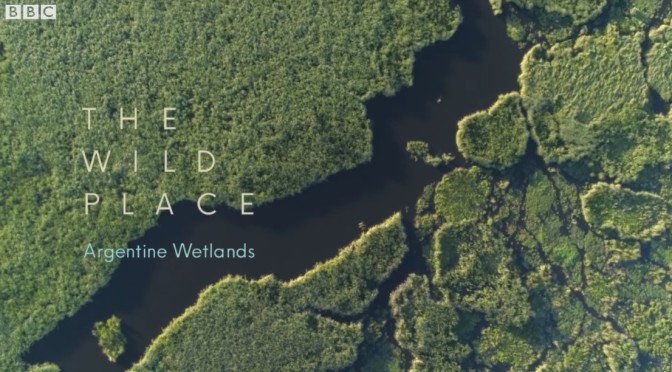
BBC Earth – It is one of the largest freshwater reservoirs on the South American continent. It is the largest protected area in Argentina, with 1.3 million hectares of pristine wilderness. Also referred to as Esteros del Iberá, the Iberá Wetlands stays true to its name with a spectacular offering of streams, marshes, lagoons and swamps that cover approximately 14 % of the Corrientes Province.
The wetlands are home to a staggering 4,000 plant and animal species, which make up 30 % of Argentina’s biodiversity. The indigenous communities of the wetlands inhabited the area as early as in the 9th century.
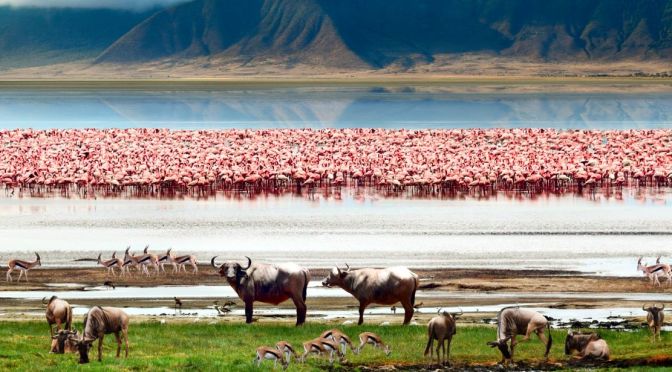
The Ngorongoro Conservation Area spans vast expanses of highland plains, savanna, savanna woodlands and forests. Established in 1959 as a multiple land use area, with wildlife coexisting with semi-nomadic Maasai pastoralists practicing traditional livestock grazing, it includes the spectacular Ngorongoro Crater, the world’s largest caldera.
Video highlights: 00:14 – Giraffes walking on the planes 01:11 – Buffalos walking up the hill 02:28 – Zebras walking near a road 03:44 – Hyeana searching for prey
The property has global importance for biodiversity conservation due to the presence of globally threatened species, the density of wildlife inhabiting the area, and the annual migration of wildebeest, zebra, gazelles and other animals into the northern plains. Extensive archaeological research has also yielded a long sequence of evidence of human evolution and human-environment dynamics, including early hominid footprints dating back 3.6 million years.











 Boomers Daily