
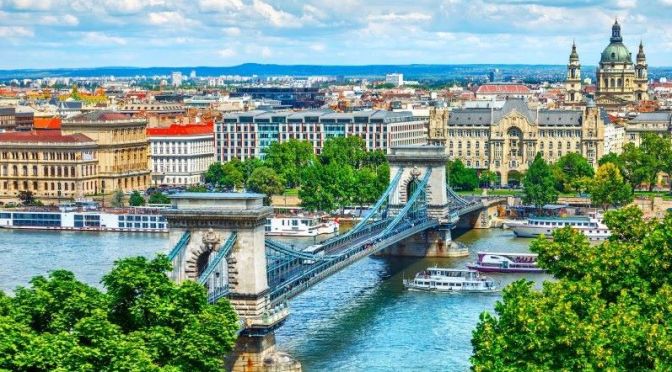
Budapest, Hungary’s capital, is bisected by the River Danube. Its 19th-century Chain Bridge connects the hilly Buda district with flat Pest. A funicular runs up Castle Hill to Buda’s Old Town, where the Budapest History Museum traces city life from Roman times onward. Trinity Square is home to 13th-century Matthias Church and the turrets of the Fishermen’s Bastion, which offer sweeping views.
Videos
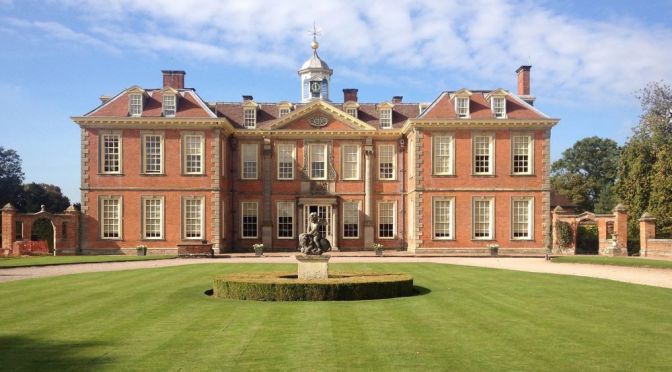
Tours: The Gardens At Hanbury Hall In England
The gardens at Hanbury Hall in Worcestershire are thought to be one of the most faithful recreations of the formal style used by 18th-century garden designer George London.
Watch this video to find out how the National Trust has created a sunken parterre, bowling green and veg garden using plans made in 1730. You’ll learn about how rhythmic planting scales, ordered planting and bare soil have been used to revive a long-forgotten style and approach.
The National Trust protects and cares for places so people and nature can thrive. Everyone can get involved, everyone can make a difference. Nature, beauty, history. For everyone, for ever.

Art: 17th Century French Classical Painter Michel Corneille The Elder
This remarkable painting by Michel Corneille the Elder has been hidden away from view for at least the past 110 years and is a truly exceptional rediscovery for French painting of the 17th century. After a recent restoration, the artist’s signature has been re-exposed so that now this impressive work can be confidently attributed to the early French Classicist.
This episode of Anatomy of a work of art, discover The Death of Virginia, taken from Roman historian Livy and recounts the death of Virginia, daughter of a centurion in the Roman army. This rediscovery will be one of the highlights of our sale Tableaux Dessins Sculptures 1300-1900, Session I, Including Treasures from the Antony Embden Collection.

Home Tour: Brighton East 4 In Melbourne, Australia
Complementing the Australian climate, Brighton East 4 is a mid-century inspired home crafted to meet the demands of a young family. Designed and built by Inform with architecture by Pleysier Perkins, the house takes inspiration from Palm Springs.
00:00 – Introduction to the Mid-Century Inspired Home 00:56 – The Client Brief 01:20 – Walking Through the Home 02:02 – Interior Design Style 02:43 – The Island Bench 03:04 – Colour Palette and Materiality 03:36 – Collaboration between the Client, Architect and Builder 04:06 – The Feel of the Home 04:41 – Successfully Meeting the Client Brief
Settled into the same-named Melbourne suburb, Brighton East 4 articulates quintessential Australian living. As a mid-century inspired home, the residence has an informal, open-plan layout and natural materiality, including the use of stone and timber.
Architecturally, Brighton East 4 curves, further evidencing its existence as a mid-century inspired home. Present in both the external and internal architecture, curves effortlessly unify the outdoor and indoor aspects of the home, creating fluidity and softness. Natural materials are a key feature of a mid-century inspired home and are incorporated throughout the project.
Behind the staircase sits a feature wall of stack-bond brickwork, whilst the bathroom sees terrazzo used generously. In the kitchen, the island bench sports an elegant stone top, with slatted timber battens at its base. Showcasing their proficiency in architecture and interiors, Inform and Pleysier Perkins craft a comfortable residence with a strong sense of spatial flow. As a mid-century inspired home, Brighton East 4 testifies to its Palm Springs influence through a natural and restrained materiality.
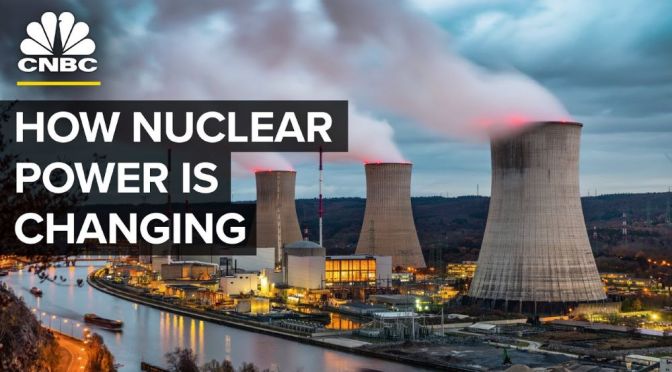
Analysis: How Nuclear Power Is Changing (CNBC)
For some, nuclear power may conjure images of mushroom clouds or bring back memories of disturbing nuclear disasters like Chernobyle and Fukushima. But despite public fear around nuclear power, the technology has proved to be an emission-free, reliable way to produce large amounts of electricity on a small footprint.
As a result, sentiments about the technology are beginning to change. Both the U.S. government and private companies including X Energy, NuScale and, Bill Gates-backed, TerraPower are pouring money into developing, what they say will be smaller, safer nuclear reactors. CNBC visited Idaho National Laboratory to see the Marvel microreactor firsthand and learn what such developments could mean for the future of nuclear power.
After humankind discovered nuclear fission, the first applied use was the atomic bomb. The study of fission for electricity production came later. In December 1953, President Dwight D. Eisenhower gave his fateful Atoms for Peace speech, an impassioned plea to reconstitute the power of the atomic bombs dropped in World War II for a more noble cause.
“Against the dark background of the atomic bomb, the United States does not wish merely to present strength, but also the desire and the hope for peace,” Eisenhower told the United Nations. Almost 70 years later, the tension between those end uses still underlies the space today. From the 1950s through the 1970s, the United States dramatically increased its nuclear energy generation.
But the Three Mile Island accident in 1979 and Chornobyl meltdown in 1986 changed the landscape, spurring fear that nuclear energy could not be controlled safely. Since the 1980s, nuclear energy capacity and generation in the U.S. has largely stayed flat. Today, the country’s fleet of nuclear power reactors produces only 19% of the country’s electricity, according to the government’s Energy Information Administration.
In more recent times, the Fukushima Daiichi accident in Japan in 2011 — and earlier this year the capture of nuclear power plants in Ukraine by invading Russian forces — have added to public concerns. But despite its fraught origin story and the psychological effect of high-profile accidents, nuclear energy is getting a second look. That’s largely because nuclear energy is clean energy, releasing no greenhouse gasses.
Meanwhile, the world is seeing more of the effects of climate change, including rising global temperatures, increased pollution, wildfires, and more intense and deadly storms. “We need to change course — now — and end our senseless and suicidal war against nature,” Antonio Guterres, the secretary-general of the United Nations, said in Stockholm on Thursday. “There is one thing that threatens all our progress. The climate crisis. Unless we act now, we will not have a livable planet,” Guterres said. “Scientists recently reported that there is a 50-50 chance that we could temporarily breach the Paris Agreement limit of 1.5 degrees Celsius in the next five years.”

Aerial Views: Piraeus In Eastern Greece (4K)
Piraeus is a port city in the Athens-Pireaus urban area Greece. It is located, eight kilometres southwest of Athens’ city centre, along the east coast of the Saronic Gulf.

Wildlife Views: Evolution Of Marine Iquanas (Video)
Marine iguanas are the only modern lizards that hunt for food above and below water. Due to natural selection, they have adapted to survive in deep underwater meadows. With the ability to hold their breath for half an hour and sharpen their claws to grip slippery rocks, they are able to thrive in the chilly underwater temperatures that many cold-blooded reptiles could not survive.
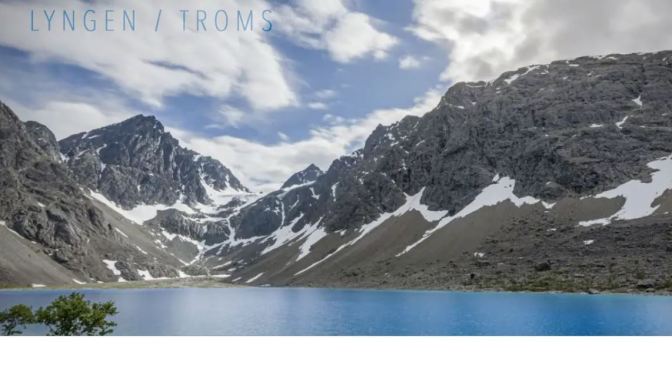
Aerial Views: Landscapes & Waterways Of Finland (4K)
Finland is a Northern European nation bordering Sweden, Norway and Russia. Its capital, Helsinki, occupies a peninsula and surrounding islands in the Baltic Sea. Helsinki is home to the 18th-century sea fortress Suomenlinna, the fashionable Design District and diverse museums. The Northern Lights can be seen from the country’s Arctic Lapland province, a vast wilderness with national parks and ski resorts.
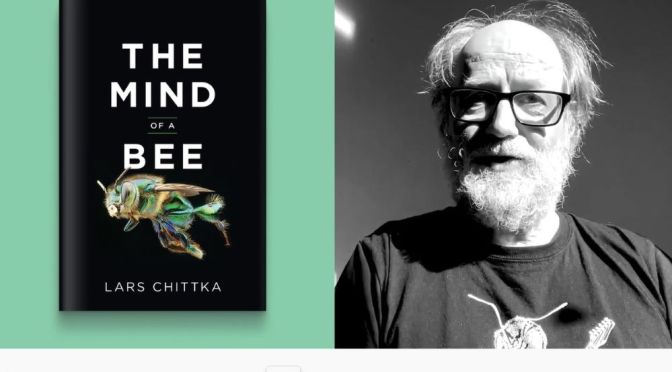
New Books: ‘The Mind Of A Bee’ – Lars Chittka (2022)
Most of us are aware of the hive mind—the power of bees as an amazing collective. But do we know how uniquely intelligent bees are as individuals? In The Mind of a Bee, Lars Chittka draws from decades of research, including his own pioneering work, to argue that bees have remarkable cognitive abilities.
He shows that they are profoundly smart, have distinct personalities, can recognize flowers and human faces, exhibit basic emotions, count, use simple tools, solve problems, and learn by observing others. They may even possess consciousness. Taking readers deep into the sensory world of bees, Chittka illustrates how bee brains are unparalleled in the animal kingdom in terms of how much sophisticated material is packed into their tiny nervous systems.
He looks at their innate behaviors and the ways their evolution as foragers may have contributed to their keen spatial memory. Chittka also examines the psychological differences between bees and the ethical dilemmas that arise in conservation and laboratory settings because bees feel and think. Throughout, he touches on the fascinating history behind the study of bee behavior. Exploring an insect whose sensory experiences rival those of humans, The Mind of a Bee reveals the singular abilities of some of the world’s most incredible creatures.
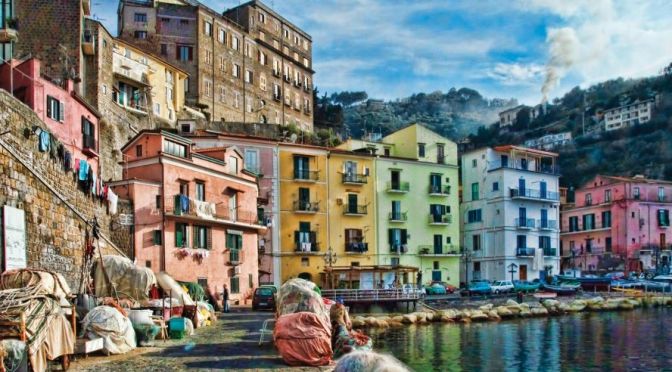
Walking Tour: Sorrento In Southwestern Italy
Sorrento is a coastal town in southwestern Italy, facing the Bay of Naples on the Sorrentine Peninsula. Perched atop cliffs that separate the town from its busy marinas, it’s known for sweeping water views and Piazza Tasso, a cafe-lined square. The historic center is a warren of narrow alleys that’s home to the Chiesa di San Francesco, a 14th-century church with a tranquil cloister.
 Boomers Daily