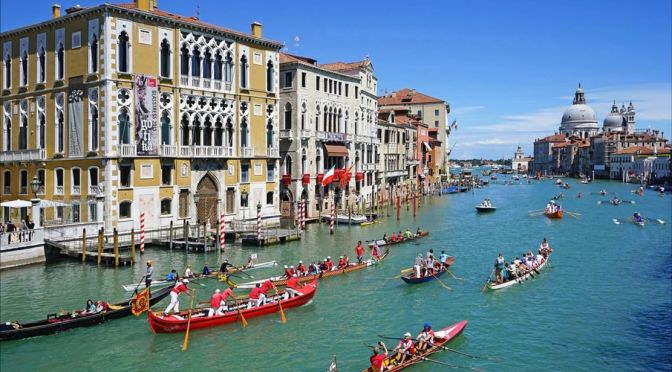
The Vogalonga is a non-competitive celebration for all rowers. This peaceful protest against wave damage caused by motor boats, and lagoon degeneration, brings together Venetians and enthusiasts from around the world.
The naval review Vogalonga is held, yearly, in Venice on the Pentecost Day. The Vogalonga which started in 1975 by the local rowing clubs as a protest against the wash and the waves created by the ever increasing number of motor boats in the city and the lagoon. More than 400 boats in various kinds and sizes from 50 Venice’s clubs and private boats from all over the world participate in this wonderful event.
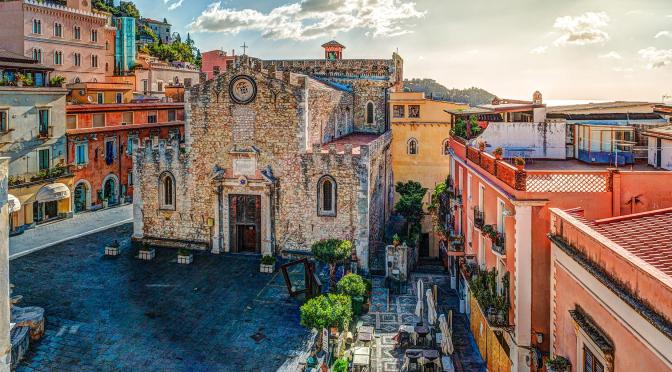
Taormina is a hilltop town on the east coast of Sicily. It sits near Mount Etna, an active volcano with trails leading to the summit. The town is known for the Teatro Antico di Taormina, an ancient Greco-Roman theater still used today. Near the theater, cliffs drop to the sea forming coves with sandy beaches. A narrow stretch of sand connects to Isola Bella, a tiny island and nature reserve.
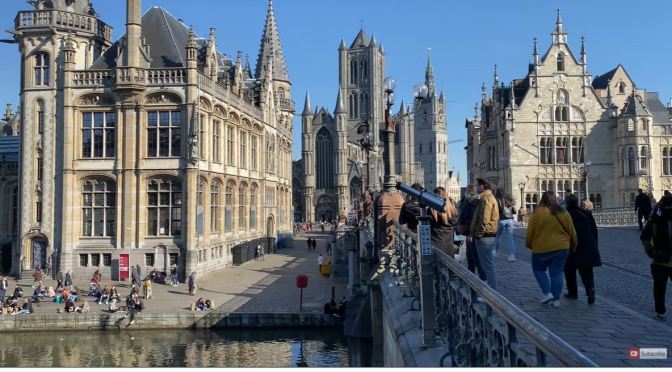
Ghent is a port city in northwest Belgium, at the confluence of the Leie and Scheldt rivers. During the Middle Ages it was a prominent city-state. Today it’s a university town and cultural hub. Its pedestrianized center is known for medieval architecture such as 12th-century Gravensteen castle and the Graslei, a row of guildhalls beside the Leie river harbor.
Seattle, a city on Puget Sound in the Pacific Northwest, is surrounded by water, mountains and evergreen forests, and contains thousands of acres of parkland. Washington State’s largest city, it’s home to a large tech industry, with Microsoft and Amazon headquartered in its metropolitan area. The futuristic Space Needle, a 1962 World’s Fair legacy, is its most iconic landmark.
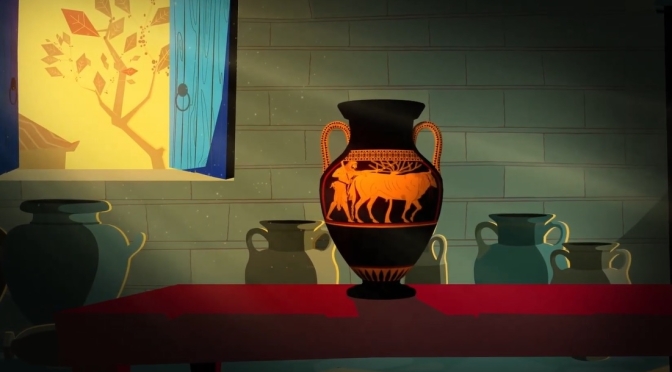
In this five-minute animated video, journey back to the 6th-century BCE workshop of the Athenian master Andokides and witness an ancient artist’s moment of creative ingenuity. For generations Athenian vase painters had employed black-figure technique, in which the figure is painted in a mixture of clay and water called slip and details are incised with a sharp tool.
At some point—we don’t know precisely when or why—a vase painter had the idea to reverse the scheme, leaving the figures the color of the clay and painting details with a brush. We now call this red-figure technique. Learn how ancient vase painters created vases in both styles and marvel at the technical virtuosity of the multi-step firing process that contributed to their distinctive, high-contrast look.
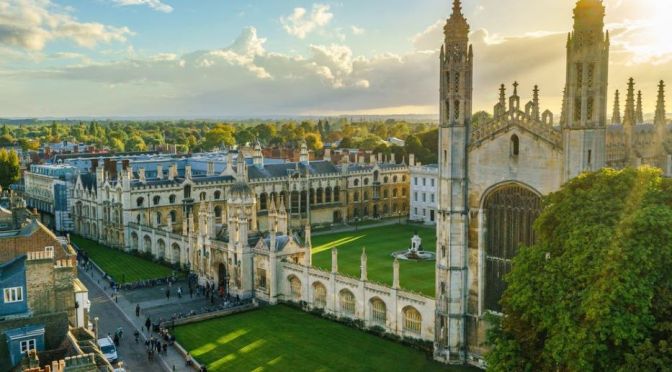
Cambridge is a city on the River Cam in eastern England, home to the prestigious University of Cambridge, dating to 1209. University colleges include King’s, famed for its choir and towering Gothic chapel, as well as Trinity, founded by Henry VIII, and St John’s, with its 16th-century Great Gate. University museums have exhibits on archaeology and anthropology, polar exploration, the history of science and zoology.
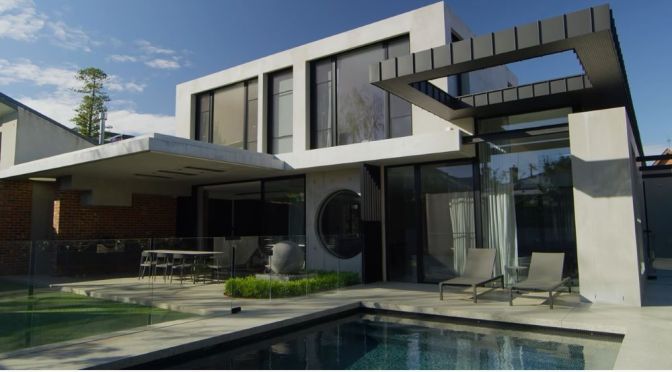
Evolving from a symmetrical design, Round Choreography is a playful geometric home with a familial tenor. With the architecture, interior design and build undertaken by mckimm, the forever house sees a clear design intent rigorously executed.
00:00 – Introduction to the Forever Home 00:38 – Designing with Unique Geometries 01:08 – In-Situ Concrete 01:40 – Intuitive Design 02:14 – Wellness and Gym Area 02:31 – Collaborative Approach to Design 03:28 – The Material Palette 04:07 – What the Architect’s Are Most Proud Of
Settled into the leafy suburb of Malvern, Round Choreography is named in homage to the original floorplan of the home that flourished into the completed forever house. Geometric in nature, the interiors celebrate a circular motif, visible from the kitchen to the ensuite and the internal courtyard of the home’s lower level.
As architect, interior designer and builder, mckimm’s construction team had intimate knowledge of the design intent, enabling efficiency to undertake strenuous tasks to deliver the desired forever house. The unique frameless window in the living area is a particular triumph. The practical nature of the forever house extends to its materiality. mckimm chooses a durable palette comprised of concrete, timber and stone to express a commitment to longevity whilst celebrating aesthetic rawness.
Polished concrete flooring with hydronic heating meets walls of the same material, creating an architecturally consistent envelope. Designed in the knowledge that the clients are growing their family, Round Choreography captures the excitement of embedding oneself in a location. The light-filled forever house marks the beginning of family life.
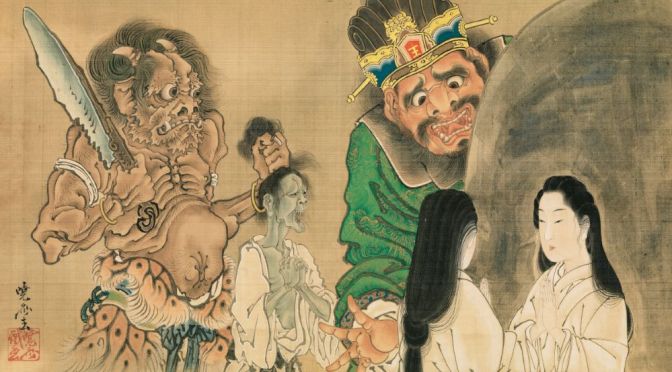
The Japanese painter Kawanabe Kyōsai (1831–1889) was one of the most innovative artists of his day. He lived during a turbulent time, experiencing the downfall of the Tokugawa shogunate (the hereditary military government) and the new imperial regime’s reforms to modernise and Westernise the country. Kyōsai’s drive to capture the world with his brush earned him the nickname ‘demon of painting’ – which he lived by.
Kyōsai, as a highly trained painter, was proficient in traditional methods and subjects. He broke with convention by blurring the established boundary between ‘serious’ and comic pictures. Traditionally, complex painting techniques were reserved for literary classics, historical and legendary figures, auspicious themes and religious images. Comic pictures were typically produced in a lighter, more fluid style.
Kyōsai often saw humour in ‘serious’ subjects and introduced comic and everyday content in highly finished, detailed paintings. The selection in this room demonstrates Kyōsai’s range and skill across diverse genres. Subjects include animals, monsters, ghosts, protective deities and Buddhist icons. Some paintings display powerful Kano-style ink techniques, others depict humorous creatures – recalling works by his first teacher, Utagawa Kuniyoshi, and referencing medieval picture scrolls. He can be seen exploring Western techniques such as perspective, shading and the study of anatomy, which attests to his insatiable curiosity and desire to push beyond tradition.
Kyōsai had a keen interest in society, and captured contemporary events in his pictures with humour and piquancy. His satirical prints from the 1860s, the period leading up to the collapse of the shogunate regime, reflect widespread anxiety about the political turmoil, economic instability and foreign presence. He channelled the febrile atmosphere into dynamic images of frog battles, monster parties and wildly dancing tengu (mischievous, semi-human creatures). Under the new Meiji government, the sudden influx of Western-style culture greatly shocked many Japanese, after over 260 years of relative isolation.
Kyōsai’s comic pictures express both the excitement of the new era, with modern technologies such as the telegraph and trains, and a certain scepticism towards those who blindly followed the new trends. The government’s policy of hiring European and American specialists to teach at new institutions in Japan brought the painter a personal benefit. The British architect Josiah Conder (1852–1920) became his pupil around 1881, and remained a student, patron and friend until Kyōsai’s death in 1889.
In nineteenth-century Japan, artists often produced works impromptu in front of an audience. The creative process was appreciated as a performance. At commercially organised calligraphy and painting parties called shogakai, attendees would pay for admission, and once inside, could ask the artists to create works for them at no extra charge. These gatherings were frequently a platform for collaboration. Multiple painters would complete a picture together or a calligrapher would inscribe a poem by the painter’s work. Kyōsai often depicted a scene of art viewing, and the artworks within the image would be painted by other artists.
Collaboration has always been an important part of the creative process in Japan, among artist friends or between teacher and pupils, sharing and marking the occasion. Event flyers, newspaper articles and anecdotes attest that Kyōsai was famous for his speedy, skilful and witty performances. The parties involved copious alcohol. Kyōsai loved saké and his brush became even more playful and expressive when intoxicated. Josiah Conder wrote in his master’s obituary: ‘under the influence of BACCHUS some of his strangest fancies, freshest conceptions and boldest touches were inspired.’
Brașov is a city in the Transylvania region of Romania, ringed by the Carpathian Mountains. It’s known for its medieval Saxon walls and bastions, the towering Gothic-style Black Church and lively cafes. Piaţa Sfatului (Council Square) in the cobbled old town is surrounded by colorful baroque buildings and is home to the Casa Sfatului, a former town hall turned local history museum.
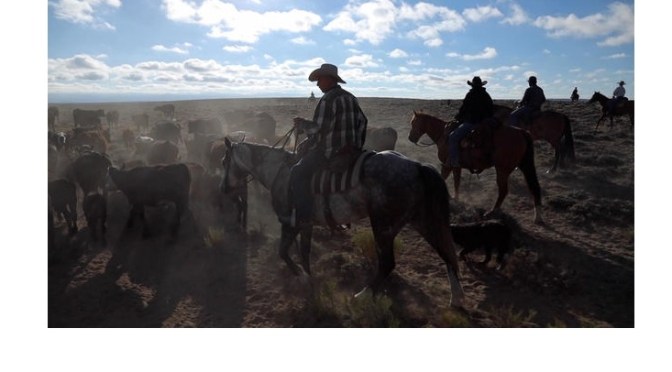
Bill Whitaker saddles up for one of the last enduring symbols of the Old West, a Wyoming cattle drive that travels the same route pioneered 125 years ago.
Upper Green River Valley, Wyoming
Predating most federal land management agencies, the Green River Drift cattle trail has been continuously used since the 1890s by the Upper Green River Cattle Association ranchers to get cattle from spring pasture on the desert to summer pasture in the forest. Chilly fall weather causes the cattle to “drift” back out of the forest to return to their home ranches. The trail, 58 miles long with 41 miles of spurs, crosses BLM, State of Wyoming, National Forest, and private properties. It has played a pivotal role in the development of ranching in the area as well as in the development of relationships between Federal agencies that manage grazing allotments and private property owners. The Drift was listed on the National Register in November, 2013. Because it is still being used much as it has for more than 100 years, the Drift was listed as a Traditional Cultural Property (TCP), the first ranching related TCP in the nation.
News, Views and Reviews For The Intellectually Curious


 Boomers Daily