Videos

Design: Seymour House In Melbourne, Australia

An Architect’s own home, Seymour House is inserted as a respectful addition to its neighbourhood, openly embracing the streetscape lined with heritage-listed properties and modernist gems. In crafting the dwelling, Lani Fixler of Lani Fixler Studio has created a place that is private and personal whilst also engaging in an open conversation with the surrounds.

Timeline: 00:00 – The Local Project Print Publication 00:10 – Creating a Family Home 00:40 – Introduction to the Home 01:25 – Entering the Modernist Home 02:04 – Walking through the Home 02:47 – The Bedrooms and Bathrooms 03:19 – Landscaping 03:40 – Courtyard Sculpture 03:54 – Artwork Throughout the Home 04:29 – What the Architect is Most Proud Of 05:00 – Subscribe to The Local Project Print Publication

Located in a south-eastern suburb of Melbourne, Seymour House is an architect’s own home that draws from Lani Fixler Studio’s long-standing familiarity with the built environment. The project is one that expertly merges personal responses with the contextual. In the construction of Seymour House, a connection to the street was important, as well as embracing the constricted site instead of challenging it. Sitting adjacent to Harleston Park, Seymour House is an architect’s own home crafted to be a continuation of its natural setting, with only two concrete plinths defining the barrier between the public and the private. Throughout the building, modernism is championed through a natural and restrained materiality with the use of concrete, terrazzo, timber and slate. The consistency with which the palette is applied – with blockwork featuring as both an internal and external architectural element – celebrates the environment surrounding an architect’s own home. Expressing considered detail and the characteristics of an architect’s own home, Seymour House is imbued with a sense of personality that uplifts its understated aesthetic. Crafted to complement the history and culture of the surrounding neighbourhood, Lani Fixler Studio graciously allows past narratives to continue as new chapters unfold.
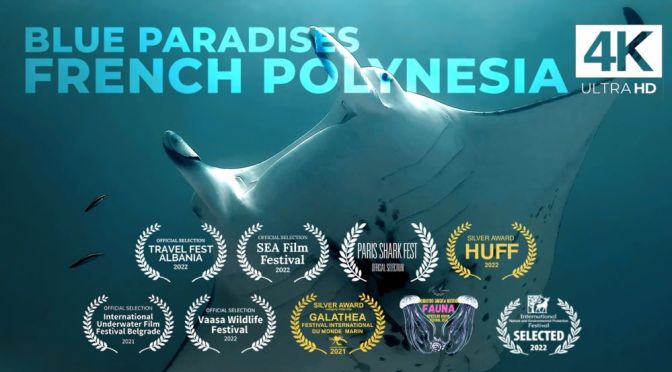
Views: The ‘Blue Paradises Of French Polynesia’ (4K)

Bora Bora, Fakarava, Ranguiroa, Tahiti, Tikehau, Moorea, Maupiti…

Our Odyssey through these islands and atolls is one of the most spectacular diving expeditions we have had the chance to do.
A crystal clear water (visbility can reach 45 meters), hundreds of different reef fish species, corals and pelagic, to sum up : an exceptional beauty both in terms of flora and fauna.

French Polynesia is known as the largest shark santuary in the world,
probably the only place in the world where you can see 6 species of sharks in a single dive : Grey reef sharks, Tiger sharks, Black-tip sharks, White-tip sharks, Nurse sharks and Lemon sharks. Yes! In a single dive.
The dives are mainly drifting because of the underwater topography of its passes, this is where the show begins, life is teeming: Hammerhead sharks, dolphins, school of barracuda, eagle rays, turtles, manta rays, marbled groupers, tuna, napoleons… We are not going to give you an exhaustive list, because there are around 800 species, I’ll let you imagine.
We dived into the main passes:Tiputa, Tumakohua, Garuae, Avatoru,… But the one that offered us the most beautiful spectacle is undoubtedly Tetamanu, the southern pass of Fakarava. Imagine yourself in front of a wall of 700 sharks (We were there the third week of June).
If you do not yet practice scuba diving, no worries, you can fully enjoy the beauties that French Polynesia has to offer by practicing snorkeling.
In the stunning lagoon of Moorea, you can snorkel with stingrays, black tip sharks and colorful fishes.

If French Polynesia benefits from a unique underwater environment, magnificent coral reefs and amazing lagoons, it is also an earthly paradise, not only for its majestic scenery or its dream beaches but above all for the kindness of the Polynesians (Tahitians).
So far we have mainly traveled to the Society Islands and the Tuamotus but we are planning to go in the Austral archipelago to swim with the
Humpback whales. Exploring Polynesia is the adventure of a lifetime, because it is the size of Europe.

Art Exhibits: ‘Cezanne’

This video offers a look at Cezanne’s unique approach to color, form, and space through specialized imaging of a few of the artist’s most influential works in the Art Institute’s collection: The Basket of Apples, The Three Skulls, and The Vase of Tulips.

Cezanne May 15, 2022–Sep 5, 2022 https://www.artic.edu/exhibitions/928…

Australian Architecture: A Tour Of Courtyard House Near Melbourne

Working with its signature material base, FGR Architects creates Courtyard House – a concrete dream house with a functional and airy interior. Shielded from the street, the minimalistic home enables natural ventilation and a sunlit landscape.

Timeline: 00:00 – The Client Brief for the Home 00:46 – Surprising Entryway 01:09 – A Sense of Intimacy from the Street 01:31 – Entering the Home 02:34 – Concrete Features 03:20 – Other Materials Used in the Home 04:03 – The Architect’s Favourite Part of the Home

A low-profile building, Courtyard House represents a structural shift from the local built environment; an intriguing blur in the pattern of gable-roof constructions. Set back in its site, the dream house embraces its contextual standing, opening its grounds to the natural northern sunlight.

Upon approach, the architecture of the dream house outlines a sequence of 90 degree turns that leads residents from the footpath to the front gate, then to the main entry of the home. The journey serves to introduce the idea of connectivity, echoed within the interior design. The layout of Courtyard House intentionally fosters passive solar heating and natural ventilation. A sightline directly connects the entrance of the dream house to the backyard, whilst large sliding doors join the living-kitchen-dining area to the outdoor space. Though unique and compelling, Courtyard House is ultimately understated. Demonstrating skill in concrete and light play, FGR Architects creates a practical and elegant dream house that enables an immersive natural connection.

Aerial Views: Landmarks & Landscapes Of Portugal

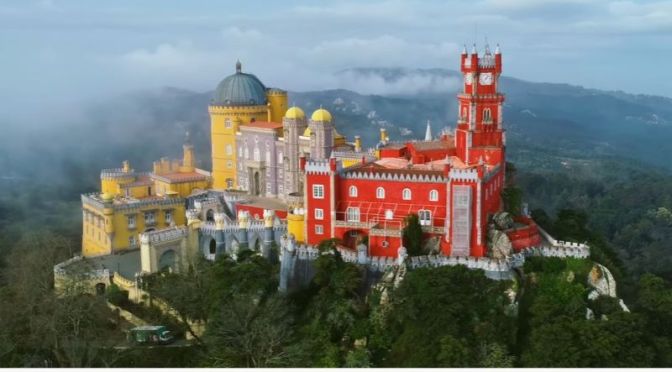
Portugal is a southern European country on the Iberian Peninsula, bordering Spain. Its location on the Atlantic Ocean has influenced many aspects of its culture: salt cod and grilled sardines are national dishes, the Algarve’s beaches are a major destination and much of the nation’s architecture dates to the 1500s–1800s, when Portugal had a powerful maritime empire. 

▶️ Highlights – Portugal 2022 0:00 ▶️ Silves 16:19 ▶️ Lagos 34:16 ▶️ Cabo Sordao 47:41 ▶️ Alcacer do Sal 1:01:17 ▶️ Costa Vicentina 1:34:01 ▶️ Sines 2:15:47 ▶️ Palma 2:33:35 ▶️ Poceirao 2:48:07 ▶️ Pont de Portimao 3:07:43

Aerial Views: Manhattan

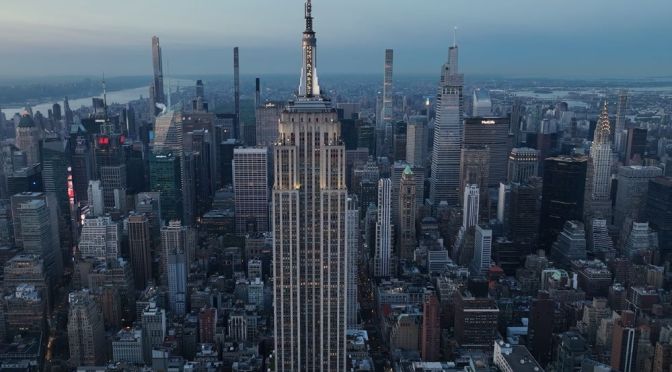
Manhattan is the most densely populated of New York City’s 5 boroughs. It’s mostly made up of Manhattan Island, bounded by the Hudson, East and Harlem rivers. Among the world’s major commercial, financial and cultural centers, it’s the heart of “the Big Apple.” Its iconic sites include skyscrapers such as the Empire State Building, neon-lit Times Square and the theaters of Broadway.

Island Views: Padulella Beach On Elba, Italy (4K)

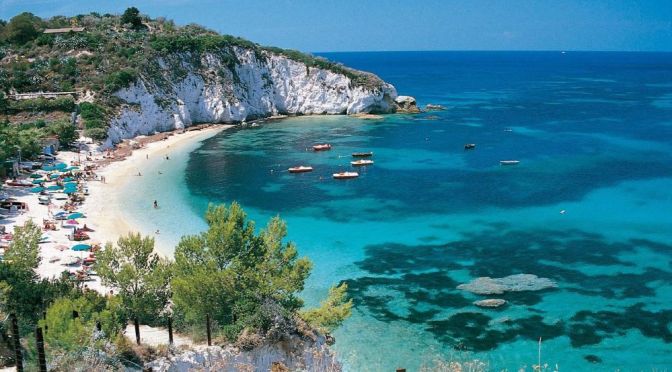
Padulella beach is one of the white-sands beaches to the north of Portoferraio, and thanks to its suggestive beauty is without a doubt one of the most popular beaches among both locals and tourists.

The beach is to the east of Punta di Capo Bianco that shelters it from winds from the west. To the right some cliffs separate it from Ghiaie beach and from Cala dei Frati beach.

The brilliant white of the tall cliffs all around the beach that seem to plunge right down into the water stand out against the crystal clear, turquoise colour of the sea. The beach faces north, so its beauty is even more enhanced when a southern wind is blowing because it makes the sea even clearer, and thanks to the white sea bed it goes from emerald green to turquoise and blue.

Healthy Living: Can The Aging Process Be Halted?

Can the aging process be reversed – or even halted, altogether? If we manage to decode this final mystery of our human biology, we might soon be able to eradicate age-related illnesses like cancer, dementia and heart problems. The race to invent the miracle pill is well underway.

Today, international researchers are getting astonishingly close to realizing humanity’s dream of immortality. The hunt for immortality gained traction with the discovery of Costa Rica’s so-called “Blue Zone,” by Luis Rosero-Bixby. In the “Blue Zone,” on the Nicoya Peninsular, he found a remarkable number of centenarians.

Here, male life expectancy is the highest in the world. Their healthy lifestyle is one factor, but the promise of longevity is probably also because their telomeres – sections of DNA found at the end of chromosomes – are longer than those of the average person. It’s a field of research currently being explored by Maria Blasco in Madrid.

But this is just one of many possible factors influencing the process of aging. Senescent cells may also play a key role. Also known as “zombie cells”, these attack our body in old age and flood it with alarm signals until, at some point, we collapse under their weight. That’s a theory proposed by another researcher in Spain, Manuel Serrano. A billion-dollar industry is already knocking impatiently at the lab doors.

The first to market the miracle pill is guaranteed incredible wealth. That’s why investors are sponsoring young bio-startups in Hong Kong. Keen not be left out, US Big Tech is vying for the world’s best scientists. Alex Zhavoronkov has secured a slice of that pie, with a cash injection of more than 250 million dollars for his company’s work on aging research. Whereas some pioneers’ visions burst like bubbles, others rush to get other, rather more dubious products onto the market. But their efficacy is now measurable.

The epigenetic clock devised by Steve Horvath can measure our biological age, regardless of our actual age in years. With his research on the thymus gland, California’s Greg Fahy managed to not only decelerate the aging process, but reverse it. His initial study on humans showed that a particular drug cocktail took an average two-and-a-half years off their age.

Young biohackers like Nina Khera from Boston want everyone to benefit from this research. Together with friends, she’s working on the “epigenetic clock for all”. But while we’re busy trying to counter the aging process and all the illnesses it entails, fundamental questions arise: Should we be messing with nature like this? Are we about to overwhelm the planet with more and more people? Criminal biologist Mark Benecke in Cologne says that these questions are coming far too late.