Humphrey Hawksley is an author, commentator and broadcasters. His work as a BBC foreign correspondent took him all over the world, giving him a global perspective that informs his writing.
His new book, ‘Man on Edge’, puts the reader at the centre of a geopolitical crisis in Moscow.
This week ‘Monocle 24 – The Stack’ speaks with Amy Astley, editor in chief of ‘Architectural Digest’. 2020 is the 100th anniversary of the founding of the magazine in 1920.
Amy Astley (born June 5, 1969) is the editor-in-chief of Architectural Digest as of May 2016. She was editor of Teen Vogue, which launched in January 2003. She was named to edit the new magazine in June 2002 by Anna Wintour, editor-in-chief of Vogue and editorial director of Teen Vogue.
In a year of plagues, power struggles and star-crossed lovers divided by lockdown, Anne McElvoy asks James Shapiro, author of “Shakespeare in a Divided America”, what the bard would make of it all. Shakespeare is claimed by Americans of all political stripes.
But how can a lad from 16th-century Stratford-upon-Avon illuminate the past and future of the republic now? Plus, what the president might teach the professor about Shakespeare’s work. And, Shapiro prescribes a verse for the trials and tribulations of 2020.
As states grapple with the question of when it will be safe to reopen businesses and relax social distancing, there’s increasing urgency to better understand who’s immune to Covid-19. Does having the virus and recovering mean you can’t get it again, or at least that you can’t be reinfected for some time?
No one yet has good answers to these questions. Kristen V. Brown looked into what we do, and don’t, know about the science of coronavirus immunity.
This week, how the ‘sniff-response’ can help clinicians determine a patient’s state of consciousness, and how vaccines could help drive down antibiotic use.
In this episode:
00:45 Sniffing out consciousness
Researchers have found that the sniff reflex can indicate whether a patient is in a vegetative state, and even the likelihood that they will recover consciousness. Research Article: Arzi et al.
Looking at data from low- and middle-income countries, researchers have determined that vaccination could prevent millions of infections currently treated by antibiotics. Research Article: Lewnard et al.
Novelist and art writer Olivia Laing tells Robert Bound about ‘Funny Weather: Art in an Emergency’, her new collection of essays, columns and character studies from the past decade.
Funny Weather brings together a career’s worth of Laing’s writing about art and culture, and their role in our political and emotional lives. She profiles Jean-Michel Basquiat and Georgia O’Keeffe, interviews Hilary Mantel and Ali Smith, writes love letters to David Bowie and Wolfgang Tillmans, and explores loneliness and technology, women and alcohol, sex and the body. With characteristic originality and compassion, Funny Weather celebrates art as an antidote to a terrifying political moment.
Olivia Laing is a widely acclaimed writer and critic. She’s a Fellow of the Royal Society of Literature and in 2018 was awarded the Windham-Campbell Prize for non-fiction. She’s the author of To the River, The Trip to Echo Spring and The Lonely City, which has been translated into 17 languages and sold over 100,000 copies worldwide.
Her latest book is Crudo, a real-time novel about the turbulent summer of 2017. It was a Sunday Times top ten bestseller and a New York Times notable book of 2018 and was shortlisted for the Goldsmiths Prize and the Gordon Burn Prize. In 2019 it won the 100th James Tait Black Memorial Prize.
Laing’s writing about art & culture appears in the Guardian, Financial Times and frieze, among many other publications.
Her collected essays, Funny Weather: Art in an Emergency, will be published on 16 April 2020. She’s currently working on Everybody, a book about bodies & freedom.
A selection of three essential articles read aloud from the latest issue of The Economist. This week, how will governments cope with the expensive legacy of covid-19? (11:05), unscrupulous autocrats in the pandemic of power grabs (17:52), and, why Netflix’s success will continue. Zanny Minton Beddoes hosts.
Health journalist Judy Foreman talks about her new book Exercise Is Medicine: How Physical Activity Boosts Health and Slows Aging
This is Scientific American’s Science Talk, posted on April 24th, 2020. I’m Steve Mirsky. And under our current, often locked-down situation, it’s still really important to try to get some exercise. Judy Foreman is the author of the new book Exercise is Medicine: How Physical Activity Boosts Health and Slows Aging. She’s a former nationally syndicated health columnist for the Boston Globe, LA times, Baltimore Sun and other places, and an author for the Oxford University Press.
Judy Foreman is the author of “A Nation in Pain” (2014), “The Global Pain Crisis” (2017), and “Exercise is Medicine,” (2020), all published by Oxford University Press, and was a staff writer at The Boston Globe for 22 years and the health columnist for many of these years. Her column was syndicated in national and international outlets including the Los Angeles Times, Dallas Morning News, Baltimore Sun and others.
She graduated Phi Beta Kappa from Wellesley College and has a Master’s from the Harvard Graduate School of Education. She was a Lecturer on Medicine at Harvard Medical School, a Fellow in Medical Ethics at Harvard Medical School and a Knight Science Journalism Fellow at the Massachusetts Institute of Technology. She spent six months as a guest reporter for The Times of London. She was also a Senior Fellow at the Schuster Institute for Investigative Journalism at Brandeis University. She was also host of a live, weekly call-in radio show on Healthtalk.com.
Judy has won more than 50 journalism awards, including a 1998 George Foster Peabody award for co-writing a video documentary about a young woman dying of breast cancer and the 2015 Science in Society award from the National Association of Science Writers.
Ventilators have become prized in hospitals across the U.S. and beyond because they are desperately needed to treat very ill Covid-19 patients. But they are also feared for the damage they can inflict, and for the slim odds of survival they offer.
Michelle Fay Cortez and Olivia Carville report that it’s not yet clear what the long-term consequences ventilators have for those lucky enough to recover after having been on one.
Benjamin Thompson, Noah Baker, and Amy Maxmen discuss the role of antibody tests in controlling the pandemic, and how public-health spending could curtail an economic crisis. Also on the show, the open hardware community’s efforts to produce medical equipment.
In this episode:
02:08 Betting on antibodies
Antibody tests could play a key role in understanding how the virus has spread through populations, and in ending lockdowns. We discuss concerns over their reliability, how they could be used, and the tantalising possibility of immunity.
Jim Yong Kim, former president of the World Bank, argues that strong investment in public health is crucial to halt the ongoing pandemic and to prevent a global financial crisis. We discuss his work with US governors to massively increase contact tracing, and his thoughts on how researchers can help steer political thinking.
Our hosts talk about staying positive, and pick a few things that have made them smile in the last 7 days, including a tiny addition to the team, a newspaper produced by children in lockdown, and a gardening update.
Researchers are stepping up efforts to design and produce ventilators and personal protective equipment for frontline medical staff. We hear how the open hardware movement is aiding these efforts, and the regulations that teams need to consider if their designs are to make it into use.
News, Views and Reviews For The Intellectually Curious

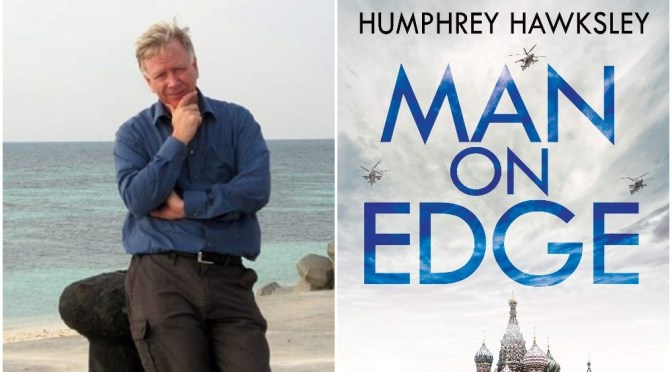
 Humphrey Hawksley is an author, commentator and broadcasters. His work as a BBC foreign correspondent took him all over the world, giving him a global perspective that informs his writing.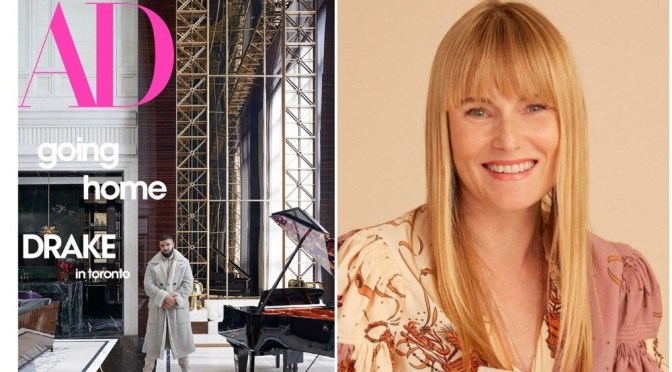
 This week ‘Monocle 24 – The Stack’ speaks with Amy Astley, editor in chief of ‘Architectural Digest’. 2020 is the 100th anniversary of the founding of the magazine in 1920.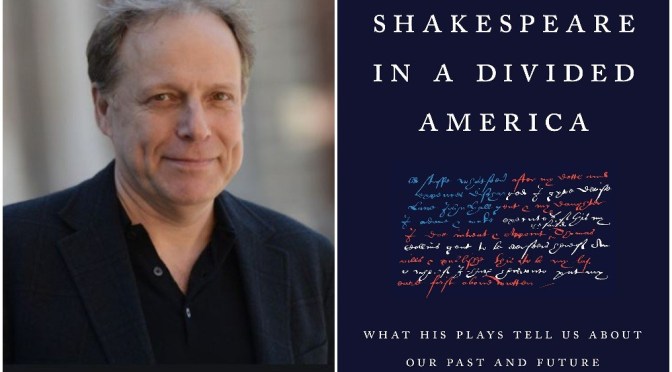
 In a year of plagues, power struggles and star-crossed lovers divided by lockdown, Anne McElvoy asks James Shapiro, author of “Shakespeare in a Divided America”, what the bard would make of it all. Shakespeare is claimed by Americans of all political stripes.
 As states grapple with the question of when it will be safe to reopen businesses and relax social distancing, there’s increasing urgency to better understand who’s immune to Covid-19. Does having the virus and recovering mean you can’t get it again, or at least that you can’t be reinfected for some time?
 This week, how the ‘sniff-response’ can help clinicians determine a patient’s state of consciousness, and how vaccines could help drive down antibiotic use.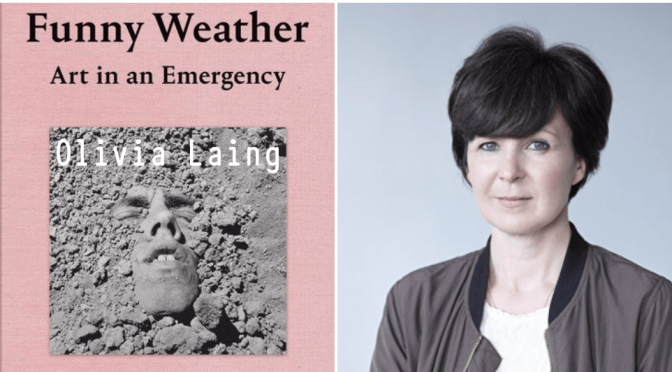
 Novelist and art writer Olivia Laing tells Robert Bound about ‘Funny Weather: Art in an Emergency’, her new collection of essays, columns and character studies from the past decade.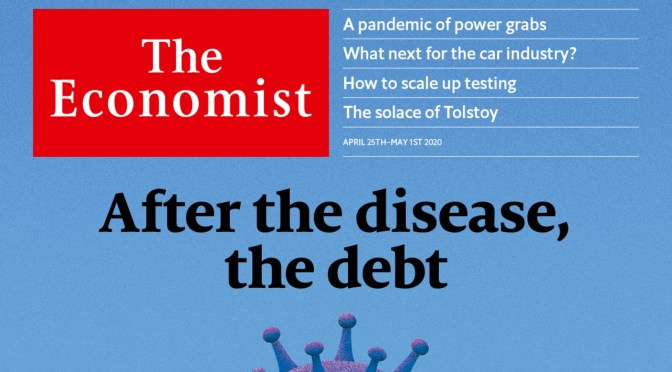
 A selection of three essential articles read aloud from the latest issue of The Economist. This week, how will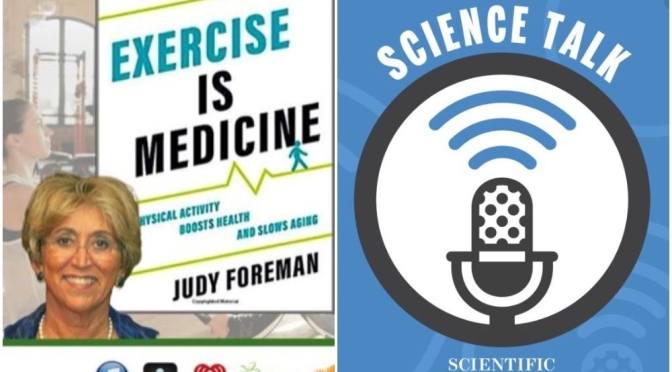
 Health journalist Judy Foreman talks about her new book Exercise Is Medicine: How Physical Activity Boosts Health and Slows Aging
 This is Scientific American’s Science Talk, posted on April 24th, 2020. I’m Steve Mirsky. And under our current, often locked-down situation, it’s still really important to try to get some exercise. Judy Foreman is the author of the new book Exercise is Medicine: How Physical Activity Boosts Health and Slows Aging. She’s a former nationally syndicated health columnist for the Boston Globe, LA times, Baltimore Sun and other places, and an author for the Oxford University Press.
 Benjamin Thompson, Noah Baker, and Amy Maxmen discuss the role of antibody tests in controlling the pandemic, and how public-health spending could curtail an economic crisis. Also on the show, the open hardware community’s efforts to produce medical equipment.
 Boomers Daily