Israel’s Prime Minister Benjamin Netanyahu was in Washington yesterday to commemorate new peace accords with UAE and Bahrain – the first Arab states in a quarter century to normalize relations with Israel.
The peace accords between the Unite Arab Emirates and Israel could have major impacts on the future of the region, including possible compromises on Palestine and annexation of the West Bank.
Plus, what the civil disorder following the Black Lives Matter protests cost the insurance industry.
And, tips to ease Zoom fatigue.
Guests: Axios’ Jennifer Kingson, Eric Pandey and contributor Barak Ravid.
This Morning With Gordon Deal reports: At least 35 dead as fires continue to rage across the west, the Gulf Coast braces for Tropical Storm Sally and how to build a resilient business during a pandemic.
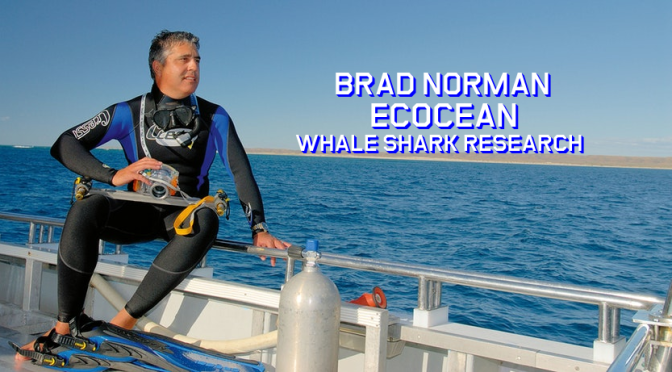
The whale shark is the largest fish in the world, recognisable by its celestial markings. Australian scientist Brad Norman has been tracking this elusive and endangered creature by using technology designed to study stars, as well as images collected through ecotourism.
ECOCEAN (Australia) is a globally recognised, non-government, not-for-profit organization based in Western Australia working towards scientific research, education and conservation of the marine environment. It’s flagship species, the whale shark, is an iconic animal for marine conservation being the world’s largest fish.
ECOCEAN (Australia) was founded in 1995 by marine conservation biologist Brad Norman and was incorporated in 2006. Brad also helped in the establishment of the partner organisation WildMe (USA) who manage the global whale shark photo-identification library – Wildbook.
First up this week, Senior Correspondent Daniel Clery talks with host Sarah Crespi about how Breakthrough Listen—a privately funded initiative that aims to spend $100 million over 10 years to find extraterrestrial intelligent life—has changed the hunt for alien intelligence.
And as part of a special issue on the Genotype-Tissue Expression (GTEx) project, Brandon Pierce, a professor in the Departments of Public Health Sciences and Human Genetics at the University of Chicago, joins Sarah to discuss his group’s work on variation in the protective caps at the end of our chromosomes. The gradual shortening of these caps, also known as telomeres, has been associated with aging. Read more from the GTEx special issue.
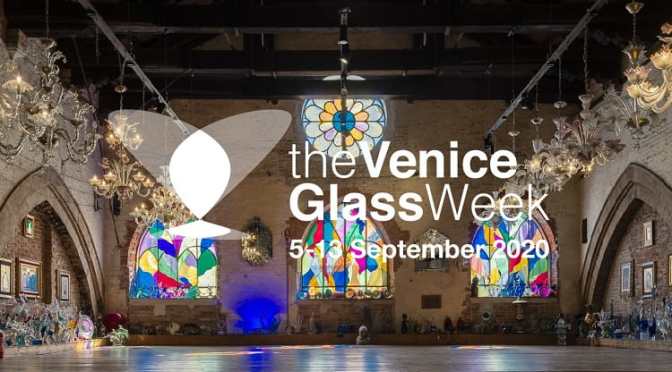
Monocle On Design: Looking for a crystal-clear take on Venice Glass Week? Monocle’s Ed Stocker checks in with WonderGlass, the brand that bonds traditional Italian craftsmanship with contemporary design.
WonderGlass bonds traditional craftsmanship with contemporary design, providing tailor-made solutions to the worlds of architecture, art and fashion – telling a story through our creations we aim to bring individuals into a delightful WonderLand. A surrealistic and dreamlike atmosphere which creates a seamless landscape of lighting, subtle colours and visual elements forming a world that captures people’s imagination.
Founded in 2013, Christian and Maurizio Mussati built their brand through bespoke glass lighting and installations handcrafted in Murano, working with renowned creative minds including Zaha Hadid, Jaime Hayon, India Mahdavi, John Pawson, Nao Tamura, Marcel Wanders, Dan Yeffet and Hideki Yoshimoto.
Now working with their team of WonderLab artisans in the Venetian region and collaborating with leading names in design and architecture such as Ronan & Erwan Bouroullec, nendo, RML (Ana Meier & Hervé Descottes) and WOHA architects – WonderGlass offers architects, artists, developers, hotel designers and museums the opportunity to incorporate artisanal creations into projects of any scale.
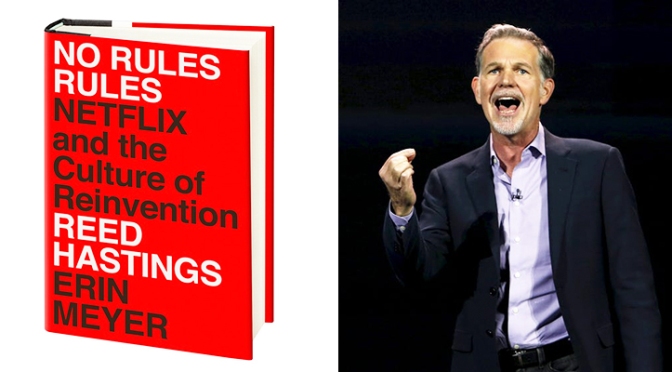
Netflix has had a blockbuster year as lockdowns supercharged subscriptions. But competition is intensifying and the American streaming market is close to saturation. Anne McElvoy asks the company’s co-founder and co-CEO how much more Netflix can still grow.
How does he respond to the charge that its data-driven entertainment is creating a monoculture? And, why he envies the BBC but fears Disney.
Extreme heat and 50 mile per hour wind gusts are fueling major fires across 11 Western States. Two towns in Oregon are completely burned down. Also, the president told famous Watergate journalist Bob Woodward in early February that he believed coronavirus was “deadly” despite offering reassuring public statements.
And, a whistleblower at the Department of Homeland Security says he was ordered to alter intelligence reports on white supremacists, Russia and China, all to please the president.
Nature looks at: Keeping electronics from overheating, Covid-19 changes, and how to include minority populations in genetic analyses.
In this episode:
00:46 Cool computers
Keeping components cool is a major hurdle when it comes to increasing electronic power. This week, we find out about a new way to integrate tiny microfluidic channels directly into circuits, to help keep them cool. Research Article: van Erp et al.
06:57 Coronapod
By comparing coronavirus genomes taken from people around the world, researchers are getting an idea of how SARS-CoV-2 is changing as it spreads. We discuss a particular genetic mutation that rapidly became dominant early in the pandemic, and the effect it may have had on the outbreak. News: The coronavirus is mutating — does it matter?
Minority populations are often underrepresented in genetic study recruitment. However, even when data about them is collected it may go unused. We find out why, and what can be done about it. Comment: Don’t ignore genetic data from minority populations















 Boomers Daily