Even if the waterway reopened today, oil would take more than a month to reach consumers. The economic shock from the war in Iran could take far longer to ease.
President Trump and President Luiz Inácio Lula da Silva, who have had a rocky relationship, will meet for talks on security, trade and critical minerals.
Intelligence agents have privately warned of the potential of hybrid attacks from Iran-linked groups. But political leaders, including Chancellor Friedrich Merz, have publicly played down the risk.
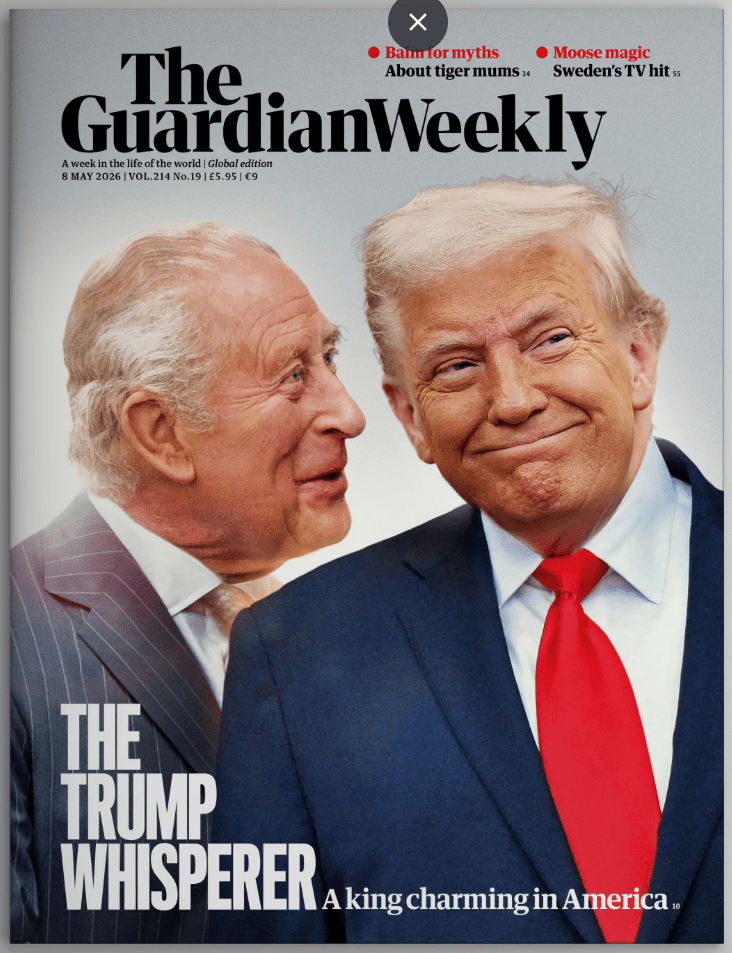
It’s fair to say that the Guardian Weekly does not cover many royal visits, but King Charles III’s US state visit was the most consequential of his reign so far. The king’s ostensible purpose was to celebrate America’s 250 years of independence but last week’s trip was freighted with other agendas, most important of which was to flatter his host, Donald Trump. Washington bureau chief David Smith’s cover story shows how “like a rapier wrapped in ermine, Charles managed to tame Trump while rebuking Trumpism”. Both David and our veteran foreign affairs commentator Simon Tisdall unpick the skill with which Charles spoke truth to this capricious and egotistical president and gave both sides of the heavily divided Congress much to praise. It was a performance of high diplomacy at a time of huge tension in the transatlantic relationship and beyond.
But the charm didn’t wash in New York where, as Adam Gabbatt’s sketch shows, the shadow of Jeffrey Epstein and Andrew Mountbatten-Windsor, Charles’s disgraced brother, lurked while the mayor, Zohran Mamdani, brought up the spectre of colonialism in the shape of the Koh-i-noor diamond, snatched under disputed circumstances.
Spotlight | A small town in Germany Landstuhl, the heart of the largest American military community outside the US, considers its future after Donald Trump’s decision to withdraw 5,000 troops, reports Deborah Cole
Environment | A gift of wings Patrick Barkham takes off for a flight of wonder with The Lost Words duo, who have reunited for a new book on endangered birds
Feature | A balm for tiger mother myths Rebecca Liu explores why a certain image of the tiger mum – strict, cold and demanding – is ubiquitous in popular culture
Opinion | Antiracists need to stand up for us all Another attack on the UK’s Jewish population demands a clear show of solidarity from those who march to protect minorities, argues Jonathan Freedland
Culture | Moose magic on the loose How do cameras capture Sweden’s seasonal TV hit, the Great Moose Migration? Malcolm Jack travels to an uninhabited island in the Ångerman river to ask the show’s makers
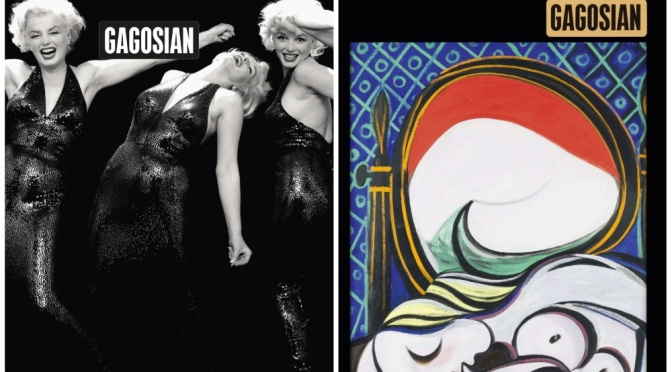
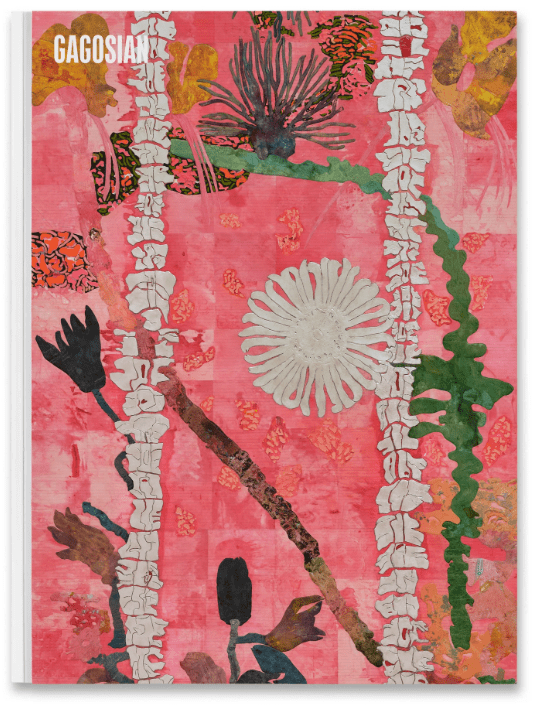
With the opening of the 61st Biennale di Venezia, a number of the magazine’s features engage with the history and contemporary culture of the storied city. Jenny Saville speaks with art historian Stefania Ventra to mark her major exhibition at Ca’ Pesaro–Galleria Internazionale d’Arte Moderna. In an essay bridging the Republic of Venice and the twenty-first century, Ben Street explores the timeless resonance of Giovanni Domenico Tiepolo’s tragicomic frescoes. And Nancy Spector discusses her bold pairing of Richard Prince and Arthur Jafa in an exhibition at the Fondazione Prada.
In the world of literature, Helen Oyeyemi shares the second installment of her fiction series As You Wish, Mary Gaitskill speaks with Jill Mulleady about their recent Picture Books collaboration inspired by Faust, Wyatt Allgeier interviews Andrew Durbin on the occasion of his new dual biography of Peter Hujar and Paul Thek, and Alana Pockros guides us through the refractive wonderlands of novelist Elaine Kraf.
Elsewhere in the issue, Carlos Valladares ponders Charli XCX’s mockumentary The Moment, Janne Sirén examines Anselm Kiefer’s mythological figures, and three luminaries from the worlds of design, fashion, and food—Ronan Bouroullec, Michèle Lamy, and Enrique Olvera—consider the furniture of Donald Judd.
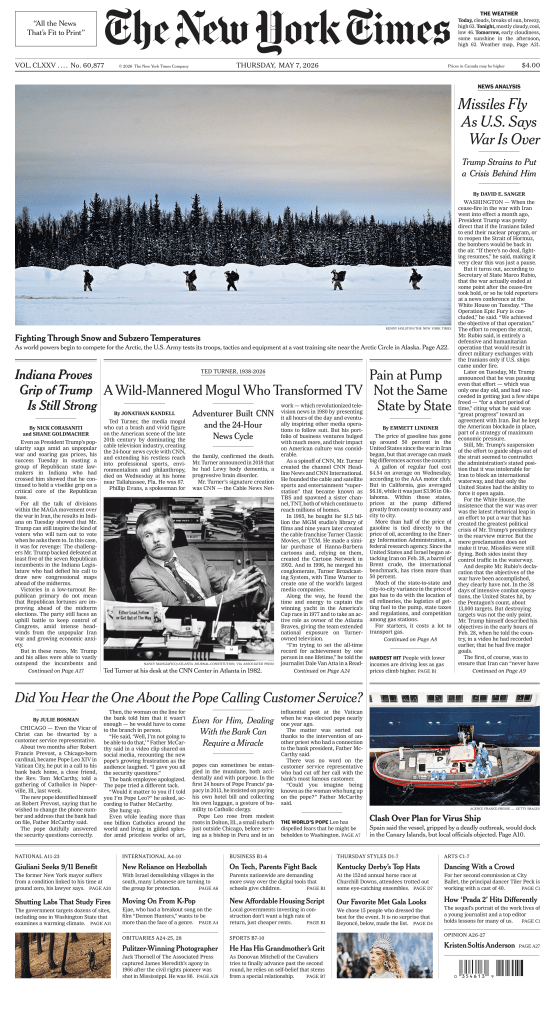
Oil prices fell sharply after President Trump announced there had been “great progress” toward a deal with Iran. The U.S. paused an operation to escort ships through the Strait of Hormuz.
Trump Promised Transparency in Venezuela, but Oil Secrets Linger
U.S. and Venezuelan officials have promised a new era of accountability after Nicolás Maduro’s downfall. But Venezuela’s oil industry remains a black hole.
Defense Secretary Pete Hegseth said U.S. naval efforts to escort ships through the strait were a defensive effort, after an Iranian official warned of escalation.
Secret Recordings, Hidden Shares and a Family Rift at South Korea’s LG
An inheritance dispute over the former chairman’s estate has prompted a criminal complaint over how the family behind the conglomerate divides its assets.
President Trump said the U.S. would help stranded ships leave the Strait of Hormuz. Iran threatened to attack vessels traveling through the waterway without its permission.
With President Trump’s visit to Beijing looming, China is pushing Iran to negotiate even as its companies export material that could be used by Iran’s military.
The election on Tuesday will test the influence of President Trump, who endorsed challengers to state senators who scuttled his push to redraw political maps.
The U.S. indictment of a Mexican governor has spotlighted cartel corruption, strained cross-border relations and handed President Claudia Sheinbaum a thorny choice.
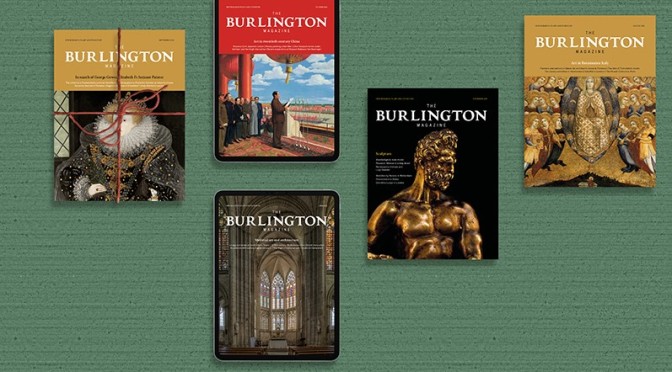
“The Consolidation of Collections: New Light on the 18th-Century British Art Market” An in-depth study by the editorial team and guest contributors exploring how major British estates restructured their private galleries during the mid-1700s. The article utilizes newly discovered ledger books to trace the provenance of several key Italian Baroque works.
“Paolo Veneziano and the International Gothic in Venice” Following the research trends seen in the early part of the year, this feature provides a technical analysis of recently restored altarpieces attributed to Veneziano, focusing on the use of ultramarine and gold leaf techniques that defined the Venetian style in the 14th century.
“Nicholas Lanier and the ‘Star’ Drawings: New Discoveries” Building on recent scholarship (featured in related symposiums), this article identifies several previously unrecognized drawings from the collection of Nicholas Lanier (1588–1666). It specifically examines the “star-shaped marks” used by Lanier and his uncle Jerome to catalog their sixteenth-century Italian acquisitions.
Editorial and Shorter Notices Editorial: “The Future of Art History in the Digital Age” Editor Christopher Baker discusses the balance between traditional archival research and the integration of AI and digital imaging in art historical authentication.
Object in Focus: “George Frederic Watts’s Satan (1847)” A specialized notice providing a new interpretation of Watts’s massive canvas. The author argues that the figure’s pose was inspired by the Monte Cavallo Horse Tamers in Rome rather than the Apollo Belvedere, as previously thought.
Exhibition and Book Reviews The Farnese Gallery Drawings (Musée du Louvre, Paris): A critical review by Ketty Gottardo on the exhibition focusing on the Carracci brothers’ preparatory works.
Studio Prints: A History, 1968–2011: A review of the new publication by Paul Holberton Publishing, detailing the impact of the London workshop on 20th-century printmaking.
Modernizing the Catalog: A review of the Patek Philippe exhibition and the intersection of fine horology with decorative arts history.
President Trump’s push to punish political enemies in his party will play a starring role in a series of Republican primaries in which he’s backed challengers.
Three representatives who had a hand in forcing the resignations of lawmakers accused of sexual misconduct said they were out to name and shame more offenders.
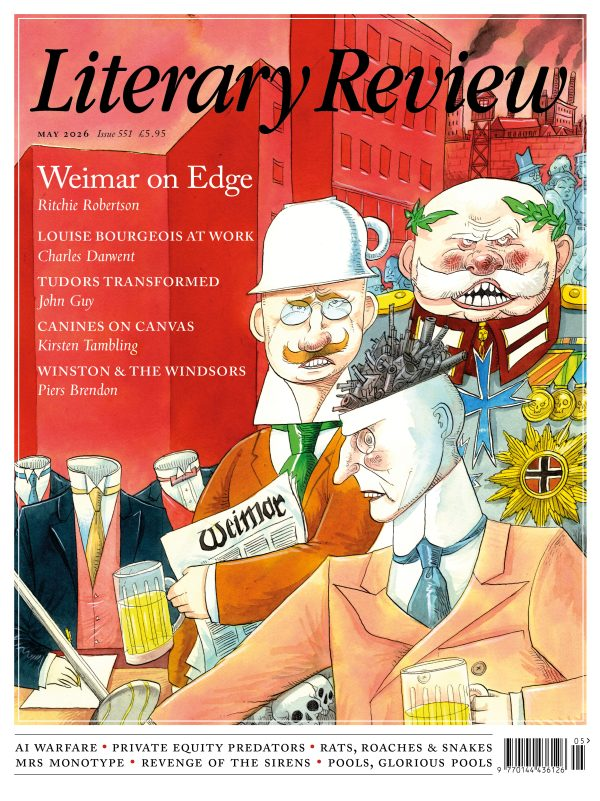
LITERARY REVIEW : The latest issue featuresRitchie Robertson on Weimar * Charles Darwent on Louise Bourgeois * John Guy on the Tudors * Kirsten Tambling on dogs in art * Piers Brendon on Churchill and the crown * Saul David on AI warfare * Simon Nixon on private equity predators * Nigel Andrew on outsider animals * Zoe Guttenplan on Beatrice Warde * Maren Meinhardt on women and music * Lucy Lethbridge on swimming * Diane Purkiss on being published * Anthony Pagden on the West * Michael Reid on Lula * Anthony Teasdale on Tory leaders * Anna Reid on Vera Gedroits * Wendy Holden on Elizabeth II * Harriet Rix on trees * Emma Smith on Shakespeare’s identity * Jane Yager on Herta Müller * Sheena Joughin on Siri Hustvedt * Adam Kucharski on evidence * Keith Miller on Douglas Stuart * Natalie Perman on Jem Calder * and much, much more…
Weimar Germany: Death of a Democracy By Victor Sebestyen
Weimar: Life on the Edge of Catastrophe By Katja Hoyer
The small town of Weimar is overladen with historical associations. Goethe spent more than fifty years there as an employee and friend of Duke (later Grand Duke) Karl August. After the last grand duke abdicated in November 1918, the National Assembly met in Weimar to draw up a new republican constitution for Germany. Other symbolically charged venues considered were Nuremberg (home of Dürer) and Bayreuth (because of Wagner), but it was Weimar that gave its name to the period of German history from …
Having been named for her father, Louis, a mere dealer in antique tapestries, seemed insufficiently romantic to Louise Bourgeois, who was born on Christmas Day in 1911. She preferred the idea that her namesake was Louise Michel, ‘the red virgin of Montmartre’, an anarchist heroine of the Paris Commune. It wasn’t true, of course, but …
A phrase like ‘fortress England’ seems to echo down the centuries, and turns up again in This Little World, Nandini Das’s new study of identity and belonging, cross-border migration, assimilation and estrangement in the period between 1500 and the restoration of Charles II. Das seeks to unmask the period’s most fundamental assumptions about English … read more
News, Views and Reviews For The Intellectually Curious

 Gagosian Quarterly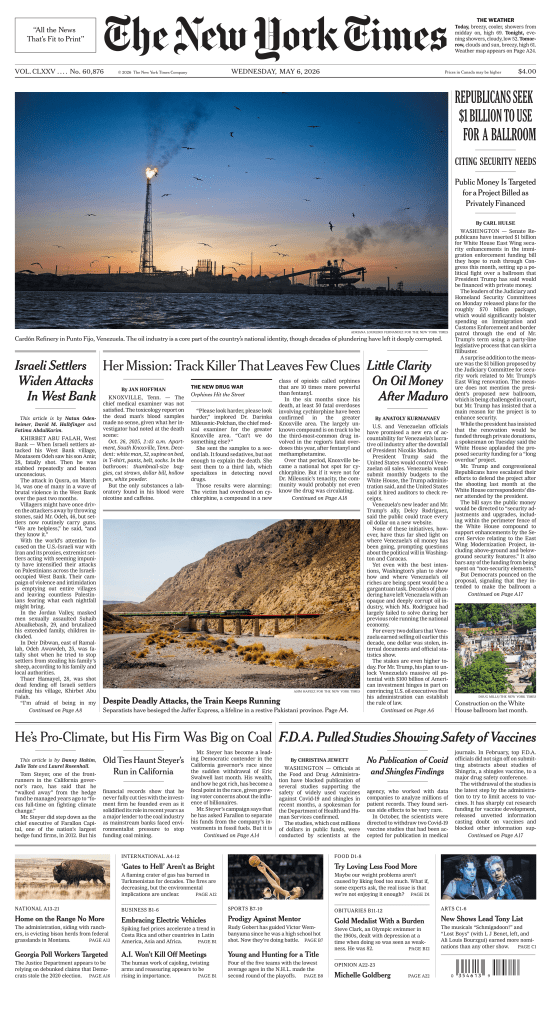


 Boomers Daily