
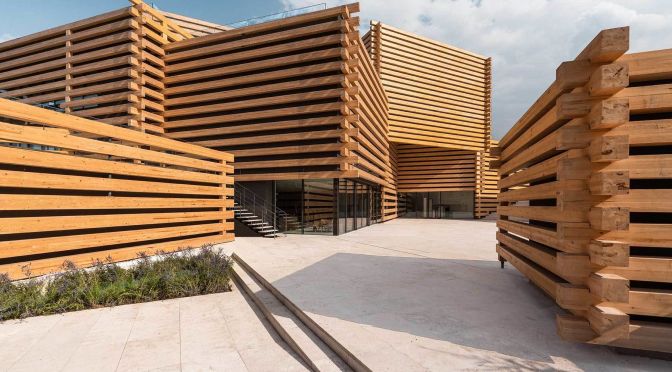
 We visit a Kengo Kuma-designed art museum in Eskisehir that’s set to become Turkey’s new cultural hotspot.
Odunpazarı Modern Museum is designed by the internationally acclaimed Japanese architecture firm Kengo Kuma and Associates.
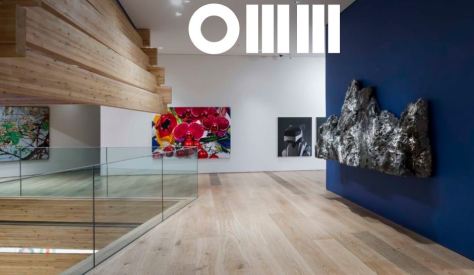
Kengo Kuma and Associates describes its philosophy as “Amalgamating nature and architecture in a manner that creates a strong bond between the ‘building’ and its ‘location’.” In his design of the OMM building, the architect thus reinterprets the historic fabric of the Odunpazarı district with a contemporary perspective. Paying homage to the local architecture of Odunpazarı, Ottoman dome architecture, and traditional Japanese architecture, OMM’s design is highlighted by four major components: geometry, light, stacking, and timber. Breaking away from conventional design through the transformation of simple geometric lines into complex images, the high-quality light entering the building, and the non-linear forms, the architectural stacking and the timber construction system alluding to the historic fabric of Odunpazarı constitute the sources of inspiration for the architecture of the museum building.
OMM – Odunpazarı Modern Art Foundation was founded in 2019 with the aim of contributing towards the development of cultural, social, and artistic life through events and activities centered on the familiarization and popularization of culture and arts in society, the advancement of art education, the support for artistic and cultural production, and the transmission of cultural values to future generations. OMM – Odunpazarı Modern Museum operates under the auspices of this foundation.

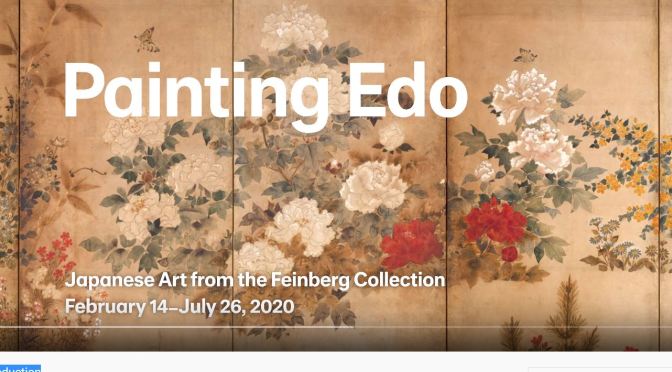
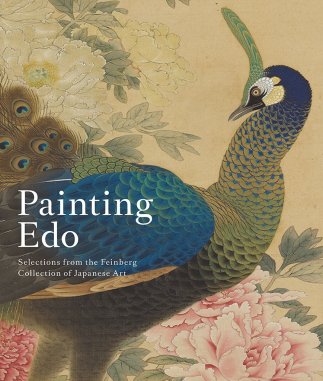 Painting Edo — the largest exhibition ever presented at the Harvard Art Museums — offers a window onto the supremely rich visual culture of Japan’s early modern era. Selected from the unparalleled collection of Robert S. and Betsy G. Feinberg, the more than 120 works in the exhibition connect visitors with a seminal moment in the history of Japan, as the country settled into an era of peace under the warrior government of the shoguns and opened its doors to greater engagement with the outside world. The dizzying array of artistic lineages and studios active during the Edo period (1615–1868) fueled an immense expansion of Japanese pictorial culture that reverberated not only at home, but subsequently in the history of painting in the West.
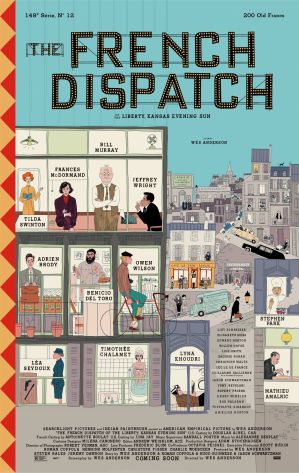 Wes Anderson’s new movie, “The French Dispatch,” which will open this summer, is about the doings of a fictional weekly magazine that looks an awful lot like—and was, in fact, inspired by—The New Yorker. The editor and writers of this fictional magazine, and the stories it publishes—three of which are dramatized in the film—are also loosely inspired by The New Yorker. Anderson has been a New Yorker devotee since he was a teen-ager, and has even amassed a vast collection of bound volumes of the magazine, going back to the nineteen-forties. That he has placed his fictional magazine in a made-up French metropolis (it’s called Ennui-sur-Blasé), at some point midway through the last century, only makes connecting the dots between “The French Dispatch” and The New Yorker that much more delightful.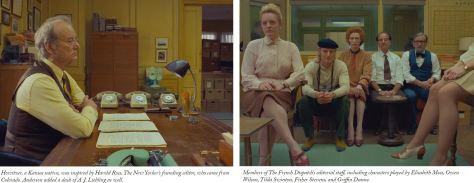

 Script: Iva Tasic





 Boomers Daily