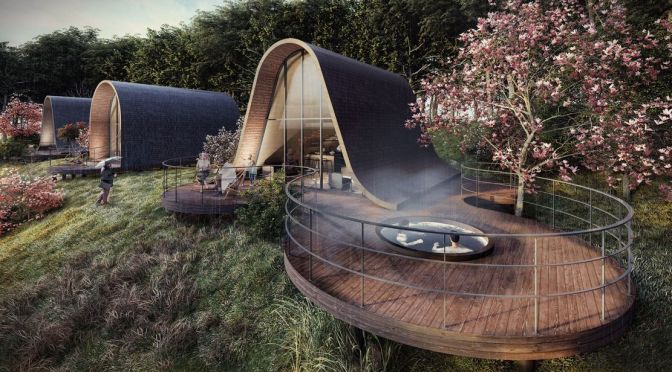
A As Architecture (May 21, 2023) – COA Hills, an eco-friendly micro-home holiday resort located in Balkaya Village, Sapanca, offers a unique architectural design that promotes health, nature, and eco-conscious living.
The resort’s sustainable architectural vision is expected to inspire a new vitality in the region and serve as a healing place where the soul finds its release. MAA’s architectural design offers guests the opportunity to stay in beautifully designed 26 micro-homes made of natural and renewable materials such as timber which can be re-introduced into natural cycle.
These micro-homes are situated on a sloped landscape that is surrounded by natural treasures such as forests, and they offer breathtaking scenery of Sapanca Lake. Nature has the power to recharge, rejuvenate, and connect people with the natural world around them. COA Hills will become a place of inspiration where nature and design find collaboration.
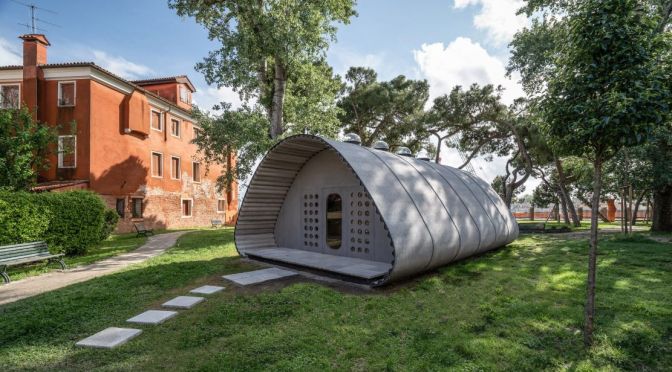
Dezeen Films (May 17, 2023) – In this video produced by Dezeen for Holcim, Norman Foster introduces a housing prototype for displaced people that the Norman Foster Foundation developed with the building materials company and unveiled in Venice during the launch of the Architecture Biennale.
The Essential Homes Research Project is a housing concept designed to sustainably provide rapidly assembled housing for people displaced by natural and manmade disasters. The prototype was designed by the Norman Foster Foundation and realised by Holcim using its materials. The homes have been designed to offer a durable alternative to tent shelters in order to withstand the elements.
They can be built on-site in order to expedite construction during emergencies. The project responds to the fact that displaced people often end up living in temporary accommodation for more than a decade, and require homes that offer safety and dignity. “Disasters lead to the need for instant accommodation and camps – mostly tented – offering scant protection from the elements,” Foster said in an exclusive video interview with Dezeen.
“What if there would be something that would be more permanent, more durable, offering greater protection from the elements, but which could be realised very quickly?”
The Local Project – (May 5, 2023) – A bold interpretation of an architectural farm house, Daylesford Longhouse seeks to rediscover how to live with the land. Recentering on the fundamental nature of our existence and self-sustained living, Partners Hill expertly imagines a beautiful home that sets the tone for a revived way of living that may be crucial for a sustainable future.
Video timeline: 00:00 – Introduction to the Architectural Farmhouse 00:37 – The Architect and Design Custodian 01:25 – A Walkthrough of the Home 02:30 – Research of the Agricultural Model 03:12 – The Concept of the Space 03:44 – Living and Working in the Space 04:04 – Establishing a Greenhouse 04:30 – The Extraordinary Kitchen 05:02 – The Unfolding of the Multifaceted Home 05:44 – Leaving the Location A Changed Person 06:02 – A Collection of Small Ideas 06:41 – The Architects Proud Moments
Located in a charming country town near Melbourne, Daylesford Longhouse sits on an elevated ridge, accommodating the sweeping views of the Australian landscape that the house sits so well within. The challenge was to uncover how an architectural farm house could flourish in a place where the land is deeply exposed to vast populations of ravenous grazing wildlife, extreme temperature variations, strong winds and a lack of water.
The concept for the architectural farm house was about having a community hub to hone skills of self-sufficiency, exchange knowledge and run programs where other people can learn. The home’s façade blends into the landscape in a way that doesn’t dominate, echoing the ethos of the residence. The multi-functional estate includes a large shed that houses a domestic dwelling at the eastern end, a garden kitchen and an intimate Airbnb and sleeping quarters.
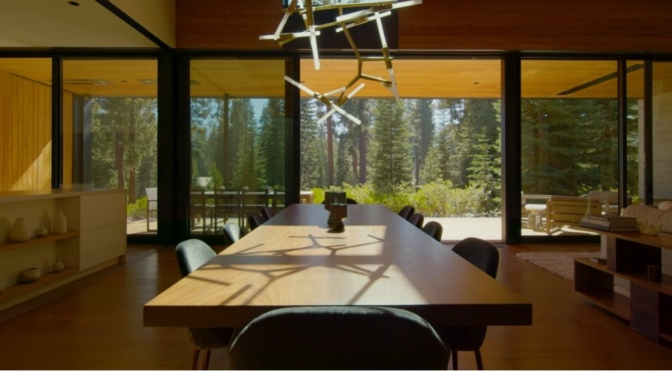
The Local Project – (May 2, 2023) – Tucked into an alpine environment, Forest House by Faulkner Architects is a cabin in the woods surrounded by thick pine trees, Fir trees and basalt rock.
Video timeline:00:00 – Introduction to the Cabin in the Woods 00:22 – The Site and Surrounding Landscape 00:38 – Saving the Landscape Around the Home 00:55 – The Clients and the Initial Brief 01:44 – A Concealed Entry 02:00 – A Walkthrough of the Home 02:38 – An Experience Space 02:58 – Working with the Sun 03:25 – A Focus on Sustainability 03:49 – The Materials Used 04:09 – A Reflection of the Surrounding Landscape 04:35 – The Most Exciting Space and its Successes
Desiring to save and protect the landscape, the architects saved 95 per cent of the trees on the property by leaving the front land largely untouched. As the clients delivered a simple brief with an open mindset, the architects were able to create a cabin in the woods that respected its surrounds and did not fall to the arbitrary aesthetics of larger homes in the area. Due to its nature-rich location, the home remains neutral and respective by allowing the landscape to breathe and embrace its structure.
As the house tour moves inside, the front of the home opens into the living, dining and kitchen areas. Tucked behind the kitchen is a small family room, while an addition of a hidden office allows for further separation of spaces where the clients can find a place to work, study and rest. Additionally, the master suite has been left on the main level, while the three ensuite guest rooms are positioned upstairs for increased separation of private and public spaces. Described as a cabin in the woods that is an atmospheric exercise in form and light, the architects began the process of designing Forest House by looking to the sun.
0:15 This AI robot is revolutionizing farming – The robot can identify weeds and crops at rate of 20 plants a second. The robot then delivers either weedkiller or fertilizer directly to individual plants to an accuracy of within 1mm. It can treat up to 500,000 plants per hour. The robot was invented by US firm Verdant Robotics.
1:24 This company cancelled all internal meetings – In January, e-commerce platform Shopify cancelled all regular meetings with 3 people or more and imposed a 2-week window before staff could schedule anything new. It also permanently banned meetings on Wednesdays and limited large meetings to a strict window on Thursdays. More organizations are trying a ‘meeting reset’, from Dropbox to Asana and Zapier. But why – and could your organization try it too?
3:00 How to build a thriving workplace – Businesses often ask staff why they resign. So why not ask why they’re joining or staying? “Why would you wait until people have already committed to walk out the door to say, ‘If only I had a time machine, I would go back to the past and convince you to stay’? What I would much rather see employers do are entry interviews and stay interviews. Entry interview is just asking the same questions you would normally pose at exit at the beginning of the employment relationship: Why are you here? What are you hoping to learn? Right. What are some of the best projects you’ve worked on? Tell me about the worst boss you’ve ever had so we can try to emulate the good and avoid the bad.”
5:22 ChatGPT is already being used for scientific research – ChatGPT launched to the public in November 2022. It gives in-depth, natural language answers to prompts, based on what it has learned from a huge database of books and articles. People have been using ChatGPT to perform an impressive range of tasks, from writing university-level essays to debugging code and filling in job applications. It has written fake scientific reports that have fooled scientists and has even been used to write a children’s book.
The World Economic Forum is the International Organization for Public-Private Cooperation. The Forum engages the foremost political, business, cultural and other leaders of society to shape global, regional and industry agendas. We believe that progress happens by bringing together people from all walks of life who have the drive and the influence to make positive change.
0:15 This island nation has moved to the metaverse – Rising seas are due to swamp Tuvalu by the end of the century. So the Pacific archipelago of 12,000 people has taken a remarkable step, declaring itself the world’s ‘first digital nation’.
1:39 Crosswords battle memory loss – Researchers studied 107 elderly people with mild cognitive impairment. 4 times a week, they spent half an hour either doing a crossword or completing tasks on a popular brain-training computer platform. Then they were reassessed after 12 and 66 weeks. Crossword players scored better on cognitive decline and daily functioning tests.
2:50 UK is rolling out ‘buzz’ stops for bees – The UK is planting bee-friendly native flowers on the roofs of roadside bus shelters, creating a parallel transport network for bugs. Management company Clear Channel aims to convert 1,000 shelters overall with native plants such as pansies and thyme.
4:05 Entrepreneur running 200 marathons for water – Guli is an Australian entrepreneur and environmental activist. She plans to complete Run Blue in time for the UN Conference on Water in March 2023 and to inspire as many people as possible along the way. Guli’s mission has taken her to the front lines of the global water crisis.
_____________________________________________
The World Economic Forum is the International Organization for Public-Private Cooperation. The Forum engages the foremost political, business, cultural and other leaders of society to shape global, regional and industry agendas. We believe that progress happens by bringing together people from all walks of life who have the drive and the influence to make positive change.
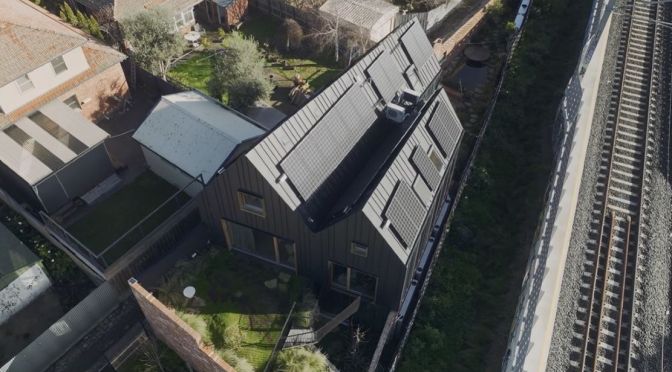
The Local Project – Passionate about creating a small home that considers a sustainable future, Marc and Felicity Bernstein at Hütt Homes collaborated with Blum to bring functionality into their family’s sustainable home.
Video timeline:00:00 – Introduction to the Small, Sustainable and Timeless Home 00:48 – The Shape of the Land 01:12 – A Walkthrough the Home 01:41 – Making the Most of the Small Space 02:00 – Blum Addicts 02:14 – Blum’s Input 02:45 – Blum Storage Options 03:10 – The First Floor 03:38 – The Top Floor 03:54 – 5 Principles of a Passive House 04:44 – Creating a Carbon-Neutral Home 05:13 – A Home That Ticks Every Box
From the exterior of the small home, the architecture considers brick and concrete as main elements of the design, while the interior uses timber as a key material to minimise the home’s carbon footprint. Utilising an open plan approach in the small home allows for a connection to the rear and first-floor gardens. Throughout the residence, a sense of communal living has been infused alongside sustainable elements.
In the sunken living room – where the sense of the communal spirit of the small home is evoked – the surrounding timber edges allow for extra seating for larger gatherings. At the other end of the house, the kitchen and dining room showcase the collaboration with Blum through storage units and cupboards. Helping to provide functionality, organisation and ergonomics while increasing the home’s passive living, Blum specified products such as the LEGRABOX in the kitchen and first-floor bedrooms to enhance storage and aesthetic function.
Moving upstairs to the private spaces, Blum has assisted with the home’s organisation and ergonomics with floor-to-ceiling cupboards in the master to staircase storage systems in the children’s rooms. Additionally, a net has been installed in the children’s rooms, hanging over the ground level and allowing for extra play space without taking away from liveable areas. Further assisting with the passive living of the home, a garden has been installed on the first level and a living green wall in the bathroom adds a natural flow of oxygen. Continuing the importance of indoor air quality, a mechanical heat recovery system has been installed to capture fresh air and remove any stale air.
Furthermore, a heat exchanger allows for temperature stability all year while maintaining energy efficiency. Throughout the small home, an emphasis on creating a carbon neutral project is referenced in the architecture and interior design choices. From the use of timber to the living green wall and connections to the gardens, sustainability is the key focus of Blum and Hütt Homes’ collaboration. An inspiration for upcoming architects and designers to think and design responsibly, TMRW Home is a responsible family residence that considers the present and the future.
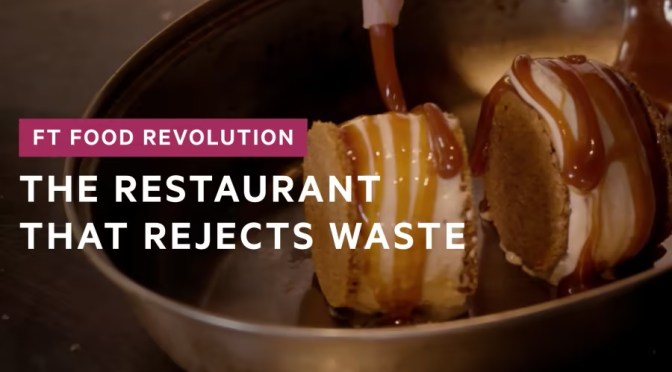
Financial Times – The FT’s Daniel Garrahan and food critic Tim Hayward visit Silo, a ‘zero waste’ restaurant in Hackney, which rejects the bin, makes ice cream from waste bread, turns seaweed into pendant lighting and ‘upcycles’ used wine bottles
SILO BEGAN IN AUSTRALIA IN 2011 WITH ARTIST JOOST BAKKER WHO PROPOSED THE IDEA OF ‘NOT HAVING A BIN’… FROM THAT POINT SILO’S CHEF AND OWNER HAS BUILT THE BUSINESS UP TO BEING THE WORLD’S FIRST ZERO WASTE RESTAURANT.
SILO IS A RESTAURANT CONCEIVED FROM A DESIRE TO INNOVATE THE FOOD INDUSTRY WHILST DEMONSTRATING RESPECT: RESPECT FOR THE ENVIRONMENT, RESPECT FOR THE WAY OUR FOOD IS GENERATED AND RESPECT FOR THE NOURISHMENT GIVEN TO OUR BODIES. THIS MEANS WE CREATE EVERYTHING FROM ITS WHOLE FORM, CUTTING OUT FOOD MILES AND OVER-PROCESSING, WHILST PRESERVING NUTRIENTS AND THE INTEGRITY OF THE INGREDIENTS IN THE PROCESS.
0:15 Global Population Reaches 8 Billion – That’s 8 times more humans than existed in 1800. Even so, the world’s population is growing at its slowest rate since 1950 due to a declining global fertility rate. Today there are an average of 2.3 births per woman. In 1950 it was 5. The world’s population is projected to peak at 10.4 billion by 2080.
1:49 The Economic Case for Climate Adaption – Climate adaptation means preparing our ecological, social and economic systems so they can cope with the future impacts of climate change. Heatwaves, storms, wildfires: the costs of climate change are already mounting but so far only 20% of climate finance has gone towards adaptation.
3:44 French Start Up Blends Wind and Solar Energy – Unéole’s energy system combines a photovoltaic rooftop panel with 2 compact wind turbines, generating 40% more energy than an ordinary rooftop panel. Solar panels work best in strong sunlight but Unéole’s units generate power when it’s overcast or during winter and can turn through the night to ensure a steady flow of power. The turbines are silent, so they don’t disturb building occupants and they’re built from mostly recycled aluminium and steel.
4:54 Lab Grown Blood Used in World First – UK scientists have transfused lab-grown blood into humans for the first time. It could revolutionize treatment for people with rare blood types, especially those who need regular transfusions. Two people were injected with 1-2 teaspoons of the synthetic blood to see how how their bodies respond. So far, so good – the trial participants are fit and healthy with no reported side effects.
00:16 Why more people than ever are short-sighted – The trend is worst in children and young adults, and half the world’s population could be short sighted by 2050.
01:37 Six species saved from extinction – Recent ecosystem restorations have rescued some species from the brink of extinction.
03:30 You could soon 3D-print furniture at home – Scientists from the Hebrew University of Jerusalem have developed a new wood-based ink that can be used for making 3d printed furniture
04:48 How Dark Data Affects Your Carbon Footprint -Companies generate 3.5 trillion gigabytes of dark data every day. But what is dark data?
The World Economic Forum is the International Organization for Public-Private Cooperation. The Forum engages the foremost political, business, cultural and other leaders of society to shape global, regional and industry agendas. We believe that progress happens by bringing together people from all walks of life who have the drive and the influence to make positive change.
News, Views and Reviews For The Intellectually Curious


 Dezeen



 Boomers Daily