
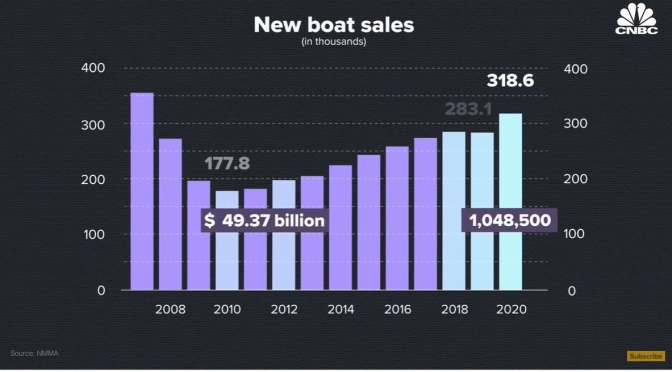
Every year, about a third of Americans spend at least some time on a boat. In the landscape of recreational power sports, which includes boats, some categories have seen their fair share of struggles in recent years. But boat industry revenues have been mostly growing. Boat sales have seen a boost during Covid, but some analysts think the growth is poised to continue.
Tag Archives: Reviews

India: Mumbai’s $1.7BN Coastal Road Project
Mumbai’s Coastal Road Project is a bold show of India’s construction capabilities, but it’s sparked protests and legal battles on the ground.
The Coastal Road is an under construction 8-lane, 22.2-km long freeway that would run along Mumbai’s western coastline connecting Marine Lines in the south to Kandivali in the north.
Mumbai (formerly called Bombay) is a densely populated city on India’s west coast. A financial center, it’s India’s largest city. On the Mumbai Harbour waterfront stands the iconic Gateway of India stone arch, built by the British Raj in 1924. Offshore, nearby Elephanta Island holds ancient cave temples dedicated to the Hindu god Shiva. The city’s also famous as the heart of the Bollywood film industry.

Money Views: U.S. Airports That Collected The Most Loose Change In 2019

Science: What A ‘Mega’ Earthquake In The Pacific Northwest Will Look Like

Top New Book Catalogs: ‘Taschen – Summer 2021’


Covid-19: How The Delta Variant Spread Globally
Covid-19’s Delta variant is proliferating world-wide threatening unvaccinated populations and economic recovery. WSJ breaks down events in key countries to explain why Delta spreads faster than previously detected strains. Composite: Sharon Shi

Science: Blood Tests For Alzheimer’s Treatment, Seismic Events on Mars

Books: ‘The Tiny Bee That Hovers At The Center Of The World’ – David Searcy
An ethereal meditation on longing, loss, and time, sweeping from the highways of Texas to the canals of Mars–by the acclaimed essayist and author of Shame and Wonder
David Searcy’s writing is enchanting and peculiar, obsessed with plumbing the mysteries and wonders of our everyday world, the beauty and cruelty of time, and nothing less than what he calls “the whole idea of meaning.” In The Tiny Bee That Hovers at the Center of the World, he leads the reader across the landscapes of his extraordinary mind, moving from the decaying architectural wonder that is the town of Arcosanti, Arizona, to driving the vast, open Texas highway in his much-abused college VW Beetle, to the mysterious, canal-riddled Martian landscape that famed astronomer Percival Lowell first set eyes on, via his telescope, in 1894. Searcy does not come at his ideas directly, but rather digresses and meditates and analyzes until some essential truth has been illuminated–and it is in that journey that the beauty is found.

Journal Views: Science Magazine – July 23, 2021
Zoology: The Evolution Of Seahorses (Video)
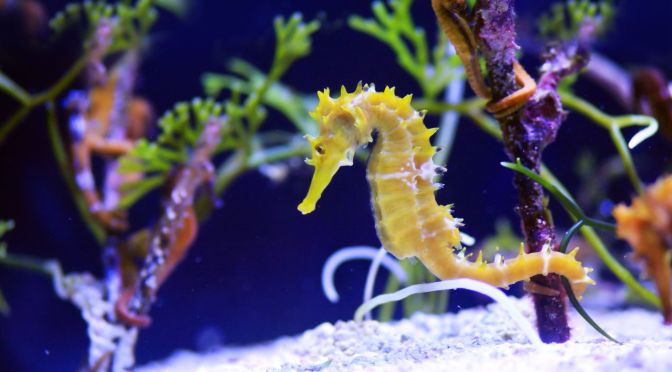
Sea horses are amazing animals because of many of their strange features like male pregnancy but also due to their beautifully unique body shape. However, this may be the reason why seahorses are famous but it actually makes them very bad swimmers so why did they evolve to have this unique body shape?
A seahorse is any of 46 species of small marine fish in the genus Hippocampus. “Hippocampus” comes from the Ancient Greek hippókampos, itself from híppos meaning “horse” and kámpos meaning “sea monster”.
 Boomers Daily