
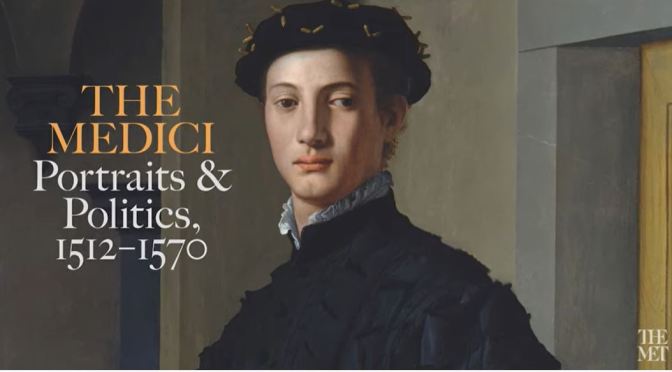
Join exhibition curator Keith Christiansen and Renaissance art historians Linda Wolk-Simon and Davide Gasparatto in conversation about the exhibition “The Medici: Portraits and Politics, 1512–1570,” and the development of the Florentine identity through portraits under Cosimo I de’ Medici’s rule. Film made possible by the generous support of The Brownstein Family Foundation, a Patron Member of The Friends of the Bargello. Learn more about the exhibition “The Medici: Portraits and Politics, 1512–1570” on The Met’s website: https://www.metmuseum.org/MediciPortr…
Tag Archives: Renaissance Italy
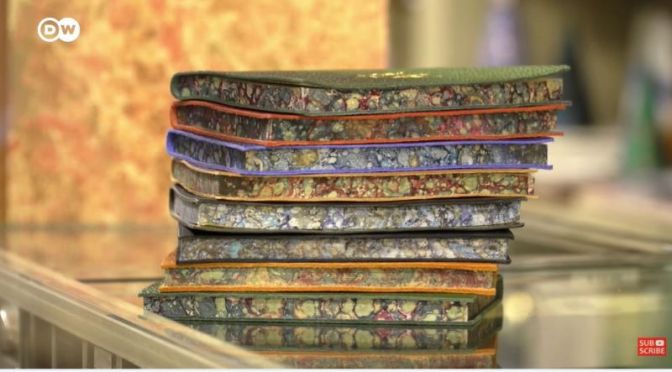
Profiles: ‘Marbled Paper’ Makers Of Florence, Italy
In the Italian city of Florence, high-quality colored paper and gift wrap have a long tradition. In fact, some of it is still made by hand. These papers are famous for their delightful patterns, shiny colors, and their Italian Renaissance-era motifs. We went to visit paper manufacturers in Florence to find out more about this age-old tradition!
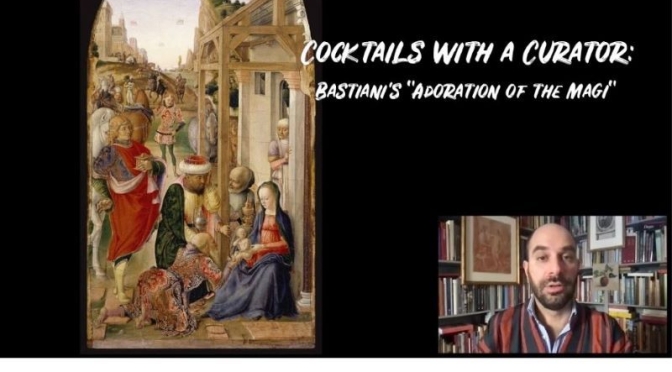
Cocktails With A Curator: Bastiani’s “Adoration of the Magi” (The Frick Video)
In this week’s episode of “Cocktails with a Curator,” celebrate the Yuletide with Deputy Director and Peter Jay Sharp Chief Curator Xavier F. Salomon as he takes a closer look at Lazzaro Bastiani’s “Adoration of the Magi.” Acquired from Pierpont Morgan’s heirs in 1935—the year The Frick Collection opened to the public—this fascinating picture shows the gift-toting kings on different stages of their journey from Jerusalem to Bethlehem. A contemporary of Giovanni Bellini, Bastiani was considered the artist’s equal at the time and commanded similar prices for his pictures. Explore the work of this magnificent but under-appreciated artist while enjoying a festive Cranberry Bourbon cocktail—Merry Christmas!
Lazzaro Bastiani was an Italian painter of the Renaissance, active mainly in Venice. He was born in Padua. He is first recorded as a painter in Venice by 1460 in a payment for an altarpiece of San Samuele, for the Procuratori di San Marco. In 1462 he was paid at the same rate as Giovanni Bellini.

Art: Michelangelo’s Sculpture ‘David’ & The Republic Of Florence
Michelangelo, David, 1501–04, marble, 17 feet high (The Galleria dell’Accademia, Florence), a conversation with Dr. Steven Zucker and Dr. Beth Harris.
This astonishing Renaissance sculpture was created between 1501 and 1504. It is a 14.0 ft marble statue depicting the Biblical hero David, represented as a standing male nude. Originally commissioned by the Opera del Duomo for the Cathedral of Florence, it was meant to be one of a series of large statues to be positioned in the niches of the cathedral’s tribunes, way up at about 80mt from the ground. Michelangelo was asked by the consuls of the Board to complete an unfinished project begun in 1464 by Agostino di Duccio and later carried on by Antonio Rossellino in 1475. Both sculptors had in the end rejected an enormous block of marble due to the presence of too many “taroli”, or imperfections, which may have threatened the stability of such a huge statue. This block of marble of exceptional dimensions remained therefore neglected for 25 years, lying within the courtyard of the Opera del Duomo (Vestry Board).
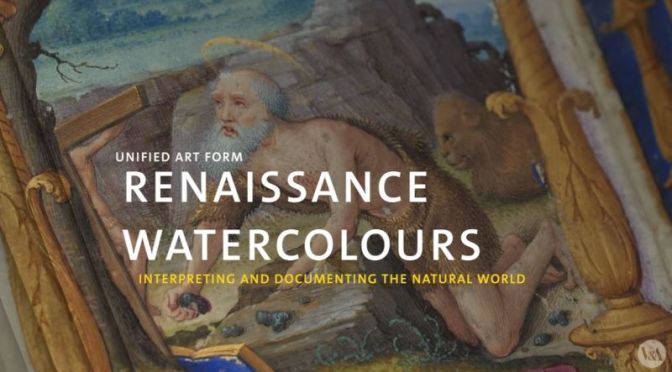
Art History: ‘Watercolor In The Renaissance’ (Video)
Focussing on the three types of object featured in the V&A display Renaissance Watercolours: illuminated manuscripts, portrait miniatures and coloured drawings, this film showcases the qualities that made watercolour the medium of choice for many artists during the Renaissance.
A modern-day painting of a pomegranate, using traditional watercolour techniques, by artist Lucy Smith, also demonstrates how watercolour painting remains a versatile medium, ideal for capturing life-like details that help us to record our diverse world.

History: “The Unchained Art Of The Renaissance”
Waldemar Januszczak challenges the traditional notion of the Renaissance having fixed origins in Italy and showcases the ingenuity in both technique and ideas behind great artists such as Van Eyck, Memling, Van der Weyden, Cranach, Riemenschneider and Durer.
Giorgio Vasari, (born July 30, 1511, Arezzo [Italy]—died June 27, 1574, Florence), Italian painter, architect, and writer who is best known for his important biographies of Italian Renaissance artists.
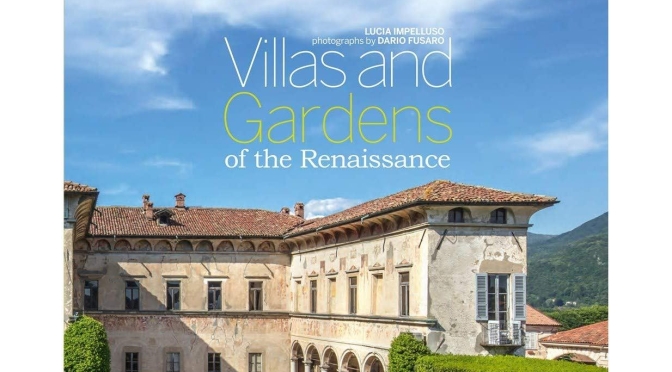
Travel & Photography: “Villas And Gardens Of The Renaissance” (Rizzoli)
 An historical text introduces each property, giving an overview of its origins. The villas have been specially photographed for this book by Dario Fusaro, with views of both the palace interiors and their grounds, as well as the gardens, glimpses of the halls, details of the furnishings, and a focus on the frescoes, where still preserved. Explanatory text offers insights on the most
 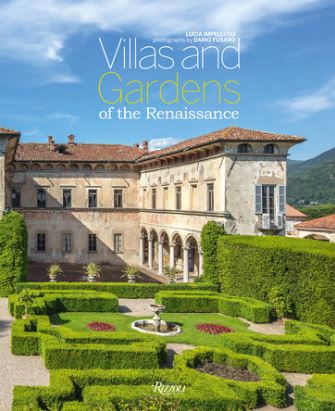 interesting frescoes, such as those of Veronese at Villa Barbaro. For the first time, Fusaro also employs a drone with the purpose of capturing the architectural structure and elements of each Italian Renaissance garden, from above and as a whole.
A stunning collection of photographs celebrating the excellence of the Italian Renaissance period through palaces and gardens built between the fifteenth and sixteenth centuries.
The book illustrates nine locations of extraordinary artistic and architectural interest, conceived by prominent Italian families and dynasties as urban villas or country houses centered around the pursuit of entertainment and leisure. These lavishly decorated and frescoed palaces are adorned with handcrafted furniture and works of art and surrounded by gardens that retain their original layout to this day–a very rare feature.
To read more and/or purchase: https://www.rizzoliusa.com/book/9788891821324
 Boomers Daily